


















Sea Power Magazine Articles
The Film Spectator Magazine Articles
The Flapper Magazine Articles
Harper's Bazaar Magazine Articles
La Baionnette Articles
The Saturday Review Articles
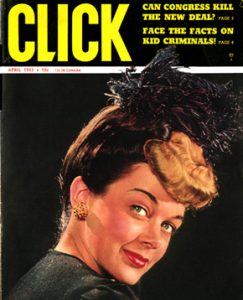
Click Magazine Articles
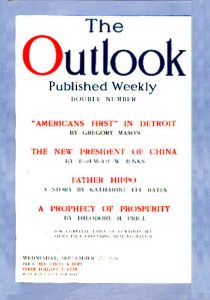
Outlook Magazine Articles
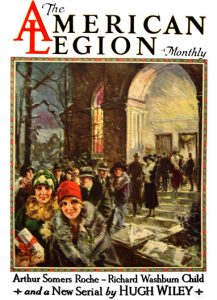
The American Legion Monthly Articles
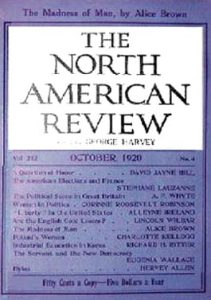
The North American Review Articles
Confidential Magazine Articles
Life Magazine Articles
The National Park Service Articles
The New Republic Articles
The Saturday Evening Post Articles
Current Literature Magazine Articles
47 Magazine Articles
The Smart Set Articles
Scribner's Magazine Articles
Ken Magazine Articles
Touchstone Magazine Articles
Trench Warfare Articles
Men's Wear Magazine Articles
Hearst's Sunday American Articles
Pic Magazine Articles
Newsweek Articles
G.I. Joe Magazine Articles
Stage Magazine Articles
Confederate Veteran Magazine Articles
Collier's Magazine Articles
The American Legion Weekly Articles
Leslie's Magazine Articles
People Today Magazine Articles
Freedom's Triumph Articles
The New York Times Articles
Vanity Fair Magazine Articles
The Dial Magazine Articles
Outing Magazine Articles
Liberty Magazine Articles
Vogue Magazine Articles
Direction Magazine Articles
Photoplay Magazine Articles
PM Tabloid Articles
Theatre Arts Magazine Articles
Rob Wagner's Script Magazine Articles
Harper's Weekly Articles
Film Daily Magazine Articles
Punch Magazine Articles
Creative Art Magazine Articles
The Atlantic Monthly Articles

The Great Depression

Find archive articles on the Great Depression from the 1930’s. Our site has great information from old magazine and newspaper articles on the Great Depression.

The Okies and the Dust Bowl
(Ken Magazine, 1938)

The other half of California’s 200,000 migratory workers are farmers who trekked from the dust bowl area; they found work on farms, but not farming; it’s seasonal piecework, like in a mill. Each Oklahoma nomad dreams of a cottage and a cow, but he’s just sitting on a barbed wire fence. With the publicity over, the government has forgotten the dust bowl refugees. At Depression depth, a man might make $8 a week; now, $5 is lucky. They are the bitterest folk in America; blood may flow…

Click here if you would like to read a 1940 article about the the finest movie to ever document the flight of the Okies: The Grapes of Wrath.

FDR’s Continuing Failures
(New Outlook, 1935)

When FDR’s first term reached the half-way mark the editor of New Outlook, Francis Walton, sat down at his typewriter and summarized the new president’s record:

It is a record of action – mostly ill-considered. It is a record of astounding failures. It is a record of abandoned experiments smilingly excused and apologized for by their perpetrator even before they were undertaken… It is a record against which natural recovery is waging a super-human struggle to reach us.

The Lot of Women in the Great Depression
(New Outlook Magazine, 1934)

An editorial by two American feminists who insisted that the economic depression of the Thirties had knocked the wind right out of the Women’s Movement. They argued that some of the high ground that was earned in the preceding decades had been lost and needed to be taken back; their points are backed up by figures from the U.S. Census Bureau as well as other agencies. Much column space is devoted to the employment discrimination practiced by both state and Federal governments in favor of single women at the expense of the married. It is grievously made clear that even the sainted FDR Administration was one of the cruel practitioners of wage inequality.


CLICK HERE to read about the pay disparity that existed between men and women during the 1930s.

Advertisement

Use shortcode [oma_ad position="summary_top"] (or other position) in your theme or widgets to display OMA Promotions here.

The Unhappy Constituents
(New Outlook Magazine, 1933)

If President Roosevelt were a Caliph in ancient Baghdad, he would disguise himself as a Congressman and wander about the country asking the man at the filling station, the hitch-hiker, the farmer and his wife, the local chairlady of a woman’s club – he would ask them what they thought of FDR, the NRA, [General] Hugh Johnson, Brain Trusters, Jim Farley and the entire set-up in Washington… He would be startled. Mr Roosevelt is growing exceedingly unpopular – not so much the President himself as his Administration.


More about New Deal problems can be read here…

The Great Depression Reduced the Number of Marriages
(The Pathfinder, 1933)

We were interested to learn that two of the most semi-popular queries on Google are, 1930s wedding theme decorations and 1930 wedding dress styles – yet to read the attached article is to learn that the most accurate step that any contemporary wedding planner assigned this theme can recommend is that the happy couple forego the nuptial ceremony entirely and simply move in together. During the Great Depression very few couples could afford to get married, much less divorced.

The Great Depression and American Communists
(Click Magazine, 1939)

This photo-essay tells the story of the radical elements within the United States during the later period of the Great Depression – all of them were directed and financed by Georgi Dimitrov (1882 – 1949) in far-off Moscow. The leaders of the American Communist Party USA (CPUSA) were William Z. Foster, Earl Browder, and Ella Reeve Bloor.


In 1944, the city of Seattle, Washington elected a communist to the U.S. House of Representatives, click here to read about him…


Click here to learn how thoroughly the FBI had infiltrated the CPUSA.


Click here to read about an American woman who grew heartily sick of the socialists who pontificated on every street corner during the Great Depression…


Click here to read about the tactics that American Communists used in Hollywood during the Great Depression…


From Amazon: Demagogues in the Depression: American Radicals and the Union Party, 1932-1936,style=border:none

Advertisement

Use shortcode [oma_ad position="summary_top"] (or other position) in your theme or widgets to display OMA Promotions here.

Labor Abuses in the South
(Focus Magazine, 1938)

Many of the back-handed dealings that would be addressed in John Steinbeck’s 1939 novel, The Grapes of Wrath are illustrated in the attached photo-essay titled, Slavery in America. This article is about the cruel world of the Deep South that existed in the Twenties and Thirties. It was an agrarian fiefdom where generations of White planters and factory owners practiced the most un-American system of exploitation and feudalism that developed and was perpetuated from the chaos wrought by the Civil War and Reconstruction. It was a nasty place where the working people of both races labored under conditions of peonage and bone-crushing poverty with no hope in sight.


Click here to read more about the American South during the Great Depression.

In Defense of President Hoover
(Pathfinder Magazine, 1948)

Attached is a small excerpt from the Pathfinder review of Eugene Lyons’ book, Our Unknown Ex-President (1948). The author outlined the various measures taken by the Hoover administration during the earliest years of the Great Depression in hopes that the flood waters would subside:


He fought for banking reform laws, appropriations for public works, home-loan banks to protect farms and residences. He asked for millions for relief to be administered by state and local organizations… A Democratic Congress refused to heed his suggestions.


Yet, regardless of the various missteps made by Hoover and FDR, the United States remailed an enormously wealthy nation…

Government Health Care for California Migrants
(PM Tabloid, 1940)

This is a report on the 1939 government-sponsored medical outreach program for California’s Grapes of Wrath migrants:

The counties of San Joaquin Valley have well organized health departments… [Migrants] are entitled to drugs, special diets, eyeglasses and appliances if authorized by the medical director. Since many patients are in need not so much of medicines than of food, the Association may pay a medical grocery bill just as it pays the druggist. It also provides school lunches and nursery meals.


More on migrant laborers can be read here…

Advertisement

Use shortcode [oma_ad position="summary_top"] (or other position) in your theme or widgets to display OMA Promotions here.

What Will Save Us?
(Pathfinder Magazine, 1932)

The author of this brief paragraph points out that prior to the Great Depression that commenced in 1929, there were as many as five other economic slumps that existed in America’s past. He remembered that in each case something unexpected has come along to not only put us back on our feet again but to boom things in addition.

Will it be the sudden perfection of television? Or further development of electrical appliances, particularly air-conditioning and cooling? Or some new novelty?

Incompetence at the Helm
(New Outlook Magazine, 1934)

A columnist writing for the magazine New Outlook following the first nine months of the New Deal, weighed carefully all the assorted alphabet agencies and edicts that President Roosevelt created in hopes that the U.S. economy would once more spring to life. He concluded that there was nothing to look forward to and compared FDR to the con-men on the street corners who scam the passersby into playing their shell games; difference being that FDR’s shells were both empty.


Click here to read about the first 100 days of the Roosevelt administration.

Reform The Banks!
(Pathfinder Magazine, 1932)

Eight months before the Congress passed the Glass–Steagall Act (aka the Banking Act of 1933) this unsigned editorial appeared in a Washington-based news magazine pointing out that the economic downturn in the country had created a need for such legislation.


Click here to read another 1932 article about the banks.

Advertisement

Use shortcode [oma_ad position="summary_top"] (or other position) in your theme or widgets to display OMA Promotions here.

Your Graduation Gift: Despair
(New Outlook, 1933)

This is a graduation commencement speech that was written simply to appear on the printed page of a 1933 magazine – it was far too depressing to have ever been recited before an audience of eager-eared graduates and their doting relatives.

You know, of course, that ‘times are hard’… You know that less than ten percent of the post-graduate professional men from last year’s class have found work. And you have heard from home. Allowances have been cut. Classmates have had to drop out of college. Old family friends have had grave misfortunes. Homes have been lost. You know all these things, but you can’t realize them fully at this moment. You will, unfortunately, realize them only too well when you yourselves try to find a place in the world.

Prosperity’s Return
(Newsweek Magazine, 1940)

A quick read about the return of prosperity by economist turned journalist Ralph Robey:

Majority opinion among government economists at present, according to all reports, is that the current decline of business has another six or eight weeks to run and then there will be an about-face which will start us on an upgrade that by the end of the year will wipe out all the recent losses and bring production back to the high level of the final quarter of last year.

Prosperity in Sight…
(Newsweek Magazine, 1940)

The optimistic year-end forecast – numerous authorities predicted at least a 25 percent rise in residential contracts and officers of the John Manville Corp. forecast the erection 400,000 privately financed homes, largest volume since 1929 – have been buttressed by several important developments since the turn of the year.

Advertisement

Use shortcode [oma_ad position="summary_top"] (or other position) in your theme or widgets to display OMA Promotions here.

Harold Ickes Wrote the Relief Checks
(New Outlook, 1935)

When Harold Ickes (1874 – 1952) assumed his post as FDR’s Secretary of the Department of the Interior he found himself in charge of three distinct governmental concerns. The first of these elements to be lorded over was the public lands (mines, forests and Indian reservations). His second responsibility was involved with the drilling of oil. The third and most observed cell in his official asylum was that of Administrator of Public Works Three Billion Dollar Fund. He was under instruction to spend this as rapidly as possible…It would give work to the workless, get money into circulation and encourage business.


Click here to read about President Harry Truman…

The Plummeting Salaries
(New Outlook Magazine, 1933)

In this article, Dorothy Dunbar Bromley (1896 – 1986) addressed one of the preeminent issue of her day: the rapidly decreasing salaries of the American worker:

If we are fatuous optimists, it is because we have only the vaguest idea of how appalling the situation is. We have read a great deal about the return of of the garment sweatshop of fifty years ago, with the same abominable conditions and the same exploitation of women and children for a few cents an hour, or for no pay at all…


More on this exploitation can be read here…

The Poor Are Everywhere
(The Chicagoan, 1932)

Three years into the Great Depression a citizen of Chicago realizes that there is nowhere he can go to escape the uneasy presence of the hungry poor in his city:

They’re on the boulevards and in the parks. They’re on the shady streets in nice neighborhoods and around the corner from expensive restaurants. You can tell they’re starving by looking at them. Their nerve is gone – they don’t even beg. You see thousands every day… Young men and old women never begged in this country before.

Advertisement

Use shortcode [oma_ad position="summary_top"] (or other position) in your theme or widgets to display OMA Promotions here.

Scroll to Top