




Hearst's Sunday American Articles
Rob Wagner's Script Magazine Articles
Confederate Veteran Magazine Articles
47 Magazine Articles
Direction Magazine Articles
The Smart Set Articles
The North American Review Articles
Theatre Arts Magazine Articles
Film Daily Magazine Articles
Men's Wear Magazine Articles
Photoplay Magazine Articles
G.I. Joe Magazine Articles
Creative Art Magazine Articles
Ken Magazine Articles
Life Magazine Articles
Scribner's Magazine Articles
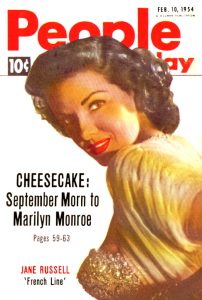
People Today Magazine Articles
Vanity Fair Magazine Articles
The Saturday Review Articles
Stage Magazine Articles
The American Legion Monthly Articles
Outlook Magazine Articles
The New York Times Articles
Liberty Magazine Articles
Freedom's Triumph Articles
The Dial Magazine Articles
Touchstone Magazine Articles
La Baionnette Articles
Click Magazine Articles
The National Park Service Articles
Punch Magazine Articles
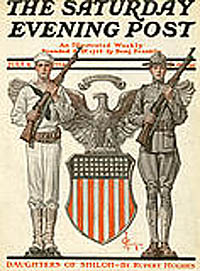
The Saturday Evening Post Articles
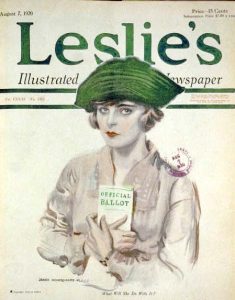
Leslie's Magazine Articles
Harper's Weekly Articles
Collier's Magazine Articles
Vogue Magazine Articles
Trench Warfare Articles
Current Literature Magazine Articles
The New Republic Articles
The American Legion Weekly Articles
Sea Power Magazine Articles
Pic Magazine Articles
The Atlantic Monthly Articles
Newsweek Articles
Harper's Bazaar Magazine Articles
The Film Spectator Magazine Articles
PM Tabloid Articles
The Flapper Magazine Articles
Outing Magazine Articles
Confidential Magazine Articles

Writing

Father Francis Duffy of the Fighting 69th
(The Bookman, 1920)

Father Francis P. Duffy (1874 – 1932) was the well-loved regimental chaplain for the illustrious, old New York infantry regiment known as the Fighting 69th.


Next time you find yourself walking near Times Square in New York City, you’ll see a statue erected in his memory situated behind a statue of the popular songster who composed Over There – George M. Cohan (1878 – 1942). These memorials will be found at Broadway and 7th Avenue (between 46th & 47th streets). Both men knew the neighborhood well – to Cohan it was known as the Theater District while Duffy knew it as Hell’s Kitchen, and it was his parish.


The Bookman reviewed Duffy’s memoirstyle=border:none as a book which carries A.E.F. readers back to lousy, old French barns, to chilly, soupy Argonne mud and, at last, to a wintry Rhineland….


You can can read more about Father Duffy’s war here…


Click here to read articles about W.W. I poetry.

A Visit to the Grave of Rupert Brooke
(The London Mercury, 1920)

Attached is an account by a learned traveler who journeyed to that one piece of ground on the isle of Skyros that will forever be England – the grave of the English poet Rupert Brooke (1887 – 1915). The literati who wrote the attached article went to great lengths imparting the significance of Skyros throughout all antiquity and it’s meaning to the world of letters – credited only as S. Casson, he informed his readers that he arrived on the island five years after the 1915 internment in order to erect the headstone that is currently in place, describing the shepherds and other assorted rustics in some detail while alluding tirelessly to the works of Homer.

German Cavalry Memoir
(Leslie’s Weekly, 1915)

Fritz Arno Wagner (1894 – 1958) is best remembered as a pioneering cinematographer from the earliest days of the German film industry, however before he could gain the experiences necessary to become the director of photography for such films as Nosferatu, and Westfront he had to first fulfill his obligations to the Kaiser. This article is an account of his brief stint in the Hussars (ie. lancers) that he gave to the editor’s of Leslie’s Illustrated Weekly Newspaper. Although the article only covers his training period, it does give the reader a sense of what life was like for an enlisted man serving in one of highly prized regiments in the Imperial German Army.

It is believed that this magazine article was written during his days with Pathe News in New York.

Click here to read about the U.S. Navy railroad artillery of W.W. I.

Advertisement

Use shortcode [oma_ad position="summary_top"] (or other position) in your theme or widgets to display OMA Promotions here.

German Cavalry Memoir
(Leslie’s Weekly, 1915)

Fritz Arno Wagner (1894 – 1958) is best remembered as a pioneering cinematographer from the earliest days of the German film industry, however before he could gain the experiences necessary to become the director of photography for such films as Nosferatu, and Westfront he had to first fulfill his obligations to the Kaiser. This article is an account of his brief stint in the Hussars (ie. lancers) that he gave to the editor’s of Leslie’s Illustrated Weekly Newspaper. Although the article only covers his training period, it does give the reader a sense of what life was like for an enlisted man serving in one of highly prized regiments in the Imperial German Army.

It is believed that this magazine article was written during his days with Pathe News in New York.

Click here to read about the U.S. Navy railroad artillery of W.W. I.

An Austrian at the German Supreme Headquarters
(Times Literary Supplement, 1921)

Reviewed herein is the W.W. memoir of General von Josef Graf Sturgkh (1859 – 1916) memoir recalling his days in Berlin serving as the Austrian Army delegate to the German military’s Great Headquarters (1915 – 1916):


Graf Sturgkh drops several hints about the very heavy losses incurred by the Germans in the very first weeks of the war…

An Englishman in the French Army
(Times Literary Supplement, 1917)

Under the French Flag is a W.W. I memoir by M. Macdonald in which the author tells the story of an Englishman who chose to sign up for the French Army due to their lax recruiting regulations which provided for the enlistment of men as old as fifty years of age. The reviewer believed the author recounted some interesting scenes of early-war France and French barracks life.

Click here to read articles about W.W. I poetry.

Advertisement

Use shortcode [oma_ad position="summary_top"] (or other position) in your theme or widgets to display OMA Promotions here.

Patriotic Verse by Gertrude Stein
(Vanity Fair, 1918)

When you stop to think of patriotic poetry, Gertrude Steinstyle=border:none (1874-1946) is not one of the word-smiths whose name comes to mind. Yet she, too, applied her talents to the genre after having labored many moons as an ambulance driver in France on behalf of the American Fund for the French Wounded. She had joined this group in 1916 and in 1922 was awarded the Medaille de la Reconnaissance Française for all her good work. This poem, in praise of the U.S. Army, appeared in a 1918 VANITY FAIR.

Scroll to Top