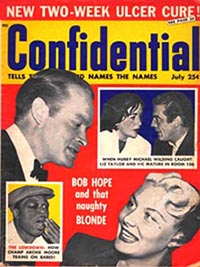






Confidential Magazine Articles
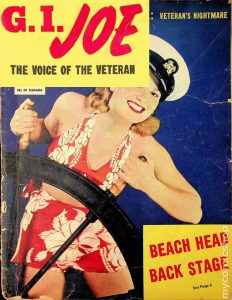
G.I. Joe Magazine Articles
Punch Magazine Articles
Rob Wagner's Script Magazine Articles
Outlook Magazine Articles
La Baionnette Articles
Direction Magazine Articles
Theatre Arts Magazine Articles
Men's Wear Magazine Articles
Pic Magazine Articles
Confederate Veteran Magazine Articles
Touchstone Magazine Articles
Outing Magazine Articles
Harper's Bazaar Magazine Articles
The Saturday Review Articles
PM Tabloid Articles
Freedom's Triumph Articles
The Film Spectator Magazine Articles
Life Magazine Articles
Ken Magazine Articles
Stage Magazine Articles
The New York Times Articles
Trench Warfare Articles
The American Legion Weekly Articles
Film Daily Magazine Articles
The Smart Set Articles
Vanity Fair Magazine Articles
Photoplay Magazine Articles
Harper's Weekly Articles
The Atlantic Monthly Articles
The Flapper Magazine Articles
Sea Power Magazine Articles
Scribner's Magazine Articles
The National Park Service Articles
The Dial Magazine Articles
Hearst's Sunday American Articles
The New Republic Articles
The North American Review Articles
Creative Art Magazine Articles
47 Magazine Articles
The American Legion Monthly Articles
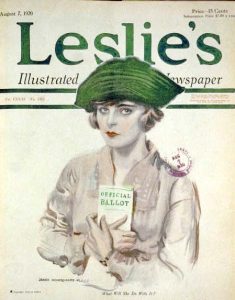
Leslie's Magazine Articles
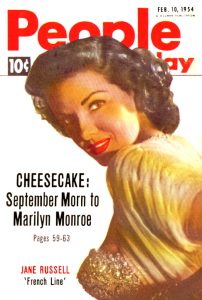
People Today Magazine Articles
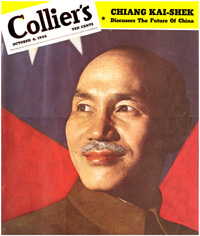
Collier's Magazine Articles
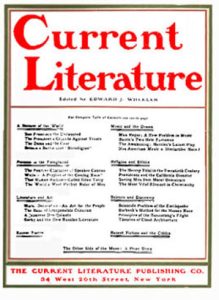
Current Literature Magazine Articles
Click Magazine Articles
Liberty Magazine Articles
Vogue Magazine Articles
The Saturday Evening Post Articles
Newsweek Articles

U.S. Army Uniforms of World War One

A.E.F. Knit Uniform Accessories
(Fleisher’s Catalog, 1918)

Photographs from the W.W. I era Fleisher’s Knitting & Crochet Manual that depicted the variety of Quartermaster approved scarves, wristlets, helmets, sweaters and watch caps that were available to the Doughboys for service Over There. In some cases the knitting instructions are intact.

Some might be amused to see that the photographer’s stylist had used the 1902 blouse rather than the more suitable 1912 issue.


From Amazon: Fleisher’s Knitting & Crochet Manualstyle=border:none

Brooks Brothers & Christmas 1917

During America’s short and costly participation in the First World War, a prominent New York clothing establishment, Brooks Brothers, did swift business making custom uniforms for both the Army and Navy.


As the following attachment will show, they also offered forty other items that were of use to both the officers as well as the ranks.


Click here to see a Vanity Fair editorial about Christmas gifts for Doughboys.

Christmas Shopping for the Doughboys
(Vogue, 1918)

These three pages were from the last of the two wartime Christmas issues American Vogue had managed to produce prior to the Armistice. Featured are some fashionable accessory items sold on New York’s Fifth Avenue that the Vogue editors deemed suitable for industrial warfare.


Click here to read about the Sam Brown Belt.

Advertisement

Use shortcode [oma_ad position="summary_top"] (or other position) in your theme or widgets to display OMA Promotions here.

Sam Brown Belts: Two Short Notices
(The Stars and Stripes, 1919)

Aside from barb wire, poison gas, machine guns and trenches, the untested American officer corps had one other alien item to contend with: the Sam Brown Belt. Worn by all the officers in the allied armies and widely recognized as the premiere emblem of authority along the front lines, many American officers were of mixed minds concerning this military fashion accessory.

The Sam Brown Belt and Military Fashions
(Collier’s, 1917)

Six months after the United States entered the First World War all sorts of issues had to be addressed, such as the matter of the Sam Brown belt. Since 1914 the famous sword belt had been established as an emblem of authority among all the Allied armies along the assorted fronts, but the Americans didn’t like it one bit. The level-headed editors of Collier’s Magazine published the attached editorial pointing out that such matters of military fashion simply don’t matter at a time of national emergency and to illustrate their point they quoted a portion from Under Fire by Henri Barbusse which laid plain how miserable everyone (without exception) looks in the trenches, regardless of their accessories.

Advertisements: Five Ads for Military Wrist Watches
( S & S, 1918 and Die Welt Spiegel, 1914)

The Great War held firsts in many categories (first big air war, first poison gas war, first submarine war) and it was also the first war in which the wrist watch played an important part. Four of the attached ads appeared in THE STARS AND STRIPES between 1918 and 1919 while the sole German ad that is posted first appeared during opening months of the conflict. Also provided is a color photograph of a World War One watch housed in one of the many types of wrist-bands available at that time.

Advertisement

Use shortcode [oma_ad position="summary_top"] (or other position) in your theme or widgets to display OMA Promotions here.

Army Rank Insignia
(Privately Printed, 1917)

A color illustration of the U.S. Army rank insignia worn by the American Army of World War I. Insignia noted are officer’s bronzed collar and shoulder devices as well as the sleeve chevrons and enlisted-men specialty badges. Excluded are enlisted men’s collar and cap devices. Please bare in mind that this insignia chart was not produced by the army but by civilians; we could only correct the errors that we were able to recognize.

The Shirt
(Sears and Roebuck, 1918)

This illustration depicts the U.S. Army olive drab flannel pull-over shirt that was first issued to U.S. enlisted men in 1912. This pull-over shirt was was produced for the Army up until 1934, when the full button-front shirt was issued.

A.E.F. Uniform Insignia: Division Markings Barred From States
(Stars and Stripes, 1919)

This uniform regulation was printed for all home bound Doughboys to see early in 1919; the order was later rescinded, however, it seemed that the General who was placed in charge of all state-side Army units during World War One disliked the European style military fashions that the A.E.F. was affecting. He also wished to ban the trench coat, over-seas cap, puttees and the Sam Brown Belt.

Advertisement

Use shortcode [oma_ad position="summary_top"] (or other position) in your theme or widgets to display OMA Promotions here.

Replacing American Combat Uniforms
(The Official Record, 1922)

The World War I American uniform data attached herein answers the question as to how often Doughboy uniforms would wear out and need replacing. This information was all transcribed by U.S. Army Quartermaster Corps and published in a book titled THE OFFICIAL RECORD OF THE UNITED STATES IN THE WORLD WAR (1922).

Advertisement

Use shortcode [oma_ad position="summary_top"] (or other position) in your theme or widgets to display OMA Promotions here.

Doughboy Uniforms: Breeches vs. Long Pants
(The Stars and Stripes, 1919)

It has officially been decided that the A.E.F. has grown up and must now wear pants.


A 1919 order appeared in THE STARS and STRIPES indicating that the era of army-issued olive drab knee breeches had passed and soon all American Army personnel would be issued long pants:

Experts have decided that the breeches legs shrink when wet and impede the circulation, and it is assured that the kind that he used to wear in civilian life will not cause the Doughboy cold feet…

To supply the A.E.F. until August, 2,500,000 pairs of pants have been ordered, and these, which will cost only nineteen cents a leg more than breeches did, will be of better quality than the latter.

The Tailoring System for U.S. Officers
(The Stars and Stripes, 1918)

This U.S. Army uniform regulation announced in the September 13th, 1918 issue of THE STARS and STRIPES helped to put British, French (and later German) tailors to work on the uniforms of U.S. officers:

According to this plan, each Quartermaster depot will have a tailoring system through which the officer can buy his cloth and then be fitted and outfitted on the spot. At each depot, civilian labor will be contracted and the officer need pay for only his share of the labor cost.

Advertisement

Use shortcode [oma_ad position="summary_top"] (or other position) in your theme or widgets to display OMA Promotions here.

Two Khaki Shirt Advertisements
(The Stars and Stripes, 1918)

Black and white illustrations showing the types of private purchase shirting available to the members of the A.E.F. who were willing to pay for such foppery.

These particular items were British made and the ads depict two jocular Tommies.

The New Thing for 1919: Water-Proof Footwear and Long Trousers
(The Stars and Stripes, 1918)

Around the middle of 1918, the American Quartermasters began to think that their supply depots should actually be stocked with uniform items that were capable of providing some degree of warmth and comfort in the French winters, and so they dreamed-up the uniform elements described herein. For those who have some knowledge of American WW I uniforms it will be easy to recognize upon reading this article that most of these items were never made (except for the long pants).

Clothing for Aviators
(Sears and Roebuck, 1918)

Two pages from the Sears Military Equipment catalog of 1918; these were flight-clothing items offered for military or private purchase during a time when aviation was oddly saturated with equestrian pretensions.

Advertisement

Use shortcode [oma_ad position="summary_top"] (or other position) in your theme or widgets to display OMA Promotions here.

Scroll to Top