






Punch Magazine Articles
Outing Magazine Articles
Liberty Magazine Articles
The New Republic Articles
Current Literature Magazine Articles
Ken Magazine Articles
Men's Wear Magazine Articles
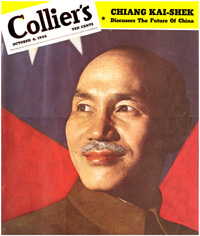
Collier's Magazine Articles
Theatre Arts Magazine Articles
Newsweek Articles
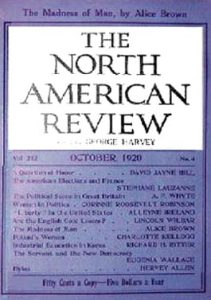
The North American Review Articles
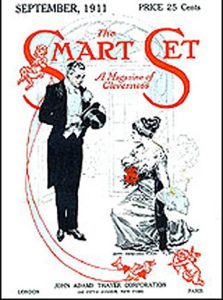
The Smart Set Articles
The American Legion Monthly Articles
Harper's Bazaar Magazine Articles
Freedom's Triumph Articles
Hearst's Sunday American Articles
People Today Magazine Articles
Vogue Magazine Articles
The Film Spectator Magazine Articles
Trench Warfare Articles
Click Magazine Articles
The National Park Service Articles
The Atlantic Monthly Articles
The American Legion Weekly Articles
Scribner's Magazine Articles
The Flapper Magazine Articles
Pic Magazine Articles
47 Magazine Articles
PM Tabloid Articles
The Saturday Review Articles
Creative Art Magazine Articles
Film Daily Magazine Articles
Outlook Magazine Articles
La Baionnette Articles
Stage Magazine Articles
Leslie's Magazine Articles
Vanity Fair Magazine Articles
The Saturday Evening Post Articles
Life Magazine Articles
The New York Times Articles
The Dial Magazine Articles
Direction Magazine Articles
G.I. Joe Magazine Articles
Sea Power Magazine Articles
Harper's Weekly Articles
Photoplay Magazine Articles
Touchstone Magazine Articles
Confederate Veteran Magazine Articles
Rob Wagner's Script Magazine Articles
Confidential Magazine Articles

Prohibition History

Learn about 1920s Prohibition with these old magazine articles. Find information on Prohibition in the 1920s.

The First two Years of Prohibition
(N.Y. Times Book Review, 1922)

After living under Prohibition for two years a journalist for The New York Times collected numerous facts and concerns on the matter of Prohibition and the political battles between Wets and Drys..


“Prohibition is undoubtedly the most drastic of all sumptuary laws. I have found it hard to believe that the men who drafted the Constitution ever supposed that it would contain a clause like the Eighteenth Amendment, which, when once inserted in the document, is practically irreversible.”

Prohibition and the High Seas
(Time Magazine, 1923)

“The Supreme Court ruled, by [a] vote of 7 to 2, that liquor is legal on U.S. ships outside the three-mile limit… The 18th Amendment and the Volstead Act apply only to actual United States territory.”

Advertisement

Use shortcode [oma_ad position="summary_top"] (or other position) in your theme or widgets to display OMA Promotions here.

The Political Landscape
(Pathfinder Magazine, 1920)

Weeks after the Prohibition Amendment came into effect, there was much scurrying about by all politicians on both the state and Federal levels – all looking for allies they could rely upon to either defend or overturn the legislation, depending upon their respective constituencies. The first question put to each representative was, “Are you wet or dry?” Shortly before this article went to press, Congress held a vote to repeal the Volstead Act: the repeal was rejected by a vote of 254 to 85.

Post-Repeal Fears

“The Eighteenth Amendment to the Federal Constitution made the criminal career pay – for the first time, perhaps, in the

The Damage of Prohibition
(The Smart Set, 1921)

Attached is an editorial that was co-authored by George Jean Nathan and H.L. Mencken from their reoccurring column in The Smart Set: Répétition Générale. This brief column sought to expose the damages inflicted upon the country by the guardians of the national virtue and their bastard children, Prohibition and the Volstead Act, which will primarily serve to promote the wide (though illegal) distribution of all the poorest distilled spirits concocted in the most remote frontiers of civilization.

Advertisement

Use shortcode [oma_ad position="summary_top"] (or other position) in your theme or widgets to display OMA Promotions here.

Prohibition Era Prisons Filled with Women
(American Legion Weekly, 1924)

Four and a half years into Prohibition, journalist Jack O’Donnell reported that there were as many as 25,000 women who had run-afoul of the law in an effort to earn a quick buck working for bootleggers:

They range in age from six to sixty. They are recruited from all ranks and stations of life – from the slums of New York’s lower East Side, exclusive homes of California, the pine clad hills of Tennessee, the wind-swept plains of Texas, the sacred precincts of exclusive Washington… Women in the bootleg game are becoming a great problem to law enforcement officials. Prohibition agents, state troopers and city police – gallant gentlemen all – hesitate to embarrass women by stopping their cars to inquire if they are carrying hooch. The bootleggers and smugglers are aware of this fact and take advantage of it.


Verily, so numerous were these lush lassies – the Federal Government saw fit to construct a prison compound in which to incarcerate them; you can read about that here…

Liquor Up
(New Outlook, 1935)

When The Noble Experiment ended in 1933 the United Sates was a far less sober nation than it was thirteen years earlier. Organized crime was stronger than ever before, more Americans were in prison then ever before and more Americans than ever before had developed an unfortunate taste for narcotics. If prohibition was undertaken in order to awaken Americans to the glories of sobriety, it was the opposite that came to pass – Americans had become a people that reveled in drink. The writer who penned this column recognized that with the demise of Prohibition arose a culture that was eagerly buying up

a flood of utensils, mechanisms, gadgets, devices and general accessories [that celebrated the] noble old art of public drinking…

Will Prohibition Create More Drug Users?
(The Literary Digest, 1922)

It stands to reason that when one addictive drug disappears, the users will seek another drug to serve as a substitute – and although Wikipedia stated that drug addiction rose 44.6% throughout the course of Prohibition, this 1922 article reported that (at least for the first three years of the law) narcotics use remained at it’s pre-1919 levels.


Click here to read about the problems of American drug addicts in the Forties…

Advertisement

Use shortcode [oma_ad position="summary_top"] (or other position) in your theme or widgets to display OMA Promotions here.

The Most Rebellious State
(The Literary Digest, 1921)

A 1921 report on the state that would not go dry: New York.

When New York wants Prohibition it will have it. So long as New York doesn’t want Prohibition there will be wholesale lawbreaking to avoid it.
– The New York World

Prohibition – Chicago Style
(The Chicagoan, 1927)

By 1927 it was common knowledge to every Chicago-based journalist that any reporter who wrote truthfully or seemed in any way outraged by the business practices of Al Capone – and others of his ilk, was likely to be found face down in Lake Michigan. The writer who penned this piece probably had that fact in mind while sitting at the typewriter; it is not an apology for the Chicago gangsters, it simply implies that they are established, the police are complicit – so get used to it. The writer then begins to explain how the bootlegging and distribution business operated – some of the up-and-coming hoods of the day must have been gratified to read that there was plenty of room for advancement within each organization.


A history of Chicago vaudeville can be read here…

Foreign Shipping
(Time Magazine, 1923)

In order to gain a secure footing on the issue of Prohibition law enforcement, a Federal law was passed seeing to it that no foreign ships within the three mile limit of the United States could ever keep alcohol or wine in their ship stores.

Advertisement

Use shortcode [oma_ad position="summary_top"] (or other position) in your theme or widgets to display OMA Promotions here.

Prohibition And Our Northern Neighbor
(Time Magazine, 1923)

When the architects of Prohibition were planning their dry fairyland they always knew that the weak spot in their scheme was going to be the vast borderlands that separate the United States from Canada and Mexico.
The attached article from 1923 outlines the concerns President Coolidge’s administration had regarding Prohibition law enforcement along the Canadian frontier.

Izzy Einstein: Prohibition Agent No. 1
(Literary Digest, 1922)

Here is an interview with Izzy Einstein (Isidor Einstein, 1880 – 1938): Prohibition agent and master of disguise:

A day with Izzy would make a chameleon blush for lack of variation…

He prepared himself to move in high, low and medium circles – on the excellent theory that the taste for liquor and the desire to sell it are no respecters of persons – and in all those circles he has since been whirling with rapidity and a quick-change adeptness.

Advertisement

Use shortcode [oma_ad position="summary_top"] (or other position) in your theme or widgets to display OMA Promotions here.

Farewell to Alcohol
(Literary Digest, 1919)

Published at a time when America stood so reluctantly on the doorstep of the Prohibition era, an unnamed editor at The Literary Digest compiled a number of quotes from numerous literary sources as if to illustrate the deep roots the Western world of belles-lettres has invested in the culture of alcohol.

Mabel Walker Willebrandt Takes On Prohibition
(Collier’s Magazine, 1924)

An article about Mabel Willebrandt (1889 – 1963), the Assistant Attorney General of the United States between the years 1921 through 1929, her tremendous successes in the past and her ambitions to hold fast in the enforcement of the Volstead Act:

‘Give me the authority and let me have my pick of 300 men and I’ll make this country as dry as it is humanly possible to get it,’ she said without the slightest trace of braggadocio. ‘There’s one way it can be done: get at the source of supply. I know them, I have no patience with this policy of going after the hip-pocket and speakeasy cases. That’s like trying to dry up the Atlantic ocean with a blotter.’

When Mrs. Willebrandt stepped down some seven years after this article went to press, she questioned the willingness of the nation’s law enforcement agencies to see the job through.

Advertisement

Use shortcode [oma_ad position="summary_top"] (or other position) in your theme or widgets to display OMA Promotions here.

Scroll to Top