





Interviews: 1912 – 1960

A Profile of George Lansbury
(Rob Wagner’s Script Magazine, 1945)

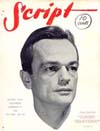
The attached article is disguised as a Hollywood fluff piece about actress Angela Lansbury (b. 1925), who at that time was about to earn her first and only Academy Award, but journalist Peter Churchill devoted the majority of column space to the life and career of her socialist grandfather George Lansbury (1859 – 1940), one time Member of Parliament and star of the British Labor Party:

Old George was born, bred, lived and died among the poor of London, and never had any money, and yes, that goes for the time he was a member of His Britanic Majesty’s Cabinet, too. But the folks down at the less desirable parts (we don’t talk of slums) of the Bow and Bromley district of London where he lived could tell you what a difference it made to have a Cabinet Minister for a neighbor.


Click here to read George Lansbury’s account of time he met Lenin…


You Might Also Want to Read an Article About Lady Nancy Astor, M.P.


Click here to read about an American woman who grew heartily sick of the socialists who loitered on every street corner during the Great Depression…

A Profile of George Lansbury
(Rob Wagner’s Script Magazine, 1945)

The attached article is disguised as a Hollywood fluff piece about actress Angela Lansbury (b. 1925), who at that time was about to earn her first and only Academy Award, but journalist Peter Churchill devoted the majority of column space to the life and career of her socialist grandfather George Lansbury (1859 – 1940), one time Member of Parliament and star of the British Labor Party:

Old George was born, bred, lived and died among the poor of London, and never had any money, and yes, that goes for the time he was a member of His Britanic Majesty’s Cabinet, too. But the folks down at the less desirable parts (we don’t talk of slums) of the Bow and Bromley district of London where he lived could tell you what a difference it made to have a Cabinet Minister for a neighbor.


Click here to read George Lansbury’s account of time he met Lenin…


You Might Also Want to Read an Article About Lady Nancy Astor, M.P.


Click here to read about an American woman who grew heartily sick of the socialists who loitered on every street corner during the Great Depression…

The Men of the ‘Enola Gay’
(Coronet Magazine, 1960)

This is a 1960 magazine interview that served to profile eleven of the top American military celebrities to emerge from the furnaces of the Second World War. These are the men of the ENOLA GAY, the B-29 bomber that incinerated Hiroshima in 1945. The interviews were conducted to reveal the deep feelings and assorted perceptions that had evolved in these men during the years since that day when they were thrust onto history’s stage; it was published at a time when the public was hearing false rumors that the ENOLA GAY crew had all gone slowly mad.

After 15 years the scene over Hiroshima is still sharp and clear to them, and though they disagree on details, they are unanimous on the point of whether they’d do the same things again.

Click here if you would like to read more articles about the Atomic Bomb.

Advertisement

Use shortcode [oma_ad position="summary_top"] (or other position) in your theme or widgets to display OMA Promotions here.

Ronald Reagan and Jane Wyman Divorce
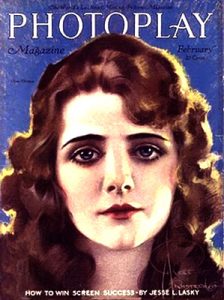
(Photoplay Magazine, 1948)

Attached is an article from a 1948 PHOTOPLAY MAGAZINE that illustrated quite clearly how much easier Ronald Reagan, the 40th President of the United States, had it with the Soviet Union, when compared to his failings with his first bride, Jane Wyman (1917 – 2007). The journalist, Gladys Hall, outlined nicely how busy the couple had been up to that time yet remarked that they had had a difficult time since the war ended, breaking-up and reconciling as many as three times. In 1948 Wyman, who had been married twice before, filed for divorce on charges of mental cruelty; the divorce was finalized in ’49 and the future president went on to meet Nancy Davis in 1951 (marrying in ’52); click here if you wish to read a 1951 article about that courtship.


Historically, Ronald Reagan was the first divorced man to ascend the office of the presidency. Shortly after his death, Wyman remarked:

America has lost a great president and a great, kind, and gentle man.


Click here to read about the Cold War prophet who believed that Kennan’s containment policy was not tough enough on the Soviets…


Click here read an article about Hollywood’s war on monogamy.

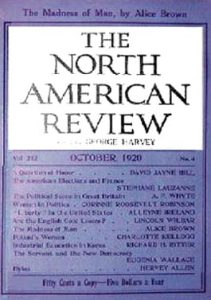
Elihu Root on Teddy Roosevelt
(The North American Review, 1919)

Eight months after the death of Theodore Roosevelt (1858 – 1919), the now defunct Rocky Mountain Club asked the former Secretary of State Elihu Root (1845 – 1937: Nobel Peace Prize 1912), to say a few words of remembrance regarding his old friend and colleague:

No one ever misunderstood what Theodore Roosevelt said. No one ever doubted what Theodore Roosevelt meant. No one ever doubted that what he said he believed, he intended and he would do. He was a man not of sentiment or expression but of feeling and of action. His proposals were always tied to action.


The historian Henry Steele Commager ranked Theodore Roosevelt at number 17 insofar as his impact on the American mind was concerned – click here to understand his reasoning…

The Crew Fifteen Years Later

This is a 1960 magazine interview that served to profile eleven of the top American military celebrities to emerge from

Advertisement

Use shortcode [oma_ad position="summary_top"] (or other position) in your theme or widgets to display OMA Promotions here.

Celebrity Wedding: Lucile Ball and Desi Arnaz
(Photoplay Magazine, 1941)

Attached you will find a small illustrated notice from the shameless gossips at PHOTOPLAY MAGAZINE reporting on the surprise 1941 wedding that took place between Lucile Ball and Desi Arnaz.

PHOTOPLAY acknowledged the nay-saying Hollywood romance prophets who predicted doom for the union of these two Rhumba Stars – but in the end, they were right: Lucy and Desi divorced in May of 1961.

Conversations With Pirandello
(Theatre Arts, 1928)

The back-and-forth that took place throughout a number of Florentine conversations between journalist Fredericka V. Blankner and Italian writer and drama theorist Luigi Pirandello (1867 – 1936: awarded Nobel Prize for Literature in 1934) were printed in her 1928 article, Pirandello, Paradox:

I see life, says Pirandello, as a tragedy…

A Child’s Interview With Charles Dickens
(The Literary Digest, 1912)

Kate Douglas Wiggins recalled her childhood train ride in the 1840’s in which she was able to have a chat with one of her favorite author, Charles Dickens (1812 – 1870), as he traveled the United States on a reading tour.

‘Of course, I do skip some of the very dull parts once and a while; not the short dull parts but the long ones.’ He laughed heartily. ‘Now that is something that I hear very little about’ he said’.

Advertisement

Use shortcode [oma_ad position="summary_top"] (or other position) in your theme or widgets to display OMA Promotions here.

Theda Bara: 1920s Sex Symbol
(Atlanta Georgian, 1917)

An enthusiastic review of the Hollywood silent film, The Tiger Womanstyle=border:none (1917) starring the first (but not the last) female sex symbolstyle=border:none of the silent era, Theda Bara (born Theodosia Burr Goodman; 1885-1955). This very brief review will give the reader a sense of how uneasily many men must have sat in their chairs when she was pictured on screen. Theda Bara retired in 1926, having worked in forty-four films.

Natalie Wood Arrives
(Coronet Magazine, 1960)

One of the first profiles of Hollywood beauty and former child star Natalie Wood (1938 – 1981).

The journalist went into some detail explaining how she was discovered at the age of six by the director Irving Pichel (1891 – 1954) and how it all steadily snowballed into eighteen years of semi-steady work that provided her with a invaluable Hollywood education (and subsequently creating a thoroughly out-of-control teenager).

At sixteen, Natalie co-starred with the late James Dean in Rebel Without a Cause, and the resulting Dean hysteria swept her forward with him… She cannot bear to be alone. She is full of reasonless fears. Of airplanes. Of snakes. Of swimming in the ocean.

The article appeared on the newsstands while she was shooting All The Fine Young Cannibals.

Karl J. Shapiro, Poet
(Yank Magazine, 1945)

&lIn 1944, Karl Jay Shapiro (1913 – 2000) was pulling in the big-bucks as a U.S. Army Private stationed in New Guinea, but unlike most of the khaki-clad Joes in at least a one hundred mile radius, Shapiro had two volumes of poetry under his belt (Person Place and Thingstyle=border:none and Place of Love) in addition to the memory of having been awarded a Guggenheim Fellowship. In this short interview, he explains what a poet’s concerns should be and offers some fine tips for younger poets to bare in mind. A year latter, while he was still in uniform, Shapiro would be awarded the 1945 Pulitzer Prize for poetry.

Advertisement

Use shortcode [oma_ad position="summary_top"] (or other position) in your theme or widgets to display OMA Promotions here.

Elihu Root Profiled
(Vanity Fair, 1915)

A photograph of Elihu Rootstyle=border:none (1845 – 1937) accompanies these two short paragraphs from the 1915 VANITY FAIR Hall of Fame, in which Root was praised as the ablest lawyer and diplomatic expert in the nation at that time. He is remembered today as the one U.S. Secretary of War (1899 to 1904) who was most instrumental in modernizing the American military in such ways that allowed it to meet the demands that would be meted out during the course of the bloody Twentieth Century.


This small notice is interesting primarily because it lets it be known that the United States was jockying for a spot in the European peace negotiations two years prior to even having troops in the field.Business ethics articles
Film Production
Magazines for kids
Singles
Single
W Magazine
Business ethics articles
Film Production
Magazines for kids
Singles
Single
W Magazine
Business ethics articles
Film Production
Magazines for kids
Singles
Single
W Magazine

The Cop Who Beat Mickey Cohen
(Coronet Magazine, 1960)

No matter how difficult the truth may seem, it cannot be ignored that between the years 1950 and 1966, criminals residing in the city of Los Angeles felt extremely ill-at-ease and entirely unsafe. This was due, in no small part, to the fact that the police chief of that city was a fellow by the name of William Big Bill Parker (1905 – 1966), a tireless officer who would not suffer hucksters, mobsters, thugs and dope heads with anywhere near the same level of patience enjoyed by today’s senior officers of the LAPD.


The count has been lost in the mists of time as to whether he frustrated more Mafiosi than civil libertarians or whether it was the other way around, but this six page article makes mention of the numerous controversial methods that the Chief deployed in his efforts to protect and serve.


Click here to read a news piece about a Hollywood blackmail scam that Micky Cohen had going in 1949.

Scroll to Top