Famine in the North-East
(Quick Magazine, 1950)
Quite often when Marxist economic theories are put into effect, tree bark becomes a sought-after delicacy…
A former fashion model, Bobbie Woodward, was outraged when she awoke that morning in 1947 to find that the hidden hairy hand that decides which direction the fashion winds will blow had given the nod to some snail-eating Frenchman who stood athwart fashion’s unspoken promise to continue the skirt hem’s march ever-upward. Wasting no time, she quickly marshaled other equally inclined women and formed The Little Below the Knee Clubs, which spread to forty-eight states (as well as Canada) in order to let the fashion establishment know that they would not be forced into wearing this fashion juggernaut known as The New Look.
The attached SEE MAGAZINE article serves as a photo-essay documenting the collective outrage of these women and their doomed crusade against Christian Dior.
One 1947 fashion critic believed that the New Look suffered from a split personality. Click here to read her review.
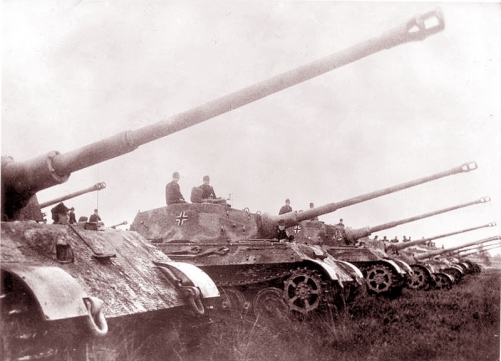
This article is illustrated with a photograph of the King Tiger tank and accompanied by some vital statistics and assorted observations that were documented by the U.S. Department of War and printed in one of their manuals in March of 1945:
The king Tiger is a tank designed essentially for defensive warfare or for breaking through strong lines of defense. It is unsuitable for rapid maneuver and highly mobile warfare because of its great weight and and low speed…The King Tiger virtually is invulnerable to frontal attack, but the flanks, which are less well protected, can be penetrated by Allied antitank weapons at most normal combat ranges.
The American answer to the Tiger was the M26 Pershing Tank; read about it here.
If you wish to read about the only German tank of World War I, click here.
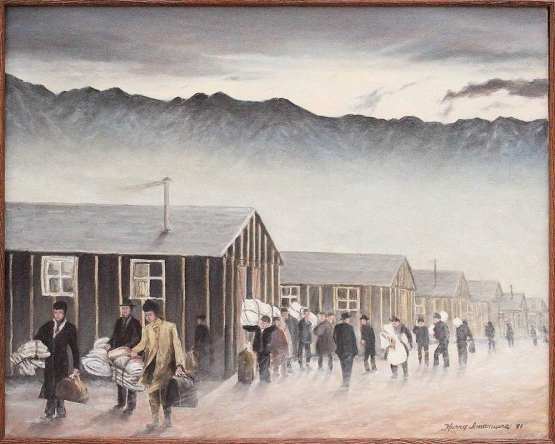
Economically, the departure of the [Japanese-Americans] presented no particular problem in the cities… But it was different in the country. [They] had owned or controlled 11,030 farms valued at $70,000,000. They had produced virtually all the artichokes, early cantaloupes, green peppers and late tomatoes, and most of the early asparagus. They owned or controlled the majority of wholesale produce markets and thousand of retail vegetable stands. When they disappeared, the flow of vegetables stopped. Retail prices went up. Many vegetables vanished entirely. There were rumors of a food shortage.
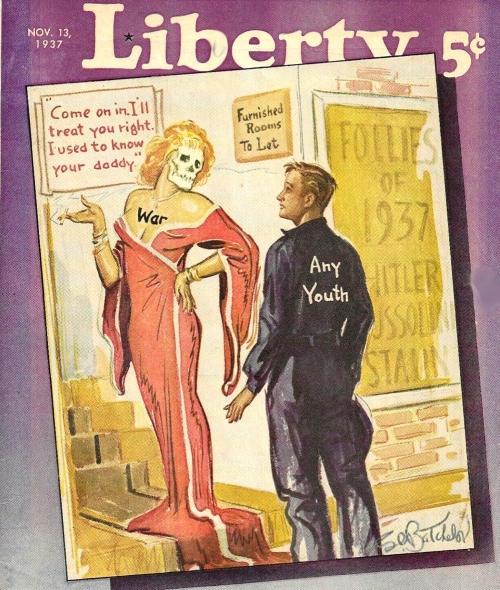
Writer Paul Gerard Smith (1894 – 1968) was a U.S. Marine in World War I and in 1938, when he saw that another war with Germany was simmering on the the front burner he put a Fresh ribbon of ink in the typewriter and wrote this editorial which he titled, An Open Letter to Boys of Military Age. His column is a cautionary tale advising the young men of his day to make their decisions thoughtfully before committing themselves to such a dangerous undertaking as war. Smith advised youth to examine the causes for the war, verify whose commercial interests will be served in victory and only if –
you find that America and the future of America is threatened – then go and kick Hell of the enemy, and God be with you.
Click here to read an article about the German veterans of W.W. I.
CLICK HERE… to read one man’s account of his struggle with shell shock…
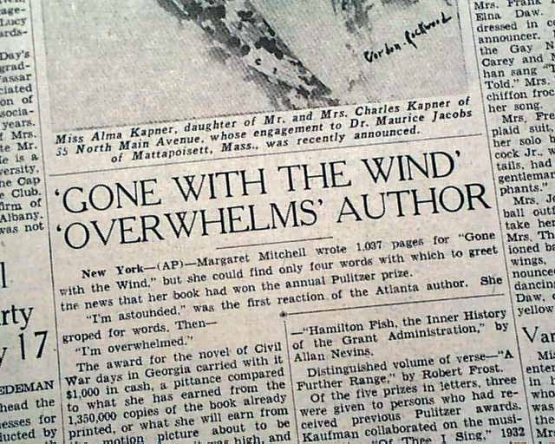
This well-read writer recalls the great novels leading up to the publication of Gone With The Wind (1936). Along the way, she lists some of the many foibles of The Great American Reading Public – in the end she recognizes that she shouldn’t have been surprised at all that the historic romance was an all-time-best-seller and that Margaret Mitchell was awarded a Pulitzer.
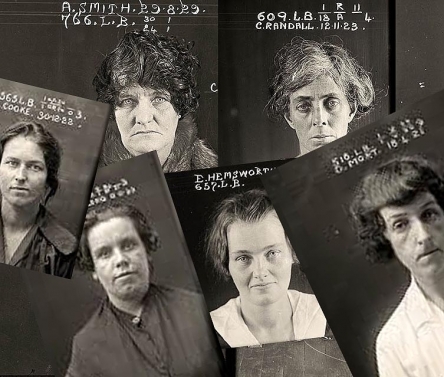
Four and a half years into Prohibition, journalist Jack O’Donnell reported that there were as many as 25,000 women who had run-afoul of the law in an effort to earn a quick buck working for bootleggers:
They range in age from six to sixty. They are recruited from all ranks and stations of life – from the slums of New York’s lower East Side, exclusive homes of California, the pine clad hills of Tennessee, the wind-swept plains of Texas, the sacred precincts of exclusive Washington… Women in the bootleg game are becoming a great problem to law enforcement officials. Prohibition agents, state troopers and city police – gallant gentlemen all – hesitate to embarrass women by stopping their cars to inquire if they are carrying hooch. The bootleggers and smugglers are aware of this fact and take advantage of it.
Verily, so numerous were these lush lassies – the Federal Government saw fit to construct a prison compound in which to incarcerate them; you can read about that here…
An article about Irving Izzy the Eel Cohen, Joseph Socks Lanza, Benjamin Bugsy Siegel, Jake Greasy Thumb Guzik and Albert Tick Tock Tannenbaum (among others) and how they earned such colorful names.
(This article was brought into the digital world by Matt the Mad Scanner Jacobsen)
An Al Capone article can be read here…
This is an article about the 1929 stock market crash – it was that one major cataclysmic event that ushered in the Great Depression (1929 – 1940). It all came crashing down on October 24, 1929 – the stocks offered at the New York Stock Exchange had lost 80% of their value; the day was immediately dubbed Black Thursday by all those who experienced it. When the sun rose that morning, the U.S. unemployment estimate stood at 3%; shortly afterward it soared to a staggering 24%.
In every town families had dropped from affluence into debt…Americans were soon to find themselves in an altered world which called for new adjustments, new ideas, new habits of thought, a new order of values. The Post-War Decade had come to its close. An era had ended. The era that followed was was the polar opposite of the one that had just gone down in flames: if the Twenties are remembered for confidence and prosperity, the Thirties was a decade of insecurity and want. The attached essay was penned by a popular author who knew the era well.
Yet, regardless of the horrors of The Crash, the United States was still an enormously wealthy nation…
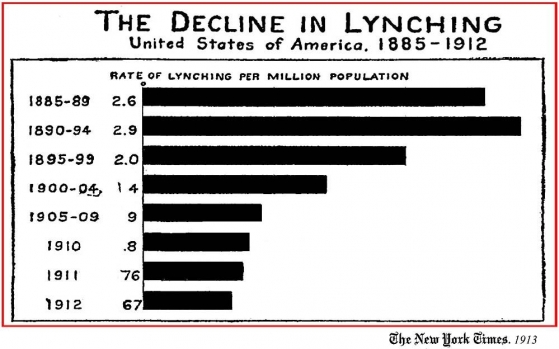
A report from The New York Times stated that, relative to the population, 1912 saw a drop in the number of lynchings. Included in this brief is a record of lynchings that occurred between the years 1885 – 1912.-from Amazon:
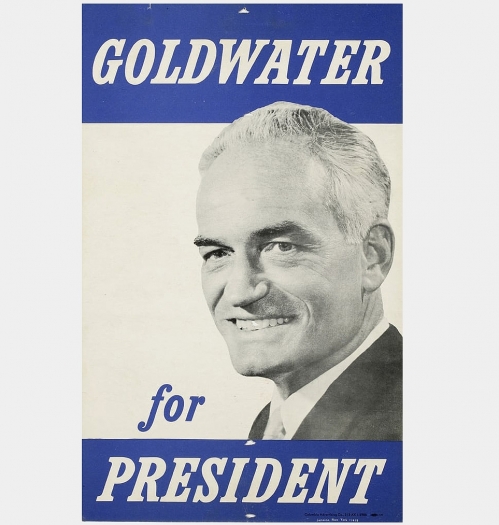
Barry Goldwater (1909 – 1998) was the Republican presidential candidate for 1964, and although he lost that contest by wide margins to Lyndon Johnson, his political philosophy has played a vital roll in shaping the direction of American conservative thought. William F. Buckley, Jr. explained why in this article.
In 1887 The New York Times reviewed the first english edition of Das Kapital by Karl Marx, click here to read it…
The War Labor Board has decreed ‘equal pay for equal work’ for women in war industry… George W. Taylor, WLB vice-chairman, wrote the decision and said that any other condition than that of pay equality was ‘not conducive to maximum production’.
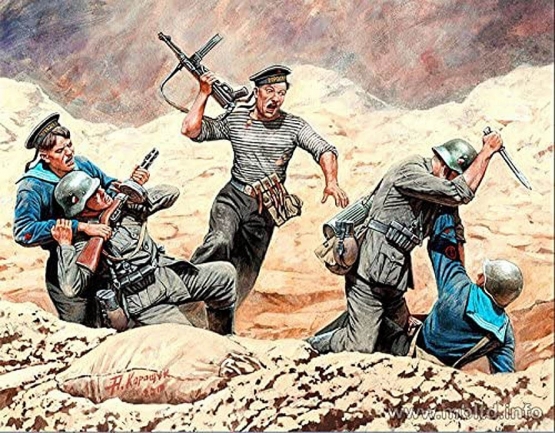
At Stalingrad the imitative appears to be slowly shifting into the hands of the Russians…The Russian attack was reported to be growing in vigor and German counterthrusts were repulsed with heavy losses.
The WASP program, for as such the Women Airforces Service Pilots became known, was begun in August, 1943. In addition to providing women fliers who could take over certain jobs and thereby release their brothers for front-line duty, the program was designed to see if women could serve as military pilots and, if so, to serve as a nucleus of an organization that could be rapidly expanded…The women who took part in the pilot program proved of great value to their country, flying almost every type of airplane used by the AAF, from the Thunderbolt fighter, to the C-54 transport, they flew enough miles to reach around the world 2,500 times at the Equator.
The WASPs were fortunate enough to have pioneering aviatrix Jacqueline Cochran (1906 – 1980) to serve at their helm.
Click here to read about the WAC truck drivers of the Second World War.
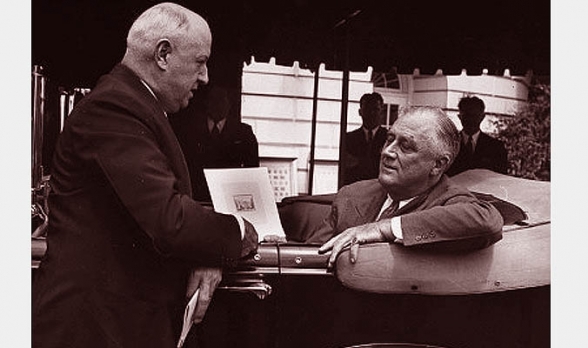
Attached is an article by James A. Farley (1888 – 1976), who in 1933 was appointed by F.D.R. to serve as both the Postmaster General as well as the Chairman of the Democratic National Committee. During the Thirties, Farley was also FDR’s go-to-guy in all matters involving politics on Capitol Hill, and he wrote the attached article two years after Roosevelt’s death in order to explain how the Court-packing scheme was received in Congress and how his relationship with FDR soon soured.
Boss, I asked him, why didn’t you advise the senators in advance that you were sending them the Court bill?
Jim, I just couldn’t, he answered earnestly. I didn’t want to have it get to the press prematurely…
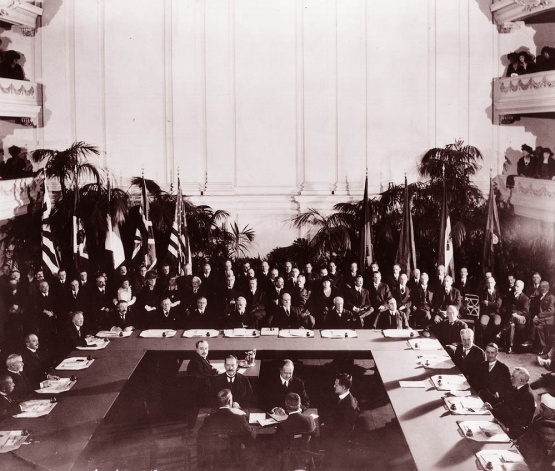
The first successful attempt in world history to limit armaments was marked for the scrap-heap on December 31, 1936, when Hirosi Saito, the slim and smiling Japanese Ambassador to the United States, bowed himself into the State Department building in Washington last Saturday and handed to Secretary Cordell Hull a document that the world has expecting for many months – Japan’s formal denunciation of the Washington Naval Treaty.
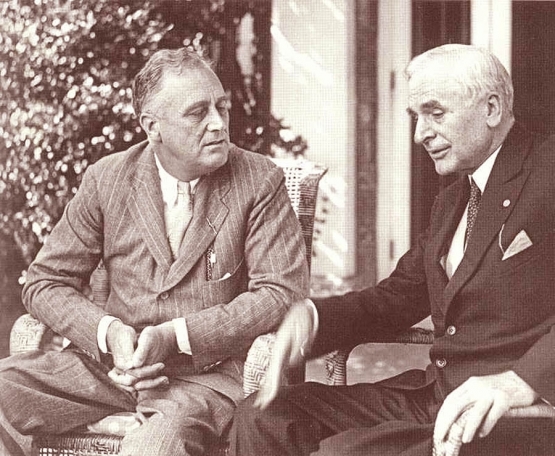
Click here to read about FDR’s Secretary of State, Cordell Hull.
This is a peculiar article about FDR’s Secretary of State, Cordell Hull (1871 – 1955); the man who penned the piece was so obsessed with Hull’s hillbilly upbringing that he didn’t get around to writing about the man himself until page six.