Author name: editor

FDR's Doctor Speaks (Collier's Magazine, 1946)
1946, Collier's Magazine, F.D.R.

FDR’s Doctor Speaks
(Collier’s Magazine, 1946)

Published ten months after the death of President Franklin Roosevelt, Vice-Admiral Ross T. McIntire, Surgeon General of the U.S. Navy, reminisced about Roosevelt’s illness and his observations of the man:

The Pearl Harbor attack put a pressure on the President that never lifted.


With the flower of American youth fighting and dying on land and sea, he looked on any sparing of himself as a betrayal…


From Amazon:


FDR’s Deadly Secretstyle=border:none

Farina (Hollywood Vagabond, 1927)
1927, Hollywood Vagabond, Silent Movie History

Farina
(Hollywood Vagabond, 1927)

Attached is a glowing review that praises the dramatic talents of a seven-year-old boy: Allen Clayton Hoskins (aka, Farina) – one of the few African-Americans to have been chosen to perform in the ensemble cast that made up the Our Gang comedies.

One of the most gifted thespians in the silent drama is Farina, the negro child actor whose facile expression has created no end of comment… Placed in the midst of a group of children, all of whom have been tutored over a period of several years in the intricacies of and politics of photoplay acting, Farina has created a high standard of achievement… this troupin’ Nubian has given the others of the gang plenty to aim at in the form of a thespic target.

Advertisement

Use shortcode [oma_ad position="summary_top"] (or other position) in your theme or widgets to display OMA Promotions here.

Stalin at 72 (Coronet Magazine, 1952)
1952, Coronet Magazine, Joseph Stalin

Stalin at 72
(Coronet Magazine, 1952)

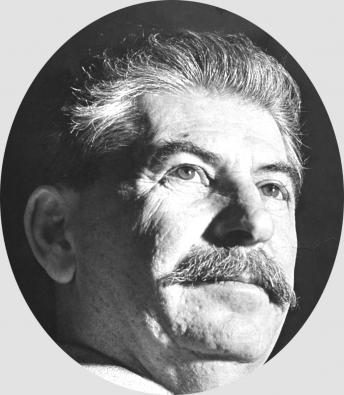
When the attached article hit the newsstands in May of 1952 Joseph Stalin had less than a year to live and like most totalitarians living on borrowed time, the heavily guarded diminutive dictator had his public appearances drastically reduced in number:

Today he lives in isolation unrivaled by any monarch since the Pharaohs. He must have forgotten what he himself once told the historian Emil Ludwig: ‘Any man on a high pinnacle is lost the instant he loses touch with the masses.’


The article has a fair amount of Stalin minutia you might find interesting.

Advertisement

Use shortcode [oma_ad position="summary_top"] (or other position) in your theme or widgets to display OMA Promotions here.

Advertisement

Use shortcode [oma_ad position="summary_top"] (or other position) in your theme or widgets to display OMA Promotions here.

Soviet Slave Labor Newspaper Article 1947 | Stalin's Gulog's
1947, America Magazine, Soviet History

Soviet Slave Labor Camps
(Pathfinder & America Magazines, 1947)

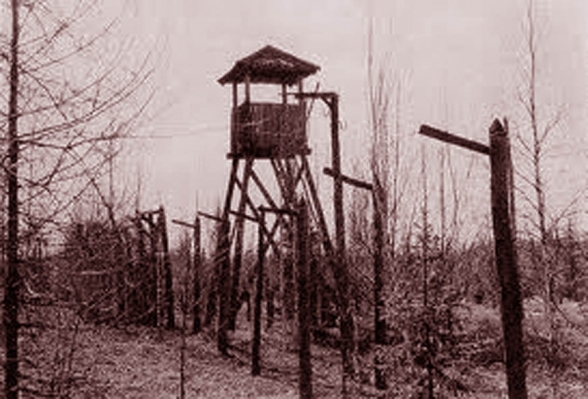
Although the true horrors of Stalin’s Russia would not be known until his death in 1953 (and then again with the opening of the Soviet Archives in 1990), bits and pieces were coming to the light as thousands of refugees and defectors swarmed the government offices of the Western Powers in search of asylum following the end of the Second World War. These small report from 1949 and 1947 let it be known how long the Soviet labor camps (Gulags) had been operational (since 1918), who was in them, how many different types of camps existed (there were three different varieties). As to the question concerning how many inmates were interred, there was no decisive count, somewhere between 14,000,000 to 20,000,000.

Since they came into being, the Soviet [forced labor] camps have swallowed more people, have exacted more victims, than all other camps – Hitler’s and others- together, and this lethal engine continues to operate full-blast…

Marlene Dietrich Did Her Bit (Yank Magazine, 1945)
1945, The USO, Yank Magazine

Marlene Dietrich Did Her Bit
(Yank Magazine, 1945)

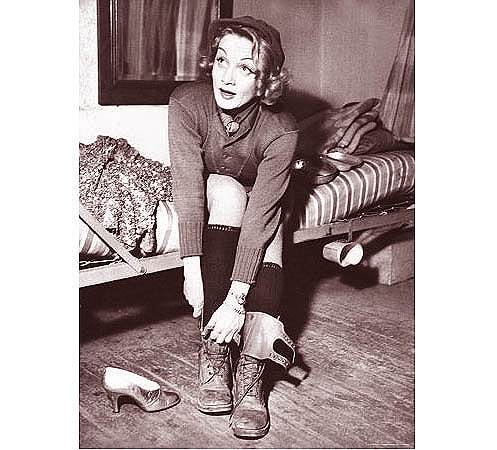
A post-game interview with Hollywood star Marlene Dietrich (1901 – 1992) concerning all the many places throughout the European Theater of Operations that she performed before Allied audiences, at times performing very close to the German front line.


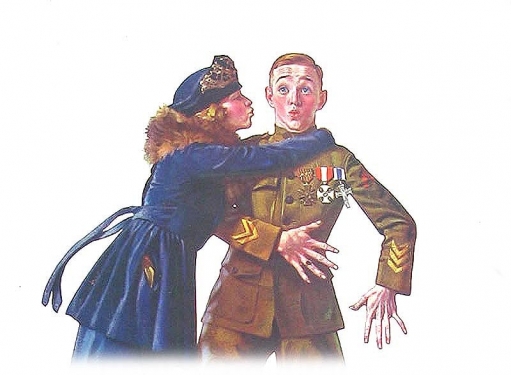
Marlene Dietrich’s only daughter, Maria Riva Dietrich (b. 1924), wrote that her mother, feeling a deep sense of pity and gratitude, made love to a very large number of front line soldiers.


Click here to read about the woman who entertained the U.S. troops during the First World War.

USO Camp Shows During WW II
1944, Newsweek, The USO

Riding The Fox-Hole Circuit
(Newsweek Magazine, 1944)

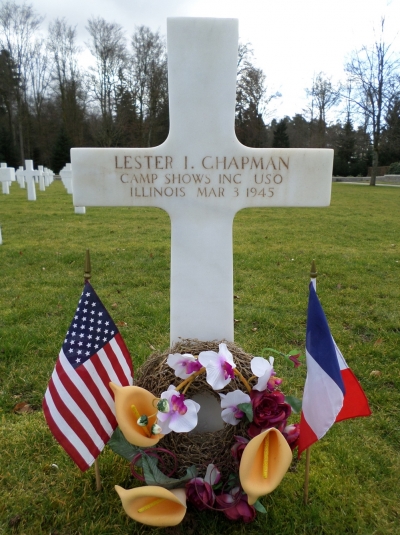
Together [these entertainers] constitute the vast composite known as USO-Camp Shows, Inc. Organized in November, 1941 as this war’s answer to the last one’s mistakes (too little which came too late to too few), Camp Shows see to it that as much entertainment as possible reaches as many soldiers as possible – in contrast to the fact that the last war produced only an Elsie Janis (You can read about her here)… The money to run Camp Shows comes from the National War Fund; the authority to use its services rests with the Army and Navy.

Advertisement

Use shortcode [oma_ad position="summary_top"] (or other position) in your theme or widgets to display OMA Promotions here.

When General Eisenhower Came Home (Yank Magazine, 1945)
1945, General Eisenhower, Yank Magazine

When General Eisenhower Came Home
(Yank Magazine, 1945)

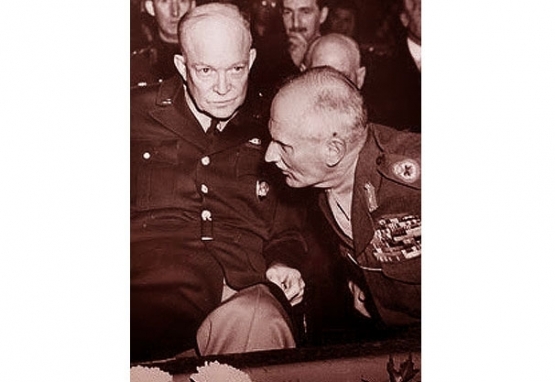
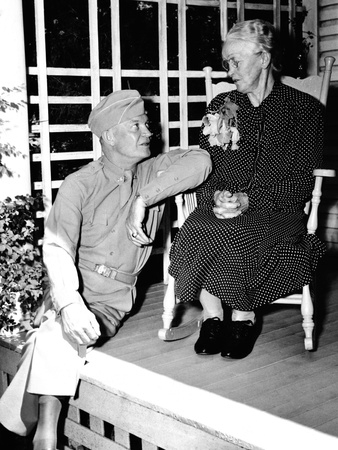
The General had seen welcomes in Paris and London and Washington and New York, but he got the warmest reception of all when he hit his boyhood home town, little Abilene, Kansas.

As soon as the Eisenhower party was seated a gun boomed and the parade began. It wasn’t a military parade. It told the story of a barefoot boy’s rise from fishing jaunts on nearby Mud Creek to command of the Allied expeditionary force that defeated Fascism in Western Europe.


In 1944, a class of sixth graders wrote General Eisenhower and asked him how they can help in the war effort; click here to read his response…

Bernie Sanders Socialist Birthplace | What was Brooklyn Like During WW2
1945, Home Front, Yank Magazine

Wartime Brooklyn
(Yank Magazine, 1945)

A four page article regarding the city of Brooklyn, New York during the Second World War – make no mistake about it: this is the Brooklyn that Senator Bernie Sanders inherited – it isn’t far from the N.Y. borough named Queens, where numerous Communists resided.


• Almost half the penicillin that was produced in the United States came out of Brooklyn

• Forty Five percent of of the Brooklyn war plants were awarded the Army and Navy E or the M from the Maritime Services

• Throughout the war, the ranks of the U.S. Armed Services were swollen with Brooklyn sons and daughters, 280,000 strong.


Click here to read an article about one of New York’s greatest mayors: Fiorello LaGuardia.

Advertisement

Use shortcode [oma_ad position="summary_top"] (or other position) in your theme or widgets to display OMA Promotions here.

The Death of Diana Barrymore (On the QT, 1960)
1960, Diana Barrymore, On the QT

The Death of Diana Barrymore
(On the QT, 1960)

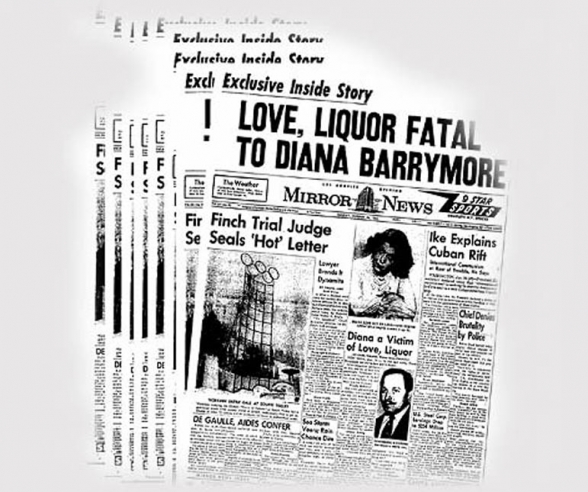
A sad article about the suicide-by-bottle choice that was made by actress Diana Barrymore in 1960.


As children, both John jr. and Diana were largely ignored by their famous father, John Barrymore, who preferred to simply pay their bills from afar and see them as rarely as possible. Young John, having abandoned all hope of ever playing a meaningful roll in the life of his father and seeing that the U.S. Navy valued him more, lied about his age and joined the Navy at 13. In later years he was much like his sister – he lead a life devoid of much meaning and drifted off into the bottle.

Literary Rebellion 1920 VANITY FAIR | Edmund Wilson 1920s Literary Criticism
1920, Twentieth Century Writers, Vanity Fair Hall of Fame

In Defense of Literary Rebels
(Vanity Fair, 1920)

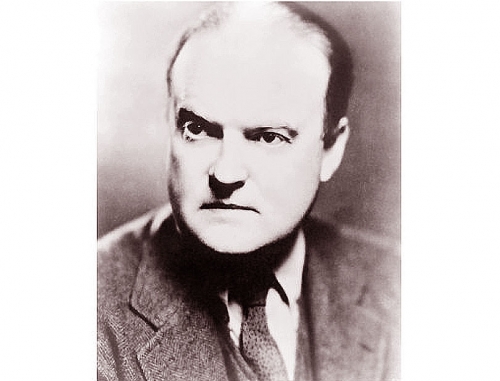
Literary critic Edmund Wilson (1895 – 1972) was a big part of the intellectual world that existed in New York throughout much of the Twenties through the Fifties. His reviews could be found in a number of magazines such as VANITY FAIR, THE DIAL and THE NEW REPUBLIC. Wilson is remembered for championing many of the younger poets that we still read to this day and in this review, Bunny Wilson celebrated the new poetic form that the modern era had created: free verse. Good words can be read on behalf of the poetry of Carl Sandburg and Amy Lowell.

Military Training During the Korean War
1950, Pathfinder Magazine, The Korean War

Stepping-Up The Training
(Pathfinder Magazine, 1950)

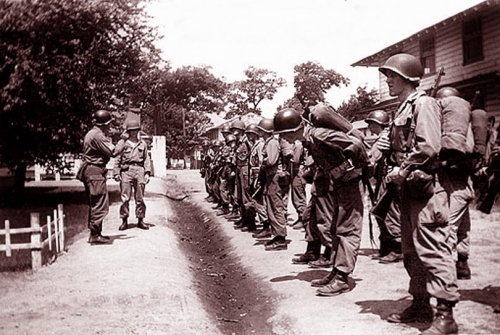
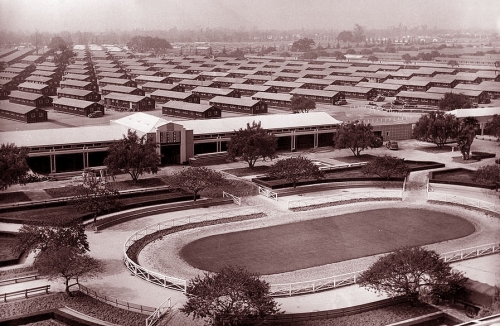
By the autumn of 1950 it became clear to the old hands at the Pentagon that the police action on the Korean peninsula was beginning to resemble a real war. With that in mind, thirteen military training camps that had been been barren for the past five years, were dusted off in order that they might once more begin training Americans for war. Two weeks later China threw her hat in the ring.


During this same period, the U.S. Navy took 62 ships that had been mothballed in order to launch the Inchon Landings…

Advertisement

Use shortcode [oma_ad position="summary_top"] (or other position) in your theme or widgets to display OMA Promotions here.

Scroll to Top