
Author name: editor

Those Who Inspired Mark Twain (American Review of Reviews, 1910)
1910, The American Review of Reviews, Twentieth Century Writers

Those Who Inspired Mark Twain
(American Review of Reviews, 1910)

This is a brief look at the up-bringing of Mark Twain (born Samuel Langhorne Clemens, 1835 – 1910), accompanied by two 1910 magazine photographs of the people who inspired the writer to create Becky Thatcher and Huckleberry Finn. Also interviewed was the the man who instructed the author in the skills required to pilot the Mississippi River.


The historian Henry Steele Commager chose to rank Mark Twain at number 4 insofar as his impact on the American mind was concerned – click here to understand his reasoning (does this still hold true?)…

Jeanette Rankin First Elected Congresswoman 1916 | First Women To Serve In The House And Senate
1938, Pathfinder Magazine, Women's Suffrage

The First Congresswomen
(Pathfinder Magazine, 1938)

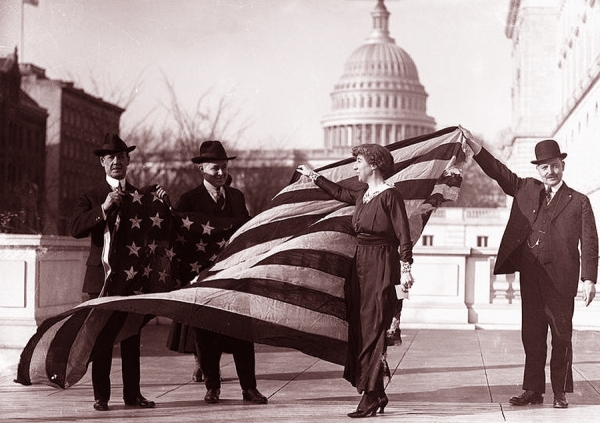
This column recalls the earliest women to serve in the House and Senate (although the tenure of Senator Rebecca Latimer Felton was oddly excluded):

In 1916, the first Congresswoman was elected. She was Miss Jeannette Rankin (1880 – 1973), a Republican from Montana. On her first day in the House, war was declared; she voted against it. The next Congress had no women.

Advertisement

Use shortcode [oma_ad position="summary_top"] (or other position) in your theme or widgets to display OMA Promotions here.

Wide-Eyed and Fresh Off the Boat (Outing Magazine, 1917)
1917, Letters, Outing Magazine

Wide-Eyed and Fresh Off the Boat
(Outing Magazine, 1917)

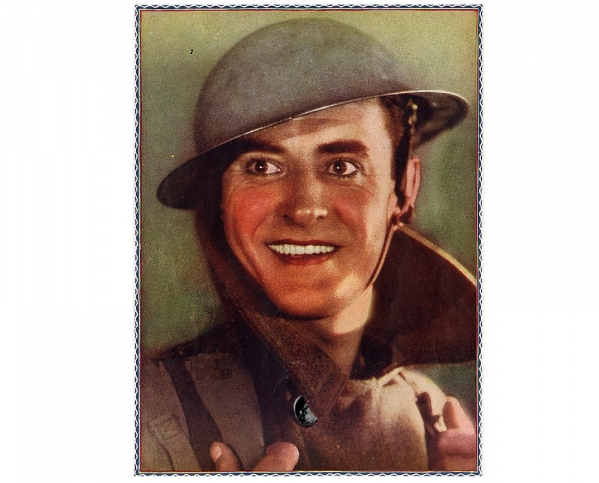
Some observations of the earliest Doughboy experiences were recorded in a letter home by this anonymous A.E.F. lieutenant during the Summer of 1917. He was unusually interested in the French architecture and rustic culture that surrounded him but also noted the deeply depressed German P.O.W. laborers, his food and the different treatment between officers and men.

Letters from the Dying (The Atlantic Monthly, 1923)
1923, Letters, The Atlantic Monthly

Letters from the Dying
(The Atlantic Monthly, 1923)

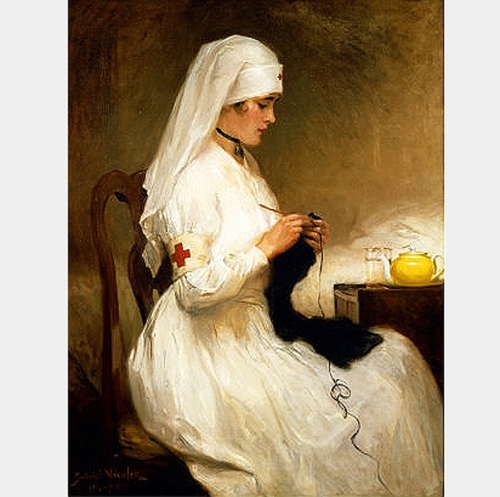
Printed five years after the war, an American nurse published these letters that were dictated to her in France by a handful of dying American soldiers; equally moving were the grateful responses she received months later from their recipients:

I am glad and thank God he had such a quiet, peaceful death. It is a very hard thing for a mother to realize she cannot be with [her son] in his last moments…I am proud to give up my only boy to his country, and that alone is a great consolation.

This is just a segment from a longer article; to read the six page memoir in it’s entirety, click here.

Click here for clip art depicting the nurses of World War One.

Advertisement

Use shortcode [oma_ad position="summary_top"] (or other position) in your theme or widgets to display OMA Promotions here.

Post-War Diary (Atlantic Monthly, 1928)
1928, Aftermath (WWI), The Atlantic Monthly

Post-War Diary
(Atlantic Monthly, 1928)

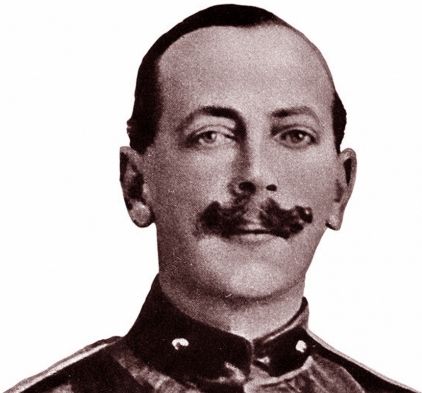
Printed posthumously, the attached article was written by British Lieutenant Colonel Charles A Court Repington (1858 – 1925) as he recalled his conversations with French Field Marshals Ferdinand Foch (1851-1929), Joseph Joffre (1852 – 1931) and a number of other French statesmen about the First World War during a series of chats that took place in the autumn 1924.

Historical Development of Social Studies in the USA | Social Studies Preferred To History | History of Social Studies
1933, Education, New Outlook Magazine

The Case For Social Studies
(New Outlook Magazine, 1933)

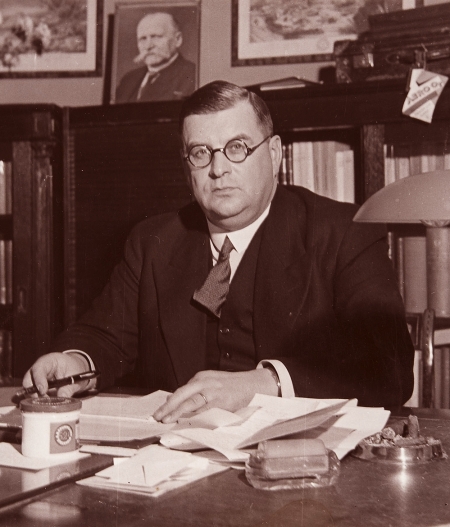
Although the author of this article, educator Cedric Fowler, does not offer a name for the subject he is proposing, it will not take you very long to recognize it as social studies. Fowler argued that the text books available at that time were more suited to the Nineteenth Century than the tumultuous Thirties, ignoring all the various hot topics of the day that would have made subjects such as history, geography and civics come alive for those students who were enrolled at the time of the Great Depression.

Life has become more complex for young Americans since the time of their fathers and grandfathers, and educational method has become more complex and more comprehensive with it… The work of Dewey, Thorndike and a score of other authorities has liberated the schoolroom from its stuffy atmosphere, has made it possible for it to become an ante-room to adult life.

Advertisement

Use shortcode [oma_ad position="summary_top"] (or other position) in your theme or widgets to display OMA Promotions here.

1944 German Fate
1944, The United States News, World War Two

Anticipating Germany’s Collapse
(United States News, 1944)

Taking into consideration the state of Germany’s military forces on land, air and sea, as well as the fragile state of the German populace after three years of steady bombardment, this 1944 NEWSWEEK MAGAZINE article concluded that Germany’s end was nigh – really, really nigh:

Thus on the face of it, Germany’s situation is desperate. She is encircled by powerful nations that are allied against her. Her chance of creating dissension to split those allies is gone. She is being beaten on every front and in every phase of the fighting. Her last chance to win has disappeared.


Germany would fight on for another sixteen months.

The Noises of Battle (The Cambridge Magazine, 1916)
1916, Letters, The Cambridge Magazine

The Noises of Battle
(The Cambridge Magazine, 1916)

This letter is very short and was composed by a German soldier who is simply identified as a socialist. Writing to his wife from the war-torn Eastern European front in Moldavia, he describes what the man-made Hell of industrial war was like – the gas shells, the grenades, the ceaseless rattle of machine guns and the never ending groans of the wounded. The soldier concludes that if only the kings who were responsible for the war could witness this carnage for only fifteen minutes, then surely the war would end.


Click here to read about the foreign-born soldiers who served in the American Army of the First World War.

The Discovery of Audrey Hepburn (People Today, 1952)
1952, Hollywood History, People Today Magazine

The Discovery of Audrey Hepburn
(People Today, 1952)

American audiences came to know Audrey Hepburn (1929 – 1993) when she was teamed up with Gregory Peck for the 1953 William Wyler production Roman Holiday (Paramount) – but the king makers of Hollywood sat up and took notice of her a year earlier, when she appeared in the European comedy Monte Carlo Baby (briefly reviewed herein). This movie was pretty quickly forgotten – and today Monte Carlo Baby cannot be found on DVD or cassette, and the film’s producer, Ray Ventura (1908 – 1979), is primarily remembered for his talents as a jazz pianist.

Advertisement

Use shortcode [oma_ad position="summary_top"] (or other position) in your theme or widgets to display OMA Promotions here.

American Dominance in 1930s Film (Stage Magazine, 1939)
1939, Hollywood History, Stage Magazine

American Dominance in 1930s Film
(Stage Magazine, 1939)

The editors of STAGE MAGAZINE were dumbfounded when they considered that just ten years after audiences got an earful from the first sound movies, the most consistent characteristic to have been maintained throughout that decade was the box-office dominance of American movie stars, directors and writers. After naming the most prominent of 1930s U.S. movie stars the author declares with certainty that this could not have been an accident.

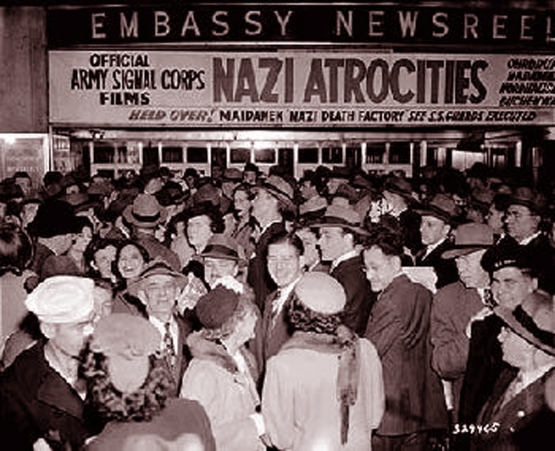
When the U.S. Home Front Found Out About Nazi Atrocities (Yank Magazine, 1945)
1945, Death Camps, Yank Magazine

When the U.S. Home Front Found Out About Nazi Atrocities
(Yank Magazine, 1945)

The editors of YANK reported that the week of VE Day the

…first-run movie houses showed films of a kind seldom if ever seen by American audiences. The films, made for the most part by the U.S. Army signal corps, showed piles of human bones, mass graves and beaten, starving men who looked more like corpses than human beings…Homefronters sat in shocked silence, broken now and then in by low gasps.

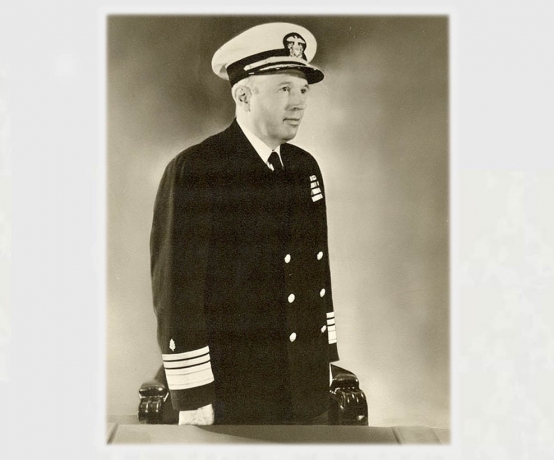
FDR's Doctor Speaks (Collier's Magazine, 1946)
1946, Collier's Magazine, F.D.R.

FDR’s Doctor Speaks
(Collier’s Magazine, 1946)

Published ten months after the death of President Franklin Roosevelt, Vice-Admiral Ross T. McIntire, Surgeon General of the U.S. Navy, reminisced about Roosevelt’s illness and his observations of the man:

The Pearl Harbor attack put a pressure on the President that never lifted.


With the flower of American youth fighting and dying on land and sea, he looked on any sparing of himself as a betrayal…


From Amazon:


FDR’s Deadly Secretstyle=border:none

Advertisement

Use shortcode [oma_ad position="summary_top"] (or other position) in your theme or widgets to display OMA Promotions here.

Farina (Hollywood Vagabond, 1927)
1927, Hollywood Vagabond, Silent Movie History

Farina
(Hollywood Vagabond, 1927)

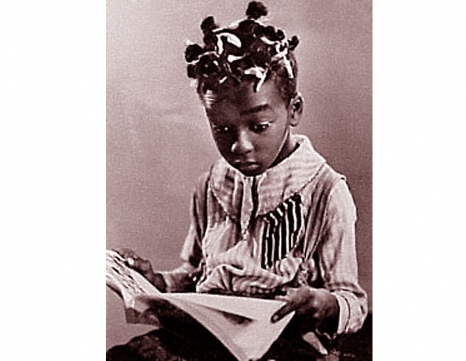
Attached is a glowing review that praises the dramatic talents of a seven-year-old boy: Allen Clayton Hoskins (aka, Farina) – one of the few African-Americans to have been chosen to perform in the ensemble cast that made up the Our Gang comedies.

One of the most gifted thespians in the silent drama is Farina, the negro child actor whose facile expression has created no end of comment… Placed in the midst of a group of children, all of whom have been tutored over a period of several years in the intricacies of and politics of photoplay acting, Farina has created a high standard of achievement… this troupin’ Nubian has given the others of the gang plenty to aim at in the form of a thespic target.

Advertisement

Use shortcode [oma_ad position="summary_top"] (or other position) in your theme or widgets to display OMA Promotions here.

Scroll to Top