Author name: editor

Dr. Walter Gross and the Office of Racial Policy (Collier's Magazine, 1944)
1944, Collier's Magazine, The Nazis

Dr. Walter Gross and the Office of Racial Policy
(Collier’s Magazine, 1944)

Although he may not be very well known outside Germany, few men rank higher in the Nazi regime than Doctor Walter Gross (1904 – 1945). As head of the Office of Racial Policy, he is Adolf Hitler’s expert on breeding, riding herd on the biological urge, and even deciding what children may be brought into the world.


Written by George Creel (1876 – 1953), this single page article outlines how this quack doctor was responsible for the enslavement of women sex slaves who were pressed into submission from all the conquered nations of Europe.


Gross killed himself at the end of the war.


Click here to read about the origins of Fascist thought…

Nazi Art Criticism (Art Digest, 1936)
1936, The Art Digest, The Nazis

Nazi Art Criticism
(Art Digest, 1936)

A few vile words concerning modernism and Jewish artists by a forgotten Nazi art critic named L.A. Schutze:

The only one who has created an art entirely born out of the Talmudistic spirit is Picasso, heir of Arabian decorative artists or the Jewish cabalists of Spain.


Click here to read about the contempt that the Nazis had for Modern Art.

1930s Nazi Films | Nazi Made Movies | Joseph Goebbels as Movie Producer
1938, Ken Magazine, The Nazis

The Nazi Hollywood
(Ken Magazine, 1938)

Written by a fellow who in later years would write a good deal about propaganda films, this article is amusing for the way it reported the total lack of humor and curiosity that Nazi Propaganda Minister Joseph Goebbels (1897 – 1945) brought to the subject of film production; how they totally killed the existing German film industry and made film criticism illegal.


Read an article about the banning of all foreign artists in Hitler’s Germany…

Advertisement

Use shortcode [oma_ad position="summary_top"] (or other position) in your theme or widgets to display OMA Promotions here.

Jokes in Germany (Coronet Magazine, 1939)
1939, Coronet Magazine, The Nazis

Jokes in Germany
(Coronet Magazine, 1939)

Many of the jokes that are at present circulating the land of Hitleria cannot be told quite openly. They are whispered among friends. The traffic is great and much whispering going on. Many people want to laugh. It seems a necessary release…


– so observed one journalist fresh from his whirlwind journey through Hitler’s Germany. He could not help but notice how painfully neurotic the Reich leadership was of being the object of Teutonic derision. This article is about the underground society of whispered jokes that the Nazis created; the journalist was good enough to write-up a few so that the free-world could take place in the chuckle-fest (some were lost in translation).

Assessing the Late-War German Soldier (U.S. Dept. of War, 1945)
1945, Compiled by the U.S. Dept. of War, German Army Studies

Assessing the Late-War German Soldier
(U.S. Dept. of War, 1945)

The German soldier is one of several different types depending on whether he is a veteran of 4 or 5 years, or a new recruit. The veteran of many fronts and many retreats is a prematurely aged, war weary cynic, either discouraged and disillusioned or too stupefied to have any thought of his own…The new recruit, except in some crack SS units, is either too young or too old and often in poor health.

Advertisement

Use shortcode [oma_ad position="summary_top"] (or other position) in your theme or widgets to display OMA Promotions here.

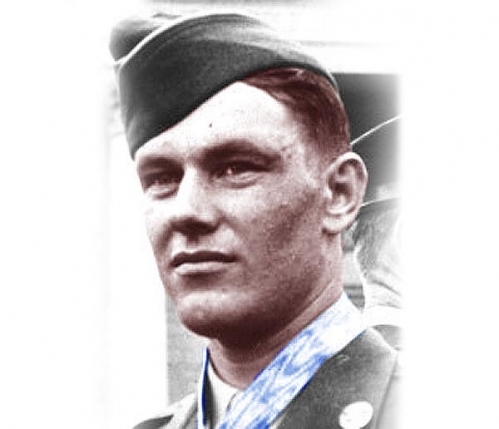
Robert D Maxwell Medal of Honor | Medal of Honor Recipients W.W. II
1945, Collier's Magazine, Medal of Honor Recipients

Medal of Honor Recipient Robert D. Maxwell
(Collier’s, 1945)

This 1945 article by George Creel reported on the brave and selfless acts of Robert D. Maxwell (1920 – 2019):

COURAGE, like everything else, has its kinds of degrees. No one would detract a hair’s weight from the bravery of the firing line, but in battle there is the heartening touch of a comrade’s shoulder, the excitement of the charge, and the 50-50 chance of coming out alive. All these aids are lacking in those epic instances where men make death a deliberate choice…one example that stands out for sheer drama and sustained fortitude is that of Technician Fifth Grade Robert D. Maxwell, who covered a German hand grenade with his body, smothering the explosion that would have killed every member of his group.


Maxwell survived his wounds; seven months later he was awarded the Medal of Honor for his courage. He currently reside in Oregon.

The Richest Tribe (Literary Digest, 1936)
1936, First Nations, The Literary Digest

The Richest Tribe
(Literary Digest, 1936)

Living, as we do, in the age of Indian gaming casinos it seems rather quaint to talk about which tribe was considered the richest of them all back in the Thirties. Nonetheless, this 1936 article tells the tale of the Osage Indians (Missouri) and the great wealth that was thrust upon them when oil was discovered on their tribal lands:

In 1935, some 3,500 Osage Indians proved their right to the title of wealthiest Indian tribe in America by drawing an income of $5,000,000 from their oil and gas leases…The members of Chief Fred Lookout’s tribe were not stingy with their new wealth. They bought clothes, big cars lavishly ornate homes…

Advertisement

Use shortcode [oma_ad position="summary_top"] (or other position) in your theme or widgets to display OMA Promotions here.

The DUKWs of W.W. II (Yank Magazine, 1944)
1944, Weapons and Inventions, Yank Magazine

The DUKWs of W.W. II
(Yank Magazine, 1944)

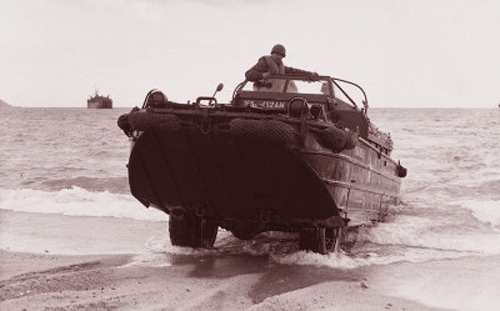
The American Army’s amphibious vehicles called the DUKWs (Ducks) were first manufactured by General Motors in 1942 and were issued to both the U.S. Army and Marine Corps. 2,000 were shipped to the British, over five hundred found their way to the Australian military and 535 were passed along to the Soviet Army. They have earned their sea legs a thousand times over and have even ventured across the English Channel.

The attached YANK MAGAZINE article was one of the first articles to have ever been written about them, and quite ironically plays-down the revolutionary nature of the invention:

Japs realize the value of the DUCKs. They once issued a communique saying their bombers sank ‘one 5,000-ton ship and one amphibious truck.

A Rug by Raymond Loewy (Quick Magazine, 1953)
1953, Design, Quick Magazine

A Rug by Raymond Loewy
(Quick Magazine, 1953)

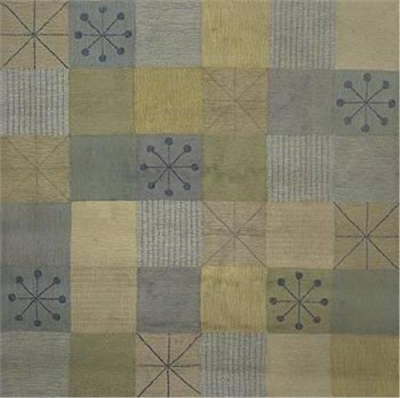
A small notice from a news digest featured a photograph of a carpet that was designed by famed industrial designer Raymond Loewy (1893 – 1986) in the early Fifties

Something new in room dividers are area rugs designed by Raymond Loewy to define areas of activity within a room; dining sections, TV corners for example. Sophisticated but adaptable to almost all interiors, the new rugs come in such decorator colors as pink, lime green [and] turquoise.

Advertisement

Use shortcode [oma_ad position="summary_top"] (or other position) in your theme or widgets to display OMA Promotions here.

American Prosperity During the Great Depression | A Study of American Wealth 1929 - 1932
1933, New Outlook Magazine, The Great Depression

How Poor Was America?
(New Outlook Magazine, 1933)

Economist Robert R. Doane (1889 – 1961) presented numerous charts and figures amassed between 1929 through 1932 to argue that America was still a wealthy nation despite the destruction wrought by the Great Depression:

In 1929 the United States held 44.6 percent of the total wealth of the world. In 1932 that proportion has increased to almost 50 percent. We still have half the banking-power of the world. We still have half the income. In all of the items of economic importance and efficiency, the United States still stands supreme.

Advertisement

Use shortcode [oma_ad position="summary_top"] (or other position) in your theme or widgets to display OMA Promotions here.

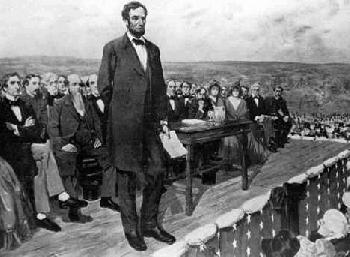
A Study of the Gettysburg Address (The Outlook, 1913)
1913, Abraham Lincoln

A Study of the Gettysburg Address
(The Outlook, 1913)

Jesse W. Weik (1857 – 1930) was one of the earliest of Lincoln scholars.

In preparation for Herndon and Weik’s Life of Lincolnstyle=border:none (1889), he visited every place in Illinois, Indiana and Kentucky where Abraham Lincoln lived; examined the records of all the lawsuits in which Lincoln was engaged, and talked to everyone he could find who knew Lincoln. For thirty years and more he has made a special study of the sources, written and unwritten, of the personal history of President Lincoln.
1917, The Literary Digest

Foolhardiness on the Western Front
(Literary Digest, 1917)

The manner in which front-line soldiers in a war are able to stave off boredom has been the topic of many letters and memoirs throughout the centuries, and the attached article will show you how one Frenchman addressed the issue – it is a seldom seen black and white photograph depicting an acrobatic stunt being performed above the parapet and in plain view of German snipers.

Advertisement

Use shortcode [oma_ad position="summary_top"] (or other position) in your theme or widgets to display OMA Promotions here.

Scroll to Top