Author name: editor

Hitler's Last Days in Power (Yank Magazine, 1945)
1945, Adolf Hitler, Yank Magazine

Hitler’s Last Days in Power
(Yank Magazine, 1945)

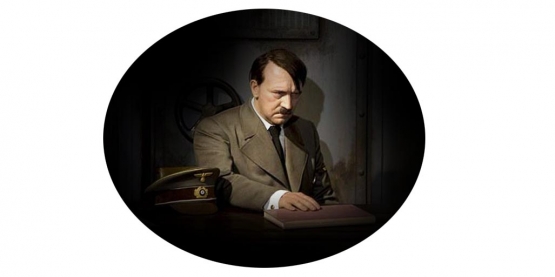
YANK reporter Harry Sions listened in as sixteen Nazi officials, having known and worked with Hitler in various capacities through the years, sat back and recalled the events of Hitler’s last 365 days in power. Much was said regarding the failed assassination attempt (project Valkyrie) but some of the more interesting content refers to the closing days in the bunker with Bormann, Keitel and Jodl.


It was reported that shortly after he took up residence in the bunker, Hitler’s hair and mustache was transformed to a bright white, yet he was not the only man in Europe in need of hair dye; click here about these other fellows.
Some Trivial Facts About Hitler (Yank Magazine, 1945)
1945, Adolf Hitler, Yank Magazine

Some Trivial Facts About Hitler
(Yank Magazine, 1945)

Assorted observations from the man who operated Hitler’s elevator at Berchtesgaden can be found herein.


What you won’t find herein is a piece of Hitler trivia that I just picked-up. The story goes that the American comedian Bob Hope was given a tour of Hitler’s bunker shortly after the German surrender. Accompanied by a U.S. colonel, the two men brought lots of American cigarette cartons with them to bribe the Russian guards (the bunker was in the Soviet sector); Hope walked away with the enormous banner that was draped in the dictator’s lounge, as well as the handle off of Hitler’s toilet. The toilet handle has remained among the comedian’s possessions in Toluca Lake, California ever since.


Read about the earliest post-war sightings of Hitler: 1945-1955

Rumors of Hitler's Favorite American Comedy Team? (Photoplay Magazine, 1937)
1937, Adolf Hitler, Photoplay Magazine

Rumors of Hitler’s Favorite American Comedy Team?
(Photoplay Magazine, 1937)

The amiable Cornelius Vanderbilt, Jr. penned the attached article and it was written at a time in his life when the man simply had to know what movie was the preferred darling above all others for the hideous Adolf Hitler – so after some hard-charging investigative journalism, he discovered that Hitler would scurry-away with Herman Goering in order to yuck it up in the dark while watching his fave non-Aryan comedy team. Who do you think it was?


Hitler might have liked American movies, but there was one thing American he didn’t like: German-Americans drove him crazy.


Click here to learn about Stalin’s favorite movie.

Advertisement

Use shortcode [oma_ad position="summary_top"] (or other position) in your theme or widgets to display OMA Promotions here.

WHAT IF - Hitler Had Been Killed? (Click Magazine, 1941)
1941, Adolf Hitler, Click Magazine

WHAT IF – Hitler Had Been Killed?
(Click Magazine, 1941)

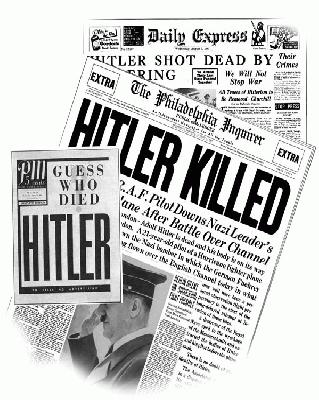
It must have been a slow news week when the CLICK MAGAZINE crew approached three of the busiest editors in the the U.S. and Britain asking them how they would break the news if Hitler were to be killed tomorrow?

Every editor we queried agreed that when it happens, the death of Adolf Hitler will sell more papers than any other news event of the Twentieth century…All agreed that Hitler’s death would not end the war; two out of three guessed he would die violently.

The leftest publisher Ralph Ingersoll knew right away that Hitler would die by his own hand.


The article is illustrated with facsimile printings of the headlines and how each paper believed the dictator would die – it was an academic exercise, but a fun read, nonetheless.

Berchtesgaden: Hitler's Mountain Retreat (Yank Magazine, 1945)
1945, Adolf Hitler, Yank Magazine

Berchtesgaden: Hitler’s Mountain Retreat
(Yank Magazine, 1945)

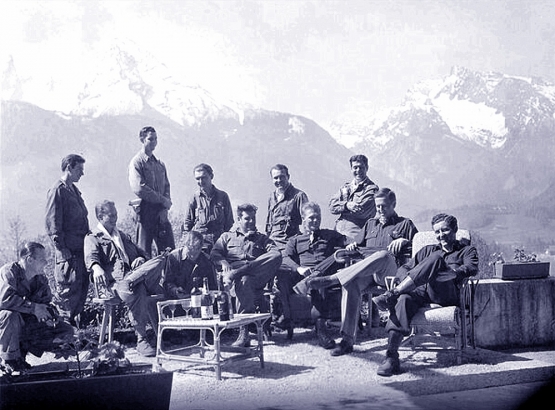
A report on what Hitler’s Bavarian retreat, Berchtesgaden, looked like after the 101st Airborne got through redecorating the place. This is an amusing article written by Yank reporter Harry Sions, who seemed to really want to know what Hitler’s taste in furnishings, books and movies truly was like. However the most entertaining parts of the article were the interviews with Hitler’s dimwitted domestic staff:

Is it true, we asked her, that the Fuhrer chewed on rugs when he became excited?

‘Only you Americans believe such nonsense,’ she replied.

Foreign Artists Barred from Germany (Literary Digest, 1933)
1933, The Literary Digest, The Nazis

Foreign Artists Barred from Germany
(Literary Digest, 1933)

Shortly after Adolf Hitler took charge in Germany, a law was passed that forbid the hiring of foreign artists, composers, writers and performers. As the attached article clarifies, there were exceptions, but all concerned recognized that it was a new day in Germany but not necessarily a better one. Writing for the New York-based magazine, MODERN MUSIC, German arts critic Hans Heinsheimer (1900 – 1993) wrote:

The aim of the National Socialist is to push us back into the Middle Ages. Their politico-culture demands are radical… They set us up as the German Superman against the ‘inferior foreigners.’

Advertisement

Use shortcode [oma_ad position="summary_top"] (or other position) in your theme or widgets to display OMA Promotions here.

Food Shortages in the Third Reich (Literary Digest, 1937)
1937, The Literary Digest, The Nazis

Food Shortages in the Third Reich
(Literary Digest, 1937)

Guns instead of butter! was the slogan General Hermann Goering, Commissar, sounded for the Four Year Plan destined to control production and slash imports as an aid to the Reich’s fantastic rearmament program.

For the great mass of Germans, however, the most serious food shortage since the war cast a pall over Christmas. Housewives got orders to specify their favorite dairy store, and to patronize it exclusively. By prohibiting any shopping around, officials found it possible to limit the distribution of butter and other fats. A census of of the size of families has already been taken, and, beginning January 1, every housewife must limit fat purchases to at least 80 per cent of her October buying.

Nazi Political Prisoners | Plotzensee Prison Torture
1939, Ken Magazine, The Nazis

Nazi Terror at Plotzensee Prison
(Ken Magazine, 1939)

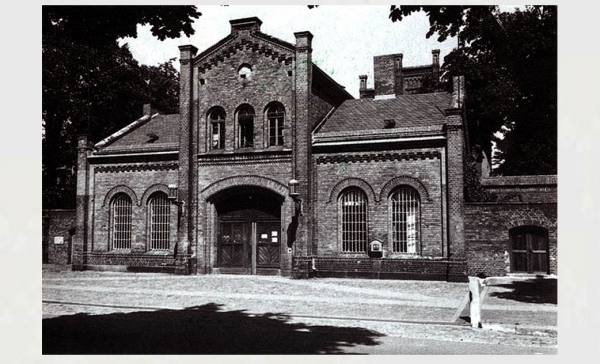
A first-hand account as to the daily goings-on at Plötzensee Prison in Nazi Germany.

Written by Jan Valtin (alias of Richard Julius Hermann Krebs: 1905 – 1951), one of the few inmates to make his way out of that highly inclusive address and tell the tale. Valtin was a communist in the German resistance movement who later escaped to New York and published his memoir about his experiences in Nazi Germany Out of the Night (1941).

…the purpose of punishment is the infliction of suffering. In the tiny, dark cells of this Nazi prison that is the Law. It breaks some men, but it tempers others to a harder steel as the underground fight against Hitler goes on…

Advertisement

Use shortcode [oma_ad position="summary_top"] (or other position) in your theme or widgets to display OMA Promotions here.

The Fascist Mojo in Germany (Literary Digest, 1933)
1933, The Literary Digest, The Nazis

The Fascist Mojo in Germany
(Literary Digest, 1933)

Shortly after that infamous day when Hitler was sworn into power in the offices of Paul Von Hindenburg, this article hit the newsstands in North America about the new mood that was creeping across Germany:

At no time since the war – not even during the occupation of the Ruhr – it is said, has there been so much militarist and nationalist propaganda in Germany as there is now.

Anti-militarist newspapers, it appears, are afraid, in Berlin at least, to raise their voice in protest because of the continual and ruinous suspensions by the authorities…


During the summer of 1938 the Nazis allowed one of their photo journalists out of the Fatherland to wander the American roads; This is what he saw…

The Merger of Austria With Germany (Ken Magazine, 1938)
1938, Ken Magazine, The Nazis

The Merger of Austria With Germany
(Ken Magazine, 1938)

Here is an article about Austria’s Chancellor Kurt Schuschnigg (1897 – 1977) and how the merger of Austria and Nazi Germany came about in 1838:

Behind the scenes that hard day at Berchtesgaden, revealing what Hitler said to Kurt Schuschnigg and what the Austrian public never knew about the German plot to stage in Vienna a counterpart of the Reichstag fire, as a pretext for invasion. Schuschnigg spoiled that pretext, only to furnish another one himself. Uncovering the plot in the hope of averting invasion he merely brought it on.

The Murder of SA Stormtrooper Herbert Hentsch (Literary Digest, 1933)
1933, The Literary Digest, The Nazis

The Murder of SA Stormtrooper Herbert Hentsch
(Literary Digest, 1933)

The Nazis were very adept at eating their young; here is but one of many stories from assorted German and Austrian newspapers that illustrated that point:

The Hitlerites, it alleges, have their own Army, police, and courts functioning independently of the constituted authorities, even defying those authorities, and passing death sentences by secret tribunals.

In Dresden dwelt a ‘shock-troop division’ man named Herbert Hentsch whose body was found not so long ago.

Various circumstances suggest that comrades of the dead young man within the Nazi ranks put him out of the way…


CLICK HERE to read about the beautiful Blonde Battalions who spied for the Nazis…

Advertisement

Use shortcode [oma_ad position="summary_top"] (or other position) in your theme or widgets to display OMA Promotions here.

Atrocity Denials (Literary Digest, 1933)
1933, The Literary Digest, The Nazis

Atrocity Denials
(Literary Digest, 1933)

Shortly after Hitler had assumed power came the eyewitness accounts concerning all the assorted government sanctioned murders, public beatings, and confiscations that characterized the Third Reich.


This article appeared on the newsstands just three months after Hitler’s coronation and is offers numerous repudiations, abnegation and disavowals all composed by the polished pros of the regime; such as Propaganda Minister Joseph Goebbels, Reichsbank Chairman Hjalmar Horace Greeley Schacht, newspaper editor Fritz Klein of the Deutsche Allgemeine Zeitung, and the editor from the Nazi organ in Munich, the Voelkischer Beobachter, who opined

We hereby nail this shameless lie. The accusations remain unexampled in the history of any cultured nation.


Click here to read about the contempt that the Nazis had for Modern Art.


Click here to read about the similarities and differences between communism and fascism.

Dr. Walter Gross and the Office of Racial Policy (Collier's Magazine, 1944)
1944, Collier's Magazine, The Nazis

Dr. Walter Gross and the Office of Racial Policy
(Collier’s Magazine, 1944)

Although he may not be very well known outside Germany, few men rank higher in the Nazi regime than Doctor Walter Gross (1904 – 1945). As head of the Office of Racial Policy, he is Adolf Hitler’s expert on breeding, riding herd on the biological urge, and even deciding what children may be brought into the world.


Written by George Creel (1876 – 1953), this single page article outlines how this quack doctor was responsible for the enslavement of women sex slaves who were pressed into submission from all the conquered nations of Europe.


Gross killed himself at the end of the war.


Click here to read about the origins of Fascist thought…

Advertisement

Use shortcode [oma_ad position="summary_top"] (or other position) in your theme or widgets to display OMA Promotions here.

Nazi Art Criticism (Art Digest, 1936)
1936, The Art Digest, The Nazis

Nazi Art Criticism
(Art Digest, 1936)

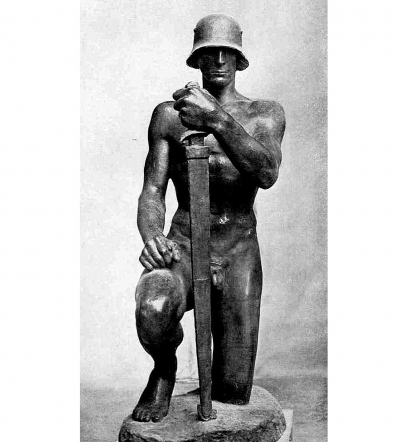
A few vile words concerning modernism and Jewish artists by a forgotten Nazi art critic named L.A. Schutze:

The only one who has created an art entirely born out of the Talmudistic spirit is Picasso, heir of Arabian decorative artists or the Jewish cabalists of Spain.


Click here to read about the contempt that the Nazis had for Modern Art.

1930s Nazi Films | Nazi Made Movies | Joseph Goebbels as Movie Producer
1938, Ken Magazine, The Nazis

The Nazi Hollywood
(Ken Magazine, 1938)

Written by a fellow who in later years would write a good deal about propaganda films, this article is amusing for the way it reported the total lack of humor and curiosity that Nazi Propaganda Minister Joseph Goebbels (1897 – 1945) brought to the subject of film production; how they totally killed the existing German film industry and made film criticism illegal.


Read an article about the banning of all foreign artists in Hitler’s Germany…

Jokes in Germany (Coronet Magazine, 1939)
1939, Coronet Magazine, The Nazis

Jokes in Germany
(Coronet Magazine, 1939)

Many of the jokes that are at present circulating the land of Hitleria cannot be told quite openly. They are whispered among friends. The traffic is great and much whispering going on. Many people want to laugh. It seems a necessary release…


– so observed one journalist fresh from his whirlwind journey through Hitler’s Germany. He could not help but notice how painfully neurotic the Reich leadership was of being the object of Teutonic derision. This article is about the underground society of whispered jokes that the Nazis created; the journalist was good enough to write-up a few so that the free-world could take place in the chuckle-fest (some were lost in translation).

Advertisement

Use shortcode [oma_ad position="summary_top"] (or other position) in your theme or widgets to display OMA Promotions here.

Scroll to Top