Author name: editor

Aviation Without Law (The Outlook, 1922)
1922, Aviation History

Aviation Without Law
(The Outlook, 1922)

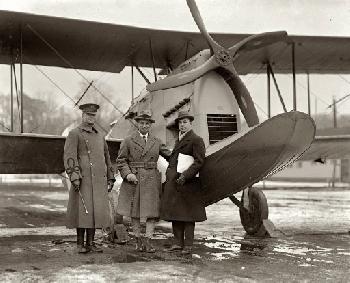
An outraged opinion writer argued that the time had arrived for government to issue flying licenses to responsible pilots, while keeping the others grounded:

…President Harding and thousands of spectators at the dedication of the Lincoln Memorial are placed in jeopardy by an irresponsible, low flying aviator; and the lives of countless thousands of innocent spectators at the Yale Bowl and other stadiums are risked unnecessarily because the House of Representatives has so far failed to provide, as forty other nations have provided, for Government regulation of civil aviation

The 9th Air Force on D-Day (Yank Magazine, 1944)
1944, D-Day, Yank Magazine

The 9th Air Force on D-Day
(Yank Magazine, 1944)

An eye-witness account of the U.S. Army Ninth Air Force A-20 bombers as they made their runs on D-Day:

There was no time to lose on this mission. Hitler’s armies might well be driving over those crossroads toward the beachheads at this minute. This was not just an ordinary mission. It was the beginning of a mission that some day might end all combat missions.

‘There’s London.’ Rafalow announced, over the intercom.
I glanced down. The acres of buildings looked quiet and peaceful.
You’d almost think there wasn’t a war on.’
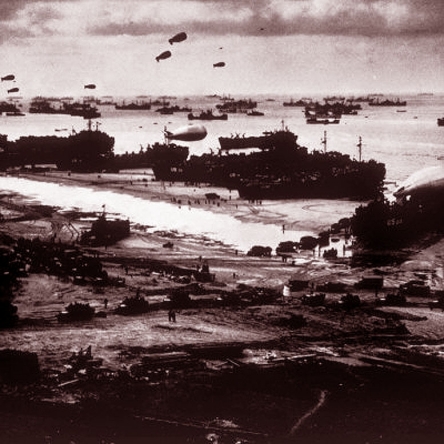
A few minutes later his voice came over the intercom again, but this time it was high-pitched with excitement. We were over the English Channel where it was quite obvious there was a war on.
‘By God, look at the ships!’ he yelled.

Advertisement

Use shortcode [oma_ad position="summary_top"] (or other position) in your theme or widgets to display OMA Promotions here.

1912, Aviation History, The Literary Digest

1912: An Important Year in Military Aviation
(The Literary Digest, 1912)

1912 was the year that the Lewis Gun was first mounted on military aircraft. The military possibilities of this combination was immediately recognizable to all onlookers:

The potential results of swooping aircraft, armed to the teeth with death dealing bullets, is staggering to ordnance officers of the Army and Navy who discuss it. ‘Where will this lead?’ they ask. Is it possible that the air is to harbor the greatest destructive forces in modern warfare? There seems nothing to prevent it.

Click here to read an article about the development of aerial reconnaissance during W.W. I.
1912, Aviation History, Popular Mechanics Magazine

The First Casualty of an Air War
(Popular Mechanics, 1912)

It was during the Italian-Turkish War (1911 – 12) that aircraft began to play active rolls in support of military operations. This article is remarkable in that it reports that as early as 1912, aircraft was used not merely to aid in the observation of enemy troop movements but also to drop bombs.

Captain Monte of the Italian army aeroplane corps has achieved the distinction of being the first airman wounded in battle while in the air with his machine.

Advertisement

Use shortcode [oma_ad position="summary_top"] (or other position) in your theme or widgets to display OMA Promotions here.

Flight Clothing for Aviators (Sears and Roebuck, 1918)
1918, Aviation History

Flight Clothing for Aviators
(Sears and Roebuck, 1918)

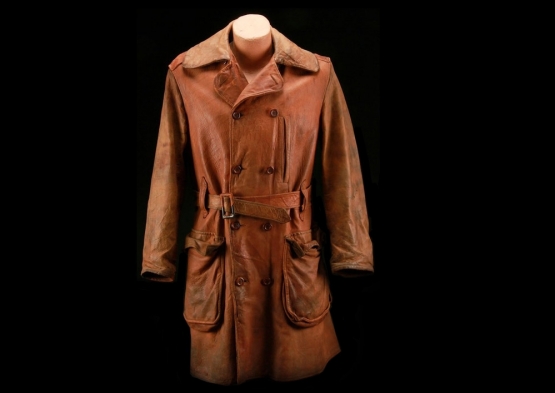
The inability of the Sears & Roebuck Company to understand the nature of early aviation was made manifest by the fact that the first pilots used to wear horse-back riding clothes before taking to the skies.

Attached, you will find two pages from the Sears Military Equipment Catalog of 1918, pictured are flight-clothing items offered for military or private purchase.

Odd-Shaped Propeller More Efficient (Popular Mechanics, 1918)
1918, Aviation History, Popular Mechanics Magazine

Odd-Shaped Propeller More Efficient
(Popular Mechanics, 1918)

For at least one week in 1918, the slide-rule jockeys lounging about in the faculty watering holes at the aeronautical engineering brain-trusts believed that the propeller illustrated herein was pretty slick, and bound to bring greater speed to the aircraft of the day. But the bright lads at OldMagazineArticles.com couldn’t help but notice that this propeller design was never seen any time after this issue of POPULAR MECHANICS was on the stand, so we have our doubts concerning the increased efficiency that the propeller was credited in creating…


What do you think?

Advertisement

Use shortcode [oma_ad position="summary_top"] (or other position) in your theme or widgets to display OMA Promotions here.

Charles Lindbergh Goes to War (Collier's Magazine, 1946)
1946, Charles Lindbergh, Collier's Magazine

Charles Lindbergh Goes to War
(Collier’s Magazine, 1946)

When America entered the Second World War, Charles Lindbergh reached out to President Roosevelt and expressed his desire to serve; in light of the fact that Lindbergh had made numerous trips to Germany and met with Goering on several occasions, the President cordially declined his offer. However, these liaisons did not exclude him from working in the private sector for one of the many defense contractors, which is precisely what he did.

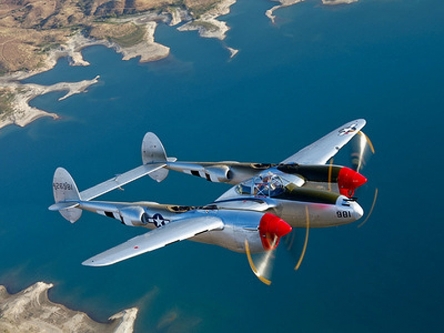
These two articles were written by an Army Air Corps colonel shortly after the war recalling his unexpected brush with Lindbergh when he was serving in New Guinea. The United Aircraft Corporation had hired the Lone Eagle to serve as a technical observer in the Pacific, where he could study the combat performance of the P-38 fighters. The articles served to expose to the American people that Lindbergh had performed a variety of patriotic tasks far beyond his corporate job description:

My God! He shouldn’t go on a combat mission, when did he fly the Atlantic? Must have been in 1927 and he was about twenty-five then. That would make him at least forty-two years old, and that’s too old for this kind of stuff.

D-Day-Plus-One (Yank Magazine, 1944)
1944, D-Day, Yank Magazine

D-Day-Plus-One
(Yank Magazine, 1944)

D-Day for my outfit was a long, dull 24-hour wait. We spent the whole day marooned in the middle of the English Channel, sunbathing, sleeping and watching the action miles away on the shore through binoculars. We could hear the quick roars and see the greenish-white flashes of light as Allied Battleships and cruisers shelled the pillboxes and other German installations on the beach.

On D-plus-one we took off for shore. Four Messerschmidtts dove down to strafe the landing crafts as we headed in, but a Navy gunner drove them off with a beautiful burst of ack-ack…

Advertisement

Use shortcode [oma_ad position="summary_top"] (or other position) in your theme or widgets to display OMA Promotions here.

Religion During the Great Depression
1933, The Great Depression, The Literary Digest

The 1930s March to the Pews
(Literary Digest, 1933)

…since the Depression began one out of every six banks has failed, one out of every forty-five hospitals has closed, one out of every twenty-two business and industrial concerns has become bankrupt…


– for those living in the digital age, the quote posted above is simply another mildly interesting, stale line from American history – but when those words were written in 1932 it meant for those who read it that there world was falling apart. So much of what they were taught to believe in was collapsing before their very eyes and as a result they felt a need to know God – and know Him they did; half way through 1932 churches and other religious bodies showed a total net gain of 929,252 members thirteen years of age or over – one of the largest gains ever recorded – and the total membership, thirteen years or more of age, reached the record figure of 50,037,209.


Click here to read about the American South during the Great Depression.

1935, Pathfinder Magazine, Renewable Energy

The Solar Motor
(Pathfinder Magazine, 1935)

Pictured herein is Dr. C.W. Hewlett – early proponent of solar energy.
He was employed by the research department at General Electric and can be seen demonstrating his brainchild, the Solar Electric Motor:

Four small, round iron plates constitute the cell which converts the light into power. The plates are coated with selenium over which is an extremely thin layer of platinum. Both of the metals are ‘light sensitive’ and convert certain of the the rays into electricity, but as to just how this is done science is pretty vague.

Advertisement

Use shortcode [oma_ad position="summary_top"] (or other position) in your theme or widgets to display OMA Promotions here.

U.S. Navy Sailor Hat Regulations
1945, Miscellaneous, Yank Magazine

Wearing the U. S. Navy Sailor Hat
(Yank, 1945)

The following article and illustration were clipped from the World War Two G.I. magazine, YANK; which we have included in our study of American World War One naval uniforms because we couldn’t imagine that the regulations involving the wearing of the lid could have been that much more different from the days when Admiral Simms ran the shop.

Advertisement

Use shortcode [oma_ad position="summary_top"] (or other position) in your theme or widgets to display OMA Promotions here.

Scroll to Top