Author name: editor

1945 Vienna | Fall of Vienna Austria 1945 | Defense of Vienna 1945
1945, Aftermath (WWII), Yank Magazine

Life in Post-War Vienna
(Yank Magazine, 1945)

Published six months after the German surrender was this account of post-war Vienna, Austria: the people, the shortages and the black-market. Originally liberated by the Soviet Army, the Americans occupied the city three months afterward; this is an eyewitness account as to what Vienna was like in the immediate wake of World War II. Reading between the lines, one gets a sense that the Viennese were simply delighted to see an American occupying force swap places with the Soviet Army, although the Soviets were not nearly as brutal to this capital as they were to Berlin.


In compliance with the Potsdam Conference, Vienna was soon divided into four zones of occupation.

The Fifth Ranger Battalion Goes Home (Yank Magazine, 1945)
1945, Army Rangers, Yank Magazine

The Fifth Ranger Battalion Goes Home
(Yank Magazine, 1945)

One quality that can be found in the memoirs of both world wars is a shared sense that the males of their respective generations had been singled-out for extermination, and when the end to these wars finally came, the most seasoned combat veterans were in a state of disbelief that they would be allowed to grow old, when so many had died. Some of this relief can be felt in this article from 1945 in which the battle-savvy men of the U.S. Army’s Fifth Ranger Battalion anticipated their return to civilian life now that the war was over.

I don’t believe it will do much good to talk about the war with civilians. I don’t think war is something that anyone can know about unless they’re actually in it. I would just rather forget I was ever in the army…


The Rangers underwent intense training in hand-to-hand combat, you can read about about it in this 1942 magazine article.

The SS Prisoner at the U.S. Army Field Hospital (Yank Magazine, 1944)
1944, POWs, Yank Magazine

The SS Prisoner at the U.S. Army Field Hospital
(Yank Magazine, 1944)

This tight little essay, titled The German, serves to illustrate a small piece of life in a very big war. Written with a sense of melancholy by a winsome American medical orderly posted to a hospital not too far behind the front lines, it explains how he slowly got to know one of his German patients, a member of the SS, and how secretive and generally unpleasant he seemed to be.


Click here to read an article about the women of the SS in captivity.

Advertisement

Use shortcode [oma_ad position="summary_top"] (or other position) in your theme or widgets to display OMA Promotions here.

Joseph Goebbels Newspaper Article
1938, Pathfinder Magazine, The Nazis

Meet Joseph Goebbels
(Pathfinder Magazine, 1938

Goebbels is the creator of the Hitler legend. He is the white-washer of the Nazi reputation. In the 1920s the party had an unsavory name because its ranks included a clique of of homosexuals. As early as 1922 a Nazi meeting at Munich voted that no woman should ever hold political office. Goebbels twisted the party’s abnormal dislike of women into something ‘respectable’ – the doctrine that a woman’s place was in the kitchen and the maternity ward.

Mary Pickford Interview | Douglas Fairbanks Interview | 1920s Hollywood Observations
1922, Douglas Fairbanks & Mary Pickford, The Literary Digest

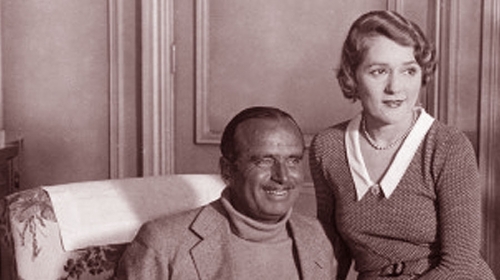
Dinner with Douglas Fairbanks and Mary Pickford
(Literary Digest, 1922)

This article is a simply wonderful read for many reasons and the chief among them is that the journalist hated Los Angeles. The New York writer Karl K. Kitchen was dispatched to Beverly Hills to interview the recently divorced Douglas Fairbanks and Mary Pickford and he seemed to have had a nice enough time with the estranged couple, so much so that the Hollywood Royals invited him to dine at their house. The whole article is written in a very chatty way and there is one small, but distinct, slanderous aside referring to Jewish power in the nascent film industry.
My Brother Groucho (Coronet Magazine, 1951)
1951, Coronet Magazine, Hollywood History

My Brother Groucho
(Coronet Magazine, 1951)

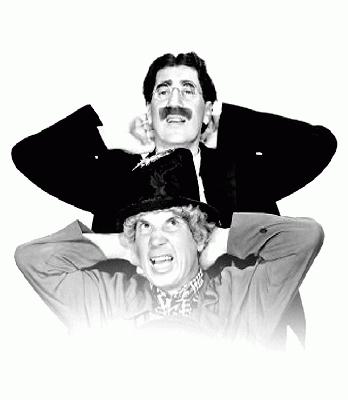
In this six page essay Harpo Marx tells the tale of Groucho (1890 – 1977) as only an older brother could see it. From the Marx family’s earliest days in the slums of New York and Groucho’s first entertainment job (he was 13), Harpo (1888 – 1964) briefly recounts his brother’s wins and losses leading up to the team’s first popular show on Broadway (I’ll Say She Is, 1923) and the man’s travails on his T.V. game show, You Bet Your Life.

Groucho’s infatuation with the language has been the backbone of his entire life and has, undoubtedly, played the largest single part in shaping him into one of the greatest wits of our time. Groucho doesn’t regard words the way the rest of us do. He looks at a word in the usual fashion. Then he looks at it upside down, backwards, from the middle out to the ends, and from the ends back to the middle…Groucho doesn’t look for double meanings. He looks for quadruple meanings. And usually finds them.


Click here to read about the manner in which the Marx Brothers would test their jokes.

Advertisement

Use shortcode [oma_ad position="summary_top"] (or other position) in your theme or widgets to display OMA Promotions here.

Pre-WW II Spy Scare | Nazi Spies on Trial Before the U.S. District Court 1938 | U.S. District Attorney Lamar Hardy Prosecutes Nazi Spies
1938, Pathfinder Magazine, Spying

The 1938 Spies
(Pathfinder Magazine, 1938)

Suddenly last June, a Federal grand jury in New York City hoisted the curtain on ‘America’s most significant spy prosecution since the [First] World War’ by indicting 18 persons for participating in a conspiracy to steal U.S. defense secrets for Germany. Subsequently, only four of the 18 could be found for trial. The others, including two high officials of the German War Ministry, were safe in – or had escaped to – the Fatherland.

Advertisement

Use shortcode [oma_ad position="summary_top"] (or other position) in your theme or widgets to display OMA Promotions here.

Modular Housing (Pathfinder Magazine, 1947)
1947, Pathfinder Magazine, Suburbia

Modular Housing
(Pathfinder Magazine, 1947)

After eight years of research, the National Retail Lumber Dealers Association and the Producers’ Council, an organization of building materials manufacturers, have polished up all the known short-cut, dollar-saving methods in building, packaged them into an industry-wide program, and labeled them the ‘four-inch module plan.’… The house is built on of three sections, each 16 x 24 feet, and bolted at floor, walls and roof. Wall joints are hidden by cabinets; by simply removing top and side cabinets, bolts can be loosened and the house readied for moving on trailers.

1940s Broadway History | List of 1945 Broadway Shows
1945, Home Front, Yank Magazine

Broadway Theater in Wartime
(Yank Magazine, 1945)

New York’s Broadway theater scene during World War II:

Show people will never forget the year 1944. Thousands of men and women from the legitimate theater were overseas in uniform -actors and actresses, writers, scene designers, stage hands – and all looked back in wonderment at what war had done to the business… Letters and newspapers from home told the story. On Broadway even bad shows were packing them in…


Click here to read a 1946 article about post-war Broadway.

Advertisement

Use shortcode [oma_ad position="summary_top"] (or other position) in your theme or widgets to display OMA Promotions here.

1932 History of Manchukuo | Former Japanese colonies | Client State of Imperial Japan
1932, New Outlook Magazine, Sino-Japanese Wars

Manchukuo
(New Outlook Magazine, 1932)

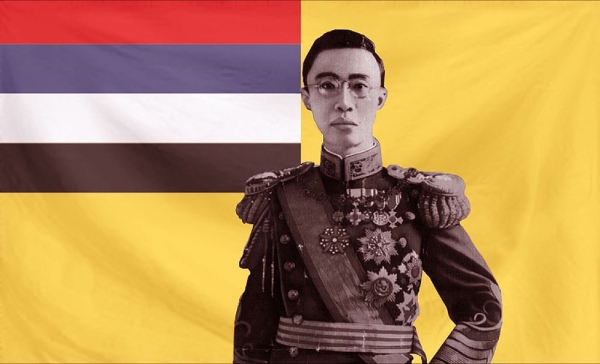
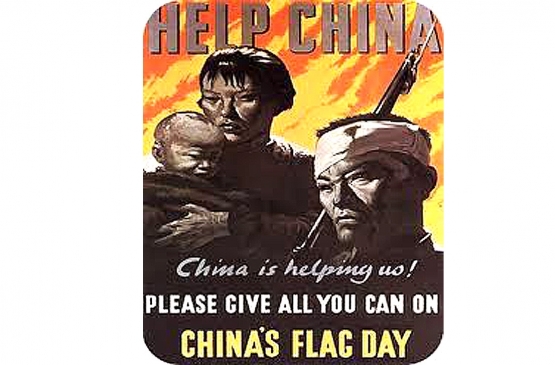
This article heralds the creation of a new nation – the short lived puppet state of Manchukuo. Carved out of portions of Japanese-occupied Manchuria in 1932, the country was created by Imperial Japan in order to serve as an industrial province from which they could continue their military adventures in China. A good deal of column space pertains to a silver tongued Japanese Foreign Minister named Count Uchida Kōsai (1865 – 1936) and how he attempted to justify Manchukuo before the outraged members of the League of Nations – when the League declared that Manchuria was Chinese, Uchida withdrew Japan from membership in the League..

History of S.A.T. Tests
1958, Education, World Week

The Onslaught of Standardized Tests
(World Week, 1958)

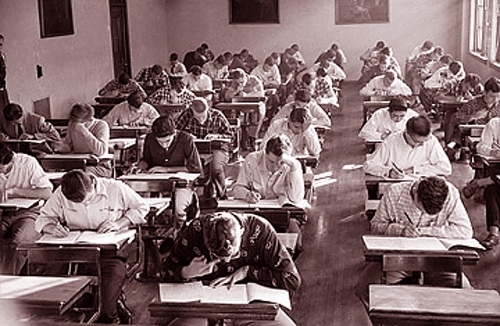
Written in 1958 with the aid of the Educational Testing Service, (Princeton, New Jersey), the article attempted to persuade America’s high school students to get used to standardized tests because they’re a really cool idea and they’ll make your life better. Illustrations are provided to indicate how the testing work and how well such tests had proved useful to the Air Force in weeding out sub-standard candidates for flight training. The journalist seemed to imply throughout these columns that the egg-heads were really doing us all a big, big favor by creating these tests.

The Women of the U.S. Coast Guard (Think Magazine, 1946)
1946, Think Magazine, Women (WWII)

The Women of the U.S. Coast Guard
(Think Magazine, 1946)

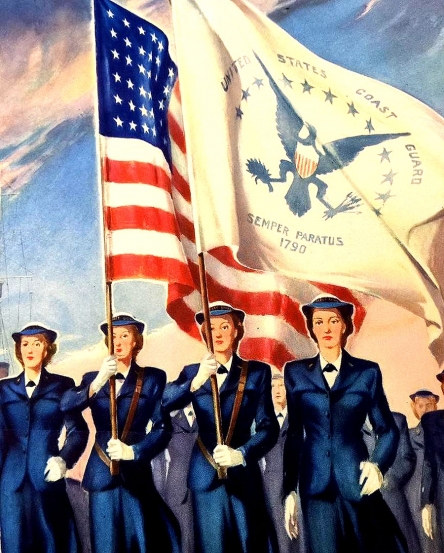
From the icy sweeps of Alaska to the tropical Hawaiian Islands, trimly clad girls in the dark blue of the Coast Guard SPARS have served since their organization was founded in 1942 to fill the shore posts of men at sea.

Communications and radio work were an important phase of their duty. Another field in which SPARS were exceptionally active was aviation, with young women in navy blue working in control towers, instructing fledgling fliers via the Link trainer, and parachute riggers…SPARS were also required to familiarize themselves with weapons.

Ranking woman officer is Captain Dorthy C. Stratton (1899 – 2006), Director of the Women’s Reserve, appointed on November 24, 1942).

Advertisement

Use shortcode [oma_ad position="summary_top"] (or other position) in your theme or widgets to display OMA Promotions here.

Japanese Atrocities in Nanking China 1937 |
1938, Ken Magazine, Sino-Japanese Wars

Nanking Ravaged
(Ken Magazine, 1938)

The occupation of Nanking by the Japanese army in December, 1937, resulted in the greatest authenticated massacre in modern history.

Fifty thousand blood-crazed beasts in Japanese uniforms roamed China’s fallen capital for four weeks in a mad Saturnalia of butchery, rape and pillage without parallel in modern history. That story, suppressed by the Japanese military who chased news correspondents and foreign officials out of Nanking, is told for the first time by one of the few Americans who remained, a ‘go-between’ for the U.S. Government with 20 years of service in China. He saw roped bundles of humanity saturated with gasoline and ignited for a Nipponese holiday.

Just Another Airborne Wedding Ceremony (Literary Digest, 1922)
1922, Aviation History, The Literary Digest

Just Another Airborne Wedding Ceremony
(Literary Digest, 1922)

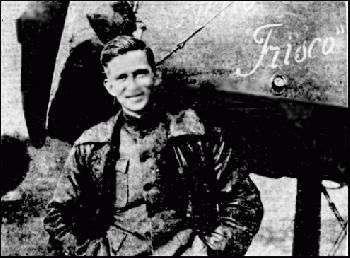
Another article on this site marks 1912 as being the year that saw the first airborne wedding ceremony; but this article reported on the first wedding to be performed in a Fokker Monoplane with the added benefit of a wireless radio transmitter that broadcast the event to numerous well-wishers down below. The wedding was officiated by non-other than the Flying Parson himself, Belvin W. Maynard. Maynard was a legend in early aviation and he died in a crash some four months later.

The number of in-flight nuptials that have been performed since the first in 1912 are too numerous to count; however the last high-profile event took place in the Fall of 2007, when Sir Richard Branson (b. 1950) of Virgin Airlines presided over an in-flight wedding ceremony at 35,000 feet en route from San Francisco to Las Vegas.

Early Aviation Safety Inventions (The Literary Digest, 1912)
1912, Aviation History, The Literary Digest

Early Aviation Safety Inventions
(The Literary Digest, 1912)

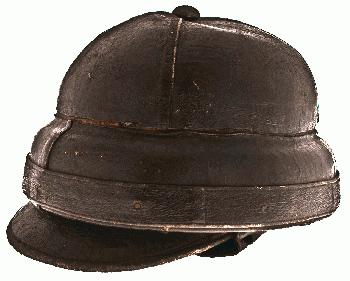
An overview of the technological advancements that had been introduced in the aviation community in 1912. References are made to the superiority of the Pneumatic Flying Helmet, and the installation of the W. I. Twombly Safety Harness, oil gauges, self-acting gas pumps, double-cables, self-starting motors and heavily re-enforced wheels.

References are also made to the 1910, twenty-two mile flight across the English Channel by a pilot named Bleriot.

Advertisement

Use shortcode [oma_ad position="summary_top"] (or other position) in your theme or widgets to display OMA Promotions here.

Scroll to Top