Author name: editor

The Great Depression and the Sexes (Coronet Magazine, 1947)
1947, Coronet Magazine, The Great Depression

The Great Depression and the Sexes
(Coronet Magazine, 1947)

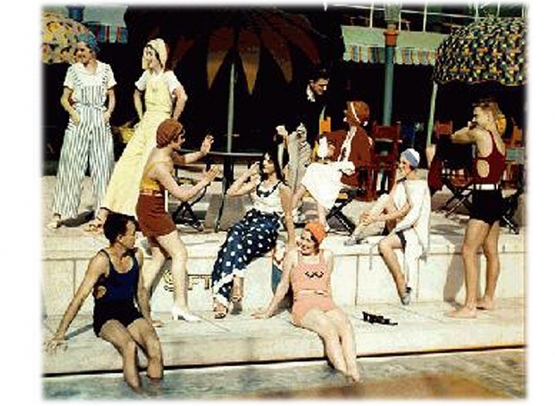
Unemployment permitted a great deal more companionship between young men and young women, which ordinarily would have led to marriage. The only thing lacking was money. The arrangements called, simply, ‘living together’ became common. Often the man or woman was married, and couldn’t get , couldn’t afford, or didn’t want a divorce. Sometimes the man simply refused to marry, and the woman took him into her home or moved into his as the next best thing…


You Might Also Care to Know About The Sex Manners of the Twenties or Men & Women During W.W. II
1937, Mahatma Gandhi, The Literary Digest

Gandhi’s Struggle Against British Imperialism
(Literary Digest, 1937)

A news article from a 1937 issue of LITERARY DIGEST pertaining to Mahatma Gandhi‘s ongoing struggle to break free from the bonds of English imperialism:

The basic policy of this Congress, Nehru admonished, is to combat the ‘Government of India Act’ (the Federal Constitution); resist in every way the attempt by British imperialism to strengthen its hold on India and its people; stress a positive demand for a constituent assembly, elected by adult suffrage.

Cold War Washington DC | Atomic Bombing of Washington DC 1950 | Washington DC Civil Defense 1950
1950, Pathfinder Magazine, The Cold War

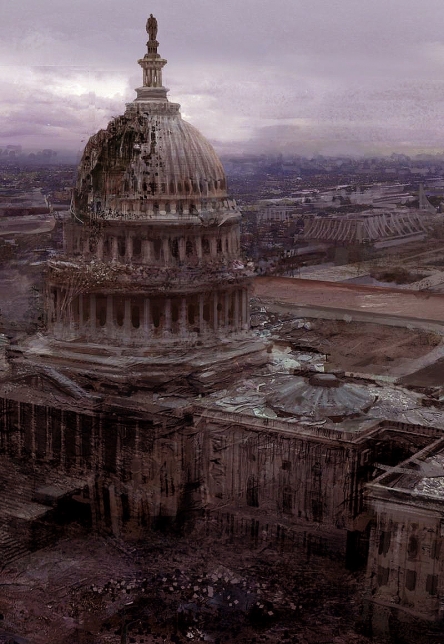
Ground Zero: Washington, D.C.
(Pathfinder Magazine, 1950)

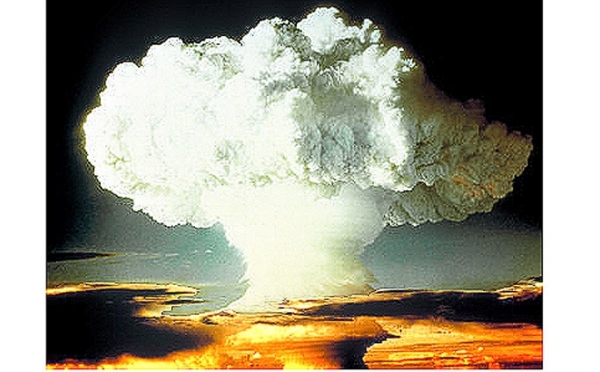
When it became clear to all that the Soviets had the bomb – and Washington was the target – the egg-heads in D.C. decided it was time to disperse various government offices to the suburbs:

Given any warning at all, the National Security Resources Board now seems confident it can preserve at least a skeleton Government. But as for the run-of-the-mine Federal employee, he’ll have to take his chances amid the irradiated rubble…

Advertisement

Use shortcode [oma_ad position="summary_top"] (or other position) in your theme or widgets to display OMA Promotions here.

Marshall Plan Rebuilt Post-War Europe | 1947 Marshall Plan Magazine Article
1947, Pathfinder Magazine, The Cold War

The Marshall Plan: Rebuilding Europe
(Pathfinder Magazine, 1947)

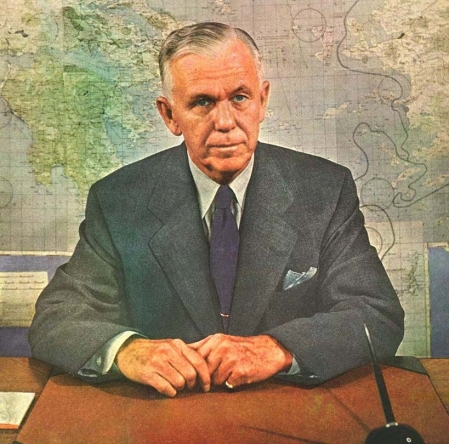
The Marshall Plan was a U.S. Government aid program that was instrumental in the reconstruction and economic resurrection of 16 Western European nations following the devastation caused by the Second World War. It is named for Secretary of State George C. Marshall, who co-authored the initiative with the help of the prominent business leader William Clayton, and the American diplomat George F. Kennan.


The attached article concerns the first draft of the scheme that was drawn-up by Marshall and the representatives of these 16 nations during the Summer/Fall of 1947. The amount of cash to be distributed (and paid back over a period of 30 years) was $22.44 billion.


Marshall knew that such an economic stimulant (and the liberties that would follow) would serve to guarantee that Western Europe would not fall into clutches of the Soviet Union.


To read about the Soviet reaction to the Marshall Plan, Click here


Read more articles from PATHFINDER MAGAZINE…

Soviet Reaction to the Marshall Plan 1947 | Soviet Reply to the Marshall Plan | Soviet Backlash 1947
1947, Pathfinder Magazine, The Cold War

The Soviet Reaction to the Marshall Plan
(Pathfinder Magazine, 1947)

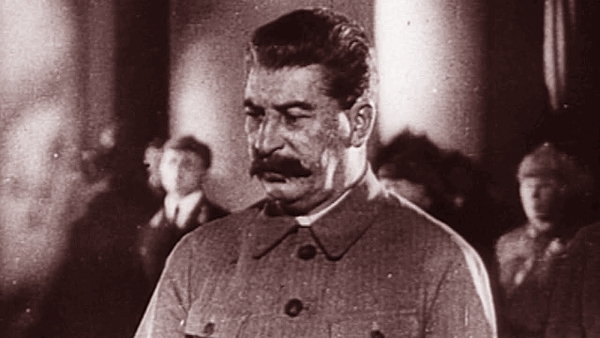
To paraphrase Second Corinthians: Europe’s despair was Stalin’s opportunity – he delighted in the post-war unemployment, the inflation and the general lack of confidence in their governmental institutions. When the Marshall Plane came to the rescue in rebuilding Europe, the Soviets knew they were licked. This article reveals how totally bummed the Soviets were over the broad European acceptance of the Marshall plan. They hated it.

1948, Berlin Blockade, Pathfinder Magazine

One Month Into the Berlin Blockade
(Pathfinder Magazine, 1948)

The firm of Uncle Sam and John Bull flying grocers, kept the Western Allies in the Battle for Berlin last week… If the peace continues, the U.S. British estimated, by mid-July there will be enough food in Berlin’s stockpile to feed the 2 million Germans in western sectors of the capital until September 1… Supplying fuel and coal was another problem…


The article is accompanied by one cartoon from THE NEW YORK HERALD TRIBUNE.


Read more articles from PATHFINDER MAGAZINE…

Advertisement

Use shortcode [oma_ad position="summary_top"] (or other position) in your theme or widgets to display OMA Promotions here.

Norman Rockwell Americana Illustrator | Norman Rockwell Magazine Article Pageant Magazine 1947
1947, Americana, Pageant Magazine

America’s Favorite Illustrator
(Pageant Magazine, 1947)

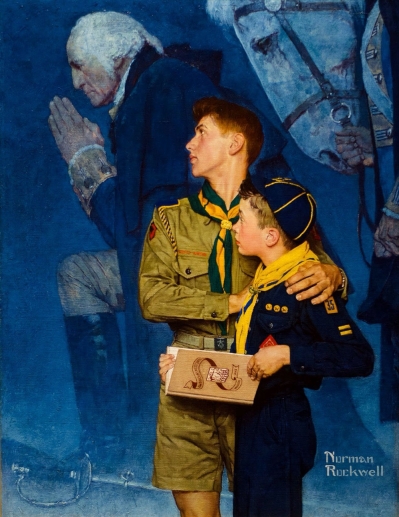
Norman Rockwell (1894 – 1978) once remarked in an interview:


“The view of life I communicate in my pictures excludes the sordid and the ugly. I paint life as I would like it to be.”


– and his vision was shared with millions of Americans. He had a fondness for depicting everyday life in small town America, childhood friendships, family life, middle school sporting events and (as discussed in the attached article) the Boy Scouts. He knew who he was; he never referred to himself as an artist, he called himself an illustrator.

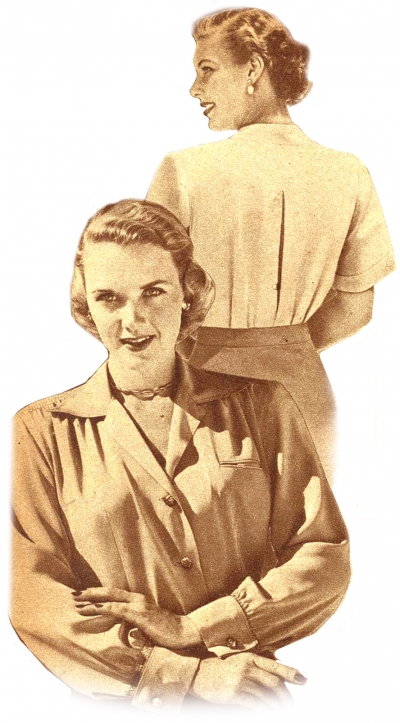
Women's Tops 1947
1940s Fashion, 1947, Pathfinder Magazine

Thoughts on Blouses
(Pathfinder Magazine, 1947)

By the time 1947 was coming to a close, an enormous shift in the fashion winds had taken place that altered the silhouette of the fashionable woman. Waists were narrow, hips were padded – and the hemline had dropped as much as twelve inches. The New Look out of Paris dictated the appearances of suits and evening wear, but blouses were left out of the revolution – everyone had to figure it out for themselves and hope that the couturiers from across the sea would come to the rescue the following season.


Advertisement

Use shortcode [oma_ad position="summary_top"] (or other position) in your theme or widgets to display OMA Promotions here.

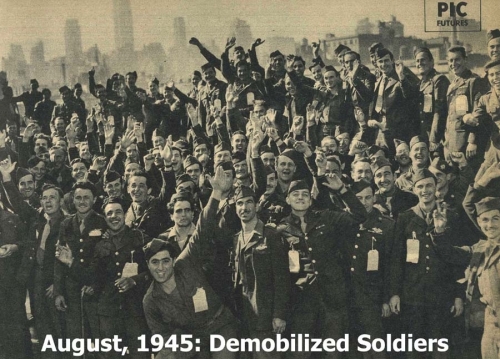
WW II US Army Demobilization Facts
General Marshall

Demobilizing the American Army of World War Two

The demobilization of 7,730,000 U.S. military personnel must have been a daunting task, but the policy makers in Washington knew well the dangers of that new world and they had no intention of completely demobilizing as they had done after the First World War. General Marshall remarked in these short paragraphs that many men would be needed for occupation duty.


To read further about the demobilized military, click here

Italian Expatriots in 1938
1938, Benito Mussolini, Ken Magazine

Mussolini and the Italian Expatriots
(Ken Magazine, 1938)

In September, 1936, when the League of Nations refused to expel the African empire from its membership, Il Duce kept Italian representatives away from League halls. They have never set foot in them since. Last spring British envoys led a successful boycott against diplomatic attendance at a first anniversary celebration of Italy’s conquest. Ill Duce countered with a peeve so wrathful that Italian newspapers made no mention of Great Britain for two whole days.

Advertisement

Use shortcode [oma_ad position="summary_top"] (or other position) in your theme or widgets to display OMA Promotions here.

Danzig Nazis (The Literary Digest, 1936)
1936, Prelude (WW II), The Literary Digest

Danzig Nazis
(The Literary Digest, 1936)

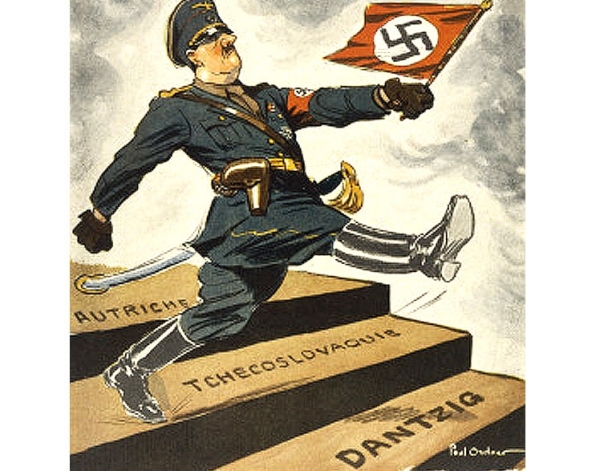
The attached 1936 magazine article presents a picture of the Polish city of Danzig as it was during the mid-thirties. It was a city in which Danzig Nazis, like Arthur Karl Greiser, spoke of making that town a part of Germany once more (it was ordained a Polish city as a result of the Versailles Treaty) and Minister Joseph Beck who liked everything just the way it was, thank you very much.

NAZI PATIENCE: Neither Beck nor Hitler is anxious to come to a break over Danzig. Hitler, a sworn enemy of Soviet Russia, advises his Danzig Nazis to forbear from mentioning their intention of completely abandoning League control for secession to Germany…

Hitler’s troops invaded Poland on August 31, 1939.

America Prepares... (Pathfinder Magazine, 1941)
1941, Pathfinder Magazine, Prelude (WW II)

America Prepares…
(Pathfinder Magazine, 1941)

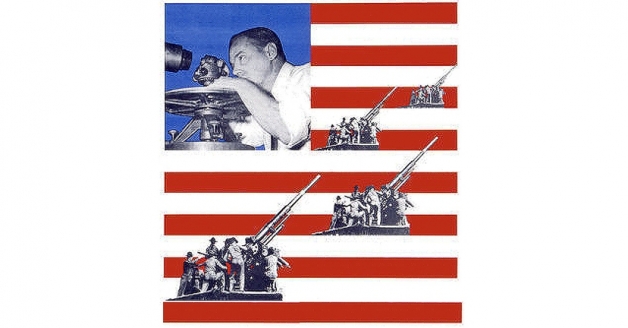
By late November, 1941, only children and the clinically optimistic were of the mind that America would be able to keep out of a war – as you’ll be able to assume when you read the attached article that appeared on the newsstands just ten days before the attack on Pearl Harbor. It extolls the industrial prowess of the United States as the country prepared for war:


• William S. Knudson (1879 – 1948), Director of the OPM, declared U.S. arms output will soon ‘assure Hitler’s defeat’. Proof of this claim was seen in the celebration in New Haven, Connecticut, of one company’s production of it’s 10,000th machine-gun within a year of the time the contract was signed to build a plant.


• The launching of the 35,000-ton battleship INDIANA at Newport News, Virginia, the third battleship to come off the ways this year, indicated the increased tempo of defense production, which Admiral Land, of the Maritime Commission, said neared ‘superhuman’.

1945 Vienna | Fall of Vienna Austria 1945 | Defense of Vienna 1945
1945, Aftermath (WWII), Yank Magazine

Life in Post-War Vienna
(Yank Magazine, 1945)

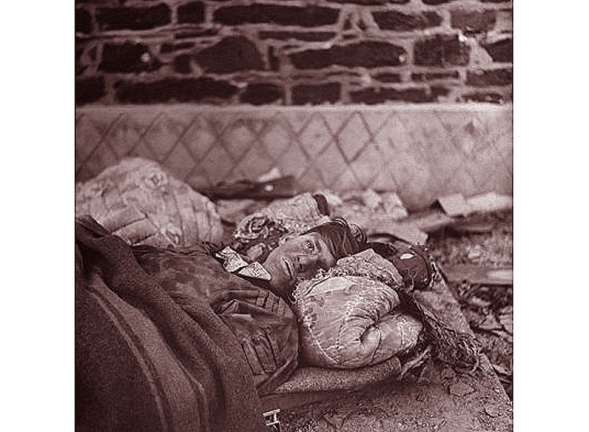
Published six months after the German surrender was this account of post-war Vienna, Austria: the people, the shortages and the black-market. Originally liberated by the Soviet Army, the Americans occupied the city three months afterward; this is an eyewitness account as to what Vienna was like in the immediate wake of World War II. Reading between the lines, one gets a sense that the Viennese were simply delighted to see an American occupying force swap places with the Soviet Army, although the Soviets were not nearly as brutal to this capital as they were to Berlin.


In compliance with the Potsdam Conference, Vienna was soon divided into four zones of occupation.

Advertisement

Use shortcode [oma_ad position="summary_top"] (or other position) in your theme or widgets to display OMA Promotions here.

The Fifth Ranger Battalion Goes Home (Yank Magazine, 1945)
1945, Army Rangers, Yank Magazine

The Fifth Ranger Battalion Goes Home
(Yank Magazine, 1945)

One quality that can be found in the memoirs of both world wars is a shared sense that the males of their respective generations had been singled-out for extermination, and when the end to these wars finally came, the most seasoned combat veterans were in a state of disbelief that they would be allowed to grow old, when so many had died. Some of this relief can be felt in this article from 1945 in which the battle-savvy men of the U.S. Army’s Fifth Ranger Battalion anticipated their return to civilian life now that the war was over.

I don’t believe it will do much good to talk about the war with civilians. I don’t think war is something that anyone can know about unless they’re actually in it. I would just rather forget I was ever in the army…


The Rangers underwent intense training in hand-to-hand combat, you can read about about it in this 1942 magazine article.

The SS Prisoner at the U.S. Army Field Hospital (Yank Magazine, 1944)
1944, POWs, Yank Magazine

The SS Prisoner at the U.S. Army Field Hospital
(Yank Magazine, 1944)

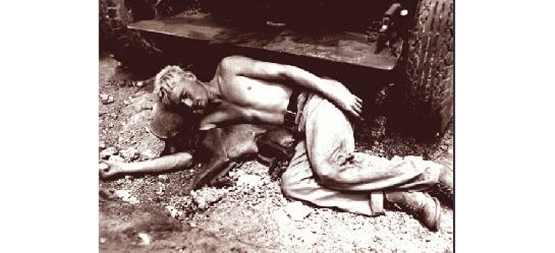
This tight little essay, titled The German, serves to illustrate a small piece of life in a very big war. Written with a sense of melancholy by a winsome American medical orderly posted to a hospital not too far behind the front lines, it explains how he slowly got to know one of his German patients, a member of the SS, and how secretive and generally unpleasant he seemed to be.


Click here to read an article about the women of the SS in captivity.

Joseph Goebbels Newspaper Article
1938, Pathfinder Magazine, The Nazis

Meet Joseph Goebbels
(Pathfinder Magazine, 1938

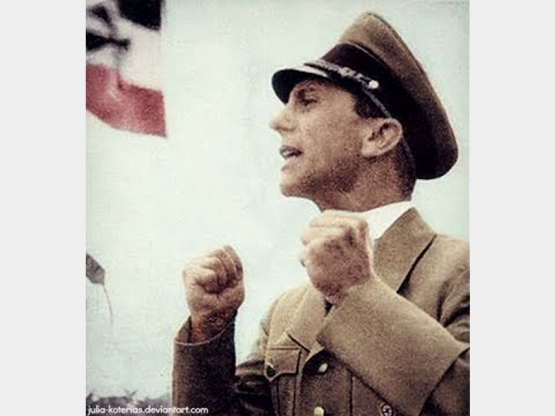
Goebbels is the creator of the Hitler legend. He is the white-washer of the Nazi reputation. In the 1920s the party had an unsavory name because its ranks included a clique of of homosexuals. As early as 1922 a Nazi meeting at Munich voted that no woman should ever hold political office. Goebbels twisted the party’s abnormal dislike of women into something ‘respectable’ – the doctrine that a woman’s place was in the kitchen and the maternity ward.

Advertisement

Use shortcode [oma_ad position="summary_top"] (or other position) in your theme or widgets to display OMA Promotions here.

Scroll to Top