Author name: editor

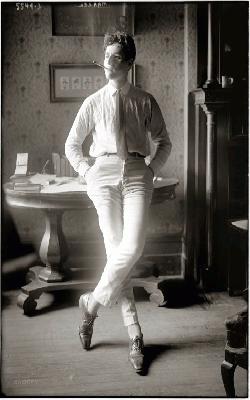
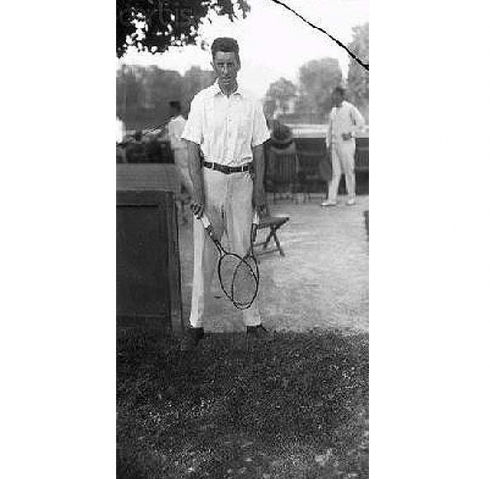
Tennis, 1919 (Leslie's Weekly, 1919)
1919, Leslie's Weekly, Tennis History

Tennis, 1919
(Leslie’s Weekly, 1919)

The net-heads of 1919 were delighted to be able to read tennis articles once more following that long dry spell that began in the summer of 1914 and left them all with such a distaste that had only recently ended.

The editors of Leslie’s Weekly jumped into the first post-war tennis season with this article, titled Tennis Again To The Fore where they began to enthusiasticly write of the great players of the sport; names like, Suzanne Lenglen (1899-1938)of France and Australia’s Norman Brooks (1877-1968) and Gerald L. Patterson (dates?)-who would all go on to dazzle and amaze the tennis world of the 1920s.

Advertisement

Use shortcode [oma_ad position="summary_top"] (or other position) in your theme or widgets to display OMA Promotions here.

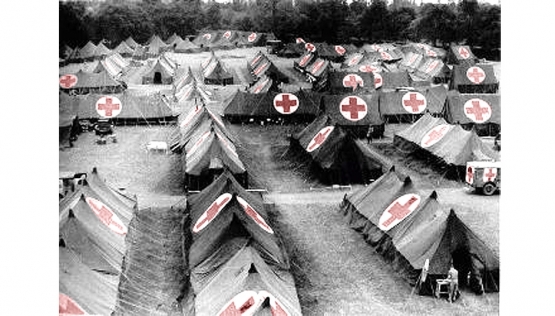
U.S. Army Mobile Hospitals of World War Two (Yank Magazine, 1944)
1944, World War Two, Yank Magazine

U.S. Army Mobile Hospitals of World War Two
(Yank Magazine, 1944)

The American military personnel who are wounded while fighting the terrorists in both Iraq and Afghanistan are today the beneficiaries of a field hospital system that was developed long ago in World War II, Korea and Vietnam. The mobile hospitals developed by the U.S. Army Medical Corps has evolved into a unique life-saving force that has not simply relied on a trained staff but also a fast and well-fueled transportation system. This Yank Magazine article will give the reader a good look at how the medics and doctors had to work during the second War to End All Wars:

A portable surgical hospital is a medical unit of four doctors and generally 32 enlisted men. They’re supposed to work directly behind the line of battle and patch up casualties so they can be removed to an evacuation hospital. Sometimes part of the portable hospital personnel have to be removed, too.

Advertisement

Use shortcode [oma_ad position="summary_top"] (or other position) in your theme or widgets to display OMA Promotions here.

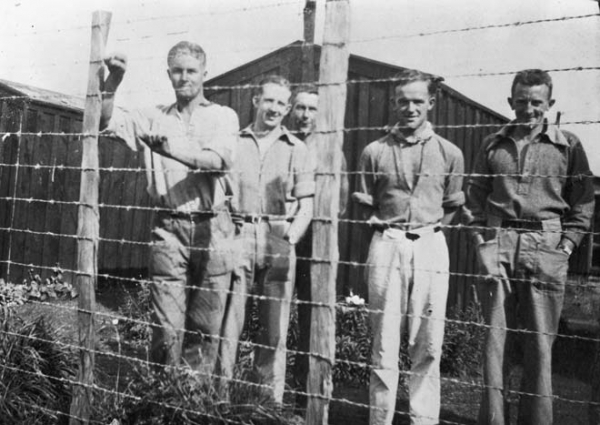
Conscientious Objectors (Yank Magazine, 1944)
1944, World War Two, Yank Magazine

Conscientious Objectors
(Yank Magazine, 1944)

Whatever became of the conscientious objectors?
Some of the men who registered as ‘conchies’ with their local selective service boards have been deferred because they are working in essential jobs. About 6,890 conchies have been interned and assigned to Civilian Public Service camps in the States. A handful, just 47, live and work in camps on Puerto Rico and the Virgin Islands, the only places outside the continental limits of the States where they may serve. By act of Congress, conscientious objectors may not be sent to foreign lands, but Puerto Rico and the Virgin Islands, although overseas, are territories of the U.S.


Click here to read about the British conscientious objectors of World War I.


We have an article that pertains to the Korean War draft-dodgers but it also explains the popular methods used by the W.W. II draft-evaders, as well.


To read an article about American draft dodgers of W.W. II, click here.

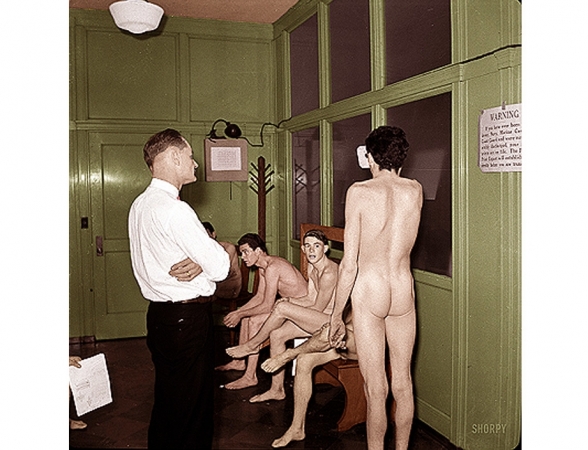
Late-War Draft Increase Announced (Yank Magazine, 1945)
1945, World War Two, Yank Magazine

Late-War Draft Increase Announced
(Yank Magazine, 1945)

Although the press questioned U.S. Secretary of War Henry L. Stimson (1867 – 1950) as to why the Selective Service Department had been ordered to call-up an additional 100,000 men when it was agreed that the U.S. military was already over strengthened with the full participation of 7,700,000 personnel currently under arms, Stimson made it clear in this notice from the Far East Edition of YANK, that he had his reasons – and this article lists a number of them.


Click here to read about a W.W. II draft board.


To read an article about American draft dodgers of W.W. II, click here.

Resident Aliens: Not Eligible for the 1917 Draft (American Legion Weekly, 1923)
1923, Draft Dodgers, The American Legion Weekly

Resident Aliens: Not Eligible for the 1917 Draft
(American Legion Weekly, 1923)

Here are a few lines from The American Legion Weekly that reported to their disappointed veteran readership that the foreign-born men residing legally in the United States who were previously accused of shirking the 1917 draft were, in fact, absolved from service and thus free to swear the oath of citizenship, after having been slandered as draft dodgers and alien-slackers until the finer points of the selective service law was clarified.

Advertisement

Use shortcode [oma_ad position="summary_top"] (or other position) in your theme or widgets to display OMA Promotions here.

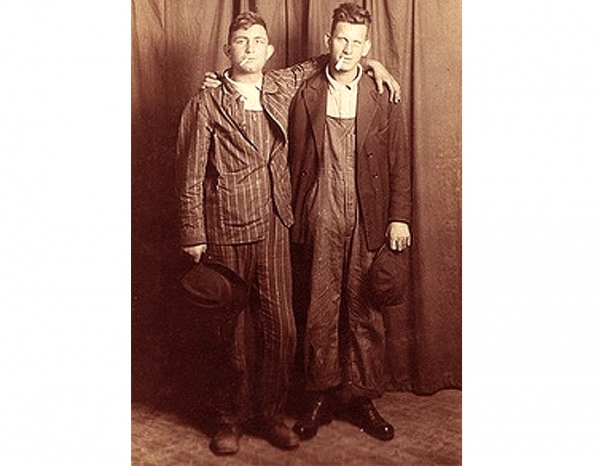
In Search of the W.W. I Draft Dodgers (American Legion Weekly, 1920)
1920, Draft Dodgers, The American Legion Weekly

In Search of the W.W. I Draft Dodgers
(American Legion Weekly, 1920)

This is a fiery editorial from a U.S. veteran’s magazine covering American law enforcement’s search for the 487,003 young men who resisted the draft of 1917-1918.

The War Department will take care of the actual deserters, the men who went into camp and then deserted. Such men are liable to prosecution at any time in their lives. The Department of Justice will get after the draft dodgers, who never answered the summons…

Draft-Dodgers and Deserters in Federal Prison (American Legion Weekly, 1923)
1923, Draft Dodgers, The American Legion Weekly

Draft-Dodgers and Deserters in Federal Prison
(American Legion Weekly, 1923)

Only eight men are serving sentences as draft deserters in Federal penitentiaries, Mr. Taylor declares. ‘Yet, the number of men defying our country in its hour of need, was many times the number who deserted the Army after the Armistice.’ Thirty-nine men, he states, are still serving time for desertion from the Army, and the draft deserters are serving shorter average sentences than are the soldiers who took unauthorized leave of the service after the Armistice.

Advertisement

Use shortcode [oma_ad position="summary_top"] (or other position) in your theme or widgets to display OMA Promotions here.

Forced Into Communism (Quick Magazine, 1952)
1952, Quick Magazine, The Cold War

Forced Into Communism
(Quick Magazine, 1952)

In his illustrated five page reminiscence, former Communist refugee Ivan Pluhar (b. 1927), recalls those dreadful days following the end of the Second World War when it became clear to all the citizens of Czechoslovakia that their Soviet liberators would never leave their country. The article will clue you in as to what life was like during the earliest years of the occupation and how dissenters were treated throughout that period.


A Quick Read About Soviet-Enforced Atheism
Behind the Iron Curtain…

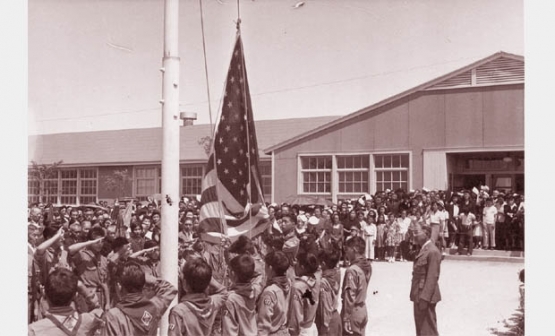
Social Groups Within the Internment Camps (U.S. Government, 1943-45)
1943, Japanese-American Internment, The U.S. Government

Social Groups Within the Internment Camps
(U.S. Government, 1943-45)

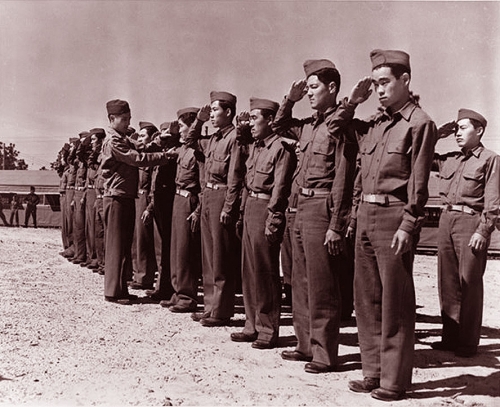
A list provided by the War Relocation Authority of the seven groups that maintained ties and created various social and educational activities for the interned Japanese-Americans spanning the years 1943 through 1945. The Y.W.C.A., the Boy Scouts and the American Red Cross are just three of the seven organizations.

For years prior to W.W. II and the creation of the Japanese-American internment camps, the people of the United States had been steadily spoon fed hundreds articles detailing why they should be weary of the Japanese presence in North America; if you would like to read one that was printed as late as 1939, click here.

Advertisement

Use shortcode [oma_ad position="summary_top"] (or other position) in your theme or widgets to display OMA Promotions here.

Nordhausen Death Camp | 1945 Liberation of Nordhausen Concentration Camp
1945, Death Camps, Newsweek

Nordhausen
(Newsweek Magazine, 1945)

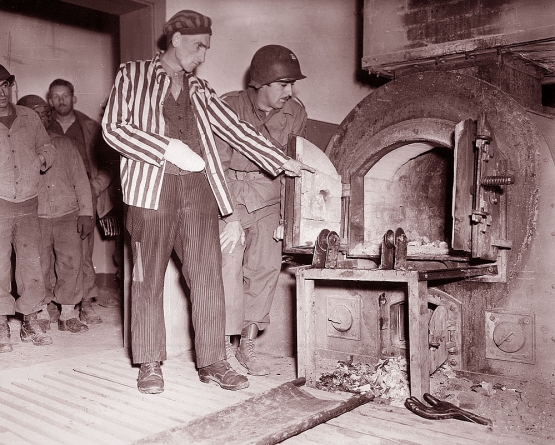
Here is an account by a war correspondent who was a part of the Allied advance through Germany. He filed this chilling report about the liberation of the Nazi death camp at Nordhausen:

No one who saw the charnel house of Nordhausen ever will be able to forget the details of that horrible scene… The Yanks stood there stunned and silent,

Albert Ganzenmüller Director of Nazi Rail Road System | Obergrupenfuehrer Albert Ganzenmüller Invention | Obergrupenfuehrer Albert Ganzenmüller Newspaper Article 1944
1944, New Masses, The Nazis

Albert Ganzenmüller
(New Masses, 1944)

Obergrupenfuehrer Albert Ganzenmüller (1905 – 1996) was responsible for running the German rail roads. This not only involved delivering troops and ordinance to the various fronts but also deporting Jews, Poles, Croats and Slovenes to assorted death camps:

Ganzenmüller’s special contribution to these migrations was his invention of the railroad-car gas chamber to exterminate Jews.

Advertisement

Use shortcode [oma_ad position="summary_top"] (or other position) in your theme or widgets to display OMA Promotions here.

Scroll to Top