Author name: editor

WW II American Military Bravery
1944, Click Magazine, World War Two

The Mettle of Americans
(Click Magazine, 1944)

Following his tour of the war fronts, U.S. Senator Henry Cabot Lodge Jr. (1902 – 1985) put pen to paper in an attempt to express his admiration for the brave and selfless acts that Americans were performing all over the globe:

If asked to say what impressed me on my recent trip to the war theater, my answer would be: the heroic qualities displayed by our American boys. My most lasting impressions were gained in the field and in the hospitals around the globe. It is there that one sees the kind of boy America produces.


Additional praise for the American fighting man can be read here…

1932 Emergency Relief and Construction Act | Hoover Administration Fight with Congress 1932
1932, Pathfinder Magazine, The Great Depression

Relief Bill Passed by Congress
(Pathfinder Magazine, 1932)

Republican President Herbert Hoover had made numerous attempts to get a Federal relief bill through the Congress to the ailing citizenry, but the Democratic congress repeatedly disagreed as to how the funds were to be distributed. Finally an agreement was reached as Hoover’s administration was reaching the end of his term and the Emergency Relief and Construction Act was passed into law.

The obnoxious features which had been injected into the legislation from time to time by Members of the House of Representatives and had so long delayed action, have been eliminated.

Harry S Truman Assumed Office of US Presidency April 12 1945 | Harry Truman Magazine Interview 1945
1945, Interviews: 1912 - 1960, Yank Magazine

The New Commander-in-Chief: Harry S Truman
(Yank Magazine, 1945)

A heavily illustrated, four page article that served to answer the U.S. serviceman’s questions as to who Harry S. Truman (1884 – 1972) was and why was he deemed suitable to serve as President?

Mr. Truman now occupies the Presidency, of course, because he won the Democratic Vice-Presidential nomination in Chicago last summer. Two things won him the nomination. First was the fact that he alone was acceptable to Mr. Roosevelt and to both the conservative element of the Democratic Party and its liberal wing. The second was the excellent performance of the Truman Committee in the investigation of our government’s spending money for the war-effort…One of the main themes of his campaign speeches last fall was that the U.S. should never return to isolationism.

Click here to read about the busy life of President Franklin Roosevelt.

Advertisement

Use shortcode [oma_ad position="summary_top"] (or other position) in your theme or widgets to display OMA Promotions here.

Defining the Left and the Right (Pathfinder Magazine, 1946)
1946, Pathfinder Magazine, The Nanny State

Defining the Left and the Right
(Pathfinder Magazine, 1946)

Surprisingly, these definitions outlining Left and Right in American politics are almost accurate descriptions for our own day, but they still fall short in a number of areas – yet, wouldn’t it be amazing if they still sufficed after all the numerous tremors that have served to rearrange the sociopolitical landscape during the past sixty years?


When the largely agricultural province of Saskatchewan (Canada) began their flirtation with socialism they, too, started with laws involving insurance – car insurance! read about it here…

The Wandering Waistline (Quick Magazine, 1951)
1950s Fashion, 1951, Quick Magazine

The Wandering Waistline
(Quick Magazine, 1951)

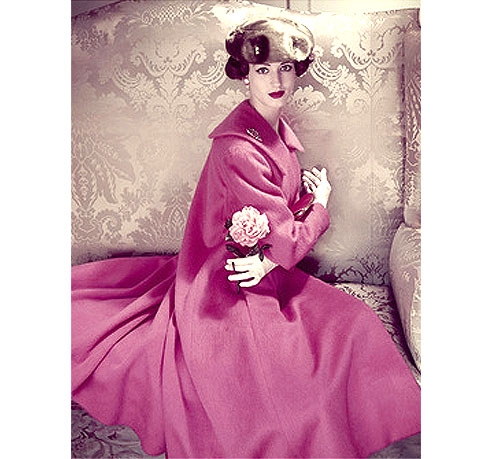
Looking back, the fashion silhouette of the 1950s is remembered as having a very narrow waistline, but in the early days of the decade, as this 1951 fashion review indicates, the feminine waist was a highly contested battle ground:

Where’s the waist? Paris popped the question, but has yet to give the answer. On the one hand, many leading designers showed a tendency to raise the waistline. But they were challenged by a strong minority that seemed determined to drop it [pictures of both high and low are provided herein]…Apparently, Paris has decreed it the year of the wandering waist. Where it will stop may well be up to American women.

If you’d like to read about the feminine silhouette of the early Forties, click here.
Japanese Army Surrenders to Soviets near Vladivostok 1945 |
1945, Newsweek, Sino-Japanese Wars

Japan Calls It Quits
(Newsweek Magazine, 1945)

In a dismal forest near Vladivostok, Japanese commanders removed their caps, bowed low, and surrendered their entire Manchurian forces to the Russians… Growing numbers of enemy troops threw away their arms and joined the long lines of ragged Japs trudging down dusty Manchurian roads to Soviet Prison stockades. When a number of of Jap officers objected to the wholesale surrender, they were killed by their own men.


Among the surrendered was the Japanese puppet, Henry Pu Yi (1906 – 1967), eleventh and last Emperor of the Qing dynasty.

Advertisement

Use shortcode [oma_ad position="summary_top"] (or other position) in your theme or widgets to display OMA Promotions here.

Director Alfred Hitchcock (Film Daily, 1939)
1939, Film Daily Magazine, Hollywood History

Director Alfred Hitchcock
(Film Daily, 1939)

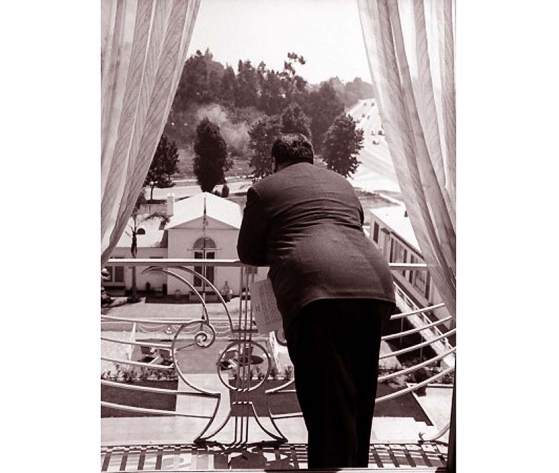
Now at work on his first American motion picture [since arriving in Hollywood], the glossily rotund Hitchcock, whose gelatinous appearance and jocose manner belie his sinister intent, and who brightly eyes all comers with a sort of controlled effervescence, happily declares that his first Hollywood opus will surpass anything he has yet done to keep an audience poised on the edges of its chairs.


Click here to read about Marilyn Monroe and watch a terrific documentary about her life.

The Death of Edward VII and the Accession George V (Review of Reviews, 1910)
1910, European Royalty, The American Review of Reviews

The Death of Edward VII and the Accession George V
(Review of Reviews, 1910)

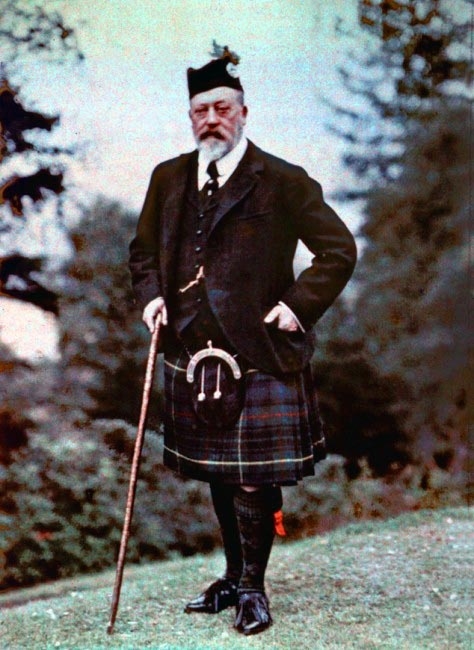
This two and a quarter page article discusses the probable effect [that] the change of sovereigns will have upon the present so-called constitutional crises. The writer also concentrates on the subject of Edward VII as diplomat, his thoughts on the entente, his popularity and his unique relationship with the French. The character of the incoming George V is examined as it relates to the constitutional controversy of 1910.

The WACs (Think Magazine, 1946)
1946, Think Magazine, WACs

The WACs
(Think Magazine, 1946)

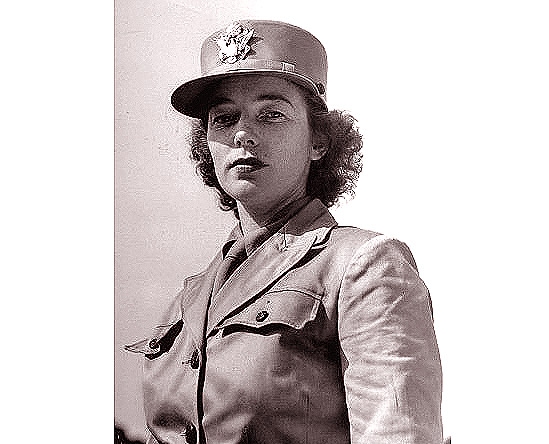
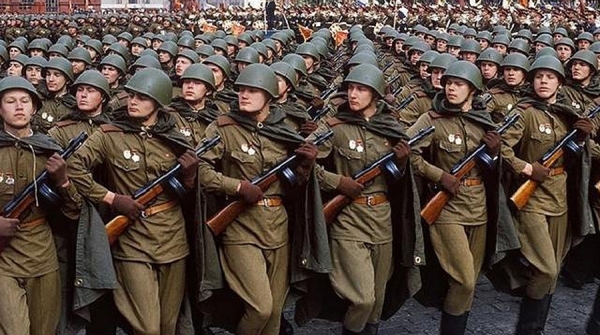
The Women’s Army Corps (WAC), first organized as an auxiliary May 14, 1942, became ‘regular army’ a little more than a year later…They were secretaries and stenographers for generals. They operated switchboards which kept communications alive throughout the European theater of operations…Their keen eyes and quick fingers made them expert as parachute riggers. They became weather experts [charting the aerial routes for the long-range bombers of the U.S. Eighth Air Force].

140,000 women served as WACs – – although this article stated that there were only 100,000.

Advertisement

Use shortcode [oma_ad position="summary_top"] (or other position) in your theme or widgets to display OMA Promotions here.

WAACs and Men | WW II Dates Between Men and Women | 56th Wac Headquarters Fort Warren Wyoming
1943, Click Magazine, WACs

Guys & WAACs
(Click Magazine, 1943)

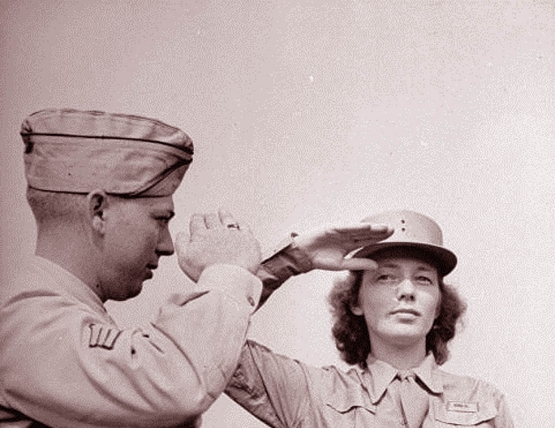
Fort Warren, Wyoming, is bleak, windswept, desolate. It is no wonder that the soldiers stationed there looked forward to the arrival at the lonely post of a unit of the Women’s Army Auxiliary Corps (WAAC). [When the women arrived] The men of Company H, Fifth Quartermaster Training Regiment, sent over an invitation to a party… The party was informal but military. The hosts marched in formation to their guests’ barracks where the two companies fell in behind their respective officers for the return trip. The evening included a buffet supper, attendance at boxing matches and refreshments afterwards.

Beauty as Duty: A Victorian Appreciation (Manners, Culture and Dress, 1870)
1893, Cosmetics, Manners, Manners, Culture and Dress

Beauty as Duty: A Victorian Appreciation
(Manners, Culture and Dress, 1893)

The thought that one’s appearance should never be a burden for others is not entirely a Victorian concept, it was more than likely borrowed from the Greeks:

It is every woman’s duty to make herself as beautiful as possible;and no less the duty of every man to make himself pleasing in appearance. The duty of looking well is one we owe not only to ourselves, but to others as well.

Click here to read about physical perfection during the Golden Age of Hollywood.

Beauty in the Congo (Click Magazine, 1938)
1938, Click Magazine, Cosmetics

Beauty in the Congo
(Click Magazine, 1938)

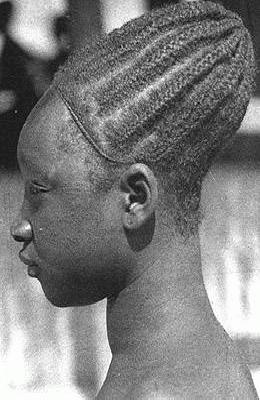
Fashions these days are simply fraught with Third World influences such as tattoos and piercings and there is no reason to suspect that fashion’s dictators might one day soon decide that the elegant life is best lived with a cone-shaped head. The attached fashion article is illustrated with three pictures of the mode-conscious Manbetu tribe of Northeaster Africa who live life large as the African Longheads.

Advertisement

Use shortcode [oma_ad position="summary_top"] (or other position) in your theme or widgets to display OMA Promotions here.

Henri Matisse Viewing in New York (Vanity Fair, 1915)
1915, Modern Art, Vanity Fair Hall of Fame

Henri Matisse Viewing in New York
(Vanity Fair, 1915)

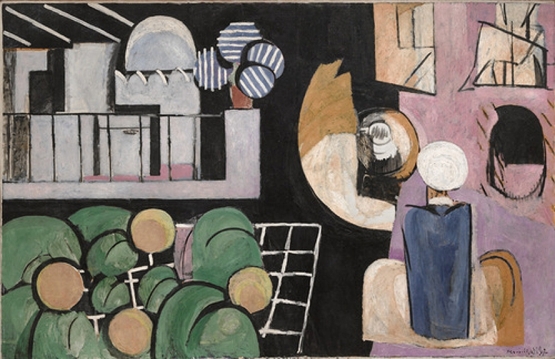
This article will give you a good look at how the seeds were sewn as early as 1915 to ensure the rise of New York City as one of the great art centers of the world. For the first time since the 1913 Armory Show, New York was again to host an important exhibition of the European modernists. Much of the article concerns Henri Matisse (1869 – 1954) and is illustrated with a portrait of the artist by the photographer Edward Steichen.


Things were changing – not long after New York was proclaimed as the commercial capital of the art world, America was recognized as the preeminent world power, click here to read about it…

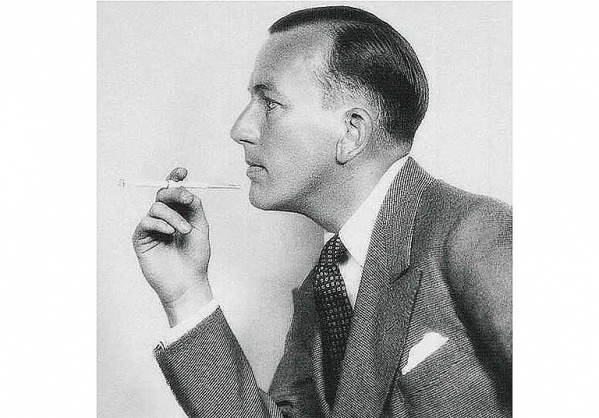
Noël Coward (Stage Magazine, 1933)
1933, Interviews: 1912 - 1960, Stage Magazine

Noël Coward
(Stage Magazine, 1933)

Noël Coward (1899 – 1973) was simply the best all-rounder of the theatrical, literary and musical worlds of the 20th century. He invented the concept of celebrity and was the essence of chic in the Jazz Age of the 20s and 30s. His debonair looks and stylishly groomed appearance made him the icon of ‘the Bright Young Things’ that inhabited the world of The Ivy, The Savoy and The Ritz. No one is totally sure when and why it happened but following his success in the 1930s he was called ‘The Master’, a nickname of honor that indicated the level of his talent and achievement in so many of the entertainment arts. -so say the old salts at NoelCoward.net, and they should know because they have a good deal more time to think about him than we do.


The attached article was no doubt written by one of his many groupies for a swank American theater magazine following the successful New York premiere of his play Design for Living:


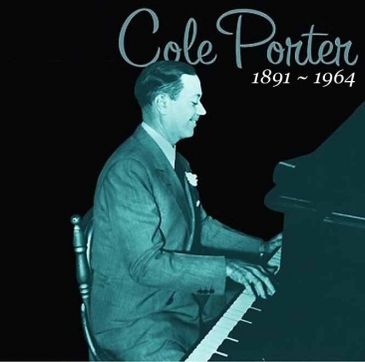
Click here to read about Cole Porter.


Elsa Maxwell kept the party going during the Great Depression…

Advertisement

Use shortcode [oma_ad position="summary_top"] (or other position) in your theme or widgets to display OMA Promotions here.

A Look at Oscar Wilde (The Nineteenth Century, 1922)
1922, Interviews: 1912 - 1960

A Look at Oscar Wilde
(The Nineteenth Century, 1922)

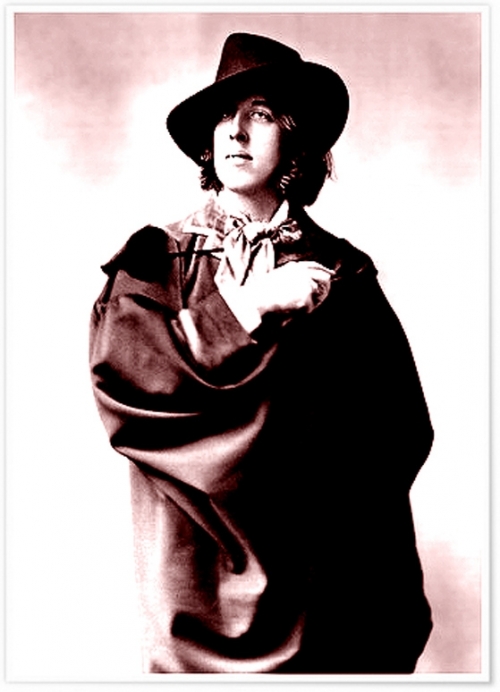
The author of this article, Gilbert Coleridge, has written an honest character study of Oscar Wilde (1854 – 1900) in hopes to better understand the man in the context of his time. One of the interesting hypothetical questions he poses asks how would Oscar Wilde (a man who lived only for pleasure) have got on during the highly rationed home front of 1914-1918 war?


He was an arresting figure in person, of commanding height, with a clean-shaved oval face. The latter was marred by a weak mouth, from which poured, with fascinating languor sometimes, torrents of paradox, quaint wit, perverse and startling epigrams, all spoken in a tone which left the listener wondering whether the speaker was really in earnest, or only talking for effect.


Another article about Oscar Wilde can be read here.

In Praise of Tennis Flannels (Vanity Fair Magazine, 1918)
1918, Tennis History, Vanity Fair Magazine

In Praise of Tennis Flannels
(Vanity Fair Magazine, 1918)

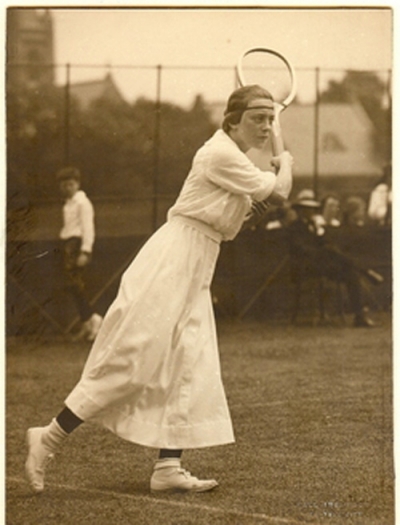
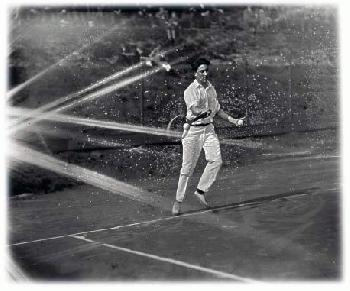
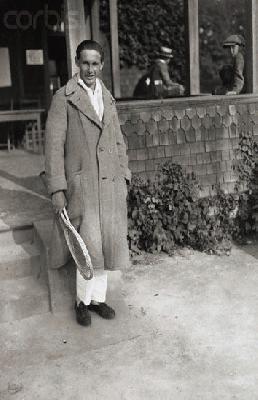
For tennis, of course, the conventional flannel trousers will continue their popularity this season. But many men will also wear white duck or twill trousers, which has the advantage of great coolness and comparatively easy to launder… -but wait! the excitement does not stop with such trilling prose! The reader will also find a lovely fashion drawing of some awfully mannly tennis players as well as photographs of the fashions being praised.

Advertisement

Use shortcode [oma_ad position="summary_top"] (or other position) in your theme or widgets to display OMA Promotions here.

Scroll to Top