Julius Streicher
(Yank Magazine, 1945)
NULL
“Though these words are feeble, they come from the bottom of a heart overflowing with pride in your loyal service and admiration as warriors. Your accomplishments at sea, in the air, on the ground and in the field of supply have astonished the world.”
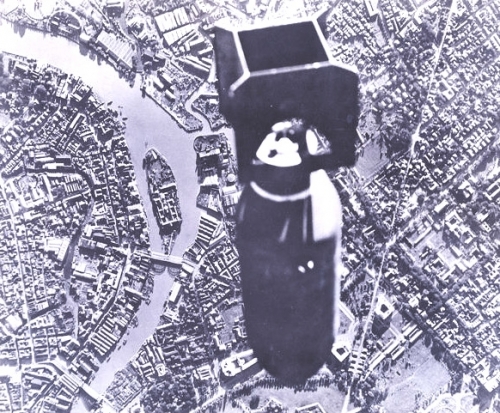
“On March 10, 1945, a group of Superforts crossed Japan’s coast line. Behind them came another group, and another in a line stretching far back toward Saipan. In a long, thin file they roared over Tokyo. They flew low and out of their open bellies spilled bombs of jellied gasoline. When they hit, they burst, spewing out billowing, all-consuming fire. The flames leaped across fire lanes, swallowed factories, destroyed skyscrapers.”
Click here to read about August 28, 1945 – the day the American occupation began.
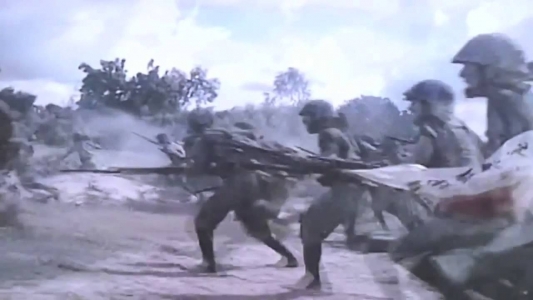
“American troops on Okinawa thought they knew all there was to know about Jap fanaticism. But last week the Japs served it up with a new twist. The evening of May 24 started out like any other on the battle-torn island. The enemy sent its usual flight of Kamikaze suicide planes to strafe American airfields and dive into shipping offshore… At the height of the earsplitting air battle, the Japs played their trump card” – from the fuselage of a twin-engine bomber that had belly-landed on an American airfield, emerged Japanese infantry.
In 1942, the reasons for despising Global Fascism were many and myriad but the woman who penned this editorial hated Hitler, Mussolini and Tojo for a reason all her own: Gertie McAllister hated them because they put women in pants.
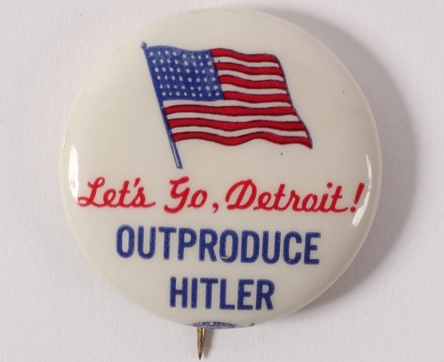
Throughout a good deal of the Great Depression (1929 – 1940), FDR liked to think he was cozying-up to the voters when he insulted the great captains of industry with mean names like “selfish” and “stubborn”. All that ended when the war started, and the President had to make common cause with these men in order gain their cooperation in meeting the military needs of the nation. This article concerns the importance of the industrial might of Detroit.
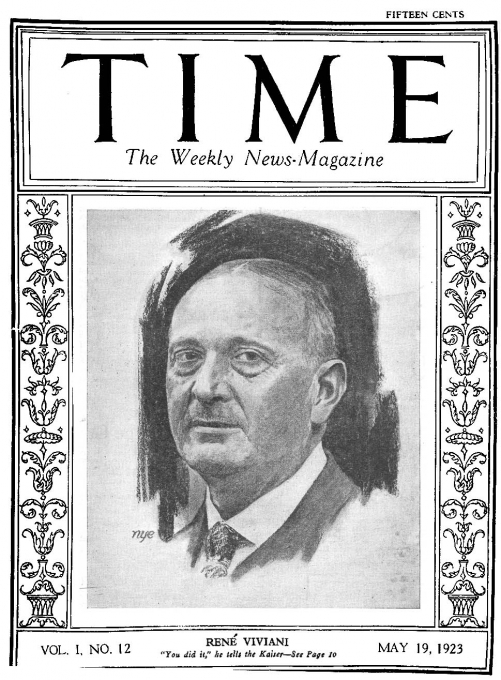
Kaiser Wilhelm’s recollections of his part in the First World War (reviewed above) was released in the Winter of 1922. Former French president Rene Viviani (1863 – 1925; leadership, 13 June 1914 – 29 October 1915) quickly responded with his own book that appeared the following spring – it was titled As We See It:
“M. Viviani’s book is a direct answer to that puerile and invidious work known as the ex-Kaiser’s War Memoirs. It is impossible to escape from the logic of Viviani’s scathing denunciation of the ex-Kaiser’s tacit inculpation in the events which preceded the world-wide cataclysm.”
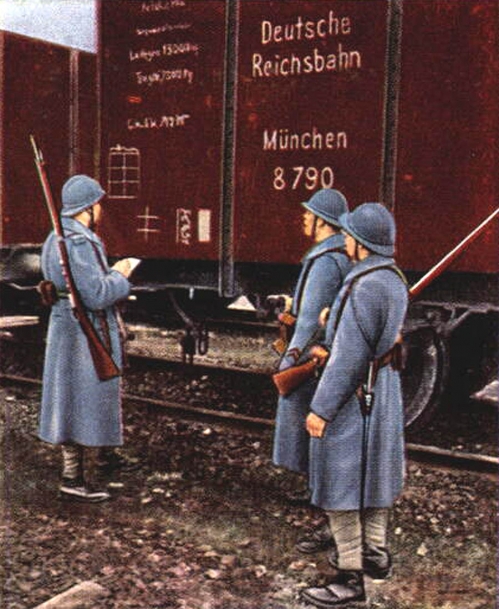
It was easy for the French and Belgians to send their Armies into Germany’s Ruhr Valley in February of 1923 – not so easy getting them out. Attached are two news articles that reported on the assorted European officials who were applying all their brainpower to the problem.
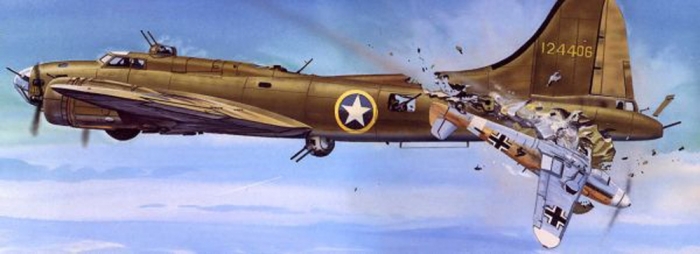
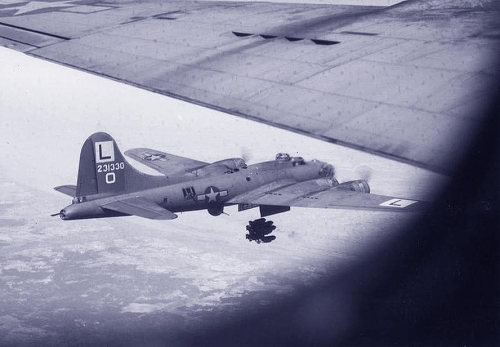
Flying home after bombing Tunis, the B-17 All-American with a full crew of ten onboard was sliced open at the rear by a nazi fighter plane that nearly severed her tail. How the craft stayed up in the air was anybody’s guess.
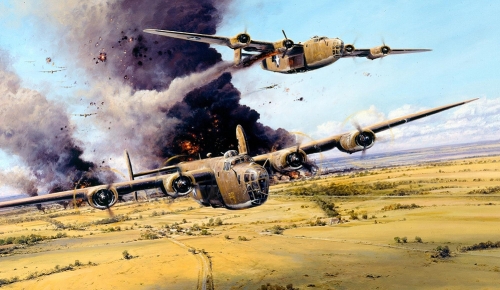
Here is an article from 1943, the year everything changed for the Axis. The article explains all that was involved with the stout-hearted raid on the Ploesti oil fields in Rumania. 177 American bombers were sent to do the job.
“From Ploesti, the Nazis extracted oil and oil products which maintained the entire German and Italian fleets, and third of the whole German air force in Russia. Around the Ploesti installations, the Germans had raised a forest of antiaircraft guns of large and small calibers. They had built blast walls around plants’ vital parts and spotted airdromes from which fighters could rise to intercept our bombers.”
“Comparing the American [daylight] raids with the RAF [nighttime] incursions, it was certainly a great shock to Berliners to find their city now open to round-the-clock bombing.”
“We don’t mind the Yanks who come when the sun shines and it’s warm. It’s the Tommies sneaking in at night that we don’t like so much.”
Click here to read about the harried everyday life on a U.S. bomber base in England…
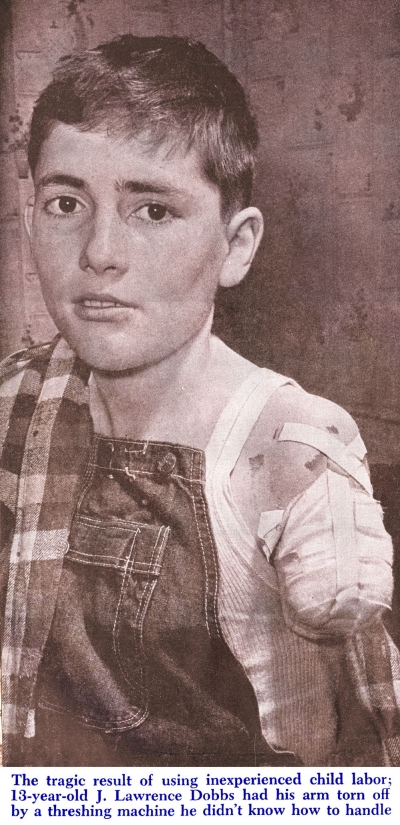
“Throughout the land, child labor is making a comeback as already inadequate laws buckle under pressure of fraudulent appeals to patriotism. Here is what greed and indifference are doing to America’s greatest asset: its children:”
“[The Devious] prefer children – the child worker is cheaper, more agile and willing, has less bargaining power. So the cry goes out for more and more children, ‘to help win the war!'”
“Just how it helps win the war for an Alabama girl of 11 to work in the fields till she collapses and is taken to a hospital with heart trouble has not been made clear.”
“The Supreme Court ruled, by [a] vote of 7 to 2, that liquor is legal on U.S. ships outside the three-mile limit… The 18th Amendment and the Volstead Act apply only to actual United States territory.”
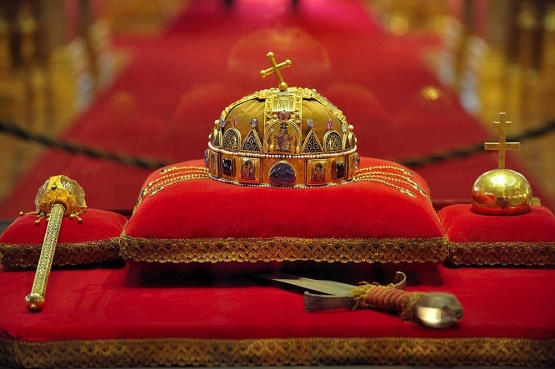
“Hungary is reported to be on the brink of revolution…[Since the war’s end] The Government has never been popular with the majority of the people; it was only accepted by them as a temporary measure, pending the advent of King Otto – the late King Charles’ young son – to the throne of Hungary.”
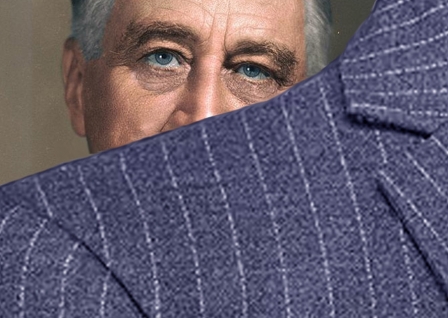
Five months after the death of President Roosevelt, writer Michael Sayers (1911 – 2010) managed to get this FDR article to press while the public’s interest in the man was still hot. It addressed the tremendous lengths the Secret Service went to on a daily basis to protect President Roosevelt from Axis assassins and general kooks who wanted a shot at him:
“The White House detail, headed by six-foot Michael Reiley (1909 – 1973), stayed beside the President at all times. They became his shadows, unseen in the public glare, but always at hand… The President was not permitted to set foot in any place that had not been thoroughly investigated beforehand.”