





Theatre Arts Magazine Articles
Sea Power Magazine Articles
Hearst's Sunday American Articles
La Baionnette Articles
Freedom's Triumph Articles
Leslie's Magazine Articles
47 Magazine Articles
Vogue Magazine Articles
The American Legion Weekly Articles
The Film Spectator Magazine Articles
Harper's Weekly Articles
Film Daily Magazine Articles
Photoplay Magazine Articles
G.I. Joe Magazine Articles
Trench Warfare Articles
Liberty Magazine Articles
Confederate Veteran Magazine Articles
Punch Magazine Articles
The Saturday Evening Post Articles
Newsweek Articles
Confidential Magazine Articles
The Dial Magazine Articles
The Flapper Magazine Articles
Current Literature Magazine Articles
PM Tabloid Articles
Touchstone Magazine Articles
The Smart Set Articles
Collier's Magazine Articles
Ken Magazine Articles
Stage Magazine Articles
Rob Wagner's Script Magazine Articles
The Atlantic Monthly Articles
The American Legion Monthly Articles
Creative Art Magazine Articles
Scribner's Magazine Articles
Vanity Fair Magazine Articles
Click Magazine Articles
Outing Magazine Articles
People Today Magazine Articles
The New York Times Articles
Outlook Magazine Articles
The North American Review Articles
The Saturday Review Articles
Pic Magazine Articles
Life Magazine Articles
Harper's Bazaar Magazine Articles
Men's Wear Magazine Articles
The New Republic Articles
The National Park Service Articles
Direction Magazine Articles

Army Rangers

Learn about the U.S. Army Rangers of W.W. II with these old magazine articles. Find the history of U.S. Army Rangers in World War II.

The 6th Rangers on Luzon
(Yank Magazine, 1945)

This notice was the Yank magazine account of what has come to be known as the Great Raid that was commanded by Lt Col. Henry A. Mucci (1909 – 1997). On January 30, 1945 Mucci lead a raiding party of 121 hand-picked men of the 6th Rangers accompanied by some 300 Filipino guerrillas into the jungles on Luzon (The Philippines) in order to liberate the survivors of the Bataan Death March from the Cabanatuan Prison Camp. At the loss of only two men, the raiders freed 510 American POWs.


Click here to read more about the Cabanatuan POW camp.

The Rangers Go Public
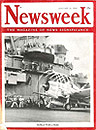
(Newsweek Magazine, 1942)

The first time the American public learned of the existence of the now famous U.S. Army Rangers was through articles like this one, that appeared during August of 1942. This article made public the fact that fewer than 100 Rangers had participated in the not-terribly-successful raid on Dieppe.

The Rangers were named after Rogers’ Rangers, the rough and crafty Indian fighters of colonial days who battled near the Canadian border under their leader, Major Robert Rogers… All Rangers are volunteers, selected for strength and ability to use such weapons as daggers, grenades, fists, tommy guns and mortars.

Ranger School
(Yank Magazine, 1942)

The 76th Division at Fort Meade learns the latest scientific methods of hand-to-hand slaughter and free-for-all street fighting that will soon be taught to every infantry outfit in the Army. The article concerns the hand-t-hand combat instruction of one Francois D’Eliscu – a U.S Army major made famous for his 11-point training plan.

Major D’Eliscu is one of the toughest men alive. He can kill with a flick of his elbow, maim with a pinch of his fingers. He imparts this toughness into the course he gave to the 76th Division instructors and to the Special Service officers from the other divisions.

Advertisement

Use shortcode [oma_ad position="summary_top"] (or other position) in your theme or widgets to display OMA Promotions here.

The Fifth Ranger Battalion Goes Home
(Yank Magazine, 1945)

One quality that can be found in the memoirs of both world wars is a shared sense that the males of their respective generations had been singled-out for extermination, and when the end to these wars finally came, the most seasoned combat veterans were in a state of disbelief that they would be allowed to grow old, when so many had died. Some of this relief can be felt in this article from 1945 in which the battle-savvy men of the U.S. Army’s Fifth Ranger Battalion anticipated their return to civilian life now that the war was over.

I don’t believe it will do much good to talk about the war with civilians. I don’t think war is something that anyone can know about unless they’re actually in it. I would just rather forget I was ever in the army…


The Rangers underwent intense training in hand-to-hand combat, you can read about about it in this 1942 magazine article.

The Army Rangers in Tunisia and Italy
(Yank Magazine, 1944)

A compelling collection of World War II combat stories involving the 1st, 3rd and 4th Ranger Battalions. Numerous Army Rangers were interviewed for this article and it is an informative read which starts with the formation of the unit taking place just seven months after the U.S. declaration of war (December 8, 1941) and their earliest deployments in North Africa and Italy.

The original outfit, the 1st Ranger Battalion, was activated in Northern Ireland on June 19, 1942, with 600 men selected from more than 2,000 soldiers who had volunteered. Their training was in Scotland, and they had more casualties there than they had on their first African landing. The British Commandos were their instructors.


Read about the hand-to-hand combat training for the Ranger Battalions here…

Scroll to Top