
















Direction Magazine Articles
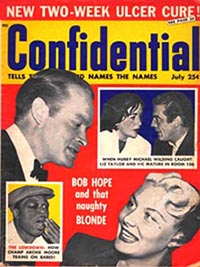
Confidential Magazine Articles
The Flapper Magazine Articles
Leslie's Magazine Articles
Creative Art Magazine Articles
The New Republic Articles
Pic Magazine Articles
Vogue Magazine Articles
Harper's Weekly Articles
47 Magazine Articles
Film Daily Magazine Articles
Hearst's Sunday American Articles
Click Magazine Articles
Sea Power Magazine Articles
Punch Magazine Articles
Trench Warfare Articles
Confederate Veteran Magazine Articles
The American Legion Weekly Articles
Life Magazine Articles
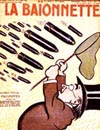
La Baionnette Articles
The Saturday Evening Post Articles
Stage Magazine Articles
Collier's Magazine Articles
The Dial Magazine Articles
Photoplay Magazine Articles
G.I. Joe Magazine Articles
Harper's Bazaar Magazine Articles
Touchstone Magazine Articles
Newsweek Articles
Men's Wear Magazine Articles
The National Park Service Articles
Freedom's Triumph Articles
The New York Times Articles
The Smart Set Articles
Rob Wagner's Script Magazine Articles
The North American Review Articles
Current Literature Magazine Articles
Vanity Fair Magazine Articles
Scribner's Magazine Articles
The American Legion Monthly Articles
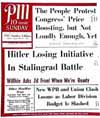
PM Tabloid Articles
People Today Magazine Articles
The Film Spectator Magazine Articles
Ken Magazine Articles
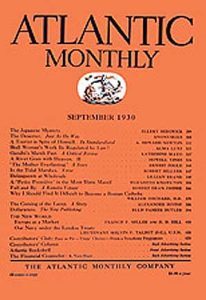
The Atlantic Monthly Articles
Outing Magazine Articles
Theatre Arts Magazine Articles
Outlook Magazine Articles
Liberty Magazine Articles
The Saturday Review Articles

Prelude (WW II)

The Consequences of the Munich Agreement
(Pathfinder Magazine, 1938)

When England and France yielded to Germany in the Munich Agreement of last September, a significant change took place. The balance of power in Europe shifted from the democracies to the dictatorships… [and] the United States had to stop thinking of England and France as America’s ‘first line of defense’ in the time of a European war.

Danzig Nazis
(The Literary Digest, 1936)

The attached 1936 magazine article presents a picture of the Polish city of Danzig as it was during the mid-thirties. It was a city in which Danzig Nazis, like Arthur Karl Greiser, spoke of making that town a part of Germany once more (it was ordained a Polish city as a result of the Versailles Treaty) and Minister Joseph Beck who liked everything just the way it was, thank you very much.

NAZI PATIENCE: Neither Beck nor Hitler is anxious to come to a break over Danzig. Hitler, a sworn enemy of Soviet Russia, advises his Danzig Nazis to forbear from mentioning their intention of completely abandoning League control for secession to Germany…

Hitler’s troops invaded Poland on August 31, 1939.

America Prepares…
(Pathfinder Magazine, 1941)

By late November, 1941, only children and the clinically optimistic were of the mind that America would be able to keep out of a war – as you’ll be able to assume when you read the attached article that appeared on the newsstands just ten days before the attack on Pearl Harbor. It extolls the industrial prowess of the United States as the country prepared for war:


• William S. Knudson (1879 – 1948), Director of the OPM, declared U.S. arms output will soon ‘assure Hitler’s defeat’. Proof of this claim was seen in the celebration in New Haven, Connecticut, of one company’s production of it’s 10,000th machine-gun within a year of the time the contract was signed to build a plant.


• The launching of the 35,000-ton battleship INDIANA at Newport News, Virginia, the third battleship to come off the ways this year, indicated the increased tempo of defense production, which Admiral Land, of the Maritime Commission, said neared ‘superhuman’.

Advertisement

Use shortcode [oma_ad position="summary_top"] (or other position) in your theme or widgets to display OMA Promotions here.

More Babies, Please
(Pathfinder Magazine, 1937)

Italy, Germany and Russia, leading exponents of Europe’s Fascist and Communist camps, have each asked for more prolific mothers and decreed measures designed to fetch in the bambini, kinder and kodomos. Their dictator’s desires for more babies and still more babies have developed into a population race.


Click here to read about the Nazi struggle to increase their birthrate…

A Soviet Need to Update
(The Literary Digest, 1937)

While strong on land and in the air, [the Soviet Union] is weak on the water. Most Russian ships are World War or pre-War in origin, and many of her best vessels are in the Baltic, facing Germany, or in the Far East, where Japan looms up.

Military Buildup in Switzerland
(Literary Digest, 1937)

Little Switzerland will not be caught as Belgium was in 1914. The ‘Isle of Peace’, home of the League of Nations that was to forge all nations of the world together into a chain of amity, is fortifying her frontiers to the tune of war-rumbles. The army and air forces are being expanded in preparation for that ‘inevitable’ war Europe seems to be resigned to. She realizes that the only way to preserve her peace is to be prepared to fight for it.

A Swiss statesman, in an interview with correspondents, summed up his individual reaction, which probably holds good for the majority of the population, when he said:
War will come. We will try to stay out at any price, save our liberty. The moment a foreign soldier crosses our border, we will fight.
And you may rest assured that we shall fight to the last man.

Advertisement

Use shortcode [oma_ad position="summary_top"] (or other position) in your theme or widgets to display OMA Promotions here.

The Era of the Dictators
(Pathfinder Magazine, 1937)

If necessity can be called the mother of invention, then deep public dissatisfaction can be called the mother of the authoritarian or ‘totalitarian’ state. In Europe, the [First] World War resulted in post-war conditions that walked arm-in-arm with profound social change. The aftermath was a great political and economic headache that grew slowly in intensity until it lead people to embrace anything that promised a cure… In Europe there are no less than 11 nations operating under systems far removed from democracy as we know it in this country.

The Military Buildup in France and Britain
(Literary Digest, 1936)

This 1936 magazine article reported that Germany had spent a considerable sum on munitions and armaments throughout much of the previous year and was not likely to stop anytime soon. In light of this fact, the French and British governments were moved to do the same:

Winston Churchill, a cherubic reddish-haired Cassandra, bobbed up in the House of Commons again last week to warn his countrymen of the ‘remorseless hammers’ of the world.

Advertisement

Use shortcode [oma_ad position="summary_top"] (or other position) in your theme or widgets to display OMA Promotions here.

Military Buildup in the United States
(Literary Digest, 1936)

At midnight, December 31, the Naval Limitations Treaty of 1930 will expire and, tho a treaty of a sort was negotiated last April, apparently it will not be ratified and put into effect by the end of the year.

With this in mind, Congress authorized the construction of two battleships at the cost of $50,000,000 each.

And is it worth it, in these days of fleet and deadly torpedo planes or great diving bombers clutching demolition bombs weighing a ton apiece? Naval experts think so. The Battleship, they say, is still the backbone of the battle-fleet. In the phrase of the street, the battleship can dish it out.

The Navy would soon learn that they were actually living in the age of the aircraft carrier.


Click here to read more about the expansion of the U.S. Navy.

The World Wide Military Expansion
(The Literary Digest, 1935)

A 1935 magazine article which presented a table of statistics regarding the the European military expansion and then concluded by stating:

It seems fair to offer the opinion that a major war is likely within the next ten years because the pressure of rising armament expenditure promises to be so great as to develop the explosion that bound to come.

In 1940 former W.W. I Prime Minister David Lloyd George wrote an editorial in which he condemned the leaders of Europe for procrastinating rather than dealing with Hitler when Germany was still weak.
Click here
to read it.

President Roosevelt and the Panay Incident
(Literary Digest, 1937)

Attached, you will find a survey of opinions drawn from diverse corners of the fruited plain regarding the restraint exercised by President Franklin Roosevelt in the wake of Imperial Japan’s sinking of the U.S. gunboat Panay:

[President Franklin Roosevelt] should be sustained in his effort to make Japan realize that she cannot continue a policy of aggression with disregard of treaties and international law. A firm policy now for law and order will save many lives.

-Russell J. Clinchy,Washington Council for International Relations

Advertisement

Use shortcode [oma_ad position="summary_top"] (or other position) in your theme or widgets to display OMA Promotions here.

Germany’s Lost African Colonies
(Ken Magazine, 1938)

One thing about Adolf Hitler: he had a real bee in his bonnet when it came to the colonies that Imperial Germany had lost as a result of article 119 of the Versailles Treaty:

Germany renounces in favor of the principal Allied and Associated Powers all her rights and titles over her overseas possessions.

Attached, you will find a nifty cartoon depicting a terribly upset Hitler as he contemplated the map of Africa and all the colonies he was having to do without – all rendered in that glorious 1930s manner.

Click here to read more about the African colonies lost to Germany as a result of the Versailles Treaty.

The Advance on the Rhineland and Other Forebodings
(Stage Magazine, 1936)

One of the very few literati who recognized what a German military presence in the Rhineland meant was a one legged American veteran of the last war named Laurence Stallings (1894 – 1968). This article appeared to be about the great benefit afforded to us all by hard working photo-journalists who supplied us daily with compelling images of various far-flung events, but it was in all actuality a warning to our grand parents that the world was becoming a more dangerous place.

I think the unforgettable picture of the month will come from shots stolen near a French farmhouse by Strasbourg, when the French were countering Hitler’s move into the Rhineland…Routine were the crustacean stares of the Italian children in gas masks last week, where they practiced first aid against chlorine and mustard barrages…

Military Buildup in the USSR
(Literary Digest, 1935)

Premier Vyacheslav M. Molotov (1890 – 1986) pictured the Soviet Union as a lusty young giant strong enough to defend itself from both the East and the West in the keynote speech of the Seventh All Union Congress of Soviets, the Soviet Parliament.

In proof of this claim it was shown that in the last two years the Soviet Government had increased the strength of the Red Army from 562,000 men in 1932 to 940,000 in 1934.


Read about all the various international treaties that the Soviet Union violated…

Advertisement

Use shortcode [oma_ad position="summary_top"] (or other position) in your theme or widgets to display OMA Promotions here.

Scroll to Top