










The National Park Service Articles
Life Magazine Articles
Direction Magazine Articles
The Dial Magazine Articles
Photoplay Magazine Articles
Pic Magazine Articles
47 Magazine Articles
Stage Magazine Articles
People Today Magazine Articles
G.I. Joe Magazine Articles
Ken Magazine Articles
Punch Magazine Articles
Sea Power Magazine Articles
Hearst's Sunday American Articles
The New Republic Articles
The Saturday Review Articles
Outlook Magazine Articles
Men's Wear Magazine Articles
Outing Magazine Articles
Theatre Arts Magazine Articles
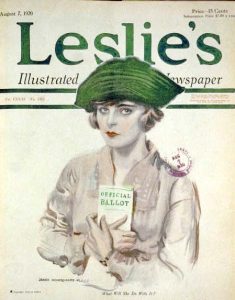
Leslie's Magazine Articles
The Saturday Evening Post Articles
La Baionnette Articles
The American Legion Monthly Articles
Scribner's Magazine Articles
Current Literature Magazine Articles
Creative Art Magazine Articles
The Smart Set Articles
Newsweek Articles
Vanity Fair Magazine Articles
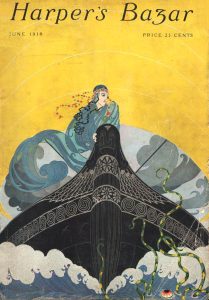
Harper's Bazaar Magazine Articles
Film Daily Magazine Articles
Collier's Magazine Articles
PM Tabloid Articles
Touchstone Magazine Articles
Harper's Weekly Articles
Trench Warfare Articles
The New York Times Articles
The North American Review Articles
Liberty Magazine Articles
The Film Spectator Magazine Articles
Confederate Veteran Magazine Articles
Confidential Magazine Articles
Click Magazine Articles
The Flapper Magazine Articles
The American Legion Weekly Articles
Rob Wagner's Script Magazine Articles
Freedom's Triumph Articles
Vogue Magazine Articles
The Atlantic Monthly Articles

Stars and Stripes Archive

Learn About the Americans of WW I with these Old Stars and Stripes Newspaper Articles. Get All Your WW I Articles from The Stars and Stripes.

The Third Anniversary of Verdun
(The Stars and Stripes, 1919)

1919 marked the third anniversary of the Battle of Verdun and the grounds were still littered with the dead, surrounded by a tons of equipment, lying in open fields pock-marked by thousands of high explosive shells:

Spring will come to France next month, but Spring will not come to the field of Verdun. Already the grass is green on the broad stretches of Champagne; in the Vosges the snow patches linger only in the stubborn shelter of rocks that bar the sun,; but there is no portent of resurrection in all the stretch of churned up gravel marking the line of forts that protect the citadel of the Meuse from the Northeast…the shell holes are filled with clear water, and between them course new born brooks, sublimating in crystal pools from which no man would dare drink.

Paris Furlough
(The Stars and Stripes, 1918)

A cartoon by C. LeRoy Baldridge (1889 – 1977) which depicted the streets of Paris in a way that only the A.E.F. could have witnessed it. A Yank-heavy Place de l’Opera is overwhelmed by sight-seeing Doughboys (note the Y.M.C.A. patch on the tour guide) and loitering officers lounging about over-priced cafes. In the foreground stands a bewildered Doughboy, dumb-struck by the passing gaze of an appreciative Parisienne while a few steps away a four-gold-chevroned private gets reamed for failing to salute the single-chevron looey. The stage is shared by bickering cabees, melancholy widows, wandering sailors, unforgiving MPs and a hard-charging, over-weight uniformed woman.

Click here to read about W.W. I art.

Click here to read the observations of U.S. Army lieutenant Louis L’Amour concerning 1946 Paris.

American Ambulance Volunteers in the Service of France
(The Stars and Stripes, 1919)

A thumbnail history of the United States Army Ambulance Service, which first arrived in June of 1917.

All through the hard French fighting of 1917 the 6,000 American ambulance drivers kept steadily at work in every sector of the French front. It was not until March, 1918, that the first sections of the service found themselves helping in battles with the fighting regiments of their own Army.

Many of the volunteers were college men, such as the poet E.E. Cummings, who wrote an interesting account of his days as an ambulance driver during the war.

Advertisement

Use shortcode [oma_ad position="summary_top"] (or other position) in your theme or widgets to display OMA Promotions here.

In the Doughboy Trenches
(The Stars and Stripes, 1918)

Mr. Junius B Wood, correspondent of the CHICAGO DAILY NEWS with the A.E.F. recently spent a week in the sector held by the American Army Northwest of Toul. He lived the life of a Doughboy, slept a little and saw a lot. He spent his days in and near the front line and some of his nights in No Man’s Land. Here is the second and concluding installment of his story, depicting life at the front as it actually is…

Night Patrol
(Stars and Stripes, 1918)

Mr. Junius B. Wood, correspondent of the CHICAGO DAILY NEWS with the A.E.F. recently spent a week in the sector held by the American Army Northwest of Toul. He lived the life of a Doughboy, slept a little and saw a lot. He spent his days in and near the front line and some of his nights in No Man’s Land. Here is the second and concluding installment of his story, depicting life at the front as it actually is…

U.S. Propaganda Pamphlets Dropped on the Hun
(The Stars and Stripes, 1919)

This is a swell read, written in that patois so reminiscent of those fast talking guys in 1930s Hollywood movies. One of the many reasons I find this era so interesting has to do with the fact that the war coincided with that mass-media phenomenon called advertising – and this article pertains exactly to that coincidence. This column was printed shortly after the war in order to let the Doughboys in on the existence of a particular group within the A.E.F. that was charged with the task of dumping propaganda leaflets all over the German trench lines:


Propaganda is nothing but a fancy war name for publicity and who knows the publicity game better than the Yanks?

Advertisement

Use shortcode [oma_ad position="summary_top"] (or other position) in your theme or widgets to display OMA Promotions here.

Scroll to Top