














Outing Magazine Articles
The Saturday Evening Post Articles
The National Park Service Articles
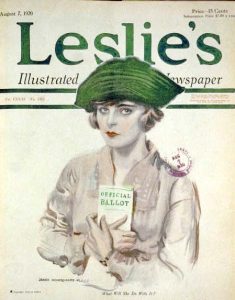
Leslie's Magazine Articles
People Today Magazine Articles
Harper's Bazaar Magazine Articles
The North American Review Articles
Freedom's Triumph Articles
Vanity Fair Magazine Articles
Harper's Weekly Articles
La Baionnette Articles
Hearst's Sunday American Articles
Liberty Magazine Articles
The American Legion Weekly Articles
The American Legion Monthly Articles
The Flapper Magazine Articles
The Smart Set Articles
Ken Magazine Articles
Life Magazine Articles
Confederate Veteran Magazine Articles
Outlook Magazine Articles
The Dial Magazine Articles
Newsweek Articles
Creative Art Magazine Articles
Photoplay Magazine Articles
Click Magazine Articles
Sea Power Magazine Articles
The Atlantic Monthly Articles
Touchstone Magazine Articles
Stage Magazine Articles
Current Literature Magazine Articles
The Saturday Review Articles
PM Tabloid Articles
Vogue Magazine Articles
Direction Magazine Articles
G.I. Joe Magazine Articles
Film Daily Magazine Articles
Confidential Magazine Articles
Theatre Arts Magazine Articles
Scribner's Magazine Articles
The Film Spectator Magazine Articles
47 Magazine Articles
Collier's Magazine Articles
Trench Warfare Articles
Rob Wagner's Script Magazine Articles
The New York Times Articles
Punch Magazine Articles
The New Republic Articles
Pic Magazine Articles
Men's Wear Magazine Articles

Prelude

The U.S. Army: Plagued by Deserters
(Review of Reviews, 1910)

As a wise, old sage once remarked: You don’t go to war with the army that you want, you go to war with the army that you have -no truer words were ever spoken; which brings us to this news piece from a popular American magazine published in 1910. The reader will be interested to know that just seven years prior to the American entry into World War One, the U.S. Army was lousy with deserters and it was a problem they were ill equipped to handle.


Click here to read some statistical data about the American Doughboys of the First World War.

Rumors of War
(Review of Reviews, 1910)

This article refers to a temperate review of Anglo-German relations as understood by Dr. Theodore Schiemann (1847 – 1921), confidant of Kaiser Wilhelm II and professor at the University of Berlin. Interestingly, the professor predicted some aspects of the forth-coming war correctly but, by enlarge, he believed Germany would be victorious:

A German-English war would be a calamity for the whole world, England included; for it may be regarded as a foregone conclusion that simultaneously with such an event every element in Asia and Africa that is hostile to the English would rise up as unbidden allies of Germany.

The Franco-Russian Alliance
(Literary Digest, 1897)

The Franco-Russian Alliance (1892 – 1917) was a military partnership uniting the Russian empire of Alexander III Alexandrovich and the French Third Republic under President Marie François Sadi Carnot. It was a key element that contributed to the deep sense of insecurity experienced by Kaiser Wilhelm II of Germany. When one reads the attached article from 1897, with it’s strong anti-German language, you will come away wondering why the First World War didn’t begin sooner:

France may now hope to regain her lost provinces with the help of Russia. The hour of revenge has come. Alsace Lorraine will once more be French…

Advertisement

Use shortcode [oma_ad position="summary_top"] (or other position) in your theme or widgets to display OMA Promotions here.

The German Threat to Russia
(Literary Digest, 1913)

The German military maneuvers have aroused the attention of Europe to the splendid equipment and administration of the Army, not only in the fighting spirit, but in the commissariat and its medical service.


-so begins the attached article which referenced the overall sense of intimidation and uneasiness that was triggered by the display of bristling military might that was recently witnessed. The journalist mused about just what the Franco-Russian Alliance would mean in the face of such an advanced military force, touching upon the size of the German Army compared with other forces in Europe -openly stating that France could never stand up to an attack.

Scroll to Top