












Ken Magazine Articles
The American Legion Monthly Articles
Click Magazine Articles
The Flapper Magazine Articles
The National Park Service Articles
Photoplay Magazine Articles
Sea Power Magazine Articles
47 Magazine Articles
Theatre Arts Magazine Articles
G.I. Joe Magazine Articles
La Baionnette Articles
Leslie's Magazine Articles
Liberty Magazine Articles
Scribner's Magazine Articles
Freedom's Triumph Articles
The New York Times Articles
Creative Art Magazine Articles
Current Literature Magazine Articles
PM Tabloid Articles
The American Legion Weekly Articles
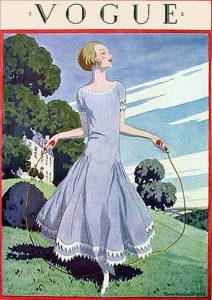
Vogue Magazine Articles
Pic Magazine Articles
People Today Magazine Articles
Direction Magazine Articles
The Film Spectator Magazine Articles
Touchstone Magazine Articles
Harper's Bazaar Magazine Articles
Outlook Magazine Articles
The Saturday Evening Post Articles
Rob Wagner's Script Magazine Articles
The Atlantic Monthly Articles
Collier's Magazine Articles
Outing Magazine Articles
Film Daily Magazine Articles
Hearst's Sunday American Articles
Punch Magazine Articles
Confederate Veteran Magazine Articles
Life Magazine Articles
Vanity Fair Magazine Articles
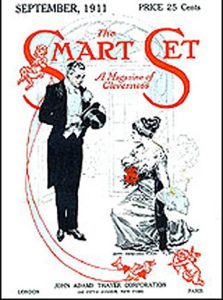
The Smart Set Articles
The North American Review Articles
The New Republic Articles
Confidential Magazine Articles
Trench Warfare Articles
Men's Wear Magazine Articles
Stage Magazine Articles
Harper's Weekly Articles
The Dial Magazine Articles
Newsweek Articles
The Saturday Review Articles

World War One

Find old World War 1 articles here. Find information on uniforms, women, gas warfare, prisoners of war and more.

The American Death Record
(American Legion Weekly, 1922)

Statistics of the World War prove, however, that war was, from the standpoint of mortality, not vastly different from other wars. In spite of the improvements in methods of killing by machinery,Nature managed to runup a higher score than the enemy’s bullets and shells. The Surgeon General of the Army, at the request of The American Legion Weekly, has prepared the following figures for the period of the war, from April 1, 1917 to December 31, 1919.

The Case for Cavalry
(Vanity Fair Magazine, 1919)

Numbered among the many Monday-morning-quarterbacks who appeared in print throughout much of the Twenties and Thirties were the old horse soldiers of yore, bemoaning the fact that industrial warfare had deprived their kind of the glory that was their birthright. This was not the case on the Eastern Front, where Imperial Russian generals had seen fit to launch as many as 400 cavalry charges – while American troopers were ordered to dismount (along with most other cavalry units in the West) and suffer postings with the Service of Supply, among other assorted indignities.

The American Springfield ’03 Rifle
(U.S. Infantry Drill Manual, 1911)

A black and white diagram depicting the breach of the 1903 Springfield riflestyle=border:none, with all parts named. This rifle was the primary weapon for American troops during World War One and was in use by that army up until 1936. At the time of America’s entry into the W.W. I, in April of 1917, there were roughly 843,239 Springfield ’03 rifles issued; seeing that this was not nearly enough for such an adventure, the Springfield Armory manufactured 265,620 additional rifles. In some photographs from the war, American soldiers and Marines are pictured shouldering the British Enfield rifle, which had been modified to fit the ammunition of the Springfield ’03. Subsequent modifications produced the Springfield 1903A3 and A4 which were issued to American snipers up until the earlier years of the Vietnam War.

Throughout the course of the war the U.S. Army was paying $19.50 for each rifle.

Advertisement

Use shortcode [oma_ad position="summary_top"] (or other position) in your theme or widgets to display OMA Promotions here.

The War and the Royal Families
(Vanity Fair, 1915)

A five paragraph account regarding the royal families of Europe; how close they were prior to the war and the important roll played by Queen Victoria in maintaining the strong bond between them. One particular line of note:

Queen Victoria was the only human being whom the Kaiser feared.

Click here to read another article about the war and the royal families.

The Zimmermann Plot
(The Atlanta Georgian, 1917)

The full text of the telegram to German Ambassador Von Eckhardt from Dr. Alfred Zimmermann outlining the plan to form a military alliance with the nation of Mexico. Should the United States declare war on Germany and Austria, Mexico, in turn, was to attack the American South-West and reclaim her lost colonies.

Advertisement

Use shortcode [oma_ad position="summary_top"] (or other position) in your theme or widgets to display OMA Promotions here.

The Summer of 1918, pt. II
(American Legion Weekly, 1919)

Evidently, the Twenty-Sixth meant that the hand was off the collar of the dog of war, but he could only go to the end of the leash. The Twenty Sixth was to be given the leash and the full field later…When the Twenty-Sixth started to attack on the early morning of the 21st there was nothing to attack. The German was going and the Twenty-Sixth was to give chase…

Chateau-Thierry: Setting the Record Straight
(Literary Digest, 1919)

It has been said that when the U.S. Army’s senior staff officers had learned of the great victory that the U.S. Marines had achieved at the Bois de Belleau in the summer of 1918, one of them had remarked, Those head-line hunting bastards! When reading this next piece you will immediately get a sense that the army was fed-up with the folks at home believing that the same Marines were responsible for the Army’s success at Chateau-Thierry. The war was already over by the time this piece appeared, making it clear to all that Chateau-Thierry was a feather in the cap for the Army.

Click here to read an article about the American snipers in W.W. I France.
Click here to read about W.W. I art.

Advertisement

Use shortcode [oma_ad position="summary_top"] (or other position) in your theme or widgets to display OMA Promotions here.

Relief Agency Structures on U.S. Army Camp Grounds

Illustrated with as many as twelve pictures, this article from Architectural Record points out what the recreational buildings looked like on the grounds of the various U.S. Army camps that were hastily erected following the Congressional declaration of war in April of 1917.

Summing Up the Aisne-Marne Offensive
(Dept. of the Army, 1956)

This printable page from an R.O.T.C. manual concerns the American military efforts in World War I.
Attached is a useful summation in three paragraphs of the Aisne-Marne offensive. The reader will learn which American and French units participated, the dates on which the battle raged and the German defense strategy.

The battle had numerous and far reaching results. It eliminated the German threat to Paris, upset Ludendorff’s cherished plan to attack the British again in Flanders, gave the Allies important rail communications, demonstrated beyond further doubt the effectiveness of American troops on the offensive, firmly established Allied unity of command…

Trench Medicine
(Harper’s Weekly, 1915)

An informative article from World War I concerning the doctors of all the combatant nations and how they dealt with the filthy conditions of stagnant warfare and all the different sorts of wounds that were created as a result of this very different war:

This is a dirty war. Gaseous, gangrene, lockjaw, blood poisoning, all dirt diseases… Colonel G.H. Makins of the Royal Army Medical Corps longs for the clean dust of the Veldt, which the British soldier cursed in the Boer War.

Advertisement

Use shortcode [oma_ad position="summary_top"] (or other position) in your theme or widgets to display OMA Promotions here.

Wrong Turn at Gallipoli
(Ken Magazine, 1938)

This is an opinion piece written at a time when the world stood at the doorstep of World War II. The writer went to some length to outline the fatal error made just one generation earlier and how the sins were to be paid for by their sons and daughters:

The world of today, an upheaval of antagonisms heading toward destructive war, was not inevitable. Russia need not have fallen to the Bolshevists, Germany to the Nazis, Italy to the Fascists. The United States need not have entered the Great War. Two million men slain in battle need not have died. These consequences resulted from a decision of a few men during the World War.


He argued that the Dardanelles Campaign is where the whole war went sideways.


Click here to read what the Kaiser thought of Adolf Hitler.

Dogfight Over Hunland
(Vanity Fair, 1918)

British fighter pilot in the Great War, Lieutenant E.M. Roberts, gave this account of the deadly game of Boche-hunting above the clouds:

I noticed he was going down a little, evidently for the purpose of shooting me from underneath. I was not quite sure as yet that such was really his intention; but the man was quick…he put five shots into my machine. But all of them missed me.

I maneuvered into an offensive position as Quickly as I could, and I had my machine gun pelting him…The Hun began to spin earthward.

Grim Determination on the German Home Front
(Literary Digest, 1916)

This report, filed from Switzerland, stood in stark contrast to hundreds of other articles previously published by the Allied presses that reported how regretful the Germans were for having provoked war and how economic privations were making them even more-so. This unnamed journalist insisted that the German home front that he saw in 1916 was composed of a proud and determined people who were fully prepared to see the war through to a German victory.

Advertisement

Use shortcode [oma_ad position="summary_top"] (or other position) in your theme or widgets to display OMA Promotions here.

Napoleon Takes Charge
(Literary Digest, 1922)

The Napoleon who plays the Monday-morning-quarterback in these columns was created by the tireless researcher Walter Noble Burns (1872 – 1932); his version of Bonaparte explains what went wrong on the Western Front and how he would have beat the Kaiser – but not before he dishes out liberal amounts of defamation for the senior commands on both sides of No Man’s Land.

The war’s stupendous blunders and stupendous, useless tragedies made me turn over in my sarcophagus beneath the dome of the Invalides. I can not conceive how military men of even mediocre intelligence could have permitted the Allied Army to waste its time by idly lobbing over shells during a three-years’ insanity of deadlocked trench warfare.


Click here to read an article about life in a W.W. I German listening post…

The Power of Positive Thought in Military Training
(Outing Magazine, 1918)

The power of positive thinking is one of the necessary elements that has been ingrained within the psyche of every U.S. Army recruit for at least the past 100 years. Positive thought is the topic of this 1918 article about the wartime training of U.S. Army officer cadets at Camp Grant, Illinois, by Major Herman J. Koehler (1859 – 1927), who believed deeply that there is no limit to human endurance.


Read what the U.S. Army psychologists had to say about courage.

The U.S. First Division at Cantigny
(The Stars and Stripes, 1918)

The battle of Cantigny (May 28 – 31, 1918) was America’s first division sized engagement during the First World War; George Marshall would later opine that the objective was of no strategic importance and of small tactical value. General Pershing was hellbent on eradicating from the popular memory any mention of the A.E.F.’s poor performance at Seicheprey some weeks earlier, and Cantigny was as good a battleground in which to do it as any. Assessing the battle two weeks after the Armistice, Pershing’s yes men at the STARS AND STRIPES wrote:

But at Cantigny it had been taught to the world the significant lesson that the American soldier was fully equal to the soldier of any other nation on the field of battle.


An article from THE NEW REPUBLIC recognizing that 1914 marked the end of an era.

Advertisement

Use shortcode [oma_ad position="summary_top"] (or other position) in your theme or widgets to display OMA Promotions here.

Scroll to Top