
















Outing Magazine Articles
Trench Warfare Articles
Life Magazine Articles
Photoplay Magazine Articles
Vogue Magazine Articles
Collier's Magazine Articles
The New Republic Articles
Current Literature Magazine Articles
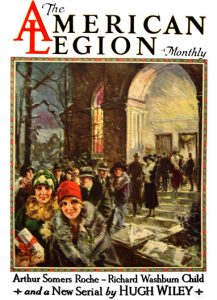
The American Legion Monthly Articles
The Flapper Magazine Articles
Confederate Veteran Magazine Articles
Men's Wear Magazine Articles
The Atlantic Monthly Articles
47 Magazine Articles
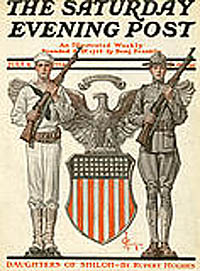
The Saturday Evening Post Articles
Harper's Weekly Articles
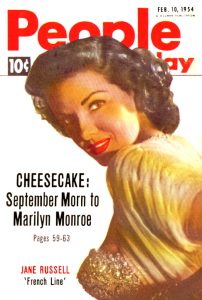
People Today Magazine Articles
Outlook Magazine Articles
Touchstone Magazine Articles
The New York Times Articles
The North American Review Articles
Click Magazine Articles
Newsweek Articles
Leslie's Magazine Articles
Film Daily Magazine Articles
Creative Art Magazine Articles
The Saturday Review Articles
Theatre Arts Magazine Articles
The National Park Service Articles
Pic Magazine Articles
The Dial Magazine Articles
Rob Wagner's Script Magazine Articles
Liberty Magazine Articles
Hearst's Sunday American Articles
Punch Magazine Articles
The Smart Set Articles
Ken Magazine Articles
PM Tabloid Articles
G.I. Joe Magazine Articles
The American Legion Weekly Articles
Stage Magazine Articles
Vanity Fair Magazine Articles
Harper's Bazaar Magazine Articles
La Baionnette Articles
Freedom's Triumph Articles
Direction Magazine Articles
Scribner's Magazine Articles
Sea Power Magazine Articles
The Film Spectator Magazine Articles
Confidential Magazine Articles

Cars

Read About the Early Cars of the 1900s. Our Articles Tell of the Car Culture of the 1920s.

The Social Value of the Car
(Literary Digest, 1908)

John Walter Edward Douglas-Scott-Montagu, 2nd Baron Montagu of Beaulieu (1866 – 1929), Member of Parliament, publisher of THE CAR and all-around advocate for the internal combustion engine gave an address in which he extolled the virtues of the automobile in societal evolution. Some of the virtues are just plain quaint while others touch upon elements of Edwardian life we would never consider. Lord Montagu innocently believed that motorists would play a part as unofficial ambassadors; traveling abroad, joyfully chatting with one and all and thereby decreasing the chances of a European war.

He would have been surprised to know what an active roll the automobile played throughout both world wars.

Campers of 1921
(Vanity Fair Magazine, 1921)

Motor camping is in it’s infancy, observed the shrewd and sure-footed motoring journalist George W. Sutton in this 1921 VANITY FAIR report regarding the evolution of campers. To further illuminate his readers, he provided black and white plans illustrating the interior of two campers mounted on the back of Ford chassis (during the 1920s, Ford Model Ts were by far the most common make of automobile). Although there were a handful of camper-shell manufacturers at the time, the two featured here were custom made.

Earliest Car Crash Photograph
(Popular Mechanics, 1914)

A rare action photograph of an unidentified car and driver smashing into the crowd-control fencing at the Vanderbilt Cup Races held in Santa Monica, California during the summer of 1914. The unstoppable juggernaut was cruising at sixty-miles miles per hour.

Click here to read about the historic trans-Atlantic flight of Charles Lindbergh.

Advertisement

Use shortcode [oma_ad position="summary_top"] (or other position) in your theme or widgets to display OMA Promotions here.

The Town Cars of 1922
(Harper’s Bazaar, 1922)

This is a quick read from a 1920s HARPER’S BAZAAR comparing the European and American limousines (a.k.a., ‘coupe, town car, cabriolet’); these were the luxurious looking vehicles that we’ve all seen in pictures from that period in which the chauffeur was expected to perform his duties without the benefit of a roof over his head. The uncredited journalist talks about where cars such as these are likely to be found, their interiors, tufted seating upholstery, basket weaving applications, leather casings and more.

Click here to read about the first car radios.

Click here to read a magazine profile of W.W. I fighter ace Captain Eddy Rickenbacker.

European Styles in Cars
(Vanity Fair Magazine, 1921)

One of the special correspondents writing for VANITY FAIR on the subject of motoring was the British novelist Gerald Biss (1876 – 1922), who contributed similar pieces to THE STRAND, TATLER, DAILY MAIL and EVENING STANDARD. In this review, Biss gave his drink-deprived American readers the straight dope as to what they can expect to see from the European car manufacturers of 1921. References are made to the products of the Voisin and Vauxhall Companies and there was some lose talk about electric starters and high-grade tweleve-cylinder cars.

Advance of the Low-Priced Automobile
(Current Literature, 1912)

In answer to the cry for more affordable cars that can easily be purchased by working families, the French automobile industry of 1912 produced a line of long, narrow, boat-like cars, mounted on four wire wheels, carrying it’s passengers in tandem fashion. The production of these one and two cylinder air-cooled motors was based more upon the production lines of motorcycles rather than cars.

Advertisement

Use shortcode [oma_ad position="summary_top"] (or other position) in your theme or widgets to display OMA Promotions here.

Cars from Europe Get Tinier
(Vanity Fair Magazine, 1921)

One thing is absolutely certain- Europe is economizing. It must. Everything in the motor world points to an enormous increase in the number of 10 h.p., four cylinder cars and in the even smaller 7-8 h.p. two cylinder machines.

The First Automotive Brake Lights
(Popular Mechanics, 1918)

Many dented fenders later, the first signal indicators show up. This article makes clear that both the Brake light and the turning signal indicator are both the same color (red) but they are an improvement on what was sporadically used in a few circles: the Illuminated Glove (a fingerless mit intended for the left-hand that was supposedly easier to see when making stop or turning gestures).

The 1908 New York – Paris Race: Bumpy Ride
(Literary Digest, 1908)

With the centennial re-running of the New York to Paris race beginning this May (2008), it is interesting to read about the authentic 1908 contest and the difficulties they faced in a world without proper roads.

Interest in the New York – to – Paris race, temporarily suspended by the failure to find a passable road in Alaska…

Advertisement

Use shortcode [oma_ad position="summary_top"] (or other position) in your theme or widgets to display OMA Promotions here.

Scroll to Top