
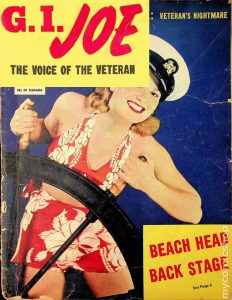
”Portrait of Nan”
(Coronet Magazine, 1945)
NULL
|
|
|

|
|
|
|
|
|
|
|
|
|
|
|
|
|
|
|
|
|
|
|
|
|
|
|
|
|
|
|
|
|
|
|
|
|
|
|
|
|
|
|
|
|
|
|
|
|
|
Find old Modern Art articles here. Find information on Modern Painting, artists, 1920s modernists, newspaper articles about modernism and more.
“Upon his first arrival in Paris, Picasso met with success. It was ’99… At that time he had a face of ivory, and was as beautiful as a Greek boy; irony, thought and effort have brought slight lines to the waxen countenance of this little Napoleonic man… At that time, Picasso was living the life of the provincial in Paris… He had won fame there by his portraits of actresses in the public eye. Jeanne Bloch, Otero – all the stars of the Exposition. Those paintings are priceless today; the intelligent museums have bought them.”
“When Kaethe Schmidt was born in Koenigsberg in 1867, the twin fairies Pity and Indignation claimed her as their own.” As a result of marriage she became Kaethe Kollwitz, and it was under this name she produced her finest works of art:
“She has been the artist of the common people, in that she has made art out of their weal and their woe and she has been content to receive understanding and approbation from them alone.”
Ernest Boyd (1887 – 1946), all-around swell guy and significant literary figure in 1920s New York, took a hard look at German Expressionism and its wide influence on other Teutonic arts in the early Twenties. He paid particular attention to the German critic Hermann Bahr (1863 – 1934), who coined the term, Expressionism, and had much to say about the movement.
Artist Tristan Tzara (1896 – 1963) reported from Berlin for the editors at Vanity Fair on what’s new in German art. With tremendous enthusiasm he explained everything that was going on throughout all the German studios – he did not hold back – every name brand is included: Schwitters, Klee, Kandinsky, Lehmbruck, Gropius and the Bauhaus.
The art that Hitler has exiled as ‘degenerate’ is finding ready homes in other lands that have not yet been culturally crushed beneath the heel of Europe’s twin tyrannies: Fascism and Communism. Because Hitler has embraced the calendar decoration as the supreme art form, the Museum of Modern Art in New York has been able to acquire five works that formerly were housed in prominent museums.
The article lists the purchased works.
At the very peak of bourgeois respectability, one of the high priests of art and culture, Gilbert Seldes (1893 – 1970), sat comfortably on his woolsack atop Mount Parnasus and piled the praises high and deep for one of the lowest of the commercial arts. The beneficiary was the cartoonist George Herriman (1880 – 1944), creator of Ignatz Mouse and all other absurd creations that appeared in his syndicated comic strip, Krazy Kat (1913-1944):
His strange unnerving distorted trees, his totally unlivable houses, his magic carpets, his faery foam, are items in a composition which is incredibly with unreality. Through them wanders Krazy, the most tender and the most foolish of creatures, a gentle monster of our new mythology.
A brief art review from 1946 announcing an exhibition of paintings, drawings, photographs, architectural plans and models by the modern architect Le Corbusier (né Charles-Édouard Jeanneret-Gris, 1887 – 1965) at the Mezzanine Gallery in Rockefeller Center.
Along with Ozenfant, Le Corbusier invented Purism. The earliest painting in the collection, and the only one of that period (1920), which is familiar to art audiences as part of the permanent collection of the Museum of Modern Art.
An editorial by the artist Philip Evergood (1901 – 1973) who believed that the Federal Arts Project of the Thirties had not simply made the lives of artists a little better but has also created a far better society:
The Federal Arts Project has pointed the way to an American Culture. It has set a weight in motion, it has let loose a force that has affected hundreds of thousands of lives. It has made murals depicting the history of our country and the lives of our people have been placed on the walls of our schools, hospitals, libraries and public buildings making them of greater beauty and of greater community interest – monuments and small sculpture have been added in equal numbers, easel paintings and prints now hang in thousands on the walls of public buildings…
Evergood likened this government funding to the Renaissance, when the church served as the artist’s patron and culture flourished.
Click here if you would like to read a 1939 article about the closing of the Federal arts funding program.
Click here to read a 1942 article by Rockwell Kent on the proper roll of American artists during wartime.
Prior to the establishment of the New York School in the 1940s, there has always been a popular belief among Europeans (and a few Americans) that the art produced in the U.S. was purely derivative and lacked true originality in conception and style. In the attached article from the early Twenties, some of these Europeans and Americans step forward and identify themselves while continuing to crack wise on the topic; however, the editors of ART NEWS will not suffer this abuse and they return fire offering plenty of evidence to the contrary.
When it was made known to Nelson Rockefeller that the muralist he retained to decorate the lobby of his New York Building (Rockefeller Plaza) had taken the liberty of painting the likeness of Lenin in the work, letters were exchanged between the two men. The attached column is an excerpt from a longer piece that pertains to the dust-up.
Against the backdrop of a metropolis, a painter finds exultation in the vigorous beauty of the common girl.
A review of the paintings and sculptures from the Weimer Republic and the manner in which that new art served to reflect the social upheaval that was taking place in Germany at that time. The article concerns itself primarily with one art exhibit in particular, the Spring Exhibition of the Berlin Secession (1919) and the two art factions who participated: there were the artists of Der Sturm a movement that existed prior to the war and a newer, post-war tribe; the November Group. Also displayed were the works of two painters who served in the Kaiser’s army and did not return; Franz Marc (1880-1916) and August Macke (1887-1914).
It is hoped by the German Expressionists and the artists of the New Objectivity that their art will serve as a tool for the destruction of Germany’s old order.
Click here to see a few trench war images by German Expressionist Otto Dix.
Click here to read about Expressionist woodcuts.
The New Objectivity held up a mirror to the political crises that was playing out all over Germany, click here to read about it…
In this article, The Mob as Art Critic, an anonymous reviewer gathered excerpts from assorted negative reviews concerning the New York Armory Show of 1913 in an attempt to show the often violent reaction the exhibit inspired.
An art review of the American painter, Grant Wood (1891 – 1942), and his efforts to illustrate a 1935 children’s book titled Farm on the Hill
Wood, a reigning member of the Regionalism School in American art, had come into the public eye some six years earlier with the creation of his painting, American Gothic, is quoted in this article concerning his creative process and the importance his vision of Iowa plays while painting:
…Mr Wood seceded from the neo-meditationists of Paris because when he began to meditate he realized that ‘all the really good ideas I’d ever had came to me while I was milking a cow.’
Click here to read a 1942 article by Rockwell Kent on the proper roll of American artists during wartime.
Sounding a good deal like Simon Cowell (b. 1960), British painter C.R.W. Nevinson (1889 – 1946) had some nasty words for the American people and the art market they created.
Here emphatically they have lost their courage. They are afraid to buy what they like; they rely entirely on the auction-room value. To read the American art news is like reading our Financial Times. The American art critic has no use for a picture which does not tell a story…
Pegged as a Futurist, Nevinson is best remembered for his W.W. I paintings of the Western Front, which can be read about here.
The attached VANITY FAIR article announced that the numero uno society portrait painter of the Gilded Age, John Singer Sargent (1856 – 1925) was swearing-off portrait commissions in order to concentrate on water color. Little did he know that he would be back at it in a few years painting whole boat-loads of general officer portraits when he was named as one of the Official British War Artists.