











Miscellaneous

Scrambling for Oil
(Literary Digest, 1921)

Even as early as 1921 the world was noticing that in the U.S., that old Yankee mantra about avoiding foreign entanglements (a distortion of Washington’s Farewell Address) was being updated with a disclaimer: avoid foreign entanglements except when oil is involved.


Having put the Prussians in their place three years earlier, oil had become the new peace-time obsession for the Americans and their British ally – but it was to be the bane in their relationship: the Anglo-American irritant as Sydney Brooks remarked in FORTNIGHT REVIEW. With car manufacturers filling orders to placate a booming consumer market, the Brits pumped oil in Mesopotamia, the Americans in Texas while the oil companies from both locals vied for the rights to explore Latin America and the Caribbean.

SECOND TEST MISC.

Funny Wills…
(Coronet Magazine, 1952)

There just aren’t that many funny wills around that are devised with the intention of rendering the last word in a bad marriage or to dispense petty revenge on those who remained above-ground – that is why we found these two columns so amusing.

The Weirdest Invention of 1912
(Popular Mechanics, 1912)

Up all hours and badly in need of sleep, the pointy headed historians at this website have examined all other possibilities and – leaving no stone un-turned, mind you – have unanimously voted in favor of dubbing this the weirdest invention of 1912…

Advertisement

Use shortcode [oma_ad position="summary_top"] (or other position) in your theme or widgets to display OMA Promotions here.

‘Troublesome Mesopotamia”
(Literary Digest, 1920)

This is a very interesting magazine article concerning the 1920s British experience in Iraq (Mesopotamia); regardless as to where the reader stands concerning the 2003 Iraq War, you will find a striking similarity in the language used in this piece and the articles printed prior to the U.S. infantry surge of 2008:

Unless there is a complete change of policy, Mesopotamia, which has been the grave of empires, is now likely to be the grave of the Coalition.


Click here to read more articles about the British struggle for 1920s Mesopotamia.

SECOND TEST MISC.

Germany and the German-Americans
(Literary Digest, 1897)

The attached article briefly recalls the general discomfort that the German government experienced when confronted with a unique social sect called German-Americans. As handsome and affable as they might have been, these volk still irked the Kaiser and his administrators to a high degree, although this article points out that the Fatherland was warming to them slowly.


This article makes a number of references to the Bancroft Treaty and how the agreement pertained to a particular German-American family named Meyer. After years spent in the U.S., Meyer the elder returned to Germany along with his wife and children – the story became a news-worthy when it was revealed that his draft-age son, a naturalized Yank, resisted military conscription and was thrown in the hoosegow. It was at that moment when the American embassy stepped forward.


Not surprisngly, Hitler didn’t like German-Americans any better than the Kaiser…

Sheep from the Sky
(Click Magazine, 1938)

One of the weirdest inventions found in the annals of Italian military history was reserved for sheep. The funny pictures attached herein were snapped during the Italian adventures in Ethiopia, when sheep parachuting from the sky was not thought of as anything unusual and the story goes that the far-flung Italian infantry simply could not bare to have the standard pre-packaged processed food that most armies have to suffer and so an accommodating military air-dropped do-it-tour-self Ossobuco kits.

Advertisement

Use shortcode [oma_ad position="summary_top"] (or other position) in your theme or widgets to display OMA Promotions here.

SECOND TEST MISC.

‘Progressive Monogamy”
(The English Review, 1922)

In her 1922 essay, Marriage, Jane Burr (né Rosalind Mae Guggenheim, 1882 – 1958) refers to the modern marriage as progressive monogamy. She writes knowingly about the blessings and damnation of matrimony and believed that the institution has only improved since we entered an age where unions between man and woman can be so easily dissolved.


Over the civilized globe there hangs this tragedy of women and this tragedy of men – those who are free longing for bondage, those who are in bondage longing for freedom, everybody searching for the pure white flame, yet everybody compromising with sordidness that could be avoided, if only a new attitude could be legitimized.

The Tin Can
(Click Magazine, 1945)

When this small piece was published there was a lot of talk concerning the blessings of the tin can. Recycling was in its infancy on the home fronts during the Second World War and tin played a big part for both the military (you can read about that here) and civilly (the home preservation of fruits and vegetables). This short article will tell you more about this helpful invention that aided in the allied victory.

Advertisement

Use shortcode [oma_ad position="summary_top"] (or other position) in your theme or widgets to display OMA Promotions here.

The Gun Barrel Fence on P Street
(Pathfinder Magazine, 1920)

When compared to the historic events that took place on numerous other street corners in Washington D.C, the intersection of 28th and P streets barely makes the list, but the residence that stands on the north-east corner there is a twofer. The attached article explains just why the front and side fence is so unique to Washington history – and in later years the house would be purchased by Cold War diplomat Dean Acheson.

SECOND TEST MISC.

Algernon Charles Swinburne, Reconsidered
(Literary Digest, 1917)

The 1917 publication of The life of Algernon Charles Swinburnestyle=border:none, by Edmund Gossestyle=border:none caused much discussion in the literary world:

A bombshell that struck literary England a little past that last mid-century has been re-echoing in the recently published ‘Life of Algernon Charles Swinburne’ by Edmund Gosse. The shell was the volume called ‘Poems and Ballads’ a cursory knowledge of which probably places it in many minds as one of the bad books of literature…

General James Gavin Remembered Robert Capa
(’47 Magazine, 1947)

Here is a W.W. II reminiscence of combat photographer Robert Capa (1913 – 1954) by the legendary airborne infantry commander General James Gavin. The remarks were addressed to the editors of ’47 Magazine in response to an article on Capa that had appeared earlier in the magazine.

Advertisement

Use shortcode [oma_ad position="summary_top"] (or other position) in your theme or widgets to display OMA Promotions here.

The Popularly-Elected Senate
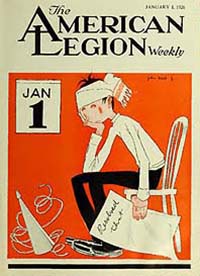
(American Legion Weekly, 1920)

In 1913 a very strong, anti-Federalist step was taken to amend the Constitution and alter the manner in which U.S. Senators were to be selected and replaced in the event of vacancies. The 17th Amendment was passed: it guaranteed that senators would no longer be elected from within the legislative bodies of the state governments, but would be elected directly by the citizens of their respective states, just as the representatives are. Historian Everett Kimball pointed out in this article how the 17th Amendment altered the very nature of the U.S. Senate.

Richard Julius Hermann Krebs Under the Nazi Boot
(Ken Magazine, 1939)

A first-hand account as to the daily goings-on at Hitler’s Plotzensee Prison.
Written by Jan Valtin (alias of Richard Julius Hermann Krebs: 1905 – 1951), one of the few inmates to make his way out of that highly inclusive address and tell the tale. Krebs was a communist in the German resistance movement who later escaped to New York and wrote a book (Out of the Nightstyle=border:none
) about his experiences in Nazi Germany.

The prisoner who has served his sentence is usually not released; he is surrendered to the Gestapo for an indefinite term in one of the concentration camps, preferably Sachsenhausen or Buchenwald. Incurable hard cases are sent to Dachau…

Advertisement

Use shortcode [oma_ad position="summary_top"] (or other position) in your theme or widgets to display OMA Promotions here.

What Makes Songs Popular
(’48 Magazine, 1948)

Knowing, as they did, that the Broadway composer Oscar Hammerstein II (1895 – 1960) was no slouch when it came to writing hummable tunes with snappy lyrics, hundreds of people would write to him daily seeking advice as to how they might be able to do the same (indeed, the search logs at Google indicate that this question is asked 369,000 times each month). No doubt fed-up with these never ending solicitations – Hammerstein penned this article, What Makes Songs Popular: in four pages he spewed-forth all that he knew about writing music and lyrics:

It seems to me that the most important element in a lyric is subject matter. A song had better be about something fundamental – which is why so many songs are about love.

must have been fed up with answering the hundreds of letters that he received daily begging him for tips as to how best to write songs and lyrics – he turned to the editors of ’48 MAGAZINE who were happy to print his article in which answered those questions

Why Englishmen Resist Socialism
(Literary Digest, 1897)

Attached are the thoughts of German socialist Karl Liebknecht (1871 – 1919) concerning the matter as to why he believed the British working classes seemed so thoroughly unenthusiastic about launching a socialist rebellion in their country.

Advertisement

Use shortcode [oma_ad position="summary_top"] (or other position) in your theme or widgets to display OMA Promotions here.

Scroll to Top