Author name: editor

Levittown Newspaper Article 1952 | Levittown 1950s
1952, Pageant Magazine, Suburbia

Levittown: The Birth of the Modern Suburb
(Pageant Magazine, 1952)

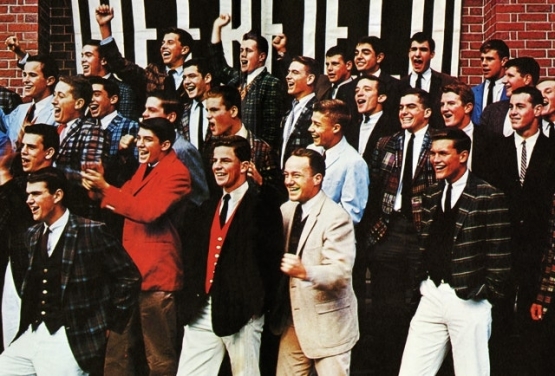
When the Second World War ended in 1945 the Europeans began shoveling themselves out of the rubble while simultaneously erecting their respective nanny-states. By contrast, the Americans set out on a shopping-spree that has yet to be matched in history. Never before had so many people been able to purchase so many affordable consumer products, and never before had there ever been such a variety; aided by the G.I. Bill, housing was a big part of this binge – and binge they did! The apple of their collective eyes involved a style of prefabricated housing that was called Ranch House, Cape Cod and Early American. Millions of them were built all across the country – and the financial model for these real estate developers came from a Long Island, New York man named William J. Levitt.


Attached is an article titled 15 Minutes with Levitt of Levittown.

1944, Japanese Soldiers, Yank Magazine

Who Was Tougher: The Japanese or The Germans?
(Yank Magazine, 1944)

By the end of 1943 Major General Joseph Lawton Collins (1917 – 1987) was one of two U.S. generals to give battle to both the Japanese in the East and the Germans in the West (Curtis Lemay was the other general). In this two page interview with Yank Magazine correspondent Mack Morriss, General Collins answered the question as to which of the two countries produced the most dangerous fighting man:

The Jap is tougher than the German. Even the fanatic SS troops can’t compare with the Jap…Cut off an outfit of Germans and nine times out of 10 they’ll surrender. Not the Jap.


Click here to read another article in which the Japanese and Germans were compared to one another.


Click here to read an interview with a Kamikaze pilot.

The Woman Who Didn't Want to Dress Like Jackie... (Coronet Magazine, 1961)
1961, Coronet Magazine, Jackie

The Woman Who Didn’t Want to Dress Like Jackie…
(Coronet Magazine, 1961)

This unique (and thankfully humorous) voice lets us know how widespread The Jackie Look was in the America of the early sixties – but she will have non of it:

I am accepting all offers – including Confederate money – for my Jackie Kennedy wardrobe of sleeveless ‘avant-garde’ dresses and pill-box hats. I’ll even throw in a necklace or three of pearls. If you insist, and I hope you do, I’ll also add my French cookbook and my water-color set… I have had it. I just don’t want to look like Jackie Kennedy. The competition is becoming far too keen.


We recommend: Jackie Stylestyle=border:none

Advertisement

Use shortcode [oma_ad position="summary_top"] (or other position) in your theme or widgets to display OMA Promotions here.

What Was New York City Like in 1945
1945, Old New York History, Yank Magazine

Manhattan During Wartime
(Yank, 1945)

This is a three page article concerning the city of New York from Yank‘s on-going series, Home Towns in Wartime.

The Yank correspondent, Sanderson Vanderbilt, characterized Gotham as being overcrowded (in 1945 the population was believed to be 1,902,000; as opposed to the number today: 8,143,197) and I’m sure we can all assume that today’s New Yorkers tend to feel that their fore-bearers did not know the meaning of the word.

New York was the home base of Yank Magazine and this article presents a young man’s view of that town and the differences that he can recall when he remembers it’s pre-war glory (Sanderson tended to feel that the city looked a bit down-at-the-heel).

Click here if you would like to read an article about the celebrations in New York the day World War Two ended.
Read a Vanity Fair article about New York during W.W. I


Click here to read about the first NYC air-raid wardens of 1942.

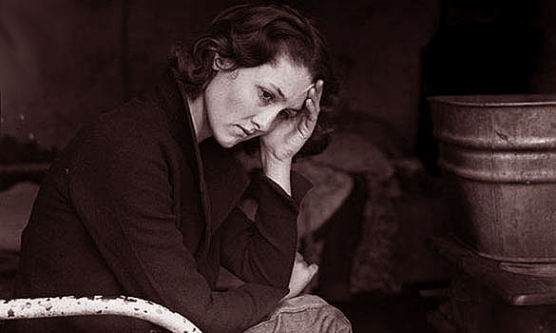
American Women During the 1930 s Great Depression | Job Statistics for Women in the Great Depression
1934, New Outlook Magazine, The Great Depression

The Lot of Women in the Great Depression
(New Outlook Magazine, 1934)

An editorial by two American feminists who insisted that the economic depression of the Thirties had knocked the wind right out of the Women’s Movement. They argued that some of the high ground that was earned in the preceding decades had been lost and needed to be taken back; their points are backed up by figures from the U.S. Census Bureau as well as other agencies. Much column space is devoted to the employment discrimination practiced by both state and Federal governments in favor of single women at the expense of the married. It is grievously made clear that even the sainted FDR Administration was one of the cruel practitioners of wage inequality.


CLICK HERE to read about the pay disparity that existed between men and women during the 1930s.
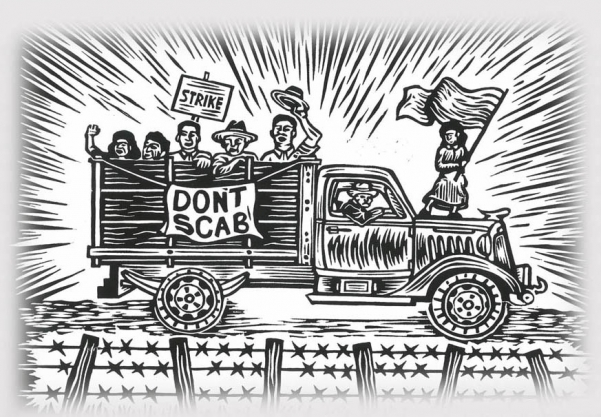
1947 Di Giorgio Strike Bakersfield | History of California Farm Labor Struggles
1947, Agricultural Labor, Commonweal Magazine

Government-Supplied Scabs
(Commonweal Magazine, 1947)

Writing to the editors of the news monthly, Commonweal during the Autumn of 1947 was Harry Leland Mitchell (1906 – 1989), president of the Southern Tenant Farmer’s Union who reported that the National Farm Labor Union was engaged in an important strike against the Di Giorgio Corporation in Bakersfield, California:

First, the Di Giorgio Corporation is the world’s largest fruit-producing corporation… it is to large scale industrialized agriculture what Ford is to the automobile industry. If the National Farm Labor Union wins the strike, it will be possible to proceed rapidly to the [organizing] of the migratory agricultural workers of California.


– but the union didn’t win. Di Giorgio, in league with the Department of Agriculture, secured foreign laborers to break the strike.

Advertisement

Use shortcode [oma_ad position="summary_top"] (or other position) in your theme or widgets to display OMA Promotions here.

A-20 Havoc Bomber Aircraft | Boston Bomber in WW II | A-20 Bomber in WW II
1944, Weapons and Inventions, Yank Magazine

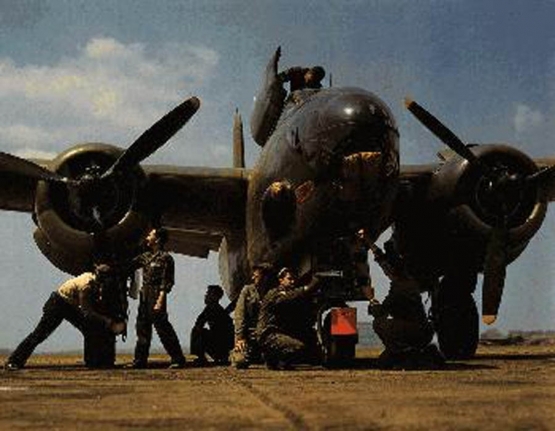
The American A-20 Havoc
(Yank Magazine, 1944)

An enthusiastic Yank Magazine article about the Douglas DB-7/A-20 Havoc (the British called it the A-20 Boston): throughout the course of the war, there was no other attack bomber that was manufactured in greater quantity than this one (7,477).

An eyewitness report of a pre-invasion mission over the continent in one of the newest and most effective U.S. air weapons, an attack bomber that looks like an insect but moves and hits with the speed of a meteor…

Advertisement

Use shortcode [oma_ad position="summary_top"] (or other position) in your theme or widgets to display OMA Promotions here.

1920s Chicago Gangsters | 1920s Chicago Bootleggers
1927, Prohibition History, The Chicagoan

Prohibition – Chicago Style
(The Chicagoan, 1927)

By 1927 it was common knowledge to every Chicago-based journalist that any reporter who wrote truthfully or seemed in any way outraged by the business practices of Al Capone – and others of his ilk, was likely to be found face down in Lake Michigan. The writer who penned this piece probably had that fact in mind while sitting at the typewriter; it is not an apology for the Chicago gangsters, it simply implies that they are established, the police are complicit – so get used to it. The writer then begins to explain how the bootlegging and distribution business operated – some of the up-and-coming hoods of the day must have been gratified to read that there was plenty of room for advancement within each organization.


A history of Chicago vaudeville can be read here…

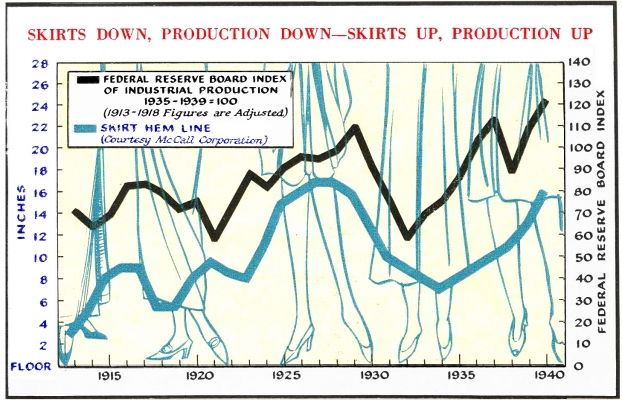
1941 Skirt Hemlines | Fashion Originators Guild Argument for Longer Hemline 1941 | 1940s Fabric Rationing and Hemline Length
1941, Fashion (WWII), Newsweek

A Patriotic Argument for Shorter Skirts
(Newsweek Magazine, 1941)

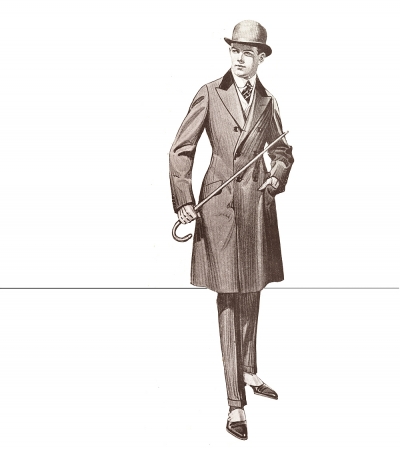
Months before the attack on Pearl Harbor, Washington was gearing-up for the fight by restricting the availability of certain fabrics to the fashion industry and diverting these materials to the defense industry. This started an open discussion in fashion circles as to whether it would simply be best to raise the hemlines until the national emergency was over.

The Fashion Originators Guild termed shorter skirts silly and added that dresses ‘are just as short today as decency and grace will permit.

Advertisement

Use shortcode [oma_ad position="summary_top"] (or other position) in your theme or widgets to display OMA Promotions here.

Erskine Caldwell War Reporting 1941
1941, Eastern Front, PM Tabloid

The Partisan War
(PM Tabloid, 1941)

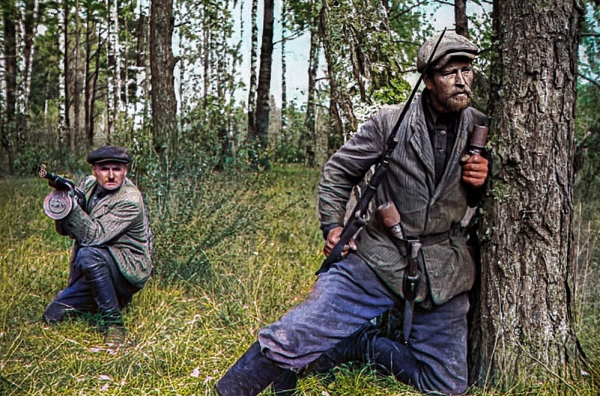
A Red Army officer, who said the German Army was being constantly harassed behind its lines by partizan activities and guerilla warfare, told me details of a number of recent incidents in White Russia. He said almost every village in German-occupied territory had supplied one or more groups of partizans who lived in the woods and used every opportunity to waylay detachments of infantry patrols and tanks.

Advertisement

Use shortcode [oma_ad position="summary_top"] (or other position) in your theme or widgets to display OMA Promotions here.

1940 Morale in Germany | Poor Morale in 1940 Germany
1940, German Home Front, PM Tabloid

Despair and Hunger
(PM Tabloid, 1940)

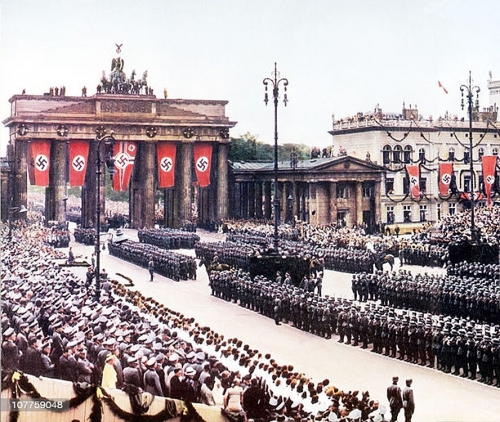
PM correspondent Richard O. Boyer (1903 – 1973) was in Berlin in June of 1940 when Paris fell to the German Army. He was dumbstruck by the surprising gloominess that hung heavily upon the German people the week of that great victory:

I could not understand it all and could scarcely believe the testimony of my own eyes. The scarlet banners with their black swastikas that garlanded the city everywhere in response to Hitler’s orders seemed only to emphasize the worried melancholy. The victory bells that rang each day at noon acquired the sound of a funeral dirge when one looked at the tired, pinched faces of the Germans hurrying along the pavements … When I expressed surprise to a glum man sitting near me he glanced impatiently up and only said, ‘We celebrated once in 1914’.


The Japanese home front suffered from tuberculosis – click here to read about it…

'No More Pearl Harbors'' (Pathfinder Magazine, 1946)
1946, Pathfinder Magazine, Spying

‘No More Pearl Harbors”
(Pathfinder Magazine, 1946)

When the twenty-year-old editor at Yank Magazine wrote this editorial at the close of W.W. II he was expressing a belief that was shared equally with the members of the W.W. I generation who prosecuted and managed the war from Washington – and that was an understanding that the world is a far more dangerous place than we thought it was and it needs to be watched. This 1946 article is similar to other columns that appeared in 1947 (when the CIA was established) and 1952 (when the NSA opened its doors) in that it announced the creation of a government agency intent on global espionage in order to have done with all future concerns that another Pearl Harbor was in the planning.

Advertisement

Use shortcode [oma_ad position="summary_top"] (or other position) in your theme or widgets to display OMA Promotions here.

Scroll to Top