Author name: editor

The Crew of the Enola Gay Fifteen Years Later (Coronet Magazine, 1960)
1960, Coronet Magazine, The Enola Gay

The Crew of the Enola Gay Fifteen Years Later
(Coronet Magazine, 1960)

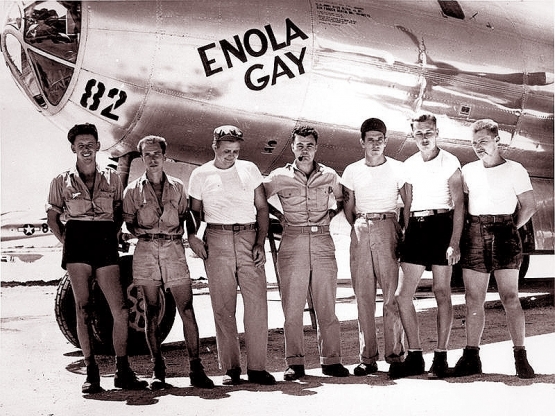
The men of the Enola Gay were hand-picked experts, chosen for intelligence, emotional stability and discipline, qualities they have put to good use in their post-war careers. Four remained in the service (one died in 1953) and the others are all successful in their business carees. They earn above-average salaries, all but one are married and they have 26 children among them. None of them has been to Japan since the war, and few have met since separation.
The Bombers Speak (Coronet Magazine, 1960)
1960, Coronet Magazine, The Enola Gay

The Bombers Speak
(Coronet Magazine, 1960)

Appearing in a 1960 issue of Coronet Magazine was this piece that revealed the assorted introspective perceptions of the crew of the Enola Gay.


In the fifteen years that had past since the dropping of the Atomic bomb these are the personal thoughts that were produced after years of sober reflection concerning their part in one of the preeminent events of the last century:

After 15 years the scene over Hiroshima is still sharp and clear to them, and though they disagree on details, they are unanimous on the point of whether they’d do the same things again.

Luftangriffe auf München 1942 | Munich Bombed 1942
1942, German Home Front, PM Tabloid

RAF Bombs Munich
(PM Tabloid, 1942)

Throughout the course of the Second World War, the city of Munich was bombed seventy-four times by both the Royal Air Force as well as the U.S. Army Air Corps. The attached article gives an account of the third of these attacks.

Giant four-motored planes flew in over their targets so low that they could clearly see the Brown House and the Beer Hall where Hitler organized his 1923 putsch… The citizens of Munich will, no doubt, be thinking of their Fuehrer today as they survey the bombed-out buildings and piles of rubble in the streets where Hitler first harangued them about his political ideas.

Advertisement

Use shortcode [oma_ad position="summary_top"] (or other position) in your theme or widgets to display OMA Promotions here.

Walt Disney's Artists and the Making of 'Bambi' (Collier's Magazine, 1942)
1942, Collier's Magazine, Walt Disney

Walt Disney’s Artists and the Making of ‘Bambi’
(Collier’s Magazine, 1942)

For the production of Snow White (1938), the Disney artists had gone to great lengths in order to properly portray the manner in which young women move; these efforts were rewarded at the box-office to such a high degree that the same devotion was applied to the study of deer anatomy in their efforts to create Bambi (1942).

We had to remember, that Disney has a ruthless fidelity to the physical scene, to the truth of nature, even when he may seem to be distorting nature.

Click here to read more articles about Disney animation.

Pepsi-Cola Hits The Spot Primary Source History |1940 Pepsi Cola Famous Radio Jingle
1940, Advertising, PM Tabloid

A Most Memorable Jingle
(PM Tabloid, 1940)

Coca-Cola may be the real thing, but in 1940 Pepsi had launched the ad that made Madison Avenue sit up and realize the true power of radio advertising. It was the famous radio jingle that we still hear today in every play, movie and TV show wishing to create the perfect Forties atmosphere – you know the one: Pepsi Cola hits the spot, etc., etc., etc. A real toe-tapper. The attached article will clue you-in to it’s significance.

Advertisement

Use shortcode [oma_ad position="summary_top"] (or other position) in your theme or widgets to display OMA Promotions here.

Pattern of Conquest by Joseph Harsch Book Review | 1941 German Home Front Magazine Article
1941, German Home Front, Newsweek

Living Under the Bombs
(Newsweek Magazine, 1941)

Here is one of the reviews of Pattern of Conqueststyle=border:none, a book by Joseph C. Harsch (1905 – 1998) – a CHRISTIAN SCIENCE MONITOR correspondent who had been posted to Germany during the earliest years of the war:
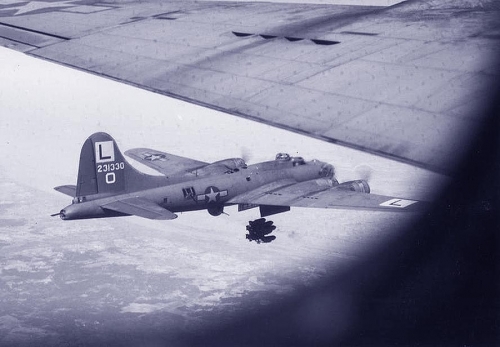
Harsch says that German morale is ‘fundamentally unsound’ however, and that it took a bad beating when the RAF first bombed Berlin, which Marshal Goering had said would happen only ‘over his dead body’. (‘Have you heard the news?’ Berliners asked each other, after the first raids. ‘Goering’s dead.’)


Click here to read about the 1943 bombing campaign against Germany.

Allied Bombing Campaign Over Nazi Germany 1944
1944, German Home Front, Newsweek

‘Eighth Over Berlin”
(Newsweek Magazine, 1944)

Comparing the American [daylight] raids with the RAF [nighttime] incursions, it was certainly a great shock to Berliners to find their city now open to round-the-clock bombing.

We don’t mind the Yanks who come when the sun shines and it’s warm. It’s the Tommies sneaking in at night that we don’t like so much.

German Letters from Stalingrad (Coronet Magazine, 1943)
1943, Coronet Magazine, Eastern Front

German Letters from Stalingrad
(Coronet Magazine, 1943)

When 22 divisions were cut off by the Russians at the gates of Stalingrad, the Nazis had to rely on air transport for contact with the surrounded troops. One mid-December day a German cargo plane was shot down on its way from the ringed divisions. The wreckage yielded some three hundred letters from doomed soldier of der Fuehrer. The Soviets selected and published a typical one:

It is hard to confess even to myself, but it seems to me that at Stalingrad we shall soon win ourselves to death.


Click here to read an assessment of the late-war German soldier…

Advertisement

Use shortcode [oma_ad position="summary_top"] (or other position) in your theme or widgets to display OMA Promotions here.

French Slaves in Germany 1942
1942, France, PM Tabloid

French Slavery Becomes A Reality
(PM Tabloid, 1942)

Petain clamped the chains of Nazi slavery on the men and women of France today. The aged Marshal, Pierre Laval, and their quisling cabinet, promulgated a decree ordering all French men and women to compulsory labor. The decree, which the Government frankly admitted meant slavery in Germany for thousands of Frenchmen, was signed by Petain on Friday night.


Click here to read about the enslavement of Europe…

Battle of Rostov 1942 | USSR vs Germans Rostov 1942
1942, Eastern Front, PM Tabloid

Red Drive Toward Rostov
(PM Tabloid, 1942)

The Red Army crossed the Don River at three points and advanced spearheads upwards of ten miles to the south of the Stalingrad Axis seige army, threatening it with more strict encirclement and at the time moving the key city of Caucacus. Moscow dispatches stressed the importance of this action which apparently swings a considerable weight along the railroad toward Rostov.

Advertisement

Use shortcode [oma_ad position="summary_top"] (or other position) in your theme or widgets to display OMA Promotions here.

Categorizing The Lynchings (The Crises, 1919)
1919, Lynchings, The Crises

Categorizing The Lynchings
(The Crises, 1919)

Here is a Crisis Magazine summary of the all the various lynchings that had been recorded in the United States between the years 1885 through 1918. Additional lists are provided that give an account of the participating states for the year 1918, the genders of the victims and the racial group to which they belonged.


Click here for the Ku Klux Klan Archive.

Special-Effects Makeup The Wizard of Oz 1939 | Jack Dawn Hollywood Makeup Artist 1939 | History of Wizard of Oz Movie
1939, Hollywood History, Pathfinder Magazine

The Birth of Special-Effects Makeup
(Pathfinder Magazine, 1939)

Here is an article about one of the most innovative minds in the nascent world of Hollywood makeup design; it belonged to a fellow named Jack Dawn (1892 – 1961). Dawn was under contract at MGM for decades and worked on over two hundred films, his most being the film that is discussed herein: The Wizard of Oz (1939, MGM). The article briefly touches upon the thin, rubbery masks that he created after having made numerous in depth studies of human bone and muscle.

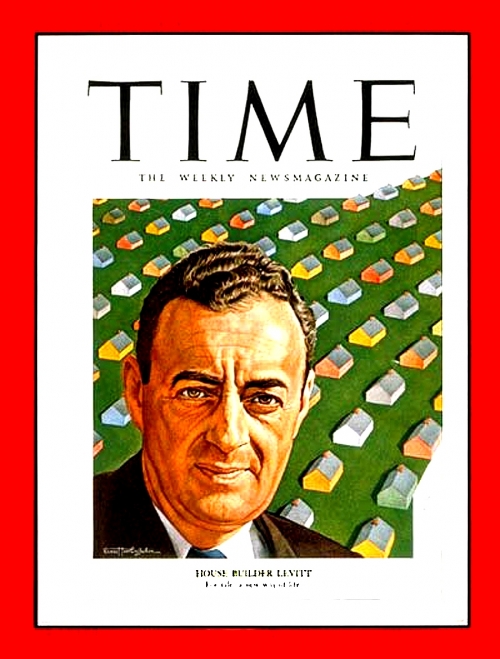
Levittown Newspaper Article 1952 | Levittown 1950s
1952, Pageant Magazine, Suburbia

Levittown: The Birth of the Modern Suburb
(Pageant Magazine, 1952)

When the Second World War ended in 1945 the Europeans began shoveling themselves out of the rubble while simultaneously erecting their respective nanny-states. By contrast, the Americans set out on a shopping-spree that has yet to be matched in history. Never before had so many people been able to purchase so many affordable consumer products, and never before had there ever been such a variety; aided by the G.I. Bill, housing was a big part of this binge – and binge they did! The apple of their collective eyes involved a style of prefabricated housing that was called Ranch House, Cape Cod and Early American. Millions of them were built all across the country – and the financial model for these real estate developers came from a Long Island, New York man named William J. Levitt.


Attached is an article titled 15 Minutes with Levitt of Levittown.

Advertisement

Use shortcode [oma_ad position="summary_top"] (or other position) in your theme or widgets to display OMA Promotions here.

1944, Japanese Soldiers, Yank Magazine

Who Was Tougher: The Japanese or The Germans?
(Yank Magazine, 1944)

By the end of 1943 Major General Joseph Lawton Collins (1917 – 1987) was one of two U.S. generals to give battle to both the Japanese in the East and the Germans in the West (Curtis Lemay was the other general). In this two page interview with Yank Magazine correspondent Mack Morriss, General Collins answered the question as to which of the two countries produced the most dangerous fighting man:

The Jap is tougher than the German. Even the fanatic SS troops can’t compare with the Jap…Cut off an outfit of Germans and nine times out of 10 they’ll surrender. Not the Jap.


Click here to read another article in which the Japanese and Germans were compared to one another.


Click here to read an interview with a Kamikaze pilot.

The Woman Who Didn't Want to Dress Like Jackie... (Coronet Magazine, 1961)
1961, Coronet Magazine, Jackie

The Woman Who Didn’t Want to Dress Like Jackie…
(Coronet Magazine, 1961)

This unique (and thankfully humorous) voice lets us know how widespread The Jackie Look was in the America of the early sixties – but she will have non of it:

I am accepting all offers – including Confederate money – for my Jackie Kennedy wardrobe of sleeveless ‘avant-garde’ dresses and pill-box hats. I’ll even throw in a necklace or three of pearls. If you insist, and I hope you do, I’ll also add my French cookbook and my water-color set… I have had it. I just don’t want to look like Jackie Kennedy. The competition is becoming far too keen.


We recommend: Jackie Stylestyle=border:none

What Was New York City Like in 1945
1945, Old New York History, Yank Magazine

Manhattan During Wartime
(Yank, 1945)

This is a three page article concerning the city of New York from Yank‘s on-going series, Home Towns in Wartime.

The Yank correspondent, Sanderson Vanderbilt, characterized Gotham as being overcrowded (in 1945 the population was believed to be 1,902,000; as opposed to the number today: 8,143,197) and I’m sure we can all assume that today’s New Yorkers tend to feel that their fore-bearers did not know the meaning of the word.

New York was the home base of Yank Magazine and this article presents a young man’s view of that town and the differences that he can recall when he remembers it’s pre-war glory (Sanderson tended to feel that the city looked a bit down-at-the-heel).

Click here if you would like to read an article about the celebrations in New York the day World War Two ended.
Read a Vanity Fair article about New York during W.W. I


Click here to read about the first NYC air-raid wardens of 1942.

Advertisement

Use shortcode [oma_ad position="summary_top"] (or other position) in your theme or widgets to display OMA Promotions here.

Scroll to Top