Author name: editor

Selecting the Wine and Cheese (Gentry Magazine, 1957)
1957, Food and Wine, Gentry Magazine

Selecting the Wine and Cheese
(Gentry Magazine, 1957)

Food writer Sam Aaron (1911 – 1996) let loose a slew of his well-researched thoughts on the matter of how well cheese and wine complement one another and provided us with a helpful list of which type of wines harmonize best with certain cheeses:

With Italian cheeses, such as Taleggio Cheese Provolone, I like a delicate red wine made near Verona called Bardolino. Frank Schoonmakerstyle=border:none

Paris Exults After Four Years of War (The Stars and Stripes, 1918)
1918, Armistice, The Stars and Stripes

Paris Exults After Four Years of War
(The Stars and Stripes, 1918)

A very moving column from the front page of the November 15, 1918 Stars and Stripes describing the joyous pandemonium that characterized the city of Paris when World War I came to a close:


And all Paris laughed the laugh of happy children after a day’s glad play. And the next day, and the next night, Paris sallied forth to romp and play again.


Click here to read about the W.W. II liberation of Paris.

Advertisement

Use shortcode [oma_ad position="summary_top"] (or other position) in your theme or widgets to display OMA Promotions here.

Sharp-Shooting on the Western Front (Cornhill Magazine, 1919)
1919, Cornhill Magazine, Snipers

Sharp-Shooting on the Western Front
(Cornhill Magazine, 1919)

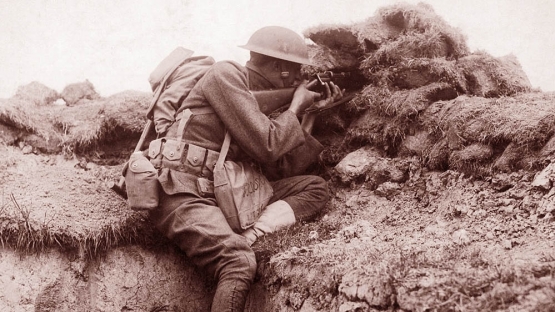
The attached remembrance of sniping on the Western Front was written by Major H. Hesketh-Pritchard, D.S.O, M.C. (author of Sniping in France 1914-18) and recalls the development and changes of sharp-shooting on both sides during the war. Pritchard broke down the scouting and sniper involvement on the Western Front into four phases:


Phase I (1914 – 1915): German snipers weigh heavily on Allied soldiers (Clear German advantage)


Phase II (1915 – 1916): British sniping organized (Advantage even)


Phase III (1916 – 1918): British sniper program takes off (Slight British Advantage)


Phase IV (1918 through to the Armistice): Allied Offensive takes effect (Snipers began scouting)
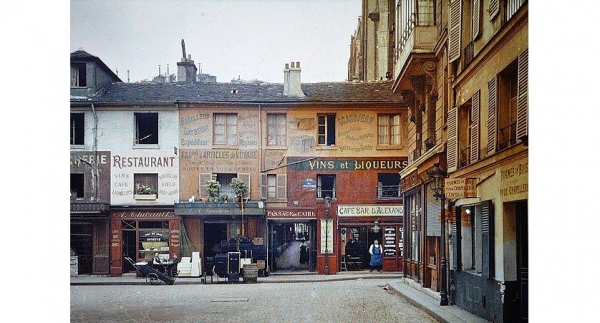
'Why I Live in Paris'' by a Former American Soldier (American Legion Monthly, 1927)
1927, Return, The American Legion Monthly

‘Why I Live in Paris” by a Former American Soldier
(American Legion Monthly, 1927)

This piece was penned by an anonymous expatriate, a former American soldier of the Great War who went into some detail comparing life in 1920s Paris to the life he knew in America, and he is quite funny about it. He described a Paris that Hemingway, Stein and Fitzgerald didn’t talk about.


Back in America I sincerely thought that my hometown had the worst telephone system in the world. This was a colossal error…


Click here to read about the fall of Paris…

Advertisement

Use shortcode [oma_ad position="summary_top"] (or other position) in your theme or widgets to display OMA Promotions here.

1918, Return, Vanity Fair Hall of Fame

Sight-Seeing at the Front
(Vanity Fair, 1918)

Written during the closing weeks of the war, this Vanity Fair article was penned by a rather sly, witty scribe who was astounded to find that those areas closest to the front, yet just outside the entrances to the reserve trenches, were jam-packed with all manner of civilian tourist groups (ie. The American Woman’s Bouillon Cube Fund, The Overseas Committee of the New and Enlarged Encyclopedia, The National Mushroom Association of the United States); an exercise in creative writing? You tell us.

Americans in Paris 1920 | WW I American Veterans Return to France 1919 | WW I American Veterans Loved France
1920, Return, The Home Sector

When The Doughboys Returned To France
(Home Sector, 1920)

Despite its almost unanimous vows testified to by countless rounded phrases in trenches and billets, a good share of the A.E.F. is returning to France. It is almost chasing its own tail in the effort to get back, for it was only a few weeks ago that newspapers everywhere said that the last of the A.E.F. was home. And before the rear guard of the A.E.F. was aboard boats headed westward, the vanguard of the returning A.E.F. was pouring back into France through every port.

Advertisement

Use shortcode [oma_ad position="summary_top"] (or other position) in your theme or widgets to display OMA Promotions here.

How Canada's Veterans are Fairing (American Legion Weekly, 1921)
1921, Aftermath (WWI), The American Legion Weekly

How Canada’s Veterans are Fairing
(American Legion Weekly, 1921)

Second only to the part played by Canada on the battlefields of Europe is the magnificent spirit in which the dominion has dealt with the returned soldier and with the fallen soldier and his dependents. From the time the war ended to the present, Canada has led the rest of the world in looking after ex-service men.


When the men of the Dominion returned from Europe they originally got three months’ post-discharge pay at their discharge rank. On second thought this was changed early in 1919 to a war gratuity basis, as follows: For one year’s overseas service or more, four months’ pay and allowances; for three years’ service or more, six months’ pay and allowances. From these amounts deducted any sum paid out under the post-discharge system which had earlier prevailed. The men who had seen service in Canada only were not forgotten and received checks for one month’s pay and allowances for each complete year of service in the army.

Moholy-Nagy and the New Bauhaus (Coronet Magazine, 1941)
1941, Coronet Magazine, Design

Moholy-Nagy and the New Bauhaus
(Coronet Magazine, 1941)

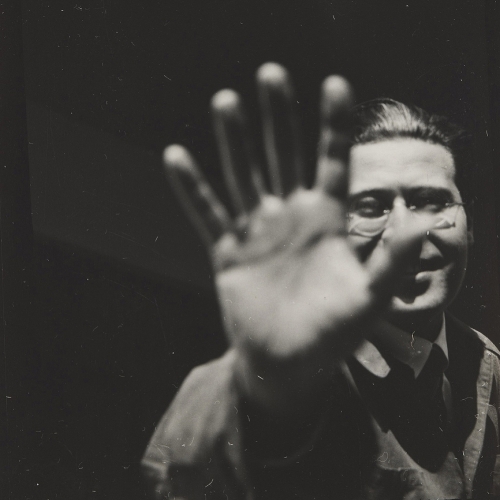
This unprepossessing place is the American survivor of a great international movement, the Bauhaus of Dessau, which filled the world with tubular chairs and sectional sofas. The Bauhaus, like so many other things German, drew Hitler’s ire because it was too intellectually independent. Hitler dissolved it in 1938…Some fragments of Bauhaus fled to America. Dr Laszalo Moholy-Nagy escaped with some remnants of students’ work and saught refuge in Chicago. There, in his concrete warehouse, Moholy-Nagy’s movement has taken root.

They do the oddest things…A chair might just be a double loop of shellacked plywood. It is steamed and shaped so that it has a seat, and a back, and stands on the floor…It doesn’t look like much of a chair. It will do the job for which chairs are sold.

The Invention of the Car was Revolutionary (Vanity Fair Magazine, 1920)
1920, Cars, Vanity Fair Magazine

The Invention of the Car was Revolutionary
(Vanity Fair Magazine, 1920)

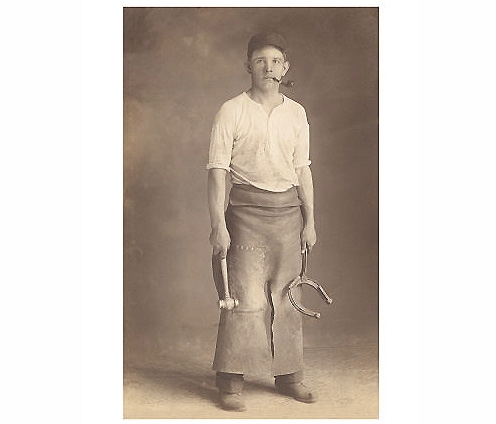
As early as 1920, the number of automobiles was quickly growing throughout the Western world. In this very brief article, a journalist lays out how rapidly life was changing in the United States as a result of the horseless carriage.

The village smithy is no more. In the place of that interesting relic of a bygone day, there stands a substantial concrete building marked ‘Garage’…

Advertisement

Use shortcode [oma_ad position="summary_top"] (or other position) in your theme or widgets to display OMA Promotions here.

Martha Gellhorn report on Dachau Concentration Camp 1945 |
1945, Collier's Magazine, Death Camps

Dachau
(Collier’s Magazine, 1945)

Attached is Martha Gellhorn’s (1908 – 1998) very disturbing eyewitness account of the Nazi concentration camp in Dachau, Poland:

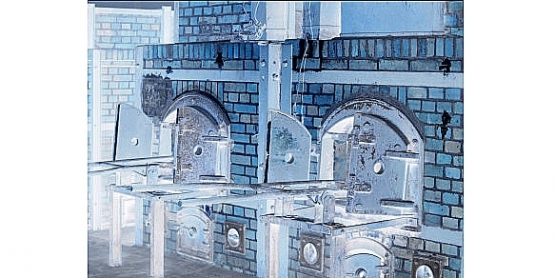
Nothing about war was ever as insanely wicked as these starved and outraged naked, nameless dead. Behind one pile of dead lay the clothed healthy bodies of the German guards who had been found in this camp. They were killed at once by the prisoners when the American Army entered.


The man primarily responsible for delivering the innocent into the ovens of the death camps was Obergrupenfuehrer Albert Ganzenmüller click here to read about him…

Mahalia Jackson Magazine Article | Christian Faith of Mahalia Jackson | Mahalia Jackson Personal Story
1964, Faith, Pageant Magazine

The Faith of Mahalia Jackson
(Pageant Magazine, 1964)

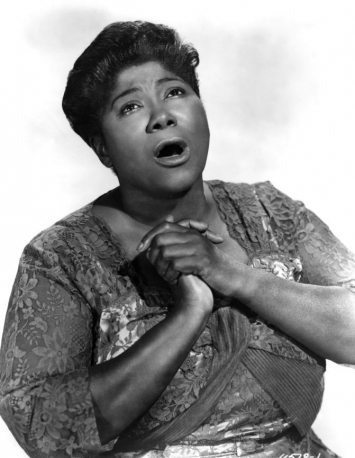
In this 1964 article, the cherished Gospel singer Mahalia Jackson (1911 – 1972) explained for the reader the relationship she had with the Almighty and further remarked that this relationship was the exact one God required from Christians:

– you have to have a made-up mind. You don’t straddle the fence serving God; we must put our all on the alter and let God abide.

The State of African-Americans in 1929 (The Book League, 1929)
1929, African-American History, The Book League

The State of African-Americans in 1929
(The Book League, 1929)

This book review of Scott Nearing’s Black Americastyle=border:none
was published on the eve of the Great Depression and it provides a very accurate account of that community.

There are in the United States today, if statistics do not lie, some twelve million Negroes. The population of the Argentine is not so large, nor that of Holland, nor that of Sweden. Eight million of these dark Americans live in the South. In Georgia alone there are more than a million colored people…How do they live – these blacks in a country controlled by whites.


Author Scott Nearing (1883 – 1983) was an American naturalist, educator and civil rights advocate.


Click here to read an article by Ralph Ellison concerning Black writers of the 1930s.

Advertisement

Use shortcode [oma_ad position="summary_top"] (or other position) in your theme or widgets to display OMA Promotions here.

1952, African-American History, Pageant Magazine

The Power of the African-American Press
(Pageant Magazine, 1952)

President Truman was re-elected in 1948 by a slender margin of 52,000 votes in the circulation area of The Chicago Defender, which almost alone of all the newspapers of all kinds in that area, supported Truman. After the election it published a boastful full-page advertisement –

What is the Negro press? Primarily it is a protest press demanding the correction of injustice to colored people. ‘We are organs of protest,’ explains Thomas W. Young, publisher of the Norfolk Journal and Guide, ‘born more than a hundred years ago in righteous indignation over the institution of slavery.’

The Ice was Thawing... (Pathfinder Magazine, 1949)
1949, African-American History, Pathfinder Magazine

The Ice was Thawing…
(Pathfinder Magazine, 1949)

Starting in the 1940s, small articles like the one here began appearing in magazines and newspapers across the nation – snippets indicating that the American people (ie. whites) were slowly catching on to the system of racial injustice they had inherited – and wondering aloud as to the tyranny of it all:

To 13 co-eds at Uppsala College, East Orange, N.J., democracy is something more than a worn text-book theory. It is a living, though thorny, reality. Shortly before school’s end, they formed one of the nation’s first interracial, interfaith college social sororities.


Another article about segregation’s end can be read here.

Advertisement

Use shortcode [oma_ad position="summary_top"] (or other position) in your theme or widgets to display OMA Promotions here.

Scroll to Top