Author name: editor

Biggest Investor in World War I | Financing the First World War
1921, The Literary Digest, World War One

The Biggest Investor In The War
(The Literary Digest, 1921)

Here is an article that deals with the money aspect of the First World War. Illustrated with two tables, the journalist explains that the United States laid out far more money than any of the combatant nations. Albeit the funds extended were in the form of loans to the Entente powers rather than the creation of their own military, in the end the U.S. ended up being the one nation that invested the most in the war.

Advertisement

Use shortcode [oma_ad position="summary_top"] (or other position) in your theme or widgets to display OMA Promotions here.

'Deutschland Unter Alles'' (Current Opinion Magazine, 1921)
1921, Aftermath (WWI), Current Opinion Magazine

‘Deutschland Unter Alles”
(Current Opinion Magazine, 1921)

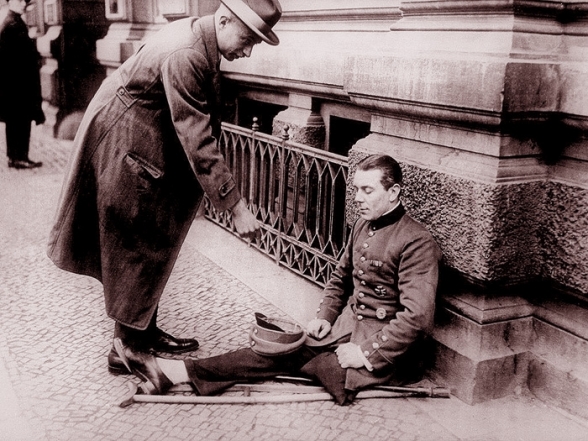
This is a brief editorial from 1921 that pointed out how amazing and promising pre-war Germany once was and then remarks how far off the mark the nation had fallen since the war ended:


Her empire dismantled.


• Occupied by alien armies.


• Worthless currency.


• Widespread despair.


Click here to read about Anti-Semitism in W.W. I Germany.


Click here to read what the Kaiser thought of Adolf Hitler.


You might also want to read about the inflated currency of post W.W. I Germany.
Sergeant York (Literary Digest, 1919)
1919, The Literary Digest, World War One

Sergeant York
(Literary Digest, 1919)

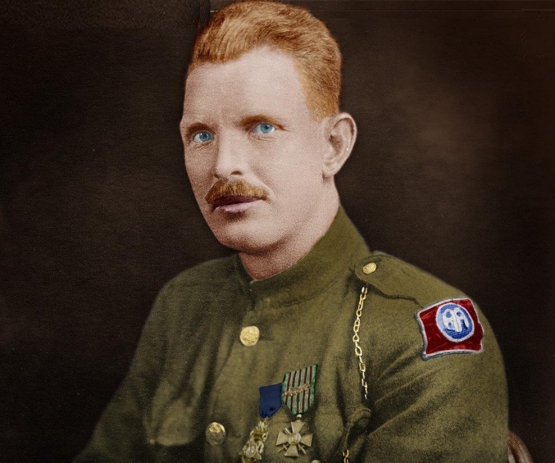
Sergeant Alvin York (1887 – 1964) of the 328th Infantry Regiment, Eighty-Second Division, was one of the great heroes of the First World War. The attached four page article recalled those deeds as well as his glorious trip to New York City where he was luxuriated at the Waldorf Astoria and feted by the swells of Gotham.

'The Americans in the Argonne Won the War'' (You Can't Print That, 1929)
1929, Writing

‘The Americans in the Argonne Won the War”
(You Can’t Print That, 1929)


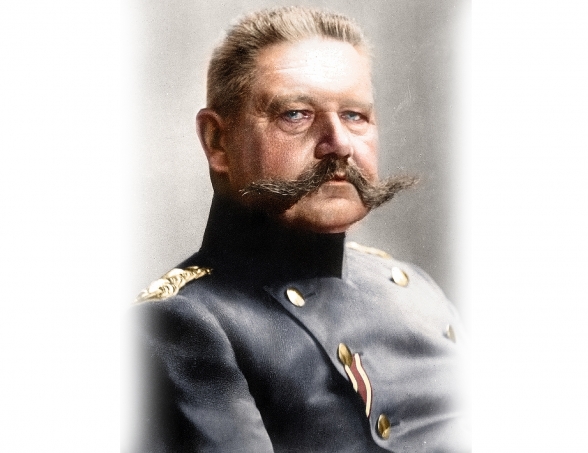
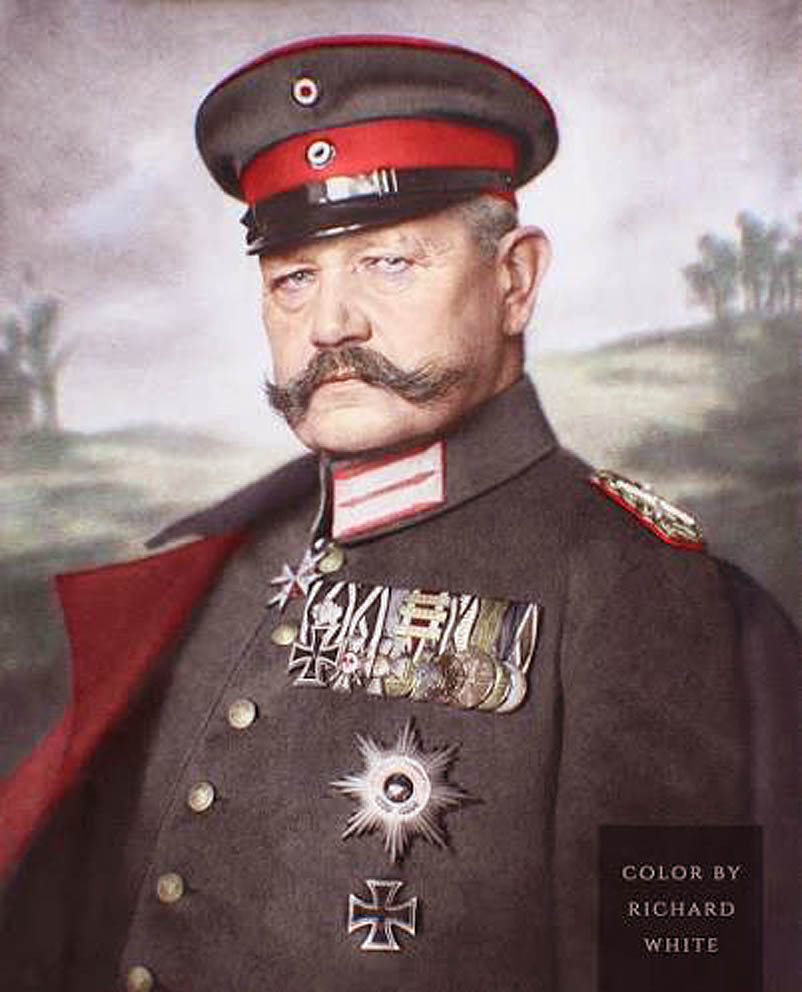
Here is a segment of the famous interview with General Paul von Hindenburg that was conducted just days after the close of hostilities in which the journalist George Seldes (1890 – 1995) posed the question as to which of the Allied Armies played the most decisive roll in defeating Germany; whereupon the General responded:


The American infantry in the Argonne won the war.


Read on…


Click here to read about sexually transmitted diseases among the American soldiers of the First World War…

Advertisement

Use shortcode [oma_ad position="summary_top"] (or other position) in your theme or widgets to display OMA Promotions here.

'The Americans in the Argonne Won the War'' (You Can't Print That, 1929)
1929, Doughboys

‘The Americans in the Argonne Won the War”
(You Can’t Print That, 1929)


Here is a segment of the famous interview with General Paul von Hindenburg that was conducted just days after the close of hostilities in which the journalist George Seldes (1890 – 1995) posed the question as to which of the Allied Armies played the most decisive roll in defeating Germany; whereupon the General responded:


The American infantry in the Argonne won the war.


Read on…


Click here to read about sexually transmitted diseases among the American soldiers of the First World War…

1929, Aftermath (WWI), Doughboys

‘The Americans in the Argonne Won the War”
(You Can’t Print That, 1929)


Here is a segment of the famous interview with General Paul von Hindenburg that was conducted just days after the close of hostilities in which the journalist George Seldes (1890 – 1995) posed the question as to which of the Allied Armies played the most decisive roll in defeating Germany; whereupon the General responded:


The American infantry in the Argonne won the war.


Read on…


Click here to read about sexually transmitted diseases among the American soldiers of the First World War…

Ezra Pound Treason | Ezra Pound Traitor | Ezra Pound Anti-Semite
1942, American Traitors, Click Magazine

Ezra Pound of Indiana
(Click Magazine, 1942)

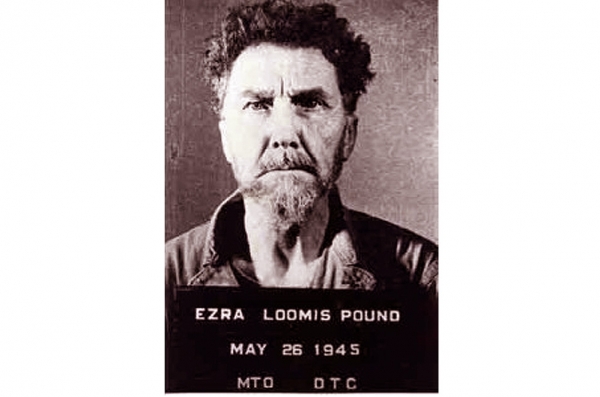
Click Magazine‘s illustrated article about the sedition of American poet Ezra Pound is peppered throughout with assorted quotes that clearly indicate the man’s guilt. The reporter, David Brown, went to some length in explaining what an odd life decision this was for a poet with such a celebrated past – a decisions that ultimately lead to his conviction in Federal Court, followed by his twelve year incarceration in a mad house.


In an effort to understand Pound’s thinking, we have included excerpts from a Wall Street Journal book review of a 2016 Pound biography that presents the poets queer rationale.

Advertisement

Use shortcode [oma_ad position="summary_top"] (or other position) in your theme or widgets to display OMA Promotions here.

'The Grapes of Wrath'' (Click Magazine, 1940)
1940, Click Magazine, Hollywood History

‘The Grapes of Wrath”
(Click Magazine, 1940)

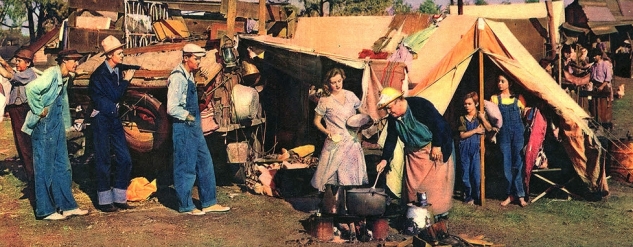
The attached article is illustrated with three color photos from the set of the movie, this short article details why The Grapes of Wrath (Twentieth Century Fox, 1940) was such a different movie to come out of Hollywood and explains how thoroughly both the art and costume departments were in their research in depicting the migrant Okies in their Westward flight:

Realism, keynote of the book, was the keynote of the picture. Henry Fonda, who plays Tom Joad, lived for weeks among the Okie farmers from Oklahoma to understand their problems…

As a result of Steinbeck’s literary efforts, medical aid was offered to California’s migrants – Click here to read about it


Click here to read a 1935 article about the real Okies.


Perhaps Steinbeck saw this 1938 photo-essay while writing his novel?

John Steinbeck became a war correspondent in 1943.

Young William Powell Magazine Article | William Powell Bio
1930, Hollywood History, Photoplay Magazine

‘I Remember William Powell”
(Photoplay Magazine, 1930)

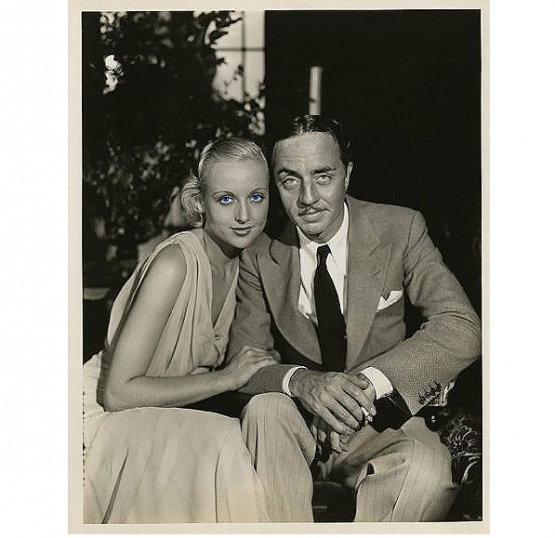
A magazine article by Leonora Ross in which she recalled her high school days with one of Kansas City’s most famous sons, actor William Powell (1892 – 1984). At the time this article appeared, Powell had some forty-two films to his credit (37 of them silent) with his best work yet to come.

If you would like to read more articles from Photoplay Magazine, click here.


CLICK HERE to read about Powell’s most famous film: The Thin Man…

Advertisement

Use shortcode [oma_ad position="summary_top"] (or other position) in your theme or widgets to display OMA Promotions here.

A Glossary of Terms for Movie Fans (Vanity Fair, 1920)
1920, Silent Movie History, Vanity Fair Hall of Fame

A Glossary of Terms for Movie Fans
(Vanity Fair, 1920)

During the summer of 1920, Photoplay Magazine ran this glossary of movie terms with cartoons by Ralph Barton and doggerel verses by Howard Dietz.


With new technology came new terms that seemed odd to the ear (it should be remembered that this new technology did not involve the use of one’s ear at all); words to be added to the nation’s vocabulary were fade-out, shooting, box-office and location.


To shoot a scene is nothing new-
Directors should be shot at, too

In Praise of Slapstick Comedy (Photoplay Magazine, 1914)
1914, Photoplay Magazine, Silent Movie History

In Praise of Slapstick Comedy
(Photoplay Magazine, 1914)

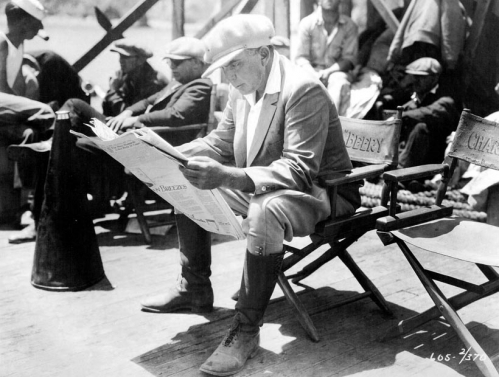
A reporter from Photoplay Magazine let all her eager readers in on the excitement from the glamorous set of the Essanay Film Manufacturing Company (Illinois) where the comedy, Actor Finney’s Finnish (1914) was being shot.
The silent short was directed and performed by those who would be participating steadily during Hollywood’s next thirty year spree: E. Mason Hopper (1885 – 1967), Director; Wallace Beery (1885 – 1949), leading man; Eddie Redway (1869 – 1919), co-star; Leo White (1882 – 1948), co-star; Bobbie Bolder (1859-1937) co-star, Ruth Hennesy (no dates), actress.

Norma Talmadge was Different (Photoplay Magazine, 1923)
1923, Photoplay Magazine, Silent Movie History

Norma Talmadge was Different
(Photoplay Magazine, 1923)

As delighted as this Photoplay Magazine journalist was to make the acquaintance of 1920s film star Norma Talmadge (1894 – 1957), she could not help but compare her to the reigning film diva of the period, Mary Pickford:

Mary awakens your love.
Norma awakens your admiration.
Mary makes you long to be of service to her.
Norma makes you long to have her friendship.
Mary Pickford is a sort of divine child, who always seems far away from you, glowing in a soft light…
Norma Talmadge is an intelligent, brilliant woman of the world, with every faculty keyed to the highest pitch…


The interview was conducted by the versatile Adela Rogers St. Johns (1894 – 1988): a veteran journalist from Hollywood’s earliest days, she also made her mark writing screenplays, novels and toiled in the precincts as one of the first woman police reporters.

Advertisement

Use shortcode [oma_ad position="summary_top"] (or other position) in your theme or widgets to display OMA Promotions here.

1920s Racism in Georgia | Georgia Governor Hugh M Dorsey Issued The Negro In Georgia Pamphlet 1921
1921, African-American History, The Literary Digest

Restraining The Terror In Georgia
(The Literary Digest, 1921)

Whether Georgia Governor Hugh M. Dorsey (1871 – 1948) was overwhelmed by a sense of humanity or whether he simply wished to reduce the northern flow of African-Americans from his state in the Great Migration – we’ll never know, but the fact stands that in late April, 1921, the Governor stood before the State Committe on Race Relations and spoke of 135 instances in which Black citizens were unjustly treated by White Georgians (The Georgia Government document pertaining to his address can be read here).

Advertisement

Use shortcode [oma_ad position="summary_top"] (or other position) in your theme or widgets to display OMA Promotions here.

Scroll to Top