Author name: editor

Pearl Harbor Newspaper Article | Pearl Harbor Magazine Article
1942, Pearl Harbor, Yank Magazine

The Pearl Harbor Story
(Yank Magazine, 1942)

When this article went to press the Pear Harbor attack was already over a year old – and like the articles that came out in ’41, these two pages capture much of the outrage that was the general feeling among so many of the American people. The article serves to give an account as to how the ships that were damaged that morning have largely recovered and were once again at sea (excluding the Arizona).


Five months after the Pearl Harbor attack the United States Navy defeated the Imperial Japanese Navy in the Coral Sea, click here to read about it…

Japanese Economy W.W. II | 1930s Japanese Economy | 1941 Japan
1941, St. Louis Star-Times, World War Two

Japan Could Not Afford to Go to War
(St. Louis Star-Times, 1941)

The day following Japan’s debut performance at Pearl Harbor found American economists assessing the economic strength of that country in an effort to understand how long their military would be able to exert power:

Government economists doubted today that Japan’s economy could withstand a long war with the United States.


Four years after the Pearl Harbor attack, a Japanese newspaper editorial expressed deep regret for Japan’s aggressiveness in the Second World War, click here to read about it…

Popular Japanese Perceptions of the USA
1942, Japanese Home Front, The American Magazine

How Americans Were Seen by The Japanese
(American Magazine, 1942)

In this article, photographer Frederick L. Hamilton recalled his two years in Japan prior to the Pearl Harbor attack; he let’s lose with all he learned concerning how the Japanese perceived the Americans:

They think we are soft, wasteful, irreverent and stupid…Most serious of all to the Japanese is their belief that we have no spiritual quality, no sense of honor.

Advertisement

Use shortcode [oma_ad position="summary_top"] (or other position) in your theme or widgets to display OMA Promotions here.

The Iconic ''I Want You'' Poster Is Seen for the First Time (Literary Digest, 1917)
1917, Posters, The Literary Digest

The Iconic ”I Want You” Poster Is Seen for the First Time
(Literary Digest, 1917)

In April, 1917, the call went out to artists of all ages that their talents were badly needed to create new and different sorts of posters that would rally the American masses to the colors. One of the first to answer the call was the celebrated illustrator James Montgomery Flagg; his first effort was the memorable I Want You poster, immediately raised the standards which other artists would have to acknowledge. It was reported that George Creel, the President’s appointee for all matters involving such undertakings in the mass-media, hosted a dinner for American illustrators; the evening ended with much clapping and cheering and the next day, one can assume, the poster campaign began in earnest.

Click here to read about W.W. I art.

WW II Novelty Fashions | WW2 Novelties in Mode
1941, Fashion (WWII), Newsweek

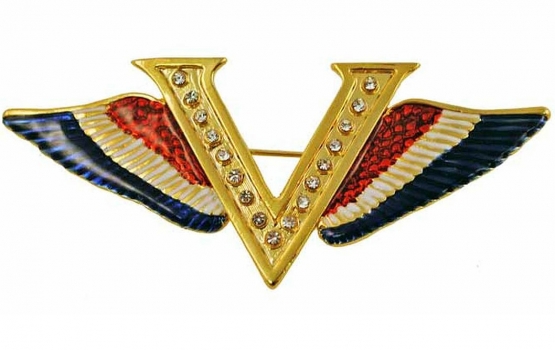
Novelty ”Victory Fashion” Makes An Appearance
(Newsweek Magazine, 1941)

It’s hard to believe – but Victory Fashion hit the American home front before it was even called the home front. However by mid-1941 Americans were pretty outraged by fascist aggression: the U-boats, London bombed, Nanking ravaged, France invaded – the list goes on. When this article went to press, we were not in the war but we were firmly on the Allied side. The word victory made its way into fashion circles and the nation’s couturiers began turning out novelty accessories and garments. Even the hairdressers contributed.
Sidney Poitier Young | Sidney Poitier Early Career
1959, Coronet Magazine, Hollywood History

Guess Whose Coming to Hollywood…
(Coronet Magazine, 1959)

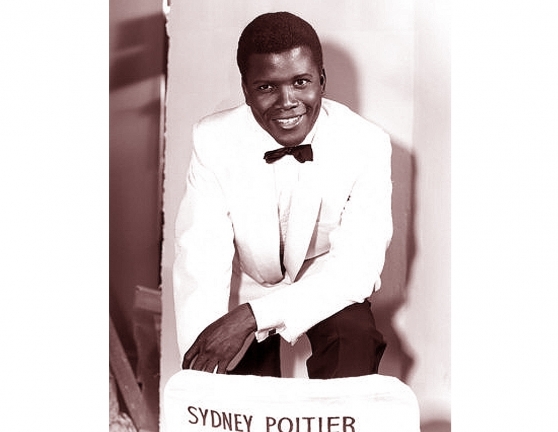
The Coronet entertainment writer was quite correct when he identified Sidney Poitier (1927 – 2022) as the first actor of African descent to earn beaucoup bucks and achieve leading-man status in dramatic rolls in Hollywood. Born and raised in the Bahamas, Poitier’s predecessors in the film colony were many, but they were all song and dance men. The attached column clearly outlines what made Poitier such an actor apart.


Before there was Sidney Poitier, there was Farina…

Advertisement

Use shortcode [oma_ad position="summary_top"] (or other position) in your theme or widgets to display OMA Promotions here.

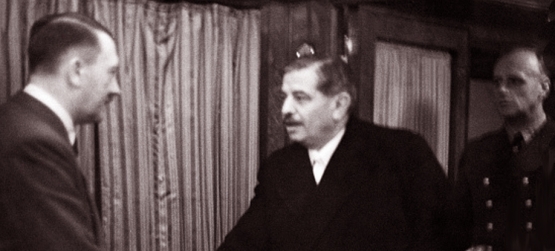
Pierre Laval: French Premier and Traitor (Collier's Magazine, 1943)
1943, Collier's Magazine, France

Pierre Laval: French Premier and Traitor
(Collier’s Magazine, 1943)

French collaborator Pierre Laval (1883 – 1945) is remembered as the Nazi tool who presided over France between 1942 and 1944, allowing for the deportation of Jews and French laborers into Germany. On D-Day, Laval stood before the radio microphones cautioning his countrymen not to join in the fight against the German occupiers. His many sins would be known a year later during the liberation of Paris, but this writer was very accurate in cataloging all his many failings, both as a citizen of France and as a Human Being.


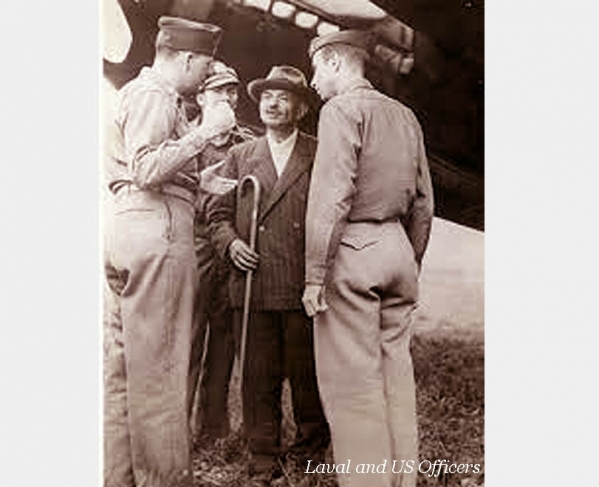
Laval was captured in Spain; you can read about that here…


CLICK HERE to read about Laval’s Norwegian counterpart: Prime Minister Vidkun Quisling

Pierre Laval Captured in Spain | Pierre Laval Primary Source Article 1945
1945, France, Newsweek

The Capture of Laval
(Newsweek Magazine, 1945)

The game was up. At the Prat de Llobregat airfield outside Barcelona the traitor sat heavily on a camp stool, waiting for the reprieve. It did not come. The Franco government had found Pierre Laval too hot to handle… Laval shrugged: ‘I suppose if Petain can face the music, I can’. But later he shouted: ‘It is unfair… delivering me to my country.’


More about Laval can be read here

Advertisement

Use shortcode [oma_ad position="summary_top"] (or other position) in your theme or widgets to display OMA Promotions here.

First Wave on D-Day | D Day Stories from Survivors | War Correspondent Kenneth G Crawford D-Day Landings
1944, D-Day, Newsweek

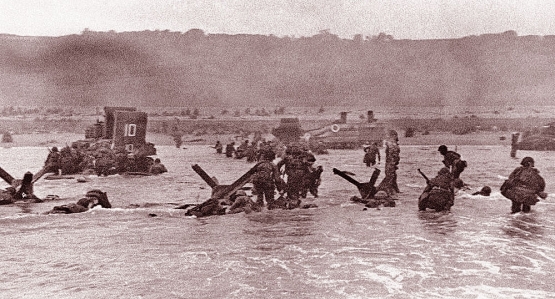
The First Wave
(Newsweek Magazine, 1944)

Down ramp!‘ shouted the coxswain from the elevated stern.

Down it came with a clank and splash. Ahead – and it seemed at that moment miles off – stretched the sea wall. At Lieutenant Crisson’s insistence we had all daubed our faces with commando black. I charged out with the rest, trying to look fierce and desperate, only to step into a shell hole and submerge myself in the channel. Luckily my gear was too wet and stinking to put on so I was light enough to come up.


This Newsweek journalist was the only allied war correspondent to have witnessed the derring-do of those in the first wave.

Relation Between Cancer and Smoking 1953 | Cancer Studies in the 1950s | How was Cancer Treated in the 1950s
1953, Miscellaneous, The United States News

Does Smoking Really Cause Cancer?
(United States News, 1953)

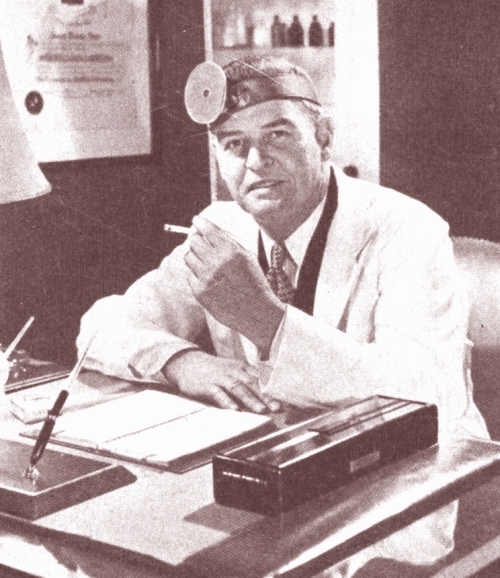
Some time ago we posted an article from 1921 about legislation that the U.S. Congress was considering concerning the prohibition of cigarettes (Click here to read about that) we thought that the cat was out of the bag at that time as to the fact concerning the connection of smoking and cancer. But we were wrong. The 1953 article attached herein concerns four doctors who appeared before Congress in an appeal for federal funding for cancer research. They made it clear that research was indicating that there was a clear link between smoking and cancer, but more exploration was needed.


In 1921 there was talk in Congress of outlawing cigarettes – you can read about it here


Click here to read about one of the greatest innovations by 20th Century chemists: plastic.

Advertisement

Use shortcode [oma_ad position="summary_top"] (or other position) in your theme or widgets to display OMA Promotions here.

The Return of the Coldstream Guards (The New Red Cross Magazine, 1919)
1919, Aftermath (WWI), The New Red Cross Magazine

The Return of the Coldstream Guards
(The New Red Cross Magazine, 1919)

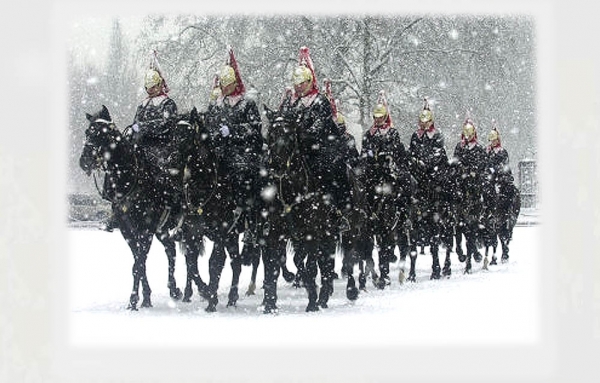
To-day was a great day in London. The Guards’ Division was inspected by the King at Buckingham Palace and had a triumphant march to welcome them home…East End and West End rubbed shoulders to-day and showed the same respect for each other that not so long ago they had shown in the trenches.


Click here to read an article about the German veterans of W.W. I.

1923 Time Magazine Article About Prohibition | Volstead Act and Canada | Canadian Liquor and Prohibition
1923, Prohibition History, Time Magazine

Prohibition And Our Northern Neighbor
(Time Magazine, 1923)

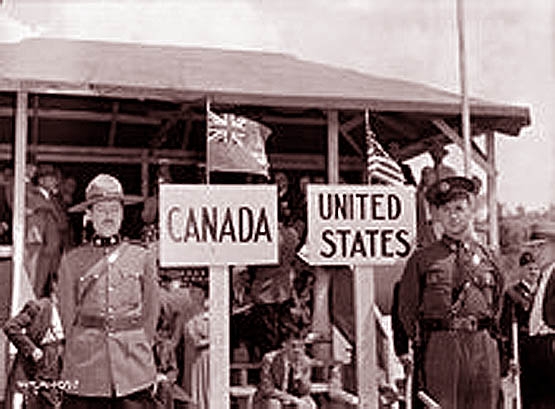
When the architects of Prohibition were planning their dry fairyland they always knew that the weak spot in their scheme was going to be the vast borderlands that separate the United States from Canada and Mexico.
The attached article from 1923 outlines the concerns President Coolidge’s administration had regarding Prohibition law enforcement along the Canadian frontier.

Advertisement

Use shortcode [oma_ad position="summary_top"] (or other position) in your theme or widgets to display OMA Promotions here.

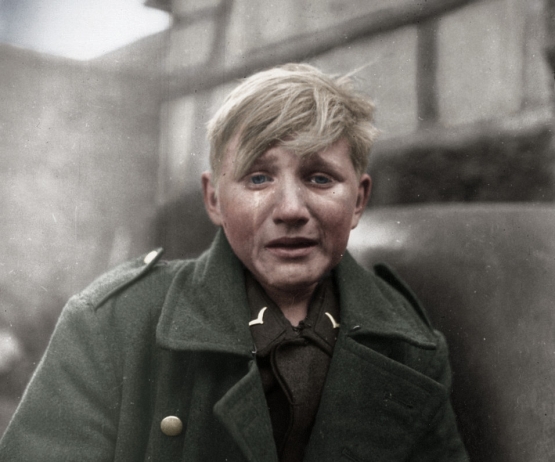
Hitler Youth Boy Soldiers Captured 1945 | German Hitler Youth 1945 POW Camp
1945, POWs, Yank Magazine

German Boy Soldiers in Captivity
(Yank Magazine, 1945)

A fascinating article reporting on the Baby Cage, the Allied prisoner of war camp that held some 7,000 boy soldiers of the German army, ages 12 through 17.

In light of the fact that so manyGerman youths had been indoctrinated from their earliest days in Nazi dogma and then dumbfounded to a far greater degree within the Hitler Jugend system, the Allied leadership post-war government believed that this group needed to be instructed in the ways of tolerance before being let loose into the general population.


Click here to read about the Nazi indoctrination of German youth.

National Urban League Magazine Article 1949 | National Urban League History | Need for the National Urban League
1949, African-American History, Coronet Magazine

Addressing the ”Negro Problem”
(Coronet Magazine, 1949)

Like the article posted above, this essay serves as further evidence that the immediate post-war years in America were ones in which the foundations for the civil rights movement were established; foundations on which the civil rights leaders of the Sixties and Seventies would rely upon to guarantee the forward momentum of the movement.


The attached article pertains to the necessary work that was being done by the National Urban League.


Upon reading this piece, we’re sure you’ll recognize that the author knew full well that the article should have been titled, The Answer to the White Problem.

Advertisement

Use shortcode [oma_ad position="summary_top"] (or other position) in your theme or widgets to display OMA Promotions here.

Scroll to Top