Author name: editor

Albert Einstein Magazine Interview (Literary Digest, 1935)
1935, Albert Einstein, The Literary Digest

Albert Einstein Magazine Interview
(Literary Digest, 1935)

A year and a half after departing Germany, Albert Einstein (1879 – 1955) vogued it up for the cameras at a meeting for the scientific community in Pennsylvania where he answered three very basic questions concerning his research.

A small, sensitive, and slightly naive refugee from Germany stole the show at the winter meeting of the American Association for Advancement of Science, which closed at Pittsburgh last week. Not only the general public and newspapermen, but even the staid scientists forgot their dignity in a scramble to see and hear the little man, Albert Einstein, whose ideas have worked the greatest revolution in modern scientific thought.

Advertisement

Use shortcode [oma_ad position="summary_top"] (or other position) in your theme or widgets to display OMA Promotions here.

General Grant Recalled Meeting Lincoln (National Park Service, 1956)
1956, Abraham Lincoln, Pamphlet Produced by the National Park Service

General Grant Recalled Meeting Lincoln
(National Park Service, 1956)

A short paragraph from General Grant’s memoir recalling the the first private interview with President Lincoln, on the occasion in the early spring of 1864 when he was given command of all the Federal armies.

In my first interview with Mr. Lincoln alone he stated to me that he had never professed to be a military man or to know how campaigns should be conducted…


Click here to read about a dream that President Lincoln had, a dream that anticipated his violent death.

When Grant was a Colonel (Literary Digest, 1908)
1908, General Grant, The Literary Digest

When Grant was a Colonel
(Literary Digest, 1908)

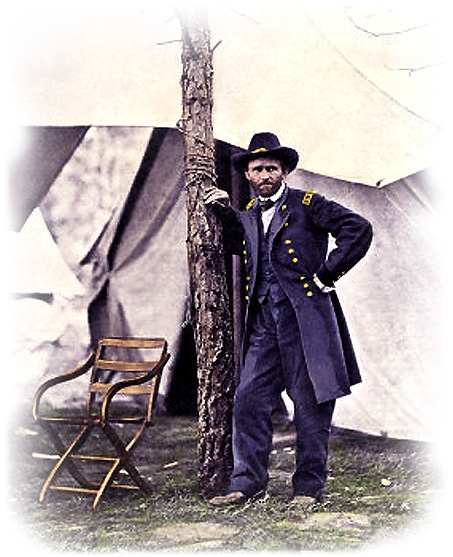
This Civil War reminiscence was originally printed in a Missouri newspaper and concerned the Union General U.S. Grant (1822 – 1885) when he was a lowly colonel assigned to guard the railroads along the Salt River in Northeast Missouri and how he got along with the local population:


He talked politely in a calm, dispassionate way, and never with heat or anger. Some of those who visited his camp in those days quote him as saying that if he had considered the war merely to free slaves he would have taken his command and joined the South…


Click here to read about
General Grant’s march on Richmond.


Click here to read about the son of General Grant and his memories of his father at Vicksburg.
Advertisement

Use shortcode [oma_ad position="summary_top"] (or other position) in your theme or widgets to display OMA Promotions here.

The American Cemetery at Romagne (Literary Digest, 1919)
1919, Cemeteries, The Literary Digest

The American Cemetery at Romagne
(Literary Digest, 1919)

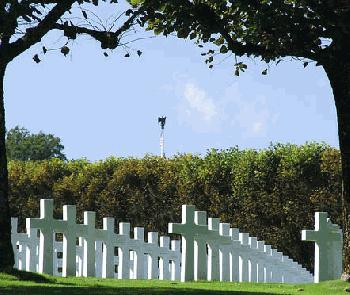
An eye-witness account of the construction of the American Meuse-Argonne Cemetery in Romagne, France:

They are now gathering up the bodies of the 26,000 American boys who were killed on the Argonne-Meuse battlefield, and are burying them in a great cemetery at Romagne, a little town in the heart of the region where the fighting took place. Here and there all over the battlefield are stakes, each marking the grave of an American soldier who was buried where he fell.

In one of the office buildings a large force of clerks is keeping the records of the dead; no banking firm could be more careful of its accounts than are these clerks…and their superiors of their registration of graves.

Advertisement

Use shortcode [oma_ad position="summary_top"] (or other position) in your theme or widgets to display OMA Promotions here.

Military Influence on NY Fashion | 1918 Vanity Fair Article on Fashion
1918, Fashion (WWI), Vanity Fair Hall of Fame

The Great War and It’s Influence on Feminine Fashion
(Vanity Fair, 1918)

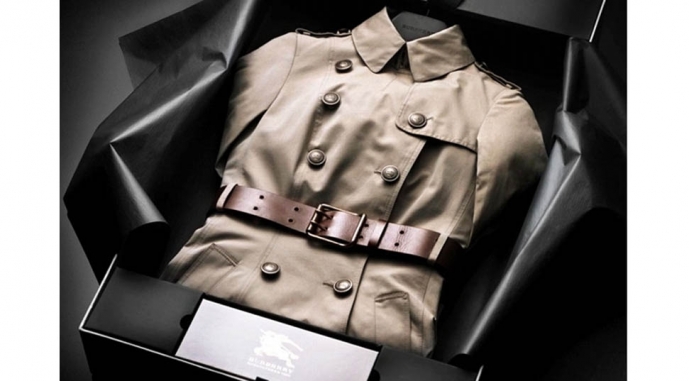
The military influence on feminine fashion predates the conflict of 1914-1918 by a long shot and the evidence of this is undeniable. These 1918 fashion illustrations show the influence that the war was having on American designers during the final year of W.W. I.


Click here to read about the fashion legacy of W.W. I…


To read about one of the fashion legacies of W.W. II, click here…


Click here to read about the origins of the T-shirt.

Advertisement

Use shortcode [oma_ad position="summary_top"] (or other position) in your theme or widgets to display OMA Promotions here.

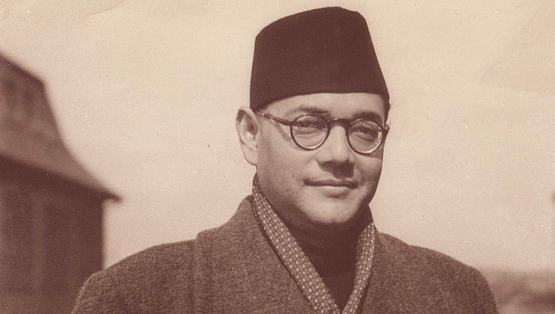
Subhas Chandra Bose founder of the Indische Legion | Subhas Chandra Bose Indian Fascist
1944, Allies, Collier's Magazine

Hitler’s Man in Delhi
(Collier’s Magazine, 1944)

Subhas Chandra Bose (1897 – 1945) spent much of the Twenties and Thirties brainstorming with Gandhi and Nehru as to how best they might secure sovereignty for their beloved India. By 1939 Bose broke ranks with his fellows at the Indian National Congress, believing that British rule would end a good deal quicker if the Indians signed on with the Axis.

African-American Stevedores in the U.S. Army (The Independent, 1919)
1919, African-Americans, The Independent

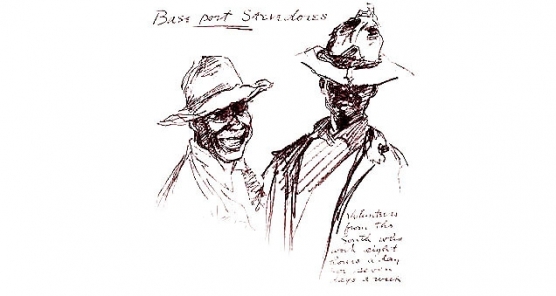
African-American Stevedores in the U.S. Army
(The Independent, 1919)

An article written by David Le Roy Ferguson (dates unknown), an African-American pastor assigned to minister to the black Doughboys posted to the depot at St. Nazaire, France. The men of his flock were stevedores who were ordered to perform the thankless task of off-loading cargo from the various supply ships arriving daily to support the A.E.F.. Aside from working as cooks or in other service positions, this was a customary assignment given to the African-Americans during the war; only a small percentage were posted to the 92nd and 93rd combat divisions.


Pastor Ferguson’s magazine article salutes the necessary labor of these men while at the same time adhering to the usual simple descriptions of the African-American as cheerful, musical and rather crude.

WPA and the State Governments | State Governors Address the WPA 1937
1937, Pathfinder Magazine, WPA

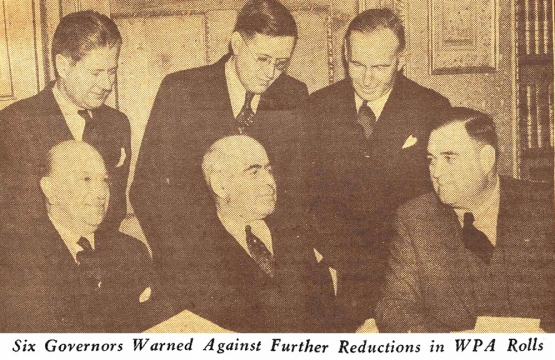
WPA and the States
(Pathfinder Magazine, 1937)

In early March, numerous governors convened and agreed that the WPA was dropping too many dependents from their rolls who were then becoming burdensome to their respective states. The executives then wrote a telegram to the White House insisting that the Federal program stop this practice.

Advertisement

Use shortcode [oma_ad position="summary_top"] (or other position) in your theme or widgets to display OMA Promotions here.

Federal Theater Project History | WPA Federal Theater Project Productions | Federal Theater Project During the 1930s
1939, WPA

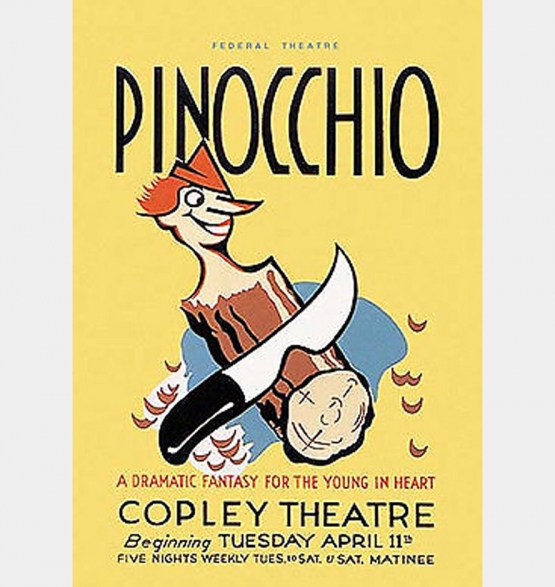
The Federal Theater Project
(Pathfinder & Literary Digest Magazines, 1939)

The Federal Theater Project (FTP) was a division of President
Roosevelt’s Works Project Administration (WPA). The WPA was organized in order to dream up jobs for the many unemployed Americans during the Great Depression. They employed manual laborers with the Civilian Conservation Corps, musicians with the Federal Music Project and historians with the Federal Records Survey – to name only a few of the agencies within the WPA. The Federal Theater Project was intended to hire the nation’s actors, costumers,directors and stagehands:

At its peak in 1936, FTP employed 12,500 people…it had puppet shows, vaudeville units, circuses and stock companies traveling through every state.

Advertisement

Use shortcode [oma_ad position="summary_top"] (or other position) in your theme or widgets to display OMA Promotions here.

Scroll to Top