Author name: editor

The Lincoln - Douglas Debates: Defining Slavery (National Park Service, 1956)
1956, Abraham Lincoln, The National Park Service

The Lincoln – Douglas Debates: Defining Slavery
(National Park Service, 1956)

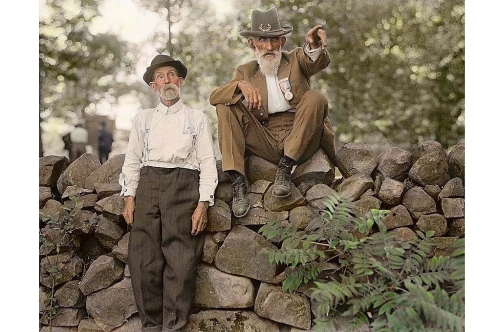
The Republican Party, which developed rapidly as a new political force following the enactment of the Kansas-Nebraska Bill in 1854, gathered its strength chiefly from those who opposed the extension of slavery into the territories. In the Lincoln – Douglas Debates this issue was paramount. Perhaps nowhere can a more concise and explicit statement of the position of the Republican Party on this issue be found than in Mr. Lincoln’s opening speech at Quincy [Illinois] in the sixth of the joint debates.

Salty Opinions from a Frenchman (Literary Digest, 1920)
1920, Foreign Opinions About America, Recent Articles, The Literary Digest

Salty Opinions from a Frenchman
(Literary Digest, 1920)

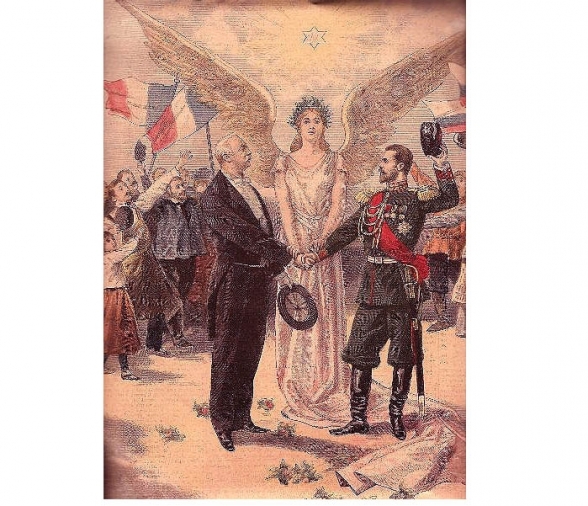
Attached are the rantings of one Frenchman on the matter of American gullibility, solipsism and naive stupidity. While recognizing an innate sense of optimism that seemed natural to Americans, the Gaul also believed that within the American culture the seed of tyranny had been planted and would one day bloom.

And in this new and vigorous country they are going to make nationalism a great religion, the supreme intellectual and social motive. This means Prussianizing, pure and simple.

The Town Cars of 1922 (Harper's Bazaar, 1922)
1922, Cars, Harper's Bazaar Magazine

The Town Cars of 1922
(Harper’s Bazaar, 1922)

This is a quick read from a 1920s HARPER’S BAZAAR comparing the European and American limousines (a.k.a., ‘coupe, town car, cabriolet’); these were the luxurious looking vehicles that we’ve all seen in pictures from that period in which the chauffeur was expected to perform his duties without the benefit of a roof over his head. The uncredited journalist talks about where cars such as these are likely to be found, their interiors, tufted seating upholstery, basket weaving applications, leather casings and more.

Click here to read about the first car radios.

Click here to read a magazine profile of W.W. I fighter ace Captain Eddy Rickenbacker.

Advertisement

Use shortcode [oma_ad position="summary_top"] (or other position) in your theme or widgets to display OMA Promotions here.

Things 'Americain' in France (Literary Digest, 1927)
1927, Foreign Opinions About America, Recent Articles, The Literary Digest

Things ‘Americain’ in France
(Literary Digest, 1927)

Whether for good or for ill, the American people have left their thumb print on much of the French language – the liberal sprinkling of the adjective Americain was ever present in 1927, as it is today. This article seeks to explain the meanings and origins of such French expressions as Oncle D’Amerique or Homard a l’Americaine -among other assorted phrases inspired by the free and the brave.

File Sharing (United States News & World Report, 1948)
Recent Articles, Spying

File Sharing
(United States News & World Report, 1948)

This is the story of how Russia got military secrets from the United States during W.W. II. It is a story that has little to do with the spy ring that congressional committees are trying to prove existed during the war period (The Gouzenko Affair: read about it here) . But it does throw light on the methods and purposes of the so-called ‘spy ring’.

Military information was going to Russia as a matter of routine, by official channels, on an organized basis, all during the period when United States Communists and their friends were supposed to be spying out bits of information to send… As an ally of the U.S. in the war against Germany, Russia had free access to far more information than the so-called ‘spy ring’ claims…

Jane Russell Sur la Plage... (Pic Magazine, 1941)
1941, Jane Russell, Pic Magazine, Recent Articles

Jane Russell Sur la Plage…
(Pic Magazine, 1941)

When these eight pictures of Hollywood actress Jane Russell (1921 – 2012) were snapped in the spring of 1941, she wasn’t up to much. She was studying acting at Max Reinhardt’s Theatrical Workshop in Los Angeles and more than likely waiting for her seven year contract with Howard Hughes to expire. The film that she’d made with him the previous year, The Outlaw, would not [be widely] distributed for some time and so we imagine that she jumped at the chance to put on a bathing suit and clown around on the beach when she got the call from the boys at PIC MAGAZINE. With the onslaught of the Second World War, she would be doing much of the same sort of posing for the pin-up photographers.


In the attached photo-essay, the PIC editors went out on a limb and called her one of America’s greatest beauties.

Advertisement

Use shortcode [oma_ad position="summary_top"] (or other position) in your theme or widgets to display OMA Promotions here.

Chemical War (The North American Review, 1922)
1922, Poison Gas, The North American Review

Chemical War
(The North American Review, 1922)

The article attached concerns the past and future of chemical warfare (at least as this was understood in 1922) and was written by Captain J.M. Scammell, Brit who wrote a good deal on the matter throughout much of the Twenties and Thirties. Like so many other articles we find from the immediate post-war period, Captain Scammell argued that chemical warfare can be one of the most humane options available to a general:

The really significant figures are those showing that while gas caused 27.3 percent of all casualties, of these only 1.87 percent died! That is less than one-twelfth the percentage that died from the effects of other wounds. Gas, moreover, does not mutilate or disfigure…

Sing Sing Prison: Home of the Bad New Yorkers (Click Magazine, 1938)
1938, Click Magazine, Old New York History, Recent Articles

Sing Sing Prison: Home of the Bad New Yorkers
(Click Magazine, 1938)

Sing Sing Prison was where the vulgar New Yorkers of the criminal variety spent much of their time:

Murderers and felons, rogues and embezzlers, an average of 2750 of them inhabit Sing Sing Prison at Ossining, N.Y. on the bank of the Hudson River. Theirs is a world apart. A world of gray stone walls and steel bars. When the gates clang shut behind them they enter upon a life scientifically regulated by Warden Lewis E. Lawes (1883 – 1947)…CLICK MAGAZINE takes you inside the grim walls and shows you what happens to the convicted criminal from the day he is committed to Sing Sing Prison until the day he leaves as a free man.

This is a photo-essay that is made up of twenty-five black and white pictures.

Read about the religious make up of Sing Sing Prison in the Thirties.

Where Glamour and Tennis Met: Nancy Chaffee (Quick Magazine, 1951)
1951, Quick Magazine, Recent Articles, Tennis History

Where Glamour and Tennis Met: Nancy Chaffee
(Quick Magazine, 1951)

This article is about Nancy Chaffee (1929 – 2002), another California-born tennis champion of the post-war era. Chaffee had once been ranked as the fourth-place women’s tennis champ in all the world, winning three consecutive national indoor championships (1950-1952). She first came to view in 1947 playing alongside the men on the U.S.C. tennis team (there was no women’s team at the time). The year before this article appeared on the newsstands, Chaffee made the semi-finals at Forrest Hills, her record at Wimbledon can be read here

Advertisement

Use shortcode [oma_ad position="summary_top"] (or other position) in your theme or widgets to display OMA Promotions here.

John Byron Nelson: One Heck Of A Golfer (Yank Magazine, 1944)
1944, Golf History, Yank Magazine

John Byron Nelson: One Heck Of A Golfer
(Yank Magazine, 1944)

This short profile of Byron Nelson (1912 – 2006) was written when the golf champion was at the top of his game. Nelson was indeed one of the grand old masters of golf with many victories to his name (twelve PGA Tour wins). This article serves to illustrate how admired he was by his fellow players as well as his contemporaries who watched the game closely.


Click here to read about the first steel tennis racket.

A German Champion of American English (Literary Digest, 1908)
1908, American English, The Literary Digest

A German Champion of American English
(Literary Digest, 1908)

Having made a twenty year study of the English spoken in both Britain and the United States, Alois Brandl (1855 – 1940), chief Professor of English literature at the University of Berlin, found himself in an advantageous position that would allow him to make definitive conclusions about the evolution of the English language on American shores:

Mr. Brandl has been comparing English as it is spoken by Englishmen and English as it is spoken by Americans, and has come to the conclusion that the former is not a whit purer than the latter… the English of Americans was not only improving, but was already as good as that of our English cousins… He is very severe on the Cockney accent, and declares that the English of the ordinary educated American is quite on an equality with that of the ordinary educated Englishman…


Professor W.W. Skeat (1835 – 1912), chair of Anglo-Saxon Studies at Cambridge University, entirely agreed with the German savant and went on in greater detail along similar lines.

No mention was made as to what unit of measure was applied to reach their deductions.

The Institute for Reconstructive Plastic Surgery (Coronet Magazine, 1959)
1959, Coronet Magazine, Cosmetic Surgery

The Institute for Reconstructive Plastic Surgery
(Coronet Magazine, 1959)

During the course of the past 63 years the triumphs of The Institute of Reconstructive Plastic Surgery have been many and myriad. Established in New York in 1951, the organization was originally called The Society for the Rehabilitation of the Facially Disfigured, and they have been the pioneers in the art of tissue transplants and the aesthetic surgery movement in general.


The attached article was first seen on the pages of a 1959 issue CORONET MAGAZINE and it recalls many of their earliest achievements.

Advertisement

Use shortcode [oma_ad position="summary_top"] (or other position) in your theme or widgets to display OMA Promotions here.

The Institute for Reconstructive Plastic Surgery (Coronet Magazine, 1959)
1959, Coronet Magazine, Cosmetic Surgery

The Institute for Reconstructive Plastic Surgery
(Coronet Magazine, 1959)

During the course of the past 63 years the triumphs of The Institute of Reconstructive Plastic Surgery have been many and myriad. Established in New York in 1951, the organization was originally called The Society for the Rehabilitation of the Facially Disfigured, and they have been the pioneers in the art of tissue transplants and the aesthetic surgery movement in general.


The attached article was first seen on the pages of a 1959 issue CORONET MAGAZINE and it recalls many of their earliest achievements.

Gowns (The Pathfinder Magazine, 1947)
1947, Pathfinder Magazine, Recent Articles, The New Look

Gowns
(The Pathfinder Magazine, 1947)

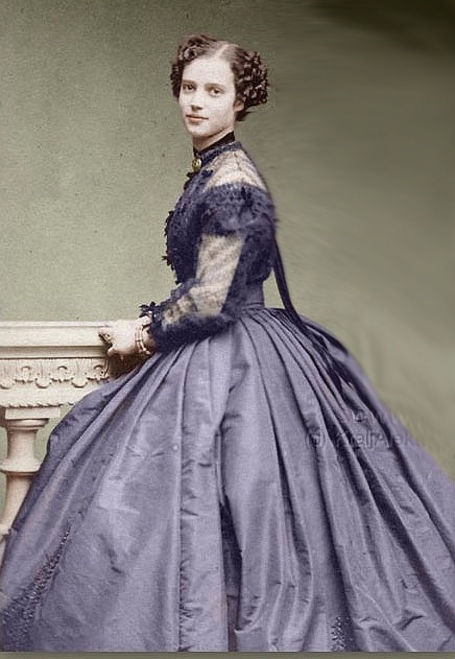
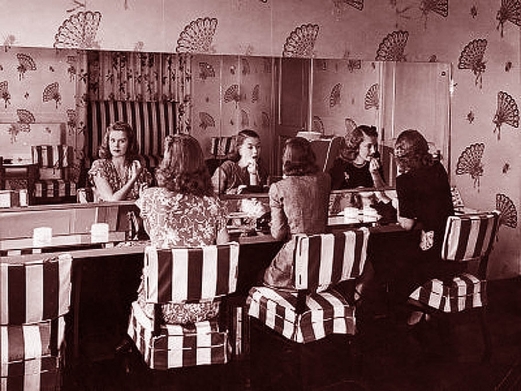
The fashionable gowns will be one of two extremes: pencil slim or big skirted like a puff ball. Whatever its cut, its color may be anything from soft dove grey to something called satan red. Fabrics are rich and lustrous, particularly the nontarnishable metallic materials. Newest is aluminum, colored gold or silver and woven into lame or onto rayon or even wool in gleaming designs.

Geraldine Farrar on Acting in the Silent Movies (Vanity Fair, 1921)
1921, Silent Movie History, Vanity Fair Magazine

Geraldine Farrar on Acting in the Silent Movies
(Vanity Fair, 1921)

In the attached article, Metropolitan Opera diva Geraldine Farrar (1882 – 1967) relays her experiences as a film actress in The Hell Cat (1918) and The Turn of the Wheel (1918), and boldly declares that there is a big difference between acting in an opera and acting for the screen (who knew?).

There are a hundred intimate expressions of the eyes, the mouth, the hands, that can only be transmitted through the camera, and the strong and sometimes merciless light of the projection machine. And this is what the motion picture actress must clearly and everlastingly keep in mind: she is acting for an audience which is near enough to detect any insincerity of feeling or any sham in make-up.

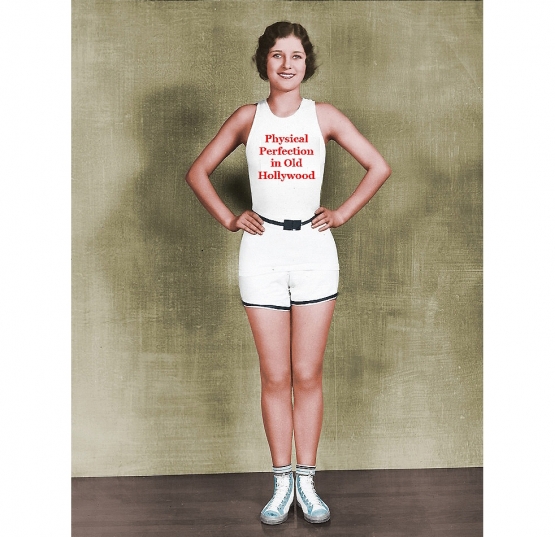
Click here to read about physical perfection during the Golden Age of Hollywood.

Advertisement

Use shortcode [oma_ad position="summary_top"] (or other position) in your theme or widgets to display OMA Promotions here.

Advertisement

Use shortcode [oma_ad position="summary_top"] (or other position) in your theme or widgets to display OMA Promotions here.

Scroll to Top