Author name: editor

An Interview with a Kamikaze Pilot (Yank Magazine, 1945)
1945, Kamikaze Attacks, Yank Magazine

An Interview with a Kamikaze Pilot
(Yank Magazine, 1945)

With the fall of imperial Japan, YANK correspondent Robert MacMillan was
one of the very first journalists to interview the Japanese Kamikaze pilot Norio Okamoto, which allowed his readers to gain some understanding as
to how the Kamikaze Corps operated:

Okomoto’s story took all the wind -the Divine Wind – out of the Kamikaze sails. Even the interpreter, a Japanese civilian, was surprised. He had worked for radio Tokyo and while he knew a lot of the propaganda stories were ridiculous, he had believed the Kamikaze legend.


Click here to read articles about post-war Japan.

1947, 47 Magazine, Magazines

’47 Magazine

(’47 Magazine, 1947)

’47 Magazine was established in March of 1947 and it was their intention to change their name with the calendar year, year by year and on through the succeeding decades. We have in our vast periodical library a few copies of ’48 Magazine – but that is as far as they got before they were voted off the island.


It was a terrific magazine – and many of the names on their board of directors are recognized as some of the best literary minds that America had produced in the mid-Twentieth Century. But, as you’ll see when you read the attached manifesto (they called it a Statement of Intent, but I think that they really wanted to call it was a manifesto) they deeply desired to create an arts magazine that was entirely free of accountants, advertisers, lawyers, agents and, ultimately, profits; so they weren’t around very long.

Benny Goodman Magazine Article | King of Swing Benny Goodman article
1938, Big Band 1930s-1940s, Stage Magazine

Benny Goodman, The King of Swing, on Park Avenue
(Stage Magazine, 1938)

To mark the momentous occasion of Benny Goodman and his Band performing for the ‘corsage clique’ on Park Avenue in 1938, ‘the King of Swing’ wrote this short essay concerning all his good work and the enjoyment that it brought to the Jitterbuggers of the world:

Swing is violent, at least so they tell me. But I’m willing to bet that Society is going to toss aside its toppers and tippers and really cut loose. They’ll all come slumming and stay for dancing.

Advertisement

Use shortcode [oma_ad position="summary_top"] (or other position) in your theme or widgets to display OMA Promotions here.

American Resolve and the Draft (Quick Magazine, 1951)
1951, Quick Magazine, The Cold War

American Resolve and the Draft
(Quick Magazine, 1951)

Illustrated with a chart that shows how much the U.S. Navy had shrunk after W.W. II and then expanded anew when faced with the war in Korea, this short article pertains to the various steps Congress was taking to meet the Soviet challenges abroad:

A $2.3 billion ship-building and repair program, just approved by President Truman, will add a 57,800-ton carrier and 172 other new vessels to the fleet. And 291 more are to be demothballed-including 6 carriers, 12 cruisers, 194 destroyers.
[Stalin was incapable of responding to such growth, so he simply ordered the production of additional A-Bombs]

The Soviet Union was the first atheist government…

Advertisement

Use shortcode [oma_ad position="summary_top"] (or other position) in your theme or widgets to display OMA Promotions here.

The Blitz Diet of 1956
1956, Coronet Magazine, Diets of Yore

The Blitz Diet of 1956

A confident declaration makes clear at the top of these columns that all adherents will lose 5 pounds in 2 days if they seriously follow the dictates of the Blitz diet:

Breakfast, lunch and dinner are the same… Eight ounces of fresh creamed cottage cheese; two or three Elberta peach halves and juice…

(F.Y.I. – the Blitz diet allows for Norwegian flat bread, butter, sugar, and cinnamon.)

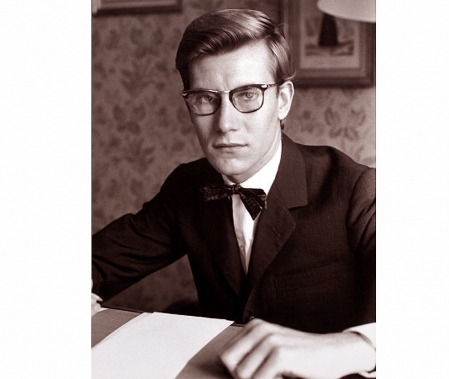
Yves Saint Laurent Takes Over the House of Dior (Coronet Magazine, 1958)
1958, Coronet Magazine, The New Look

Yves Saint Laurent Takes Over the House of Dior
(Coronet Magazine, 1958)

When Christian Dior died quite suddenly in 1957, the eggheads of the fashion world got their knickers in a twist as they wondered who would serve as the creative force for the great fashion house that he had established just ten years earlier; all eyes turned to his very young assistant, a 21 year old man named Yves Saint Laurent (1936 – 2008).


Click here to read a 1961 article about Jacqueline Kennedy’s influence on American fashion.

Advertisement

Use shortcode [oma_ad position="summary_top"] (or other position) in your theme or widgets to display OMA Promotions here.

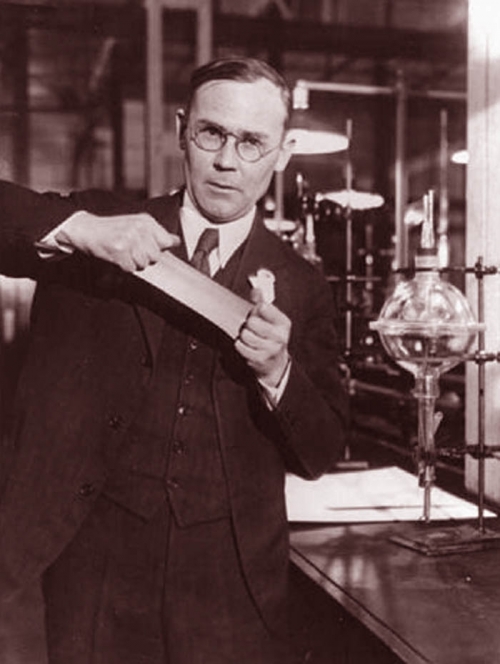
When Was Nylon Invented | Nylon History 1838
1930s Fashion, 1938, Pathfinder Magazine

The Invention of Nylon
(Pathfinder Magazine, 1938)

Last week, two of the nation’s leading manufacturers of synthetic textiles were taking important steps to woo the feminine heart from silk to synthetic hosiery. The E.I. Dupont de Nemours & Company announced that it had laid plans for construction of a new $7,000,000 plant near Seaford, Delaware, for manufacture of a new synthetic yarn called ‘Nylon,’ which, used in hosiery, was expected to compete successfully with all types of silk stockings.

War Correspondent John Steinbeck 1943 | John Steinbeck During WW2 | Once There Was a War by John Steinbeck
1943, Newsweek, War Correspondents

John Steinbeck of The N.Y. Herald Tribune
(Newsweek Magazine, 1943)

An odor rises from the men, the characteristic odor of an army. It is the smell of of wool and the bitter smell of fatigue and the smell of gun oil and leather. Troops always have this odor. The men lie sprawled, some with their mouths open, but they do not snore. Perhaps they are too tired to snore, but their breathing is an inaudible, pulsing thing.


Click here to read a movie review of The Grapes of Wrath.

Advertisement

Use shortcode [oma_ad position="summary_top"] (or other position) in your theme or widgets to display OMA Promotions here.

The Evolution of the Tank (NY Times, 1919)
1919, Inventions and Weapons

The Evolution of the Tank
(NY Times, 1919)

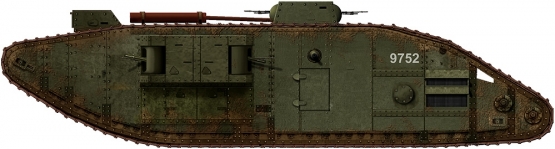
A three page article concerning the development of tanks during the First World War. While they were being created on the drawing boards of Britain’s W. Foster Company, the code name for these land dreadnoughts was water tanks; hence the name.

The first armored battle cars, or tanks were a British invention developed from an American automobile tractor used for agricultural purposes on the Western prairies. They made their initial appearance at the battle of the Somme (Flers), September 15, 1916.


However, it should be known that they were first used to greatest effect in the Battle of Cambrai (November 20 through December 7, 1917).


Click here to see a diagram of the W.W. I French Renault tank.


Read about the Patton tank in Korea…

The VT Radio Fuse (Yank Magazine, 1945)
1945, Weapons and Inventions, Yank Magazine

The VT Radio Fuse
(Yank Magazine, 1945)

Its been said that World War Two was the first high-tech war, and a passing look at many of the military tools used between 1939 and 1945 will bare that out to be true. It was not only th the first war in which jet engines and atomic bombs were used, but also the first war to deploy walkie-talkie radios, rockets, and radar. This article concerns what the U.S. Department of War classified as a weapons system just as revolutionary as the atomic bomb: the VT fuse artillery shell (a.k.a. the time proximity fuse). It was used with great success in various theaters: anti-Kamikaze in the Pacific, anti-personnel in the Ardennes and anti V-1 in defense of Britain.

This is a short article that goes into greater detail outlining the successes listed above and explains how the system worked; it also is accompanied by a diagram of the shell.


Click here to learn about the timing fuses designed for W.W. I shrapnel shells.

Advertisement

Use shortcode [oma_ad position="summary_top"] (or other position) in your theme or widgets to display OMA Promotions here.

The American 4.5 Multiple Rocket Launcher (Yank Magazine, 1945)
1945, Weapons and Inventions, Yank Magazine

The American 4.5 Multiple Rocket Launcher
(Yank Magazine, 1945)

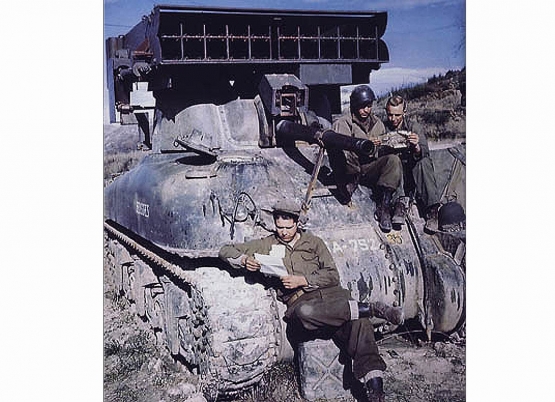
To the American G.I.s serving along the Italian Front, the presence of rockets was like a page out of a Buck Rogers comic book. They had grown accustomed to seeing them mounted on the wings of quickly speeding American fighter aircraft, but to see and hear them up close and personal when fixed to the turret of a Sherman tank (pictured) seemed altogether too bizarre. This article, Rockets in Italy, will allow you to learn about the use and deployment of the U.S. Army’s ground rocket-gun and how it amazed all the men who ever came near enough to see one.


Click here to read about one of the greatest innovations by 20th Century chemists: plastic.

German Ersatz Products 1937 | German Chemists Made Artificial Fuel Prior to WW2 | Zellwolle Fabric 1937
1937, The Literary Digest, The Nazis

‘German Ersatz”
(Literary Digest, 1937)

Speaking of Evil Geniuses, let’s not forget all that the German chemists did to dream-up efficient substitutes for motor fuel, rubber, coal and various metals just before Hitler launched the war in Europe.

The most significant little word in the German vocabulary of 1937 is Ersatz. In two syllables, which, literally translated, means ‘substitute’, it summarizes the bold experiment in rigged economy which is Adolf Hitler’s Four Year Plan… The Reich’s great chemical industry went into high gear immediately, and at this point Ersatz became the big little word of the German language.

Advertisement

Use shortcode [oma_ad position="summary_top"] (or other position) in your theme or widgets to display OMA Promotions here.

Scroll to Top