Author name: editor

Did President Lincoln Really Need the Beard? (Collier's Magazine, 1948)
1948, Abraham Lincoln, Collier's Magazine

Did President Lincoln Really Need the Beard?
(Collier’s Magazine, 1948)

When an eleven year-old girl advised Abraham Lincoln to grow some whiskers, the great man humbly took her suggestion to heart:

I am a little girl only 11 years old, but want you should be President of the United States very much so I hope you wont think me very bold to write to such a great man as you are. Have you any little girls about as large as I am if so give them my love and tell her to write to me if you cannot answer this letter. I have got 4 brothers and part of them will vote for you any way and if you let your whiskers grow I will try and get the rest of them to vote for you you would look a great deal better for your face is so thin. All the ladies like whiskers and they would tease their husbands to vote for you and then you would be President.

The rest is history.


Click here to read an 1862 review about the Civil War photographs of Mathew Brady.

Advertisement

Use shortcode [oma_ad position="summary_top"] (or other position) in your theme or widgets to display OMA Promotions here.

Movie Night in the Worker's Paradise (Photoplay, 1937)
1937, Joseph Stalin, Photoplay Magazine

Movie Night in the Worker’s Paradise
(Photoplay, 1937)

Saturday night in Stalin’s Moscow: so much to do! If you wanted to take your date to a Russian movie you could go to Battleship Potemkin, or you could take her to Battleship Potemkin, or to Battleship Potemkin! On the other hand, you might choose a foreign movie that was approved by the all-knowing Soviet apparatchik, and in that case the two of you would see a Charlie Chaplin movie – and we’ll give you one guess as to which one he liked.


Click here if you want to know what films Hitler liked.

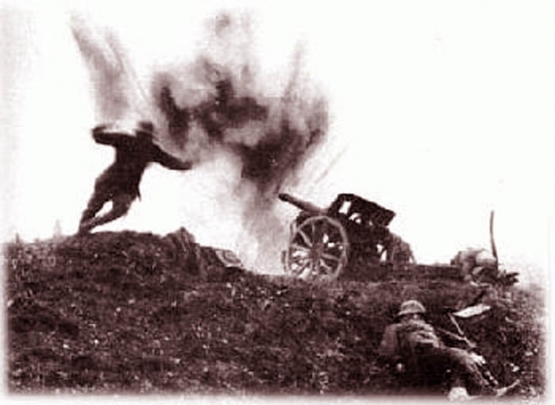
The U.S. Army Assault on November 11, 1918 (The Stars and Stripes, 1918)
1918, Armistice Day Battle, The Stars and Stripes

The U.S. Army Assault on November 11, 1918
(The Stars and Stripes, 1918)

This uncredited STARS and STRIPES article dwells on the same topic as the well-researched book by Joseph Persico, Eleventh Month, Eleventh Day, Eleventh Hour: Armistice Day, 1918 (2003, Random House). For those who are curious about the violent climax of the war, this two page article will help you to understand which A.E.F. units were still attacking along what front at 10:59 a.m. on November 11, 1918.


Then a quite startling thing occurred. The skyline of the crest ahead of them grew suddenly populous with dancing soldiers… The Germans came with outstretched hands, ear-to-ear grins and souvenirs to swap for cigarettes.

Advertisement

Use shortcode [oma_ad position="summary_top"] (or other position) in your theme or widgets to display OMA Promotions here.

The Fascist Blue Shirts of Portugal (Literary Digest, 1933)
1933, Allies, The Literary Digest

The Fascist Blue Shirts of Portugal
(Literary Digest, 1933)

Black shirts in Italy, Brown shirts in Hitlerite Germany and now comes a new imitator in Portugal’s Blue-Shirt Fascist movement known as National Syndicalism.


Portugal’s Fascism is described by a Lisbon correspondent of the London Morning Post as a blend of Hitlerite Fascism and Mussolini Fascism. Because it is called the National Syndicalist movement it must not be confused with the Red Syndicalism of Spain. Its leader is Dr. Roalo Preto, who is said to bear a personal resemblance to Hitler.

A movement of opinion and ideas toward a more just and equitable social organization…We aim at substituting the principle of liberty of work by a system of ‘harmony of direction’ under which capital, technical knowledge, and labor will cooperate under the protective care of the State in maximum productive return for the welfare of the nation.

With the Brazilians in Italy (Newsweek & Yank Magazines, 1944)
1944, Newsweek, World War Two

With the Brazilians in Italy
(Newsweek & Yank Magazines, 1944)

The attached YANK MAGAZINE article was written from the perspective of the American G.I.; it lays out a few peculiar facts about life in the World War Two Brazilian Army:

Every type of South American racial strain is represented. This gives a squad the appearance of a capsule League of Nations, except that there are no blonds.


Read about the day Brazil declared war on Nazi Germany…


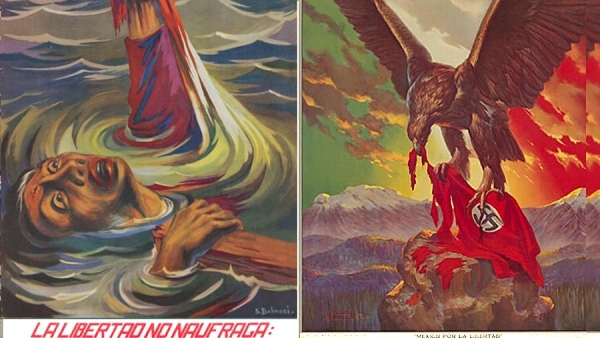
Mexico preferred not to participate in the war, but they did kick all the Fascist spies out of their country, click here to read about it…

1943 Mexican President Manuel Avila Camacho Magazine Article | Mexican President Manuel Camacho Anti-Fascist
1943, Coronet Magazine, World War Two

Mexico: American Ally
(Coronet Magazine, 1943)

When Manuel Avila Camacho (1897 – 1955) came to power as the president of Mexico (1940 – 1946) he immediately went to work kicking out the Fascist spies from Japan and Germany

He banned Nazi newspapers and cut Nazis off the air. He squashed the anti-Semitic Gold Shirts of Monterey and purged fifth columnists in key positions. He washed his hands of the Nazis and extended a hearty handclasp to Roosevelt.

Advertisement

Use shortcode [oma_ad position="summary_top"] (or other position) in your theme or widgets to display OMA Promotions here.

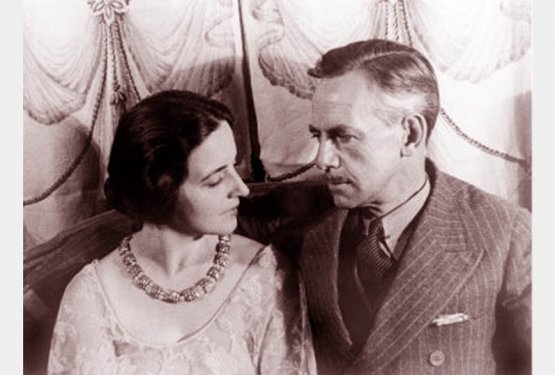
Eugene O'Neill Biography | Tragic Life of Eugene O'Neill | Alcoholic Life of Eugene O'Neill
1959, Eugene O'Neill, Look Magazine

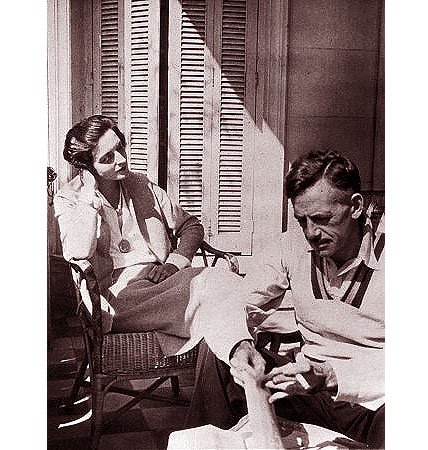
The Tragedy of Eugene O’Neill
(Look Magazine, 1959)

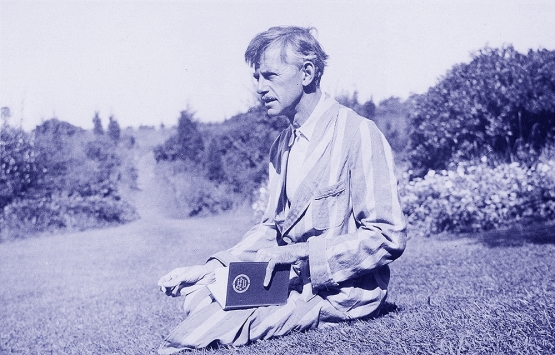
In 1946, a literary statistician ascertained that, in the world of O’Neill plays, there had been 12 murders, eight suicides, 22 other deaths and seven cases of insanity


To read the attached biographical essay is to understand that O’Neill did not become America’s premiere tragedian by simply reading about the disasters in the lives of others; his entire life was a tragedy. In his wake were alcoholic, suicidal children and numerous unloved wives.

Sun Yat-sen is Returned to Power (Literary Digest, 1923)
1923, China - Twentieth Century, The Literary Digest

Sun Yat-sen is Returned to Power
(Literary Digest, 1923)

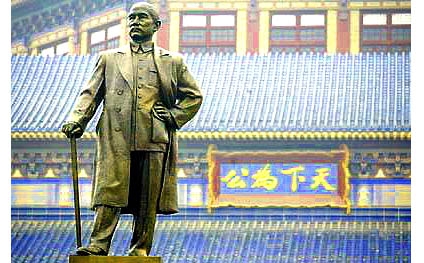
A magazine article about a political leader who is considered the founder of modern China: Sun Yat-sen (1866 – 1925):

The return of Sun Yat-sen to power in South China is much more than a mere personal triumph, who are assured by his adherents, who say that it is ‘a sign of the times which merits the thoughtful consideration of the Great Powers in their roles of guardians of the Far East.

Advertisement

Use shortcode [oma_ad position="summary_top"] (or other position) in your theme or widgets to display OMA Promotions here.

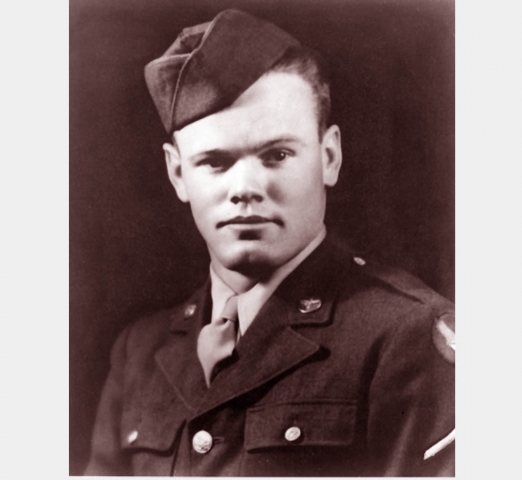
S/Sgt. Henry E. Erwin Off the Coast of Japan (Collier's Magazine, 1945)
1945, Collier's Magazine, Medal of Honor Recipients

S/Sgt. Henry E. Erwin Off the Coast of Japan
(Collier’s Magazine, 1945)

War correspondents see and hear about many courageous acts that serve as a testimony to the level of personal commitment held high by many (but not all) of the American soldiers, sailors, airmen and Marines who served in the Second World War, and when I read the opening paragraphs about this hero, I knew it was going to be unique:

His name is Staff Sergeant Henry E. Erwin of Bessemer, Alabama. He was the radio operator on a B-29, and what he did, we think, was the bravest thing we ever heard of.

Advertisement

Use shortcode [oma_ad position="summary_top"] (or other position) in your theme or widgets to display OMA Promotions here.

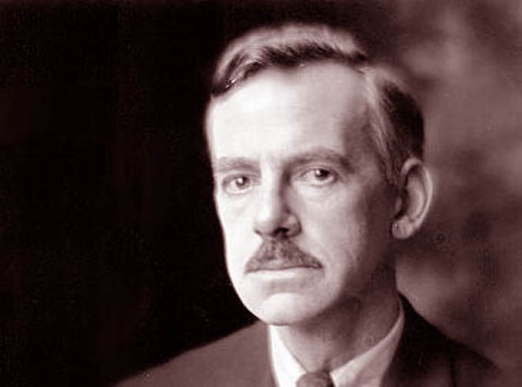
What's Next for Eugene O'Neill? (Stage Magazine, 1935)
1935, Eugene O'Neill, Stage Magazine

What’s Next for Eugene O’Neill?
(Stage Magazine, 1935)

Stage editor Hiram Motherwell (1888 – 1945) examined the meteoric rise of playwright Eugene O’Neill (1888 – 1953) and asked, What can he do next?

Eugene O’Neill is now forty-seven. His plays have just been enshrined in the definitive edition, handsome, ingratiating, expensive. They are probably more widely discussed than those of any other living playwright. They have been produced in almost every city from Moscow west to Tokyo. They have been translated into more languages. And yet it is evident that O’Neil, standing on the crest of this superb eminence, has completed a cycle; come to a momentous turning in the path his creative genius has followed. Where will the path lead?

'Soldier Man Blues from Somewhere in France'' (Literary Digest, 1927)
1927, African-Americans, The Literary Digest

‘Soldier Man Blues”
(Literary Digest, 1927)

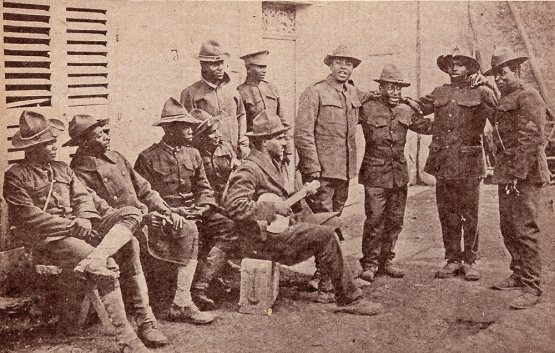
This article is essentially a collection of lyrics from an assortment of songs sung by the Black Doughboys who were charged with the task of loading and unloading trucks far behind the front line trenches during the First World War. It was written in 1927 to serve as a review for Singing Soldiersstyle=border:none by John J. Niles, who compiled the labor songs while stationed in France as a fighter pilot:


All dese colored soldiers comin’ over to France

All dese soldiers an’ me

Goin’ to help de Whites make de Kaiser dance

All dese soldiers an’ me…

Advertisement

Use shortcode [oma_ad position="summary_top"] (or other position) in your theme or widgets to display OMA Promotions here.

Scroll to Top