Author name: editor

1933, Creative Art Magazine, Design

Norman Bel Geddes
(Creative Art Magazine, 1933)

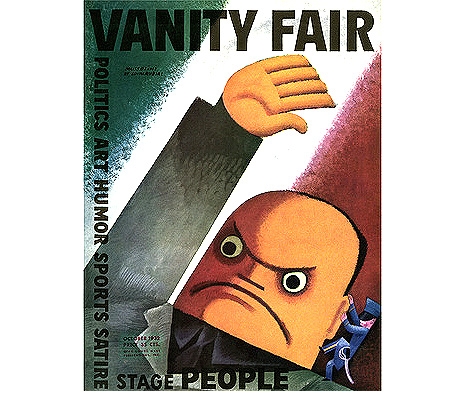
Norman Bel Geddes (1893 – 1958) was one of the prominent industrial designers to practice a style known as streamline modern. Always mentioned in the same breath as Henry Dreyfuss and Raymond Lowey, Norman Bel Geddes opened his office in 1927 and helped to give the 1930s a defining look. He was the first of his kind to recognize that American manufacturers were sincerely interested in the marketing of modern design.


The sleek, aerodynamic lines of 1930s streamlining can clearly bee seen in the thirteen images illustrating the attached article about his work, which was written by Douglas Haskell, a well-known design critic active throughout much of the period spanning the mid-Twenties through the mid-Sixties; the column was intended to serve as a review for Geddes’ 1932 book, Horizonsstyle=border:none.

GI Babies Japan | Mixed-Race babies ww2 | GI Babies WW II | Occupation Babies
1954, People Today Magazine, Post-War Japan

The War-Babies of Occupied Japan
(People Today Magazine, 1954)

There was one thing the Japanese hated more than being defeated and occupied by the Gai-jin (the Japanese slur for Whites) and that was when their daughters, sisters and nieces began bedding their tormentors and baring their young. Tremendous shame was brought on these women, and their families. This article is about the Amerasian babies who were isolated in a special orphanage designed just for them.


How did all of this come to pass? Click here to find out…

1945, General Marshall, Yank Magazine

American Advantages During World War II
(Yank Magazine, 1945)

General Marshall listed a number of clear advantages that the American G.I. had over his German and Japanese counterpart: the M-1 Garand semi-automatic rifle, the jeep and the two-and-a-half ton truck (Deuce and a half):


It is interesting to trace the planning and decisions that gave us the Garand rifle and the tremendous small arms fire-power that went with it, noting especially that the War Department was strenuously opposed.

Advertisement

Use shortcode [oma_ad position="summary_top"] (or other position) in your theme or widgets to display OMA Promotions here.

1933 Germany Quits the League of Nations | Hitler Quits League of Nations 1933
1935, The Literary Digest

When Germany Quit the League of Nations
(Literary Digest, 1935)

In October, 1933, Baron Konstantin von Neurath (1873 – 1956), Germany’s Foreign Minister, sent a telegram to the Geneva Disarmament Conference announcing Germany’s resignation from the Conference and the League of Nations. The resignation will become effective Sunday, October 20, two years after notice of retirement was given… In March, 1935, Chancellor Hitler announced universal military conscription for Germany, thereby making the Treaty of Versailles a ‘scrap of paper’.


Italy left the League of Nations in 1937 – click here to read about it.

Jewish Boycott of German Goods | 1933 Anti-Nazi Boycott
1935, Jews in the 20th Century, The Literary Digest

Jewish Americans Boycotted German Products
(Literary Digest, 1935)

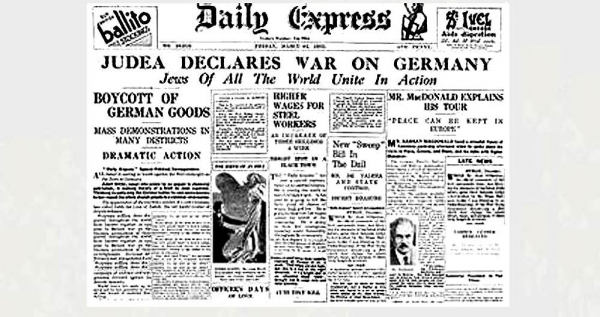
Having suffered from a Jewish-lead boycott of German goods that had been in place for two years, the businessmen of Nazi Germany dispatched Dr. Julius Lippert (1895 – 1956) off to Washington in order soothe hurt feelings and bring an end to it all. Seeing that Lippert was a devoted anti-Semite and the whole dust-up commenced because of the widespread anti-Semitic sensations that made up the very core of Hitler’s Germany were still in place and not likely to subside any time soon, Washington functionaries probably yawned and informed him that there was nothing that could be done on the Federal level.
Advertisement

Use shortcode [oma_ad position="summary_top"] (or other position) in your theme or widgets to display OMA Promotions here.

Woodrow Wilson Cabinet Officers 1917 | Franklin Knight Lane Article
1922, The American Review of Reviews, Woodrow Wilson

President Wilson’s War Cabinet Convenes
(Review of Reviews, 1922)

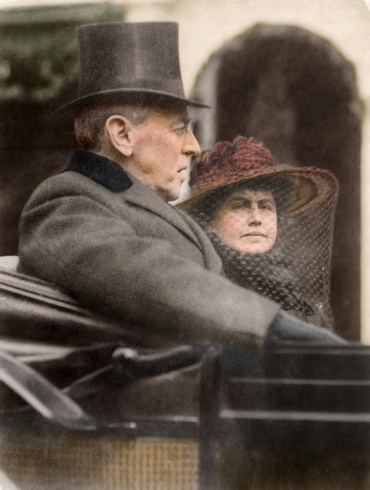
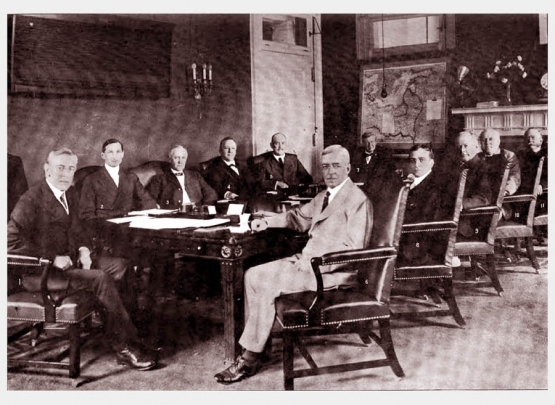
Franklin Knight Lane (1864 – 1921) recalled his service as President Wilson’s Secretary of the Interior and the eventful year of 1917 when Wilson lead the U.S. into it’s first European war. Some may be amused as he reminiscences about the time Army Chief of Staff General Tasker H. Bliss (1853 – 1930) fell asleep during one of the cabinet meetings.

London Economic Conference 1933 Article | FDR and Global Economic Depression 1933 | The World Economic Conference 1933
1933, The Great Depression, The Literary Digest

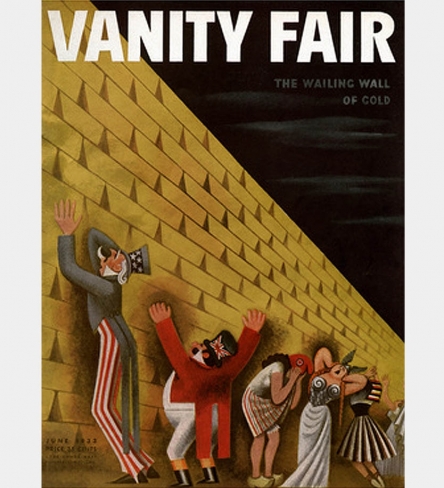
The Economic Collapse of the World
(Literary Digest, 1933)

Published in May of 1933, the attached article concerned the much anticipated London Economic Conference which was scheduled to convene the following month in London. The world leaders who agreed to assemble were all of one mind in so much as their shared belief that collectively they would stand a better chance in defeating the economic depression that was bedeviling all their respective countries. It was their intention to meet and review all existing international trade and tariff agreements and to make an effort at stabilizing the currency exchange rates.

Advertisement

Use shortcode [oma_ad position="summary_top"] (or other position) in your theme or widgets to display OMA Promotions here.

FDR's Funeral (Yank Magazine, 1945)
1945, F.D.R., Yank Magazine

FDR’s Funeral
(Yank Magazine, 1945)

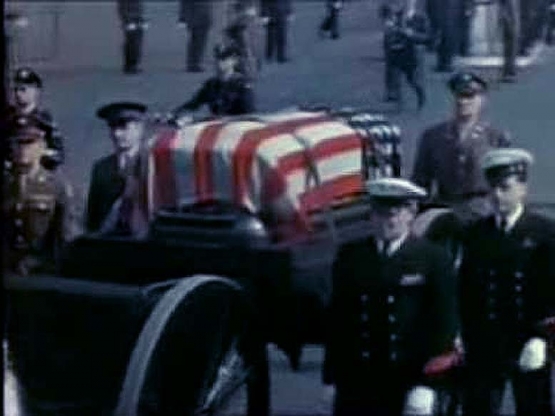
Here is a series of articles from YANK magazine that reported on the funeral of President Franklin Delano Roosevelt. One of these four correspondents was assigned to write about the general sense of loss that New Yorkers felt upon learning of the death of their president:


Not in my lifetime or in yours, will we again see see such a man.


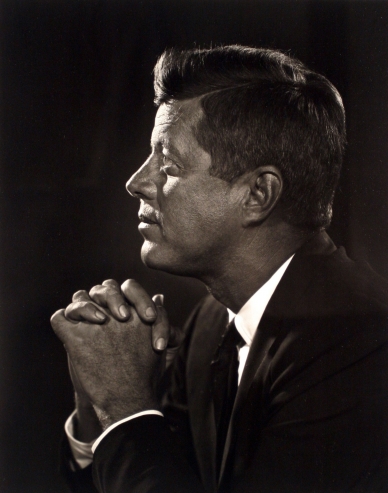
CLICK HERE… to read the obituary of President Kennedy.

FDR Expansion of the Executive Branch | FDR Wanted a Larger Cabinet
1937, F.D.R., The Literary Digest

He Re-Organized
(Literary Digest, 1937)

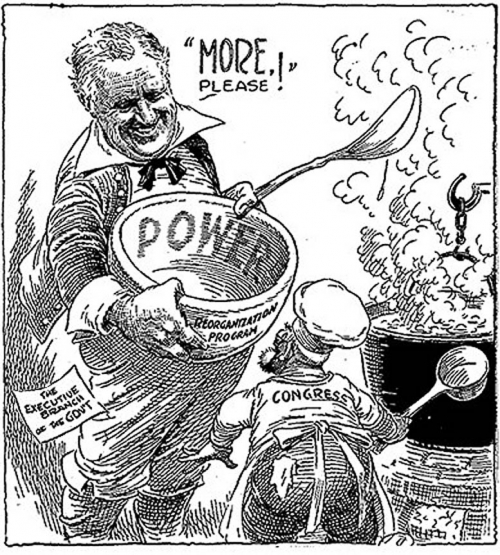
Congressional eyes bulged last January when President Roosevelt handed Congress his plan to streamline the executive branch of the Government. He asked for sixspecial assistants, two new cabinet officers, an auditor general (to supplant the all-powerful Controller General), a reshuffling and consolidation of boards and bureaus and an expansion of the civil service in all directions.

The Making of SNOW WHITE and the SEVEN DWARFS (Photoplay Magazine, 1938)
1938, Photoplay Magazine, Walt Disney

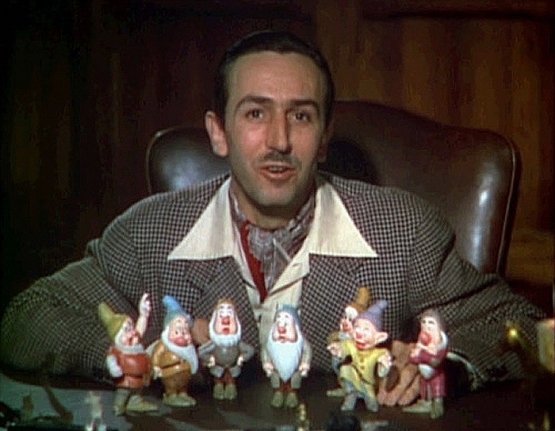
The Making of SNOW WHITE and the SEVEN DWARFS
(Photoplay Magazine, 1938)

The attached article is essentially a behind the scenes look at the making of Walt Disney’s 1938 triumph Snow White and the Seven Dwarfs:


• He employed 569 people who worked all day and frequently all night to finish it.


•The film took three and half years to make and cost $1,500,000.00.


•He concocted 1500 different paints to give it unmatched color.


•He spent $70,000.00 developing a brand new camera to give it depth.


•He threw away four times the drawings he made and the film he shot.


•He made over 2,000,000 separate drawings…


Although Disney’s wife, Lilian, was said to have remarked, No one’s ever gonna pay a dime to see a dwarf picture, the movie generated more box office receipts than any other film in 1938.

Advertisement

Use shortcode [oma_ad position="summary_top"] (or other position) in your theme or widgets to display OMA Promotions here.

The Making of SNOW WHITE and the SEVEN DWARFS (Photoplay Magazine, 1938)
1938, Photoplay Magazine, Walt Disney

The Making of SNOW WHITE and the SEVEN DWARFS
(Photoplay Magazine, 1938)

The attached article is essentially a behind the scenes look at the making of Walt Disney’s 1938 triumph Snow White and the Seven Dwarfs:


• He employed 569 people who worked all day and frequently all night to finish it.


•The film took three and half years to make and cost $1,500,000.00.


•He concocted 1500 different paints to give it unmatched color.


•He spent $70,000.00 developing a brand new camera to give it depth.


•He threw away four times the drawings he made and the film he shot.


•He made over 2,000,000 separate drawings…


Although Disney’s wife, Lilian, was said to have remarked, No one’s ever gonna pay a dime to see a dwarf picture, the movie generated more box office receipts than any other film in 1938.

Speeches by Hitler and Chamberlain Compared (Pathfinder Magazine, 1940)
1940, Adolf Hitler, Pathfinder Magazine

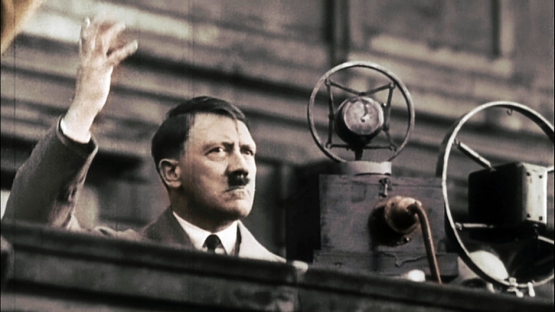
Speeches by Hitler and Chamberlain Compared
(Pathfinder Magazine, 1940)

We shall fight until the terror of the plutocracies has been broken.


– so blathered Adolf Hitler in a radio address from early 1940 in which he attempted to clarify the Nazi war aims. Never forgetting that the zi in Nazi is derived from Sozi for socialist (Compare with ‘Commie’ for ‘Communist’) – the dictator was heard here doing what he did from time to time in his speeches; borrowing the street hustle of the proletarian underdog (many thanks to WIKIanswers).


Click here to read another article on the same topic.

Advertisement

Use shortcode [oma_ad position="summary_top"] (or other position) in your theme or widgets to display OMA Promotions here.

The Women Voter in Her First Five Elections (Pathfinder Magazine, 1940)
1940, Pathfinder Magazine, Women's Suffrage

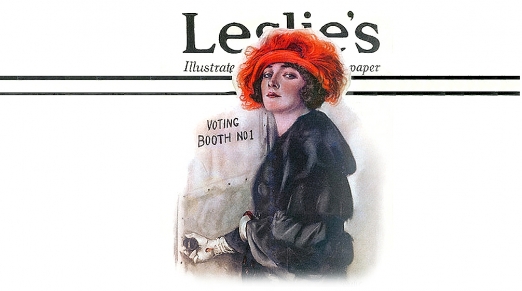
The Women Voter in Her First Five Elections
(Pathfinder Magazine, 1940)

This is an interesting article that indicates just how profoundly elections had changed after 1920, when women began to vote. Previously, when the voting booth was a gender-specific domain, the victory margins were seldom greater than 10%; yet, beginning with the 1920 presidential election and continuing through the election of 1936, dramatic differences could be seen between the winners and losers that had never existed in prior contests.


The journalist believed that the advent of radio broadcasting also played a contributing factor in these elections.


Read a 1951 profile of a future First Lady: the young Nancy Reagan.

Reichsmarshal Herman Göering Imprisoned (Collier's Magazine, 1946)
1946, Collier's Magazine, Hermann Goering

Reichsmarshal Herman Göering Imprisoned
(Collier’s Magazine, 1946)

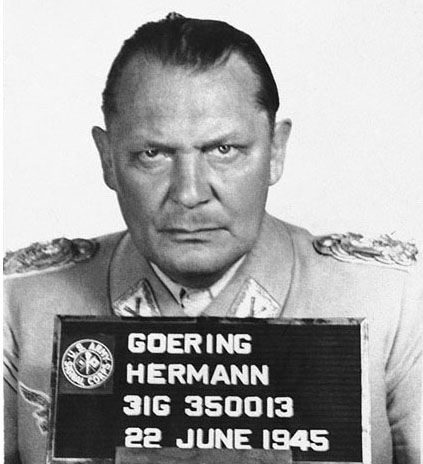
An interesting article is attached herein that originally appeared in a 1946 issue of COLLIER’S MAGAZINE recalling the last days of the once fair-haired boy of the Third Reich, Herman Göering (1893 – 1946). Filed from the U.S. Army interrogation center at the Ashcan (nom de guerre for the Palace Hotel in Fromburg, Luxemburg) you’ll get a sense as to how the fallen Luftwaffe Reichsmarshal, formerly so over-plumed and perfumed, paraded and posed for both his jailers and his fellow inmates while awaiting trial. A good read.


Click here to read an eyewitness account of the suicide of Himmler.
Click here to read about the dating history of Adolf Hitler.

The Life of Woodrow Wilson (Current Opinion, 1925)
1925, Current Opinion Magazine, Woodrow Wilson

The Life of Woodrow Wilson
(Current Opinion, 1925)

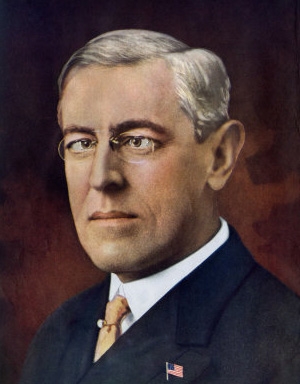
Here is a 1925 review of William Allen White’s (1868 – 1944) biography Woodrow Wilson: the Man, his Times and his Task:

Whether or not Woodrow Wilson will live as a world figure depends not so much upon what work he has done as upon what the chance of time and circumstance will do with his work. He must live or die in world fame bound upon the League of Nations. If that stands he may tower beside it…If the League crumbles, then Wilson will become one of the host of good men who spent their zeal striving for futile things.


An article about Wilson’s reluctance to go to war can be read here…


Click here to read a list of Wilson’s Fourteen Points for the Versilles Treaty.

Advertisement

Use shortcode [oma_ad position="summary_top"] (or other position) in your theme or widgets to display OMA Promotions here.

Scroll to Top