Author name: editor

Woodrow Wilson Quotes | Wartime Speeches by Woodrow Wilson
Woodrow Wilson

Woodrow Wilson on the War and the Peace
(from his Speeches)

Here are two selected quotes from two speeches by President Wilson; the first one one is from his war speech before Congress (April 2, 1917) in which he explained why the defeat of Germany would be best for the Unites States. The other quote is excerpted from a speech he made three months earlier in which he reasoned as to why a fair peace treaty was vital in maintaining peace:

…It must be a peace without victory… Only a peace between equals can last. Only a peace the very principle of which is equality and a common participation in a common benefit. The right state of mind, the right feeling between nations, is as necessary for a lasting peace as is the just settlement of vexed questions of territory or of racial and national allegiance…


Click here to read a simple list of Wilson’s 14 Points.

Farewell Woodrow Wilson (Vanity Fair Magazine, 1921)
1921, Vanity Fair Magazine, Woodrow Wilson

Farewell Woodrow Wilson
(Vanity Fair Magazine, 1921)

Celebrated columnist Walter Lippmann (1889 – 1974) wrote this piece to mark the end of the Wilson administration (1912 – 1920) and usher-in that of Warren G. Harding (1865 – 1923).

Unlike the ink-slingers in ages to come, Lippmann had pleasant remarks to make regarding his presidency:

And I firmly believe that the historian who examines the state papers of Wilson up to November, 1918, will say, not only that they are in an unbroken line from Washington’s Farewell Address, but that it required something very like genius under the pressure and in the fog of a world war, to keep that line intact.


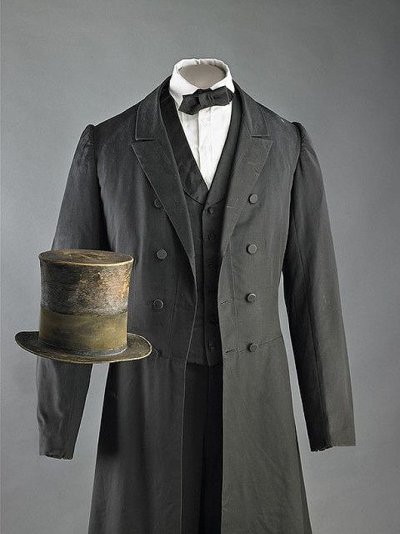
Click here to read about a dream that President Lincoln had, a dream that anticipated his violent death.


Read a 1951 profile of a future First Lady: the young Nancy Reagan.

Advertisement

Use shortcode [oma_ad position="summary_top"] (or other position) in your theme or widgets to display OMA Promotions here.

Minimum Wage Law Introduced 1937 | Minimum Wage Laws Passed in 1938 | Labor Standards Act Passed 1938
1937, Pathfinder Magazine, The Great Depression

The Wages and Hours Bill
(Pathfinder Magazine, 1937, 1938)

This article recorded portions of the battle on Capitol Hill that were waged between the Spring and Winter of 1937 when Congress was crafting legislation that would establish a minimum wage law for the nation’s employees as well as a maximum amount of working hours they would be expected to toil before additional payments would be required. This legislation would also see to it that children were removed from the American labor force. The subject at hand is the Black-Connery Bill and it passed into law as the Fair Labor Standards Act.

Sputnik Improved American Schools | Fear of Soviet Technology Improves American Education
1964, Coronet Magazine, Education

The Kick-in-the-Pants from Sputnik
(Coronet Magazine, 1964)

When the Soviet Union (1917 – 1991) launched its first satellite, Sputnik, in October of 1957, the collective jaws of the United States hit the floor in complete surprise. It was broadly believed throughout the nation that the USSR was entirely incapable of such a technological achievement. The attached article is about the cumulative efforts of American educators across the fruited plane to buck-up and begin expecting more from their students.

Advertisement

Use shortcode [oma_ad position="summary_top"] (or other position) in your theme or widgets to display OMA Promotions here.

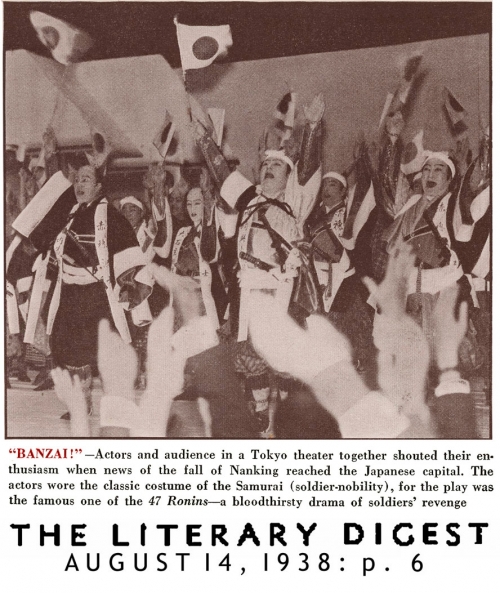
Nanking Falls (The Literary Digest, 1937)
1937, Sino-Japanese Wars, The Literary Digest

Nanking Falls
(The Literary Digest, 1937)

Exactly four months after the outbreak of the Sino-Japanese hostilities on the Shanghai peninsula’ a New York Herald Tribune correspondent cabled from Shanghai last week, ‘Nanking, China’s abandoned capital, for the third time in it’s more than 2000 years of history, was captured by an alien foe when the Japanese military forces completely occupied the city.’ …To this, Quo Taichi, Chinese ambassador to England, replied defiantly: ‘Capture of Nanking will by no means mark the end of China’s resistance.’

'Patriotism'' (The Crisis, 1918)
1919, African-Americans, The Crises

W.E.B. Du Boise and the Documents of U.S. Army Prejudice
(The Crises, 1919

This historic article first appeared in a 1919 issue of The Crisis and served to document the official discrimination against African-Americans who served both in the ranks and as officers in the American Army during the First World War. The article includes the communications from high-ranking American officers to the French military authorities, conveying their suggestions as to how America’s black Doughboys were to be treated.

Advertisement

Use shortcode [oma_ad position="summary_top"] (or other position) in your theme or widgets to display OMA Promotions here.

Modernism and Disillusion
1919, Aftermath (WWI), Current Opinion Magazine

In the War’s Aftermath Came Spiritual Disillusion
(Current Opinion Magazine, 1919)

At the thirty-fifth annual Church Congress of the Protestant Episcopal Church (1919), clergy members seemed to agree that Christian leaders were needlessly complicitstyle=border:none concerning their support for the First World War and were guilty of substituting Christian principles for patriotism:
Christianity has betrayed itself body and soul.


If you would like to read about the spirit of disillusion that permeated post-war literature, click here.

Victory and Paris Fashion (Vogue Magazine, 1919)
1919, Fashion (WWI), Vogue Magazine

Victory and Paris Fashion
(Vogue Magazine, 1919)

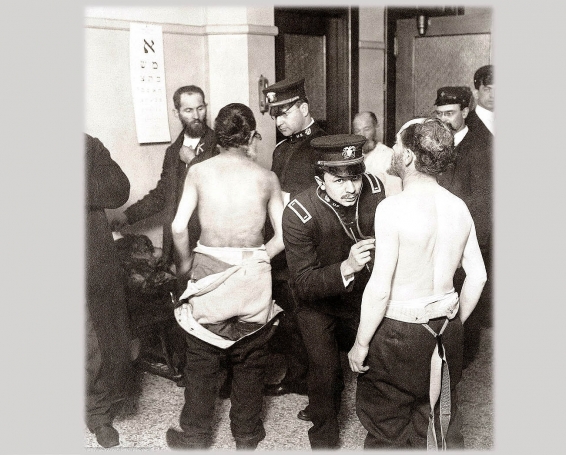
The Paris Victory Parade celebrating the end of the 1914 – 1918 war was a long awaited and much anticipated fashion event and Mme. Parisienne was not going to miss it for all the crepe de Chin in China. This VOGUE correspondent contrasted the Paris that existed a short time earlier, the gray, deserted Paris with the Paris of the 1919 Victory Parade and notes how eager the natives were to recreate that mirthful, light-hearted Paris of 1913 that they all remembered so well. There is a great sense of joie de vivre throughout the article, but it very rapidly becomes a laundry list concerning who-wore-what-where.

Quotas in 1921 Immigration (The Independent, 1921)
1921, Immigration History, The Independent

Quotas in 1921 Immigration
(The Independent, 1921)

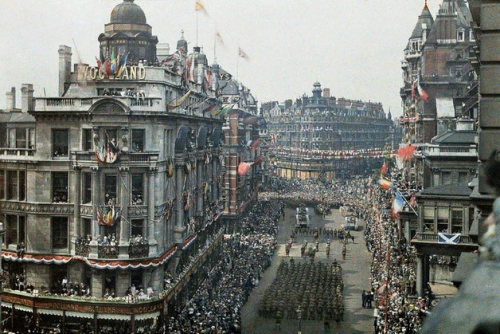
One hundred years ago the U.S. Government processed immigrants through a quota system – entry would be granted if the applicants arrived before the quota amount arriving from their country had not been reached – and if they passed their physical examination. The immigration agents did not accept one nationality for citizenship officially while permitting hundreds of thousands from this same country to reside illegally, as is the practice today. The attached column pertains to how unfair the quota system was and how it tended to break-up families. President Harding’s response to this issue is quoted.

…many would-be immigrants arriving at the port of New York had been refused admission and been sent home again, because they had happened to arrive a few hours after their country’s legal quota for the month…

Advertisement

Use shortcode [oma_ad position="summary_top"] (or other position) in your theme or widgets to display OMA Promotions here.

Anticipating the Titanic Disaster (The Nation, 1912)
1912, Pamphlet Produced by the National Park Service, Titanic History

Anticipating the Titanic Disaster
(The Nation, 1912)

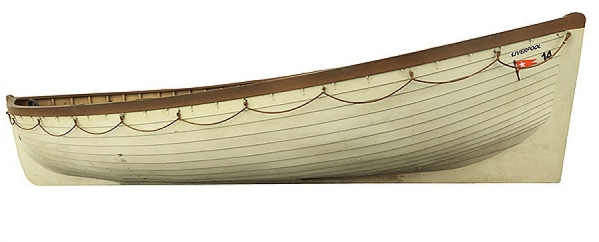
A couple of years prior to the sinking of Titanic the president of the International Seaman’s Union of America presented a petition before the U.S. Congress declaring that the issue of safety at sea is widely ignored on all levels. In his address he remarked:

There is not sailing today on any ocean any passenger vessel carrying the number of boats needed to take care of the passengers and crew…

German Submarines in American Waters (Coronet Magazine, 1941)
1941, Coronet Magazine, World War One

German Submarines in American Waters
(Coronet Magazine, 1941)

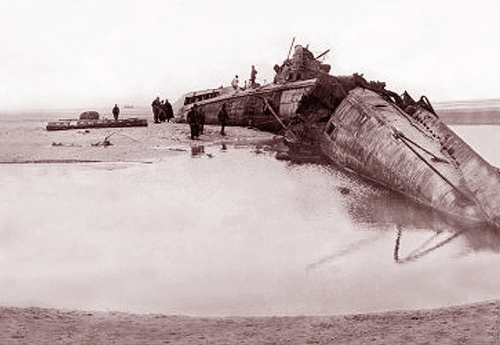
This article is composed of a couple of paragraphs recalling the damages caused to American shipping as a result of the U-Boat menace on the East Coast of the United States during the First World War. Written at a time when the U.S. was once again having to deal with the same threat, this time by Admiral Karl Dönitz (1891 – 1980), the journalist wished that Henry J. James, the author of German Subs In Yankee Waters
be properly credited for having devised many of the more successful countermeasures.

Nietzsche and World War One (Sewanee Review, 1920)
1920, The Sewanee Review, World War One

Nietzsche and World War One
(Sewanee Review, 1920)

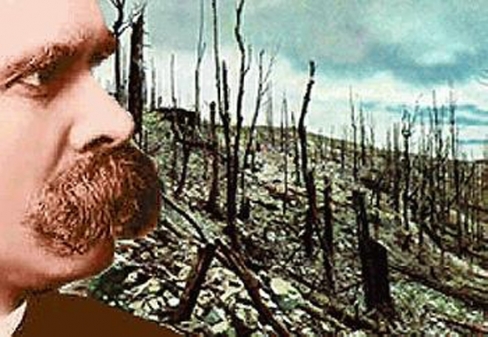
In this 1920 article the theologian George Burman Foster (1858 – 1918), examined the writings of the German philosopher Friedrich Nietzsche (1844 – 1900) and surmised how that philosopher might have understood the First World War, with all of it’s scientific and industrial power.

War constitutes one of of those dangerous ‘experiments’ undertaken by the wise man to further the progress of life, to test the value of an idea, of life. Hence, war is beneficial, good in itself; and thus Nietzsche predicts without dismay or regret that Europe is not far from entering into a period of great wars when nations will fight with one another for the mastery of the world.


Click here to read about the Nazi interpretation of Nietzsche.

Advertisement

Use shortcode [oma_ad position="summary_top"] (or other position) in your theme or widgets to display OMA Promotions here.

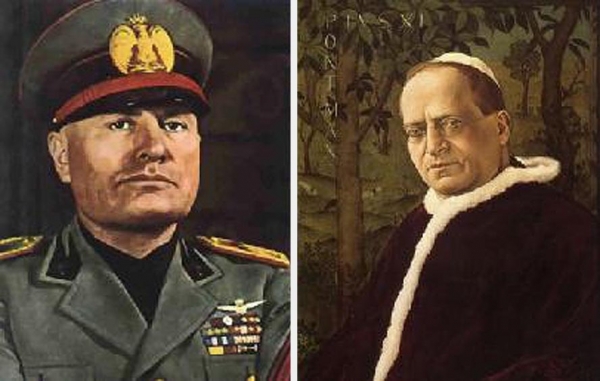
Catholic Action organization and Mussolini 1939 | Catholic Action as Fascist Resistance | Non Abbiamo Bisogno
1939, Benito Mussolini, Newsweek

Mussolini and the Pope: Friction
(Newsweek Magazine, 1939)

On June 29, 1931, Pope Pius XI issued an encyclical letter that condemned Italian fascism’s “pagan worship of the State” and “revolution which snatches the young from the Church and from Jesus Christ, and which inculcates in its own young people hatred, violence and irreverence.” The Pope irritated Mussolini to a further degree by labeling the Italian Fascist government as anti-Catholic after Il Duce put the kibosh on numerous Catholic youth organizations throughout the land. A Truce was agreed upon but as Mussolini grew closer to the Nazis later in the decade, and the battle reemerged.

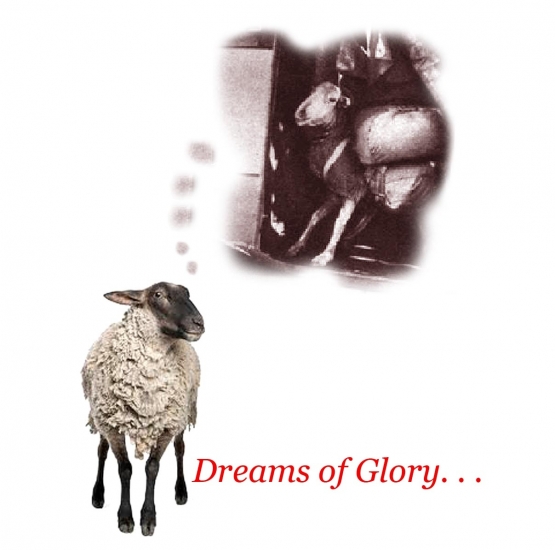
Fresh Meat Delivery System for Italian Troops (Click Magazine, 1938)
1938, Click Magazine, Weapons and Inventions

Fresh Meat Delivery System for Italian Troops
(Click Magazine, 1938)

This is a highly amusing collection of photos depicting the seldom remembered Para-Sheep of the Italian Army during their adventures in Ethiopia. It would seem that Italian grunts simply would not stomach canned food the way other infantrymen were able to do at the time and so it was decided that sheep would be individually rigged with parachutes and tossed out of planes, where they would be butchered and cooked by the Mussolini’s finest. The accompanying paragraph explains that even a bull had been air-dropped for the same purpose.
Take a look.

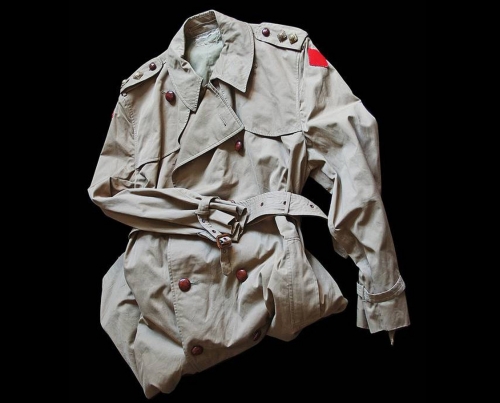
The Famous One: The Burberry Trench Coat (The Stars and Stripes, 1918)
1918, The Stars and Stripes, Trench Coats

The Famous One: The Burberry Trench Coat
(The Stars and Stripes, 1918)

The trench coat, the submarine and the machine-gun were just a few of the innovations bequeathed to the modern world following the bloody brawl of 1914-1918. All three are still with us today, and one could even argue that, given the bitter peace that followed, these three were the only victors that emerged from that war. If that is the case, three cheers for Field Marshal Burberry and his legion of trench coats that have marched on every capitol city since that first autumn on the Marne!

Advertisement

Use shortcode [oma_ad position="summary_top"] (or other position) in your theme or widgets to display OMA Promotions here.

Scroll to Top