Author name: editor

American Colleges During WW I |
1919, Education, The Home Sector

American Colleges During W.W. I
(Home Sector, 1919)

Here is a book review of The Colleges In The War And Afterward (1919) by Parke Rexford Kolbe:

One obtains a very clear picture of our educational institutions during the war and a definite feeling of the difficulties encountered when agencies which were quite individualistic, quite self-dependent, suddenly found themselves mere sub-departments of the War Department submitting to a command from higher authority as if they had been used to it all their lives…

Advertisement

Use shortcode [oma_ad position="summary_top"] (or other position) in your theme or widgets to display OMA Promotions here.

Anti-ROTC Activity on College Campuses 1927 | ROTC Kicked Off Campus 1927
1927, Education, The Literary Digest

‘Learn War No More”
(Literary Digest, 1927)

Following World War One there existed a poor taste in the collective mouths of all the participating combatant nations; as a result, 1927 saw a small rebellion against much of the military training taking place on some U.S. campuses. This article lists a number restrictions that various academic institutions had placed on those military organizations active on college and high school grounds.

The Lure of College Atheism...(The Literary Digest, 1923)
1923, Education, The Literary Digest

The Lure of College Atheism…(The Literary Digest, 1923)

They enter college as Christians and graduate as atheists or agnostics’, say some whose sons and daughters come home with a sheepskin showing proficiency in the arts and sciences and little, or none at all, in religion. The college is repeatedly blamed for this vital lack, and is not infrequently defended of the charge of failing to establish a religious background for the student.


Out of the Mouths of Babes: Girl Evangelists in the Flapper Erastyle=border:none

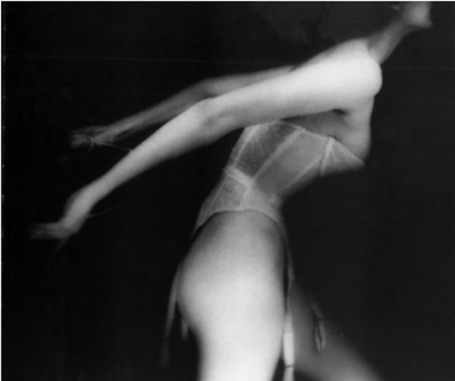
The Foundation Garments that Were Needed for ''The New Look'' (See Magazine, 1948)
1948, See Magazine, The New Look

The Foundation Garments that Were Needed for ”The New Look”
(See Magazine, 1948)

Since The New Look sought to overhaul the fashion silhouette of the female form it was quickly understood that women would need different foundation garments to complete this look. Fashion’s cry has always been: When nature doth deny, let art supply – and the rocket scientists of the ladies underwear subculture did just that. The attached photo-essay from See Magazine shows three pictures of the new under-lovelies.


Click here to learn about the lingerie and pajamas that had to be hand-crafted on the W.W. II American home front…

Advertisement

Use shortcode [oma_ad position="summary_top"] (or other position) in your theme or widgets to display OMA Promotions here.

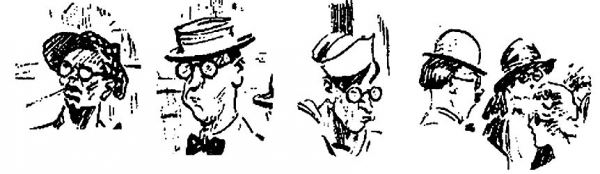
Lampooning the American Tourists (Punch, 1922)
1922, Cartoons, Punch Magazine

Lampooning the American Tourists
(Punch, 1922)

This gag concerns itself with another kind of American Expeditionary Force – when Pershing’s Doughboys left, they were replaced by the American tourists.


There is another article on this site that states a popular belief held by the Europeans of 1919 that American men were all clean shaven, tended to sport gold teeth, and were most easily recognized by their big tortoise shell glasses; however, this is the first visual manifestation of this caricature that we could find. This cartoonist did not simply believe that this was a fitting description of the white guys, but black guys, too -and the women as well; an entire nation resembling Harold Lloyd.

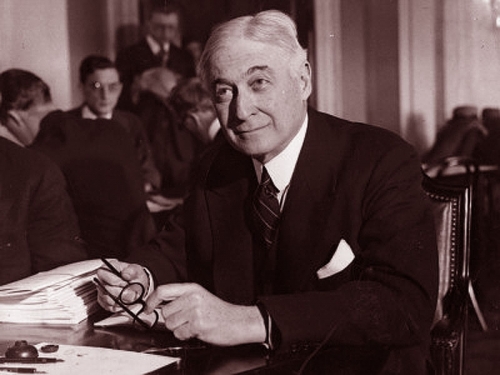
Bernard Baruch: Elder Statesman (Yank Magazine, 1945)
1945, Interviews: 1912 - 1960, Yank Magazine

Bernard Baruch: Elder Statesman
(Yank Magazine, 1945)

Bernard Baruch (1870 – 1965) was a major player in President Franklin Roosevelt’s Brain Trust; during World War Two he served that president as a respected adviser concerning economic matters. Not long after this interview, during the Truman Administration, he was appointed to serve as the first U.S. Representative on the U.N Atomic Energy Commission.


Click here to read a 1945 article about the funeral of FDR.

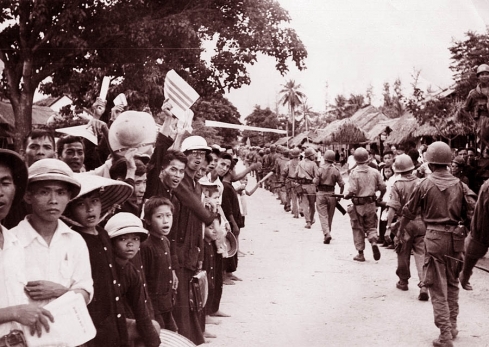
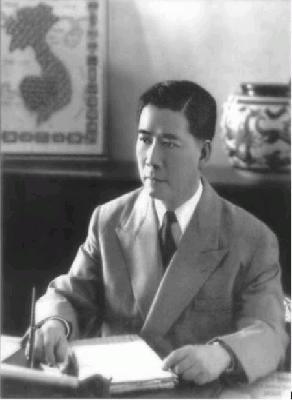
Nhu Family Power in Vietnam
1963, The United States News, The Vietnam War

What To Do About Diem?
(United States News, 1963)

Here is an article by a respected American journalist who was dispatched to South Vietnam in order that he might see for himself what the problems were as to why the Republic of Vietnam seemed so incapable of maintaining military dominance in the field. Everywhere he went he got the same answer:

A highly respected professor at Saigon University [remarked]:
‘If you have to make a choice between supporting the Ngo family
and withdrawing from South Vietnam, you might as well pull out.

You cannot win with the family.’

Advertisement

Use shortcode [oma_ad position="summary_top"] (or other position) in your theme or widgets to display OMA Promotions here.

1956, The Dept. of the Army, The Korean War

The Military Results of the Korean War
(Dept. of the Army, 1956)

Attached is an article concerning a page from American Military History and it outlines the losses and gains of the Korean War (1950 – 1953). In five sentences this article gives the number of American dead and wounded, the number of U.N. dead and wounded and the amount of ground lost to the Chinese and North Korean military; a map of the stabilized front is provided.

Babe Ruth's Record (Gentry Magazine, 1952)
1952, Babe Ruth Articles, Gentry Magazine

Babe Ruth’s Record
(Gentry Magazine, 1952)

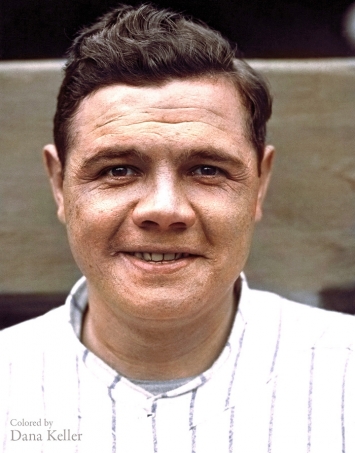
Compiled four years after the Babe’s death, the attached list will provide you with a compilation of all the various, assorted mosts that Babe Ruth racked up during his baseball career:


Most home runs, lifetime…………………………….714

Most home runs, American League………………708

Most home runs, World Series…………………….15

Most home runs, season…………………………….60

Most years leading in home runs………………….12

etc…etc…

Advertisement

Use shortcode [oma_ad position="summary_top"] (or other position) in your theme or widgets to display OMA Promotions here.

Home Run No. 60 (Gentry Magazine, 1952)
1952, Babe Ruth Articles, Gentry Magazine

Home Run No. 60
(Gentry Magazine, 1952)

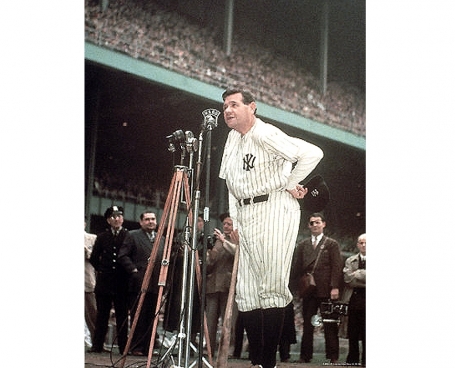
Babe Ruth hit his sixtieth home run on October 1, 1927:

The mighty blow came off a south-paw throw of Tom Zachary, Senator pitcher, as he saw his low, hard one belted into Babe’s favorite parking place, the right field bleachers. This hit not only set a record, but won the game since the score was deadlocked at two-two in the eighth, when the Pasha of Bash stepped to the rubber with one out and Koenig on third…

Take a look at an interesting article about baseball played in Japanese prison camps.

Vietminh vs the French Army 1945 | Ho Chi Minh Strategy 1945 | French Period of the Vietnam War 1945
1945, Newsweek, The Vietnam War

The Vietminh
(Newsweek Magazine, 1945)

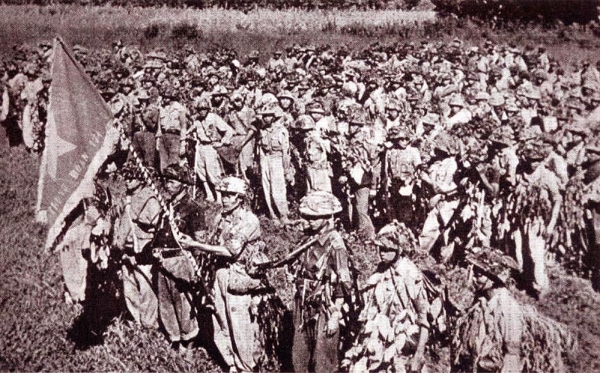
Hanoi is now the fountainhead of the largest and most successful anti-French insurgent movement ever mounted in Indo-China. Here Vietminh (first and last words of Viet Nam Doclap Dong Minh, meaning the league for the independence of Viet Nam) has set up the provisional government of the Viet Nam Republic. Viet Nam is the ancient name for the coastal provinces of Indo-China. Vietminh has been actively in existence since 1939. The President of Viet Nam and leader of the whole insurgent movement is a slight, graying little man of 55, named Ho Chi Minh who commanded guerrillas in collaboration with American officers in Northern Tonkin… For 43 years he has devoted himself to anti-French activity. Constantly reported captured or dead, he never actually fell into French hands.

Advertisement

Use shortcode [oma_ad position="summary_top"] (or other position) in your theme or widgets to display OMA Promotions here.

President Kennedy Increased Military Aid to South Vietnam |1961 Letter President Kennedy to South Vietnam President Diem
1965, The Vietnam War, Why Vietnam

President Kennedy to President Diem
(Why Vietnam, 1965)

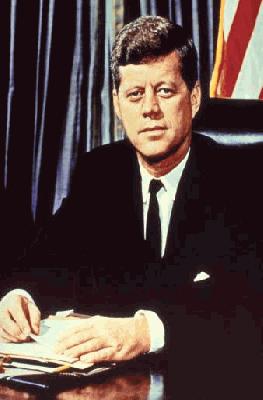
The 1961 letter from U.S. President John Kennedy in which he remarked to President Diem that North Vietnam was in violation of the 1954 Geneva Accords that it was obliged to respect. President Kennedy acknowledged that the relentless offensives launched by the North Vietnamese Communists against South Vietnam needed to be stopped and as a result his administration intended to increase American military aid.


Click here to read a 1961 article about Jacqueline Kennedy’s influence on American fashion.

President Eisenhower's Letter to President Diem (Why Vietnam, 1965)
1965, The Vietnam War, Why Vietnam

President Eisenhower’s Letter to President Diem
(Why Vietnam, 1965)

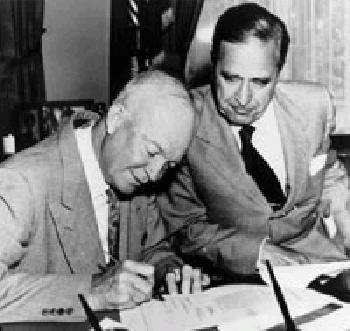
In the Fall of 1954, following the French withdraw from Vietnam, President Eisenhower wrote the following letter to the president of the newly established nation of South Vietnam, Ngô Đình Diệm (1901 – 1963) pledging to provide both funding and military aid in their fight against the Communists.

The purpose of this offer is to assist the Government of Vietnam in developing and maintaining a strong, viable state, capable of resisting attempted subversion or aggression through military means. The Government of the United States expects that this aid will be met by performance on the part of the Government of Vietnam in undertaking needed reforms. It is hoped that such aid, combined with your own continuing efforts, will contribute effectively toward an independent Vietnam endowed with a strong government. Such government would, I hope, be responsive to the nationalist aspirations of its people, so enlightened in purpose and effective performance, that it will be respected both at home and abroad…

Advertisement

Use shortcode [oma_ad position="summary_top"] (or other position) in your theme or widgets to display OMA Promotions here.

Scroll to Top