Author name: editor

African-Americans During the Great Depression | How Were Blacks Treated in the 1930s
1939, Pathfinder Magazine, The Great Depression

African-Americans During the Great Depression
(Pathfinder Magazine, 1939)

Written during the later years of the Great Depression, these columns summarize the sad lot of America’s Black population – their hardships, ambitions, leadership, and where they tended to live.

When the Depression struck, Negroes were the first to lose their jobs. Today, 1,500,000 colored adults are unemployed.


A 1938 article about the hardships of the Southern States during the Great Depression can be read here…


Click here to learn about the origins of the term Jim Crow.

Nazism and Bolshevism: the Similarities (Literary Digest, 1933)
1933, The Literary Digest, The Nazis

Nazism and Bolshevism: the Similarities
(Literary Digest, 1933)

A look at the observations made by a correspondent for The London Observer who compared the two dominate tribes found in 1933 Berlin and Moscow. The writer was far more distracted by the similarities in their street hustle and their sloganeering rather than their shared visions in governance and culture; for example, both Nazis and Communists were attracted to restrictions involving speech, assembly and gun ownership while sharing an equal enthusiasm for May Day parades and the color red. Additionally, both totalitarians had their preferred dupes:

Absolute ideas invariably demand victims; and the ruthless treatment which is deliberately meted out to Jews in Germany is closely paralleled by the creation in the Soviet Union of a sort of pariah caste of Lishentsi or disenfranchised persons.


Germany never celebrated May Day with public parades until Hitler came to power; May Day was made a national holiday and all employers were given the day off with pay.


Click here to read an article that explains in great detail how the Nazi economic system (with it’s wage and price controls) was Marxist in origin.


Read another article that compares Communism and Nazism…

Advertisement

Use shortcode [oma_ad position="summary_top"] (or other position) in your theme or widgets to display OMA Promotions here.

British Civilians Trained to Use Gas Masks (The Literary Digest, 1936)
1936, The Literary Digest

British Civilians Trained to Use Gas Masks
(The Literary Digest, 1936)

This article appeared in 1936 and reported that the populations of both England and France were being trained in the general use of gas masks in anticipation of a German invasion.

Even babies will be protected in covered perambulators, into which masked ‘Nannies’ can pump air, forcing it through filter cans. Researchers are working on an infant’s mask with a nipple attachment.

Battle of the Somme Newspaper Article | Cambridge Magazine 1916 Article
1916, The Cambridge Magazine, World War One

With the Germans on the Somme
(The Cambridge Magazine, 1916)

Throughout much of World War I, the German-American war correspondent Karl Von Wiegand (1874 – 1961) reported on the goings-on within the Kaiser’s Army for an American new syndicate. As luck would have it, he happened to be in a front line German trench when the British Army launched their enormous attack on July 1, 1916. Here is one of his earlier dispatches from the German side:


We stood awe-stricken. Mankind, like Frankenstein, was being devoured by the monster it had created.

Advertisement

Use shortcode [oma_ad position="summary_top"] (or other position) in your theme or widgets to display OMA Promotions here.

Father Francis Duffy of the Fighting 69th (The Bookman, 1920)
1920, The Bookman, Writing

Father Francis Duffy of the Fighting 69th
(The Bookman, 1920)

Father Francis P. Duffy (1874 – 1932) was the well-loved regimental chaplain for the illustrious, old New York infantry regiment known as the Fighting 69th.


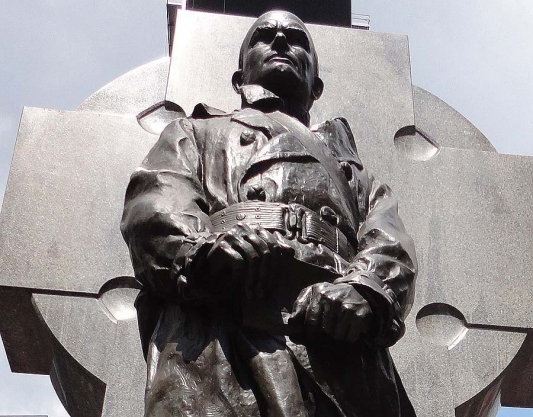
Next time you find yourself walking near Times Square in New York City, you’ll see a statue erected in his memory situated behind a statue of the popular songster who composed Over There – George M. Cohan (1878 – 1942). These memorials will be found at Broadway and 7th Avenue (between 46th & 47th streets). Both men knew the neighborhood well – to Cohan it was known as the Theater District while Duffy knew it as Hell’s Kitchen, and it was his parish.


The Bookman reviewed Duffy’s memoirstyle=border:none as a book which carries A.E.F. readers back to lousy, old French barns, to chilly, soupy Argonne mud and, at last, to a wintry Rhineland….


You can can read more about Father Duffy’s war here…


Click here to read articles about W.W. I poetry.

Prohibition: A Product of American Idealism (Literary Digest, 1922)
1922, Prohibition History, The Literary Digest

Prohibition: A Product of American Idealism
(Literary Digest, 1922)

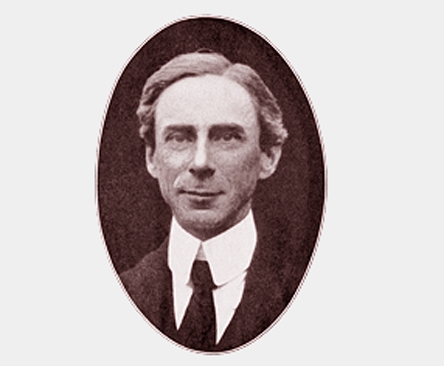
Some ninety-eight years ago, as it is also true this day, many people living outside the borders of the United States had a laugh, from time-to-time, concerning America’s commonly held belief that they are an idealistic people whose motives are not always driven by self-interest; this is a broad topic and sound arguments can be made on both sides as to whether it is true or not. The British thinker Bertrand Russel (1872 – 1970; Nobel Prize for Literature, 1950) had some thoughts on the matter and in an address made to a number of assembled Americans he submitted that, in his view, Prohibition was not a ‘noble experiment’ which sought to inspire all Americans to lead a righteous life, but rather a gross perversion of Christian doctrine.

Advertisement

Use shortcode [oma_ad position="summary_top"] (or other position) in your theme or widgets to display OMA Promotions here.

WW II Novelty Fashions | WW2 Novelties in Mode
1945, VE Day, Yank Magazine

VE-Day in London
(Yank Magazine, 1945)

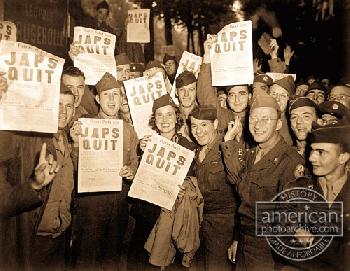
Hundreds of GIs were gathered at the Rainbow Corner Red Cross Club in Piccadilly when bundles of Stars and Stripes extras were tossed out free. The paper bore a huge banner headline, ‘Germany Quits!’ and contained the official Ministry of Information announcement which all England had just heard on the air.

News of the Reich’s final and complete surrender found Piccadilly, Marble Arch and other popular intersections jammed with people. At first incredulous, the cautious British worked up to a pitch of demonstrative joy…

Click here to read about VJ-Day in London.

Herschel Grynszpan the Fall Guy for Kristallnacht 1938 | Herschel Grynszpan Magazine Article | KRISTALLNACHT article
1938, Pathfinder Magazine, The Nazis

KRISTALLNACHT
(Pathfinder Magazine, 1938)

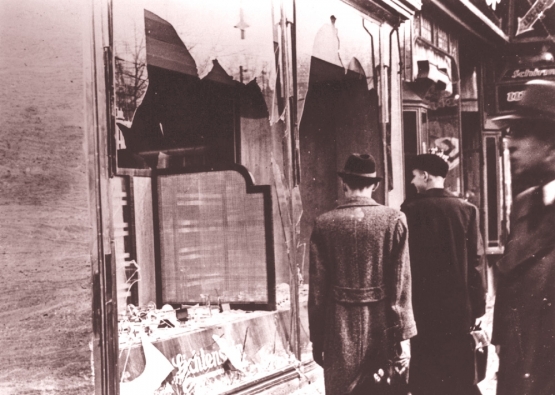
Herschel Grynszpan (1921 – ?) was a Polish-Jewish refugee born in Germany who, on his own volition, shot and killed a German diplomat in Paris in 1938. This murder prompted the Nazis to terrorize the Jewish population throughout Germany and Austria the very next day (November 8) in an event that was called Kristallnacht. This article covers the murder and the senseless horror that followed; attention was also paid to the reactions from various capital cities.

In Vienna, Storm Troopers fired 18 synagogues, shot a Polish Jew in his bed, invaded homes and threw the furniture out the windows. Ten thousand Jews were arrested, at least 60 attempted suicide. Restaurants and grocery stores refused to sell to Jewas.

Advertisement

Use shortcode [oma_ad position="summary_top"] (or other position) in your theme or widgets to display OMA Promotions here.

Hiroshima (Yank Magazine, 1945)
1945, Atomic Bombs, Yank Magazine

Hiroshima
(Yank Magazine, 1945)

Walking into Hiroshima in broad daylight, wearing an American uniform and knowing that you were one of the first Americans the people in that utterly ruined city had laid eyes on since the bombing, was not a comfortable feeling.


After the war it was discovered that one quarter of the Hiroshima dead were Koreans who were there as slave laborers.


The October 3, 1946 issue of the Atlanta Constitution ran a front page headline declaring that Imperial Japan had successfully tested their own Atom Bomb during the summer of ’45. Click here to read more on this topic.


Click here to read General Marshal’s opinions regarding the Atomic Bomb.

The Anderson Family History (Coronet Magazine, 1941)
1941, Coronet Magazine, Miscellaneous

The Anderson Family History
(Coronet Magazine, 1941)

Statistically, Anderson is the the 12th most common surname in the United States and there are 894,704 Americans who bare this last name. The name stems from two sources: Scottish and Scandinavian. Both are derived from the Greek word Andreas, which means strong, manly or courageous.


In America today there are many Andersons high in achievement, some of them still spelling their name Andersen, who were born in Sweden, Norway or Denmark. This article broadly outlines the great and famous Andersons, the ones who have walked the halls of Congress, thrived in business, written the books, preached from the pulpits and fought the wars.


Oddly, very little column space is devoted to the infamous Andersons (ie. Confederate thug Bloody Bill Anderson).


The most common last name in the English speaking world (except Canada) is Smith – read about it…
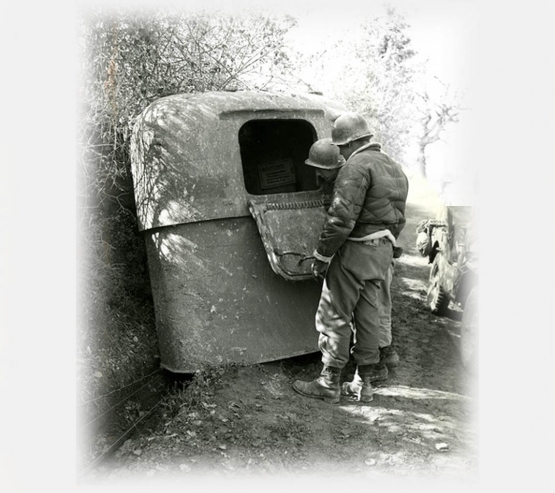
The German Portable Pillbox (Yank Magazine, 1944)
1944, Weapons and Inventions, Yank Magazine

The German Portable Pillbox
(Yank Magazine, 1944)

No doubt about it: for the fashionable, young Deutchen Soldaten on the go, the preferred choice in pillboxes is the portable variety! And you’d best believe that when those slide-rule jockeys back in Berlin lent their lobes to what the trendy book-burning crowed in Italy and Russia were saying, they jumped to it and created this dandy, 6,955 pound mobile pillbox that was capable of being planted almost anywhere. Better living through modern design!

Advertisement

Use shortcode [oma_ad position="summary_top"] (or other position) in your theme or widgets to display OMA Promotions here.

Racism on the WW2 home Front
1945, Americana, Newsweek

The American Amalgamation
(Newsweek Magazine, 1945)

In this brief report on the National Conference of Christian and Jews, a break-down of the various cultural groups is presented along with a list of the assorted religious denominations found in America at that time. We suppose that Hispanics and Asians were excluded because their numbers were so terribly small at that time.

1943 Bombing of Berlin | Destruction of Nazi Berlin 1943
1943, Newsweek, World War Two

The Battle of Berlin
(Newsweek Magazine, 1943)

The long-awaited climax of the great Allied air offensive against Germany came like a thunderclap last week. It was the opening of the Battle of Berlin… According to the [British Ministry of Economic Warfare], the Germans have evacuated nonessential civilians (children, invalids and the aged) just as the British had from London three years before. But all evidence indicated that government officials and essential workers still remained in the German capital.


Berlin police counted 5,680 dead.


More on the bombing of Germany can be read here…

Advertisement

Use shortcode [oma_ad position="summary_top"] (or other position) in your theme or widgets to display OMA Promotions here.

Scroll to Top