
Author name: editor

The Great Depression in the San Joaquin Valley Article
1937, Pathfinder Magazine, The Great Depression

Starvation in the San Joaquin Valley
(Pathfinder Magazine, 1937)

Renowned as an earthly paradise from whose rich soil the brilliant sun draws abundant crops of semi-tropical fruits, the Great Valley is today the state’s principal source of wealth. Last week, Californians were acutely conscious that the valley could also produce squalor, misery, disease and death…[The San Joaquin Valley] is host to 70,000 jobless, homeless families living in frightful squalor and privation….hopeless men and women sprawled in the sun as their ill-clad children played in the dirt.


Read about the the mood of the Great Depression and how it was reflected in the election of 1932 – click here…
The Flaws of the NRA (Collier's Magazine, 1933)
1933, Collier's Magazine, National Recovery Administration

The Flaws of the NRA
(Collier’s Magazine, 1933)

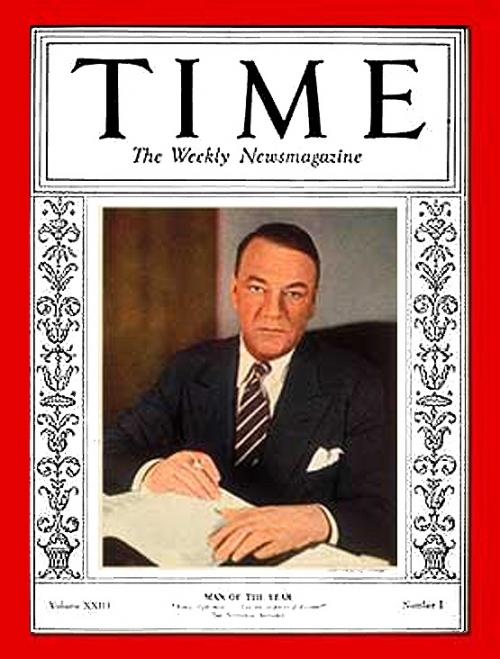
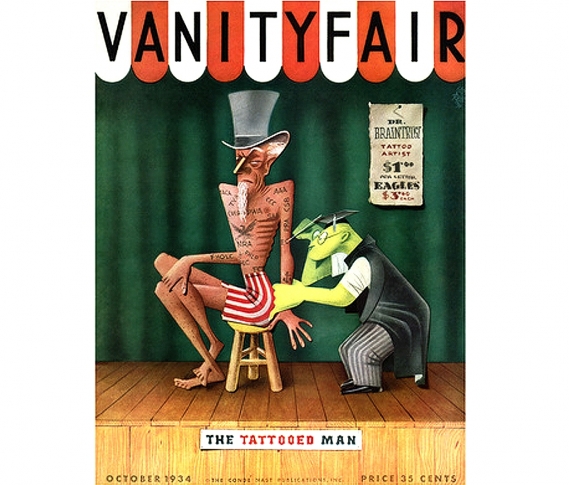
An excerpt from a longer article by Winston Churchill in which he praised the virtues of the Anglo-American alliance and the economic leadership forged by the two nations during the Depression. Four paragraphs are devoted to the confusion he experienced when stopping to consider some of President Roosevelt’s economic decisions and the roll played by his National Recovery Administration (NRA).


Like many presidents before and after him, FDR purchased many of his clothes from Brooks Brothers;
click here to read about the history of the store.

Advertisement

Use shortcode [oma_ad position="summary_top"] (or other position) in your theme or widgets to display OMA Promotions here.

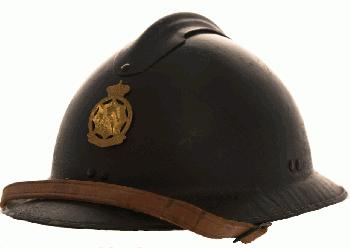
Military Buildup in Belgium (Literary Digest, 1936)
1936, Prelude (WW II), The Literary Digest

Military Buildup in Belgium
(Literary Digest, 1936)

With a clear understanding as to what was coming down the pike, Belgian Foreign Minister Paul Henri Spaak (1899 – 1972) prevailed upon Prime Minister Paul van Zeeland to push through the Chamber of Deputies a bill increasing the military service from twelve to eighteen months for Belgium’s 44,000 conscripts while at the same time, reinforcing the fortifications along the French border.
Over half the article pertains to the fascist party of Belgium, REX, a group that hardheartedly resisted any such defensive posturing. A few weeks following this printing, Léon Degrelle (1906 – 1994), the leader of REX, the Belgian fascist party, marched on Brussels and brought down the van Zeeland government.

How Did 1960s Change Society | Destruction of 1950s Society | Changing America
1968, Americana, Coronet Magazine

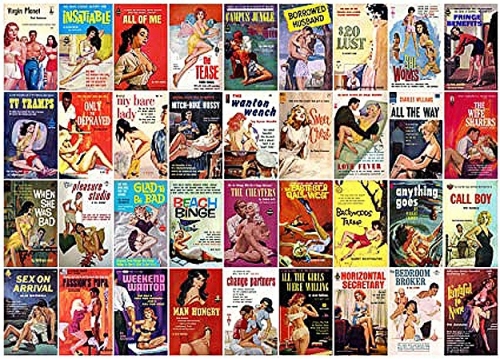
Nudity And Smut Becomes the Norm In American Pop-Culture
(Coronet Magazine, 1968)

The Sexual Revolution began slowly building with the release of the Kinsey Report in 1948 (read about that here) and from that point on the whole ball of thread began to unravel. More and more mainstream magazines, that previously would never have done so, began publishing articles about sexual concerns: adultery, frigidity and homosexuality. Hollywood went right along for the ride; TV was slow to follow, but following nonetheless. By the time 1967 came around the social war on the old taboos was in full flower. This article concerns the new standards that came into place all across America in 1968. When this article went to press, the two most infamous assassinations of 1968 had not yet taken place – after that, the flood gates would open – but change was in the air.


More about the lowering of moral standards in American popular culture can be read here…

Versailles Treaty Violations (Literary Digest, 1936)
1936, Prelude (WW II), The Literary Digest

Versailles Treaty Violations
(Literary Digest, 1936)

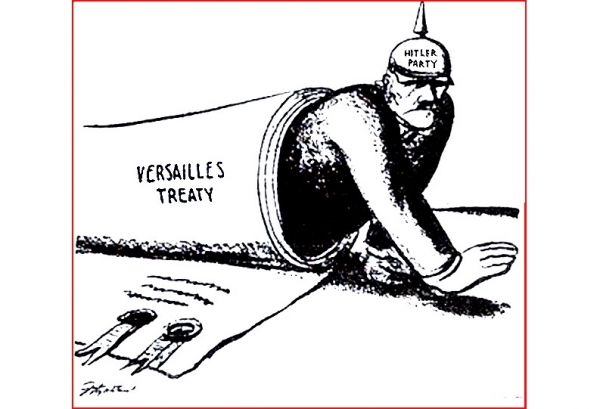
Attached is an interesting article that announced the Nazi march into the Rhineland as well as the island of Hegoland. The journalist also listed various other Versailles Treaty violations:

• The treaty said that Germany should have no troops in the Rhineland. On March 7 of this year, they marched in.

• The treaty said that Germany should never have a conscript army. On March 16 of this year, conscription was announced by Chancellor Hitler.

• It said that Germany should have no military aviation. She has it.

• It said that the Great German General Staff should be abolished. It was never disbanded.
*Violations of the Versailles Treaty began, in fact, a week before it was signed.


Click here to read an additional article concerning the Versailles Treaty violations.

Advertisement

Use shortcode [oma_ad position="summary_top"] (or other position) in your theme or widgets to display OMA Promotions here.

1930s British Palestine | British Palestine Article
1933, Jews in the 20th Century, The Literary Digest

The Bounteous Land
(Literary Digest, 1933)

The war clouds may have been gathering over Europe in 1933, but in British Palestine the skies were blue and life was good. Just as this 1922 magazine article intimated eleven years earlier, British Palestine was continuing to flourish in ways that neither the resident Zionists or the overseers from the British Colonial Office ever anticipated:

Two years ago, [British] Palestine’s orange crop – its main source of income – filled 2,000,000 cases at most. The forecast for the coming year is 6,000,000. Tel Aviv, a Jewish settlement near Jaffa, had 2,000 inhabitants in 1919. Now it claims 60,000 with 100,000 close ahead…

1947 U.N. General Assembly Resolution 181 | Rebirth of Israel 1948
1948, Jews in the 20th Century, Pathfinder Magazine

Palestine Brexit
(Pathfinder Magazine, 1948)

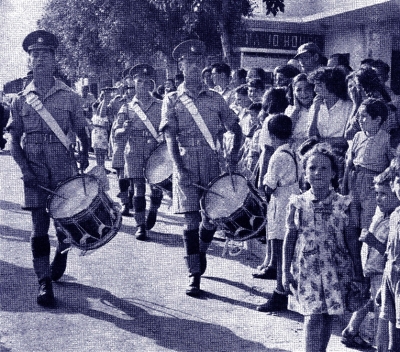
The British reign over Palestine lasted 31 years; attached is an eyewitness account of the orderly withdrawal that took place during the summer of 1948, when the remaining elements of their colonial regiments lowered the Union Jack for the last time and boarded ships for home:

Last week, from gently-heaving transports in Haifa harbor, men of Britain’s 40th Royal Marines in khaki shorts and green berets, took a last look shoreward. Alongside the transports were the aircraft carrier H.M.S. TRIUMPH, a cruiser and five destroyers… From shore came note by note the sound of a bugler blowing Last Post.

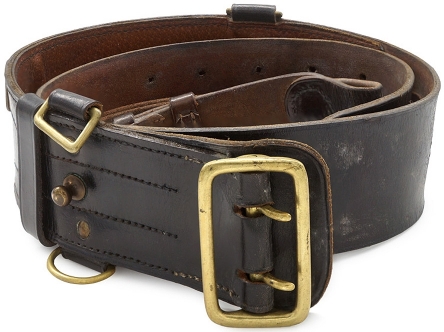
Sam Brown Belts: Two Short Notices (The Stars and Stripes, 1919)
1919, The Stars and Stripes, U.S. Army Uniforms of World War One

Sam Brown Belts: Two Short Notices
(The Stars and Stripes, 1919)

Aside from barb wire, poison gas, machine guns and trenches, the untested American officer corps had one other alien item to contend with: the Sam Brown Belt. Worn by all the officers in the allied armies and widely recognized as the premiere emblem of authority along the front lines, many American officers were of mixed minds concerning this military fashion accessory.

Advertisement

Use shortcode [oma_ad position="summary_top"] (or other position) in your theme or widgets to display OMA Promotions here.

Sam Brown Belts: Two Short Notices (The Stars and Stripes, 1919)
1917, Collier's Magazine, U.S. Army Uniforms of World War One

The Sam Brown Belt and Military Fashions
(Collier’s, 1917)

Six months after the United States entered the First World War all sorts of issues had to be addressed, such as the matter of the Sam Brown belt. Since 1914 the famous sword belt had been established as an emblem of authority among all the Allied armies along the assorted fronts, but the Americans didn’t like it one bit. The level-headed editors of Collier’s Magazine published the attached editorial pointing out that such matters of military fashion simply don’t matter at a time of national emergency and to illustrate their point they quoted a portion from Under Fire by Henri Barbusse which laid plain how miserable everyone (without exception) looks in the trenches, regardless of their accessories.

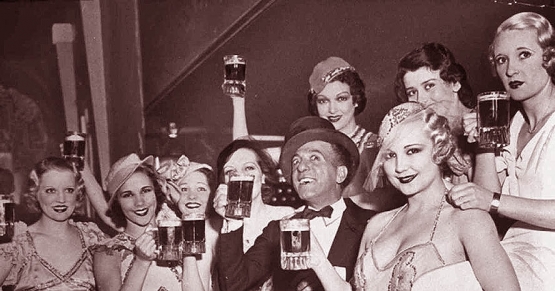
Alcohol Use During WW II | Prohibition 1943
1943, Click Magazine, Repeal

Repeal + Ten Years
(Click Magazine, 1943)

Americans on December 5 [1943] will look backwards to a dramatic night 10 years ago – many will be surprised that a whole decade has passed since the nation abandoned Prohibition… In the early ’30s, Congressman LaGuardia found authorities siphoning an estimated million dollars a day in graft from bootleggers. Cost of the ‘Noble Experiment’ to the government hovered around a billion dollars a year. In the last 14 Prohibition years, the public was figured to have spent more than $36,000,000,000 for bootlegging and smuggled liquor!

Advertisement

Use shortcode [oma_ad position="summary_top"] (or other position) in your theme or widgets to display OMA Promotions here.

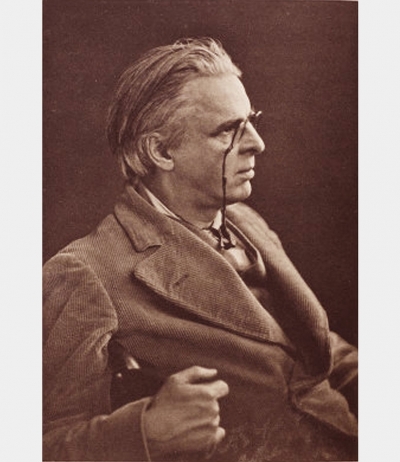
W.B. Yeats Gripes About the Theater-Going Bourgeoisie (Theatre Arts Magazine, 1919)
1919, Theatre Arts Magazine, W.B. Yeats

W.B. Yeats Gripes About the Theater-Going Bourgeoisie
(Theatre Arts Magazine, 1919)

Poet and playwright W.B. Yeats (1865 – 1939) had his say on the matter of theater-subscriber-book-of-the-month-club types who are more likely to attend performances because they feel they should, rather than attending for their own reasons of personal enjoyment:

And the worst of it is that I could not pay my players, or the seamstresses, or the owner of the building, unless I could draw to my plays those who prefer light amusement, or who have no ear for verse and literature, and fortunately they are all very polite.

Advertisement

Use shortcode [oma_ad position="summary_top"] (or other position) in your theme or widgets to display OMA Promotions here.

William Butler Yeats Interview | WB Yeats interviewed Theater Arts Magazine 1924
1924, Theatre Arts Magazine, W.B. Yeats

William Butler Yeats Interviewed
(Theatre Arts Magazine, 1924)

When the writer and editor Montrose J. Moses (1878 – 1934) got some quality time with the fifty-four year old poet and playwright William Butler Yeats (1865 – 1939) they discussed Irish theater, contemporary poetry, the collective literary merits of their generation and a good deal more. Unlike their visits in earlier days, Yeats was by then a respected icon in the republic of letters (having been awarded the Nobel Prize for Literature a year earlier).

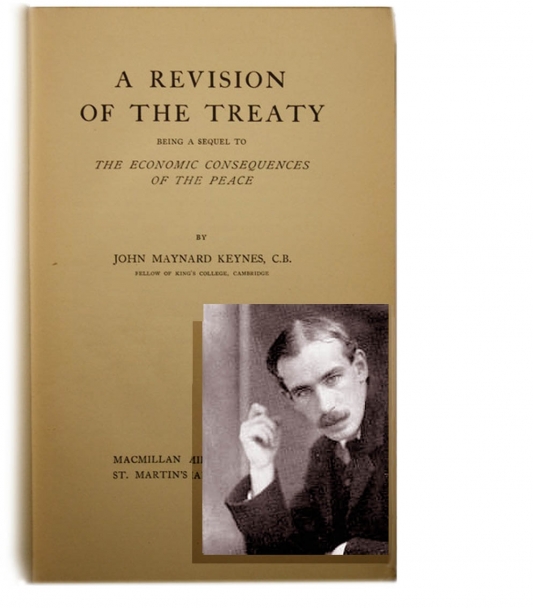
John Maynard Keynes on the Versailles Treaty (Current Opinion, 1922)
1922, Current Opinion Magazine, Versailles Treaty

John Maynard Keynes on the Versailles Treaty
(Current Opinion, 1922)

A magazine review of John Maynard Keynes book, A Revision of the Treaty (1922). The reviewer wrote that it lacks the prophetic fire of it’s author’s earlier book, The Economic Consequences of the Peace, but continues the argument of that book:

Mr. Keynes claims that almost everyone now has come around to his point of view. We practically all recognize, he says, the over-severity of the reparation clauses written into the Versailles Treaty.

Advertisement

Use shortcode [oma_ad position="summary_top"] (or other position) in your theme or widgets to display OMA Promotions here.

Scroll to Top