Author name: editor

Eyewitness to Pearl Harbor (Rob Wagner's Script Magazine, 1942)
1942, Pearl Harbor, Rob Wagner's Script Magazine

Eyewitness to Pearl Harbor
(Rob Wagner’s Script Magazine, 1942)

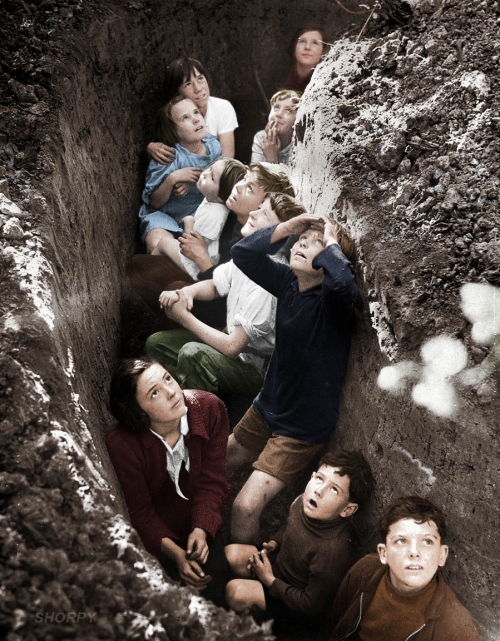
Attached is an eyewitness account of the Pearl Harbor attack as relayed to family members in a letter written home a few weeks after the assault:

The noise was like ten thousand factories gone nuts….Quicker than I can tell you, a bomb blows up the barracks with the gang in it, a ship explodes in front of me, a hangar goes up in flames…


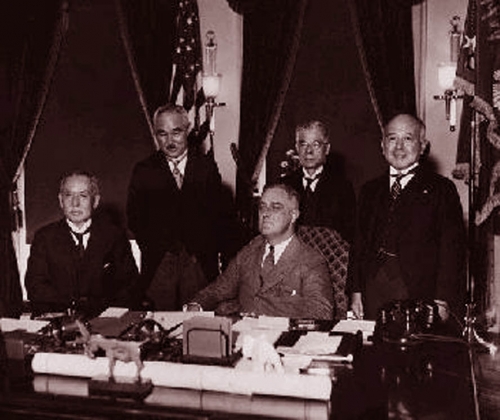
The very next day President Roosevelt stood before the microphones in the well of the U.S. Capitol and asked Congress to declare war against the Empire of Japan; CLICK HERE to hear about the reactions of the American public during his broadcast…


Pearl Harbor Christmas: A World at War, December 1941style=border:none


Click here to read about the Battle of Midway.

Bad-Boy Errol Flynn (Sir! Magazine, 1954)
1954, Hollywood History, Sir! Magazine

Bad-Boy Errol Flynn
(Sir! Magazine, 1954)

There is no doubt that the Hollywood matinee idol Errol Flynn (1909 – 1959) was the Charlie Sheen of his day, and thanks to the unrelenting press control that the Hollywood studios exercised over the fan magazines of that day, we probably only know about a quarter of his assorted debaucheries. He was a masher and a lush, and the one law suit that the studio executives couldn’t kill was

the great case against him for statutory rape which, had it stuck, would have given him jail for fifty years. For weeks in 1942 it replaced the war news in the headlines.


In 1938, Flynn wrote an article in which he weakly defended the unique moral codes of Hollywood actors; you can read it here.

Advertisement

Use shortcode [oma_ad position="summary_top"] (or other position) in your theme or widgets to display OMA Promotions here.

American Losses at Normandy (Yank Magazine, 1944)
1944, D-Day, Yank Magazine

American Losses at Normandy
(Yank Magazine, 1944)

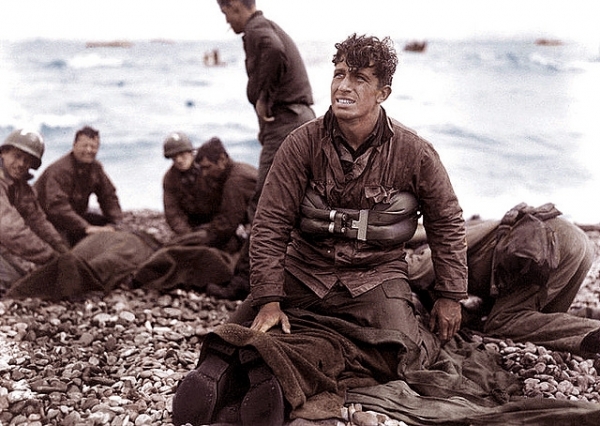
In the July 22,1944 issue of YANK the editors saw fit to release the numbers of American casualties that were racked-up during the first eleven days of the allied Normandy Invasion. In the fullness of time, the numbers were adjusted to be considerably lower than the 1944 accounting; Pentagon records now indicate 1,465 were killed, 3,184 were wounded, 1,928 were registered as missing, 26 were taken prisoner.
It is interesting to note that YANK did not sugar coat the report.


Of the total US figure, 2499 casualties were from the US airborne troops (238 of them being deaths). The casualties at Utah Beach were relatively light: 197, including 60 missing. However, the US 1st and 29th Divisions together suffered around 2,000 casualties at Omaha Beach.

FDR’s D-Day prayer can be read here

Additional facts and figures about the U.S. Army casualties in June of ’44 can be read in this article.
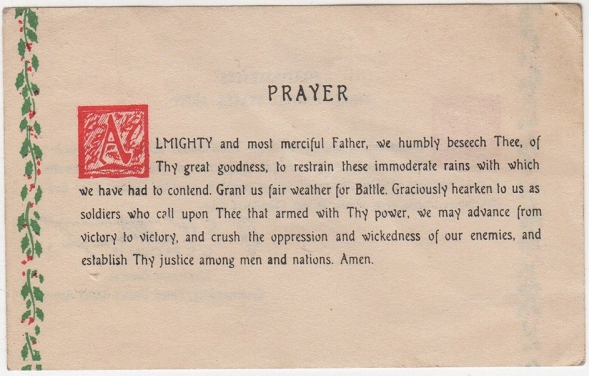
General Patton's Weather Prayer 1944 | Battle of the Bulge Weather Prayer by Chaplin James O'Neil | Prayerful General Patton
1950, Battle of the Bulge, Faith is Power for You

General Patton’s Prayer for Battle Weather
(Faith Is Power For You, 1950)

The attached paragraphs tell the story of General Patton’s famous prayer for battle weather – who authored it and how many men recited it.

That prayer [and the accompanying Christmas] greeting were typically Patton. They [read as if they] were [pulled] from the Old Testament rather than the New and had the ring of Joshua and David at their militant best.They were not written for a soft time but for their occasion; they were words to make men strong – and they did.


FDR’s D-Day prayer can be read here

Advertisement

Use shortcode [oma_ad position="summary_top"] (or other position) in your theme or widgets to display OMA Promotions here.

The GIs Hear About the Death of President Roosevelt (Yank Magazine, 1945)
1945, F.D.R., Yank Magazine

The GIs Hear About the Death of President Roosevelt
(Yank Magazine, 1945)

Gathered from all the various battlefronts around the globe, the attached article serves as a archive of spontaneous reactions uttered by a smattering of stunned GIs when they heard that President Roosevelt had died:


Pvt. Howard McWaters of Nevada City, California, just released from the hospital and waiting to go back to the Americal Division, shook his head slowly. ‘Roosevelt made a lot of mistakes,’ he said. ‘But I think he did the best he could, and when he made mistakes he usually admitted it. Nobody could compare with him as President.’


Click here to read about President Harry Truman…

WW2 Home Front Spy Fever | 1940s Spy-Hunters During WW II | Spy Tips Called In to the FBI During WW II
1944, Coronet Magazine, Home Front

Home Front Spy-Hunters
(Coronet Magazine, 1944)

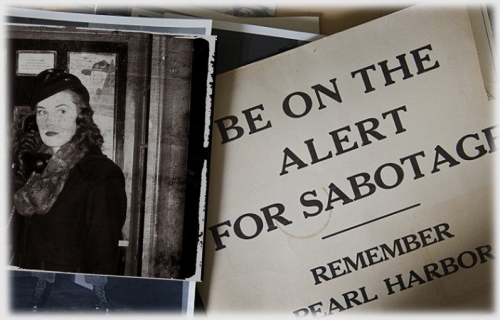
Appearing in 1944, this article listed numerous reports relayed to the FBI by amateur spy-hunters of all the imagined foreign agents who they stumbled upon daily. Some of the accounts ended up being true and lead to actual confessions, but most were just plain silly – either way, the G-men had to investigate each account.

Advertisement

Use shortcode [oma_ad position="summary_top"] (or other position) in your theme or widgets to display OMA Promotions here.

American Communists 1930 | How 1930 American Communism Was Structured | Communist Party of America 1930
1930, Scribner's Magazine, The Great Depression

Reds Among Us
(Scribner’s Magazine, 1930)

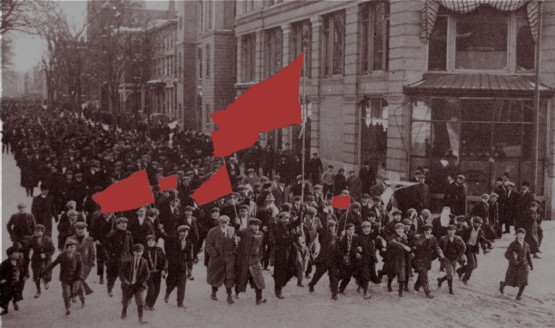
When the market crashed in the Fall of 1929, the Communist Party of America really thought their hour had arrived. They took to the streets with their red banners and set to work fomenting unrest in whatever factories were still afloat. Most Americans recognized their blarney as mere pie in the sky and would have none of it; still their membership lists were growing and many Americans were wondering how they should be dealt with. This article examined how the communists were organized, what they were up to and recommended that Americans should keep in mind that the Reds will go when prosperity returns – and not before.


We also have an article on The Daily Worker.

United States Boy Scouts History
1947, Americana, Pathfinder Magazine

The Boy Scouts of America
(Pathfinder Magazine, 1947)

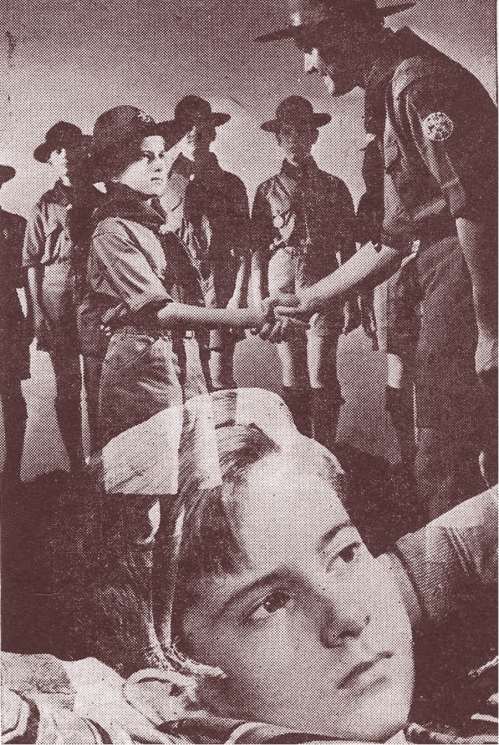
When this article first appeared, the Boy Scouts of America, as an institution, was barely thirty-five years old:

The truth is that never in the history of mankind has a simple idea – an idea, incidentally, born in South Africa – so seized the imagination of boys the world over as has Scouting.


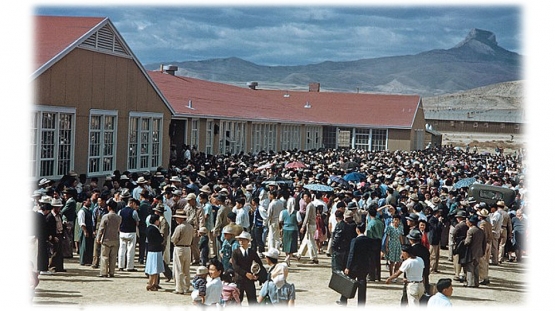
Both Boy Scots and Girl Scouts were active in the Japanese-American internment camps during W.W. II. Click here to read about that subject…

The Last Four Months of WW2 in Germany | Newsweek Article on the End of WW II
1945, German Home Front, Newsweek

The Last Three Months
(Newsweek Magazine, 1945)

From inside Germany last week emerged the picture of a state that by all normal standards was in the last stages of dissolution… All signs indicated a physical breakdown perhaps as great as that of France in 1940… Refugees, mostly women and children with blankets around their bodies and shawls on their heads to protect them from the sub-zero weather, queue up for hours outside bakeries to get a loaf of bread. Draftees ride tanks in never-ending columns.

Advertisement

Use shortcode [oma_ad position="summary_top"] (or other position) in your theme or widgets to display OMA Promotions here.

Television History Facts | TV in the 1920s and 1930s
1954, Coronet Magazine, Early Television

The First Thirty Years of Television
(Coronet Magazine, 1954)

Countless scientists contributed to the phenomenon [of television]. Marconi gets credit, as do Farnsworth and Lee de Forest. But the real starting line was strung by an RCA scientist named Vladimir K. Zworykin in 1923, when he applied for a patent on a iconoscope…


Illustrated with 27 pictures, this article lists a number of historic and semi-historic events that were captured by the early TV cameras and seen by millions of souls who otherwise would have only had to read about them in their respective newspapers, if they cared to.

A French Village Welcomes the Ninety-Second Division (The Crises, 1919)
1919, African-Americans, The Crises

A French Village Welcomes the Ninety-Second Division
(The Crises, 1919)

This is a lovely piece, originally written in French for a village paper, in which a journalist describes the collective excitement of the townsfolk in welcoming the Americans to their sleepy hamlet during the First World War, and how astonished they were to find that the arriving Doughboys were all of African descent!


Read an Article About American intervention in W.W. I and the Gratitude of France.

The Women of the U.S. Navy (Think Magazine, 1946)
1946, Think Magazine, Women (WWII)

The Women of the U.S. Navy
(Think Magazine, 1946)

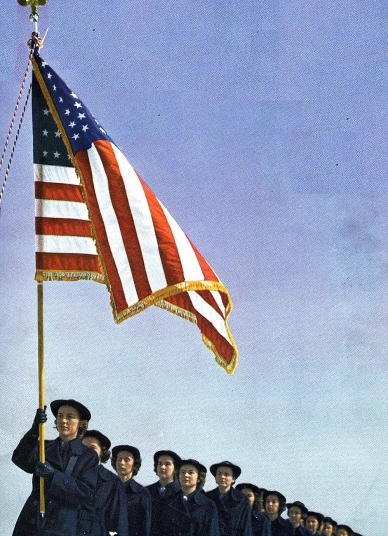
The attached is a short article from THINK MAGAZINE that sums up the contributions made by the 87,000 American women of the U.S. Navy during World War II. These women were organized into a body called WAVES (Women Accepted for Volunteer Emergency Service):

In 500 shore establishments of the United States Fleet, women in navy blue released enough men from non-combatant duty to man all of America’s landing crafts in two important operations: the Normandy landings on D-Day and the invasion of Saipan.

Created July 30, 1942, the Corps completed more than three years of service while the nation was engaged in war. The director was Captain Mildred H. McAfee (1900 – 1994), former president of Wellseley College.

Advertisement

Use shortcode [oma_ad position="summary_top"] (or other position) in your theme or widgets to display OMA Promotions here.

WWI European Aristocracy Deaths
1915, The New York Times, World War One

The Slaughter of the Aristocrats
(NY Times, 1915)

This 1915 article goes into great length listing the names of all the assorted European noblemen and plutocrats who fell during the first year and a half of the First World War.

The great world conflict which broke out soon after [the murder of Archduke Ferdinand] has placed the pall of mourning over every third home in the belligerent countries of Europe… The dreadful slaughter has fallen with especial heaviness on the upper and wealthy classes…


The writer, Charles Stolberg, also included the names of the most admired European athletes who gave their lives for king and country.

Eleanor Roosevelt on Japanese-American Internment (Collier's Magazine, 1943)
1943, Collier's Magazine, Japanese-American Internment

Eleanor Roosevelt on Japanese-American Internment
(Collier’s Magazine, 1943)

In this article, First Lady Eleanor Roosevelt (1884 – 1962) attempted to play (very politically) both sides of the street, implying on the one hand that the creation of the Japanese-American internment camps seemed a reasonable measure in wartime; but the reader doesn’t have to have a degree in psychology to recognize that she believed otherwise.

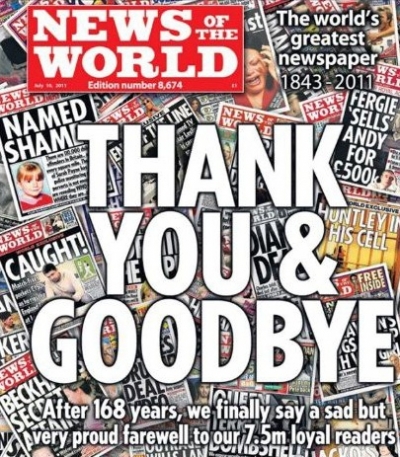
News of the World (Coronet Magazine, 1960)
1960, Coronet Magazine, Magazines

News of the World
(Coronet Magazine, 1960)

Unlike other publications that enter this world with high ideals and lofty ambitions in matters concerning free-speech, the right-to-know, good form and all that sort of stuff – only to slowly devolve into petty, libelous innuendo rags before they cease publication altogether – the British daily The News of The World (1843 – 2011) made its appearance on Fleet Street seeming as if it was already on its way out. As the saying goes, it sold out early and beat the rush.


Although its earliest editions covered the Crimean War, as well as all the other Victorian military adventures, the paper’s editorial policy had always been positioned somewhere to the left of Whoopee.

Advertisement

Use shortcode [oma_ad position="summary_top"] (or other position) in your theme or widgets to display OMA Promotions here.

Scroll to Top