Author name: editor

The Flapper as a Religious Force in the World (Literary Digest, 1927)
1927, Flappers, The Literary Digest

The Flapper as a Religious Force in the World
(Literary Digest, 1927)

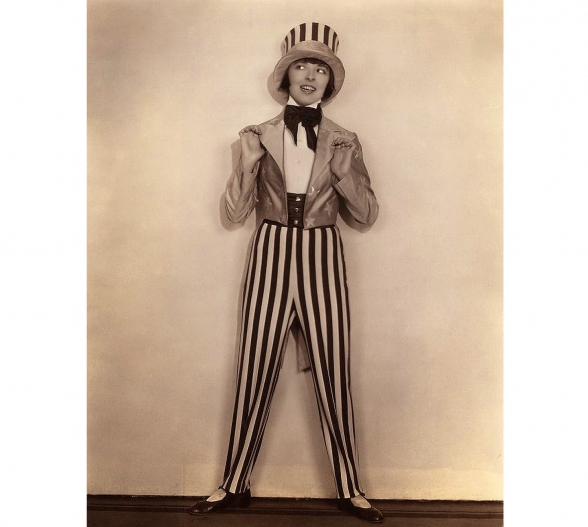
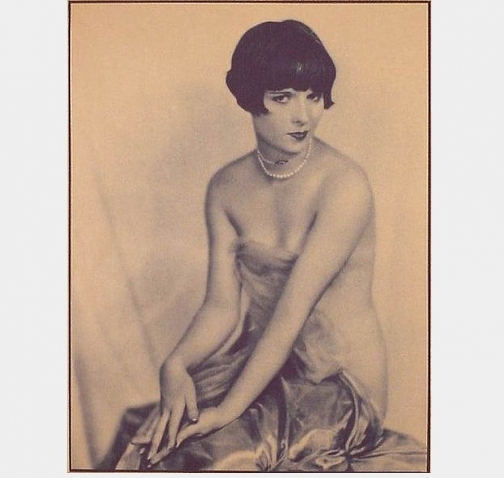
Scorned for too long by churchmen as an ambulatory example of folly, the flapper at length finds herself defended by the Church. She is not, in this new view, the brainless, overdressed Jezebel that she has been pictured to be. ‘She is a symbol of the times. As she sweeps down the street, she is like nothing so much as a fine, young spirited puppy-dog, eager for the fray’.


Unlike some members of clergy, the wise sages of Hollywood were clearly numbered among those who held favorable views about flappers, but they didn’t always produce films that were sympathetic to their causes; for example, the editors of Flapper magazine hated this movie.

Flapper Beauty Contest (Flapper Magazine, 1922)
1922, Flappers, The Flapper Magazine

Flapper Beauty Contest
(Flapper Magazine, 1922)

This funny announcement from the yellowing pages of FLAPPER MAGAZINE made it clear to one and all that all flappers were eligible to enter their Flapper Beauty Contest:

You don’t have to be beautiful to be a flapper, and if you’re not a flapper you wouldn’t be considered beautiful. So there!


(But we’re sure it helped)

Advertisement

Use shortcode [oma_ad position="summary_top"] (or other position) in your theme or widgets to display OMA Promotions here.

1920s Flapper Philosophy | Flapper Manifesto | Flapper Beliefs
1921, Flappers, Vanity Fair Hall of Fame

‘Canonizing the Flapper”
(Vanity Fair, 1921)

The following is an excerpt from the review of the New York production of the 1921 play, A Bill of Divorcement by Clemence Dane (born Winifred Ashton 1888 – 1965). With much enthusiasm, the reviewer wrote:


We know of no better expression of the creed of the new generation than that which Clemence Dane has drawn up….


What followed was a very short soliloquy which beautifully summed up not only the philosophy of the modern woman, but the philosophy of much the Twentieth Century.

The Flappers and Their Fashion Rebellion (Flapper Magazine, 1922)
1922, Flappers, The Flapper Magazine

The Flappers and Their Fashion Rebellion
(Flapper Magazine, 1922)

In the attached column, a high-spirited editorial writer hails the Flapper Revolution and singles out Paris fashion designer Paul Poiret (1879 – 1944) for being so out of step with the women of his day for continuing to design long dresses:

When flappers rise en masse and say that they can see no reason for giving up a style that means comfort, freedom and health, then indeed, out of this welter of strikes, injunctions and warfare may be seen a glimmer of hope for mankind.

M. Poiret, designer of Paris, has seen fit to take up the cudgels on behalf of the long skirt, and therefore he cannot object if the shafts of ridicule are hurled at him in return…

Flappers Defy the Paris Dictators (Flapper Magazine, 1922)
1922, Flappers, The Flapper Magazine

Flappers Defy the Paris Dictators
(Flapper Magazine, 1922)

Will Paris succeed in imposing long skirts on the flappers of America?

Not if most of them have their way! When Paris started the short skirt fad and America eagerly aped it, the dressmakers figured that it would probably run its course and then die a sudden death. But no! For American flappers may be fickle but they know a good thing when they see it. And they intend to hang on to it.


Click here to read about another icon of the Twenties: Rudolph Valentino.

Advertisement

Use shortcode [oma_ad position="summary_top"] (or other position) in your theme or widgets to display OMA Promotions here.

The Nazi Book Burnings (Literary Digest, 1933)
1933, The Literary Digest, The Nazis

The Nazi Book Burnings
(Literary Digest, 1933)

American columnist Walter Lippmann of the The New York Herald Tribune wrote:

They symbolize the moral and intellectual character of the Nazi regime. For these bonfires are not the work of schoolboys or mobs but of the present German Government acting through its Minister of Propaganda and Public Enlightenment.


CLICK HERE to read an article from 1923 about the abitious Adolf Hitler.


Read about the American reporter who became a Nazi…

Soak the Rich States, Too (Pathfinder Magazine, 1935)
1935, Pathfinder Magazine, The Great Depression

Soak the Rich States, Too
(Pathfinder Magazine, 1935)

This is an interesting article that assesses the financial abilities of each of the 48 states in 1935 in an effort to illustrate that the ten richest states, as a result of their minority status on Capitol Hill, were in no position to cry out about majority tyranny when the insolvent 38 states rigged a deliberately unfair tax code that would see to it that they alone would pay the nation’s bills.

The ‘rich’ people may howl and growl and moan at having to foot the bills for everything, but there’s no remedy for it… The reason is this: our parade of poor states totals 38, while the rich states number only ten. The figures show that these rich states, which have only one-third the population, have to pay two-thirds of the taxes. The 10 richest states have only 20 Senators in the Senate, while the 38 poor states have 76. The rich are decidedly in the minority and there is no way for them to change the set-up.

Advertisement

Use shortcode [oma_ad position="summary_top"] (or other position) in your theme or widgets to display OMA Promotions here.

The Musicians Duke Ellington Admired (Coronet Magazine, 1951)
1951, Big Band 1930s-1940s, Coronet Magazine

The Musicians Duke Ellington Admired
(Coronet Magazine, 1951)

Of all the jazz musicians who link yesterday’s ragtime with today’s dance music, Duke Ellington is the dean. In his 27 years as a pianist and composer, the Duke has played alongside every great brass, reed, and rhythm man of his day. Now he picks those music makers who, ‘on the basis of their over-all contribution, their all-time record, consistently good performance, and love of music,’ constitute 1951’s All-American jazz band.

Duke Ellington made a list of his favorite eleven musicians; some of the names may surprise you.

The Blowtorch Blonde (Coronet Magazine, 1952)
1952, Coronet Magazine, Marilyn Monroe

The Blowtorch Blonde
(Coronet Magazine, 1952)

Here is an article about the legendary Marilyn Monroe (né Norma Jeane Mortenson: 1926 – 1962), her painful beginnings, the cheesecake pictures, the bit-parts and her enormous popularity as a star are all woven into a narrative that never lets the reader forget that her unique type of appeal was something entirely new.

Jean Harlow Photoplay Magazine Article 1931 | Jean Harlow in Hollywood 1931
1931, Hollywood History, Photoplay Magazine

Jean Harlow, Star
(Photoplay Magazine, 1931)

When this interview appeared on the newsstands, Jean Harlow (1911 – 1937) had fifteen credits under her belt (most of them short films) and only six years left until she would assume room temperature as a result of kidney failure. Written by the PHOTOPLAY reporter Leonard Hall (who would like us to believe that he was a Hollywood studio psychiatrist), this is a light and breezy two page interview conducted at the New Yorker Hotel at a time when that establishment appealed to Hollywood Royalty.


Click here to read articles about Marilyn Monroe.

Advertisement

Use shortcode [oma_ad position="summary_top"] (or other position) in your theme or widgets to display OMA Promotions here.

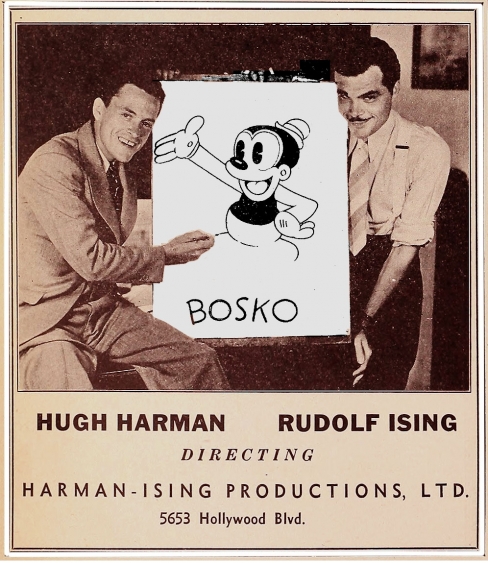
Animated Cartoon The Emperor and the Nightingale 1935 | Harmon-Ising Magazine Article
1939, Animation History, Film Daily Magazine

Hugh Harmon & Rudolf Ising: Animators
(Film Daily, 1939)

A short account regarding Hugh Harman (1903 – 1982) and Rudy Ising (1903 – 1992) who were a team of Oscar winning animators best known for founding the animation studios at Warner Brothers and Metro-Goldwyn-Mayer.

In the last decade the animated cartoon has developed from its early grotesque form to its present lofty state and this development is really a miracle in art and achievement in entertainment… The significance of the animated cartoon can be realized only when we consider its world wide appeal and power of influence.

The same year this article went to press, Harmon-Ising produced their much admired anti-war cartoon, Peace on Earth.

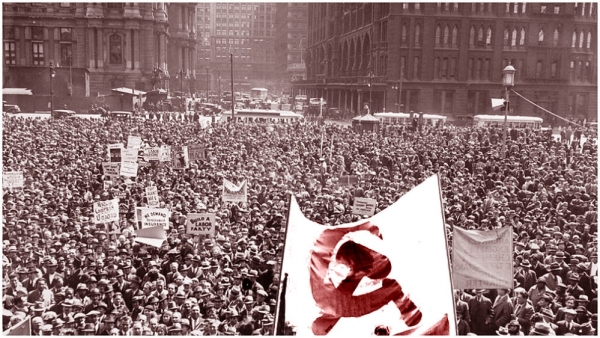
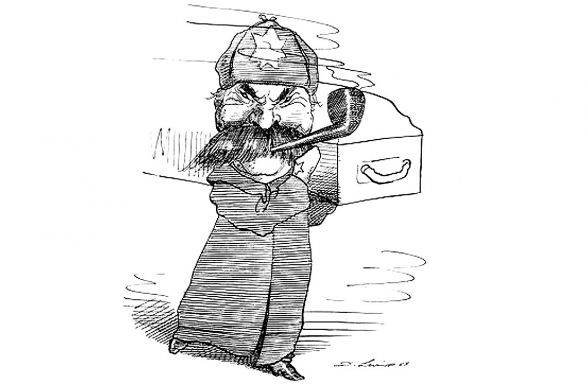
1930s American Communists
1935, Script Magazine, The Great Depression

The Degraded Lives of American Reds
(Script Magazine, 1935)

This article was written by an anonymous soul who wanted the Script readers to understand that the life of an American Communist during the Great Depression was not a good one. Their lives often involved constant police surveillance and harassment to say nothing of blacklisting.

What boon can membership in the Communist Party confer upon them in exchange for the martyrdom they almost inevitably suffer? But is any membership card ever printed worth having one’s skull fractured for?


More about American Communists during the Great depression can be read here

Advertisement

Use shortcode [oma_ad position="summary_top"] (or other position) in your theme or widgets to display OMA Promotions here.

The Anglo-Saxon North and the Latin - American South in 1910 (Review of Reviews, 1910)
1910, Foreign Opinions About America, The American Review of Reviews

The United States and Spanish Speaking Unity
(Review of Reviews, 1910)

Pio Ballesteros, Proud Spaniard, wrote this editorial in a 1910 issue of Espanña Moderna in which he lamented the long-favored practice of viewing the United States as the elder sister of the Latin-American republics and ignoring a strong sensation that all Spanish-speaking people are kin and should be united against the Anglo-Saxons.

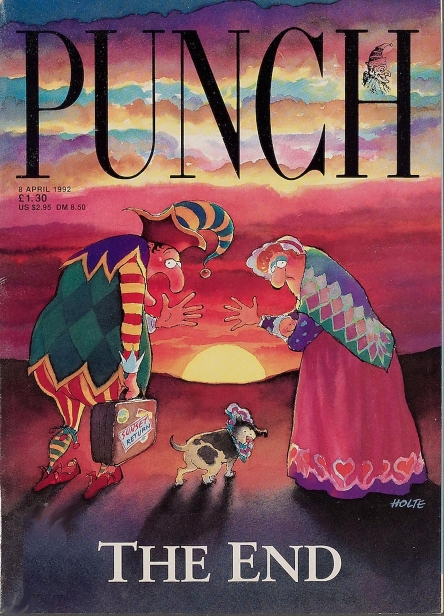
Punch Magazine History Article | First Issue of Punch Magazine 1841 |100th Anniversary of Punch Magazine
1941, Magazines, Newsweek

100 Years of Punch
(Newsweek Magazine, 1941)

This article was written to mark the 100th anniversary of Punch and in so doing gives a very pithy history of the magazine and its editorial mission:

Yet, as a true chronicler of the times, Punch‘s volumes read more like a century-long history of England, and the magazine is never more on its mettle than during periods of crisis.

Advertisement

Use shortcode [oma_ad position="summary_top"] (or other position) in your theme or widgets to display OMA Promotions here.

Scroll to Top