Author name: editor

Cultures that Eat Dogs |
1897, Food and Wine, The Literary Digest

Dogs as a Source of Food
(Literary Digest, 1897)

This article originally appeared in a French magazine and it lists numerous cultures, both ancient and modern, that eat dogs regularly:

We do not know the edible dog or the edible cat, in France, and probably since the siege they have been little served (openly at least) on the tables of Paris restaurants. At Peking, and throughout China, there is no dainty repast without its filet or leg of dog; the cat is rather a dish of the poorer classes.

War Weary Home Front in America | Additional Restrictions on WW2 Home Front 1945
1945, Home Front, Newsweek

A Languorous Home Front
(Newsweek Magazine, 1945)

At long last the impact of of total war had bruised the American consciousness. Despite the initial success of General MacArthur’s victory on Luzon and the Russians on the Eastern front, the first three weeks of 1945 had brought the nation face to face with the realities ahead as at no time since Pearl Harbor. No single factor could this metamorphosis be attributed, but it was plain that the stark lists of causalities and the growing hardships at home had contributed to it.

Hebron Massacre Criminals In Court | 1931 Palestine Riots | Jewish-Arab Riots Palestine 1929
1929, Jews in the 20th Century, The Literary Digest

Leniency For The Defendants of the Hebron Massacre
(Literary Digest, 1929)

Jews do not seek vengeance, despite the opinions commonly held in certain quarters that the god of of the Jews is a a God of vengeance. We repudiated
this concept of God and religion and religion since the days of when Joshua established the cities of refuge and have entirely outgrown it since the days of the Bible prophets… Wes stand with the majority proponents of the ennobling suggestion, and trust that the counsel of forgiveness, mercy and loving-kindness will prevail.

Advertisement

Use shortcode [oma_ad position="summary_top"] (or other position) in your theme or widgets to display OMA Promotions here.

Chinese Persecution of the Christians 1952 | Chinese War Against Christ | Maoist Persecutions | Christian Martyrs in China
1921, Miscellaneous, The Literary Digest

Christians 2: Buddhists 1′
(Literary Digest, 1921)

In 1921 a Kyoto Bible school was challenged by a neighboring Buddhist temple. The confrontation did not involve the finer points of theology (not openly, anyway) but which of the two tribes was superior at baseball. It was a Hell of a game.


The uncredited foreign correspondent made it known within the opening paragraphs that the Kyoto Buddhists were irked by the spread of Christianity in that region of Japan and chose to deploy any means at their disposal to gain some sort of advantage.


Twenty-one years later a Japanese team would play an American team. Read about that game here…

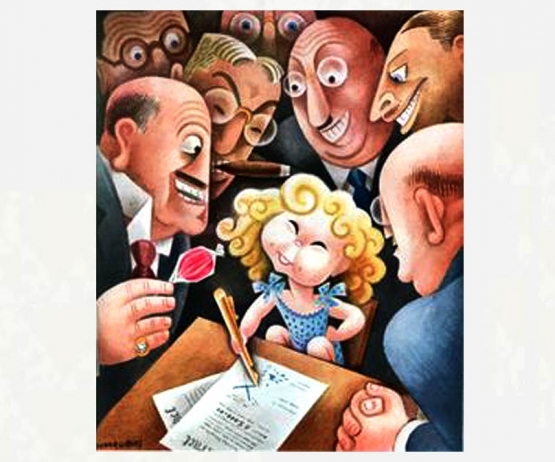
A Profile of Shirley Temple (Film Daily, 1939)
1939, Film Daily Magazine, Hollywood History

A Profile of Shirley Temple
(Film Daily, 1939)

As a phenomenon in the history of the show business and among all children, Shirley Temple (1928 – 2014) stands as absolutely unique. For four successive years she has led all other stars in the film industry as the number one box office attraction of the world. But Shirley’s influence has been wider than this – there is no country in the world, both civilized and uncivilized where at some time or another her pictures have not been shown.

In a few weeks Shirley’s fan mail reached avalanche proportions, with with the result in her next film, Bright Eyesstyle=border:none, Shirley was starred. The old contract was torn up and the Temples were given a new one.

Advertisement

Use shortcode [oma_ad position="summary_top"] (or other position) in your theme or widgets to display OMA Promotions here.

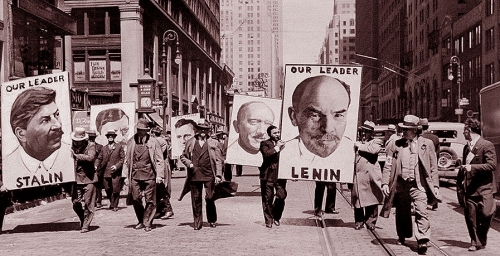
Communist Resistance During the Great Depression
1963, American Opinion, The Great Depression

Rejecting Socialism During the Depression
(American Opinion, 1963)

Novelist Taylor Caldwell (Born Janet Miriam Holland Taylor Caldwell: 1900 – 1985) recalled the bleak days of the Great Depression – and the perpetual appearance of American socialist who seemed always to be in recruitment mode.

Open or crypto-Communists, they had one unwavering theme: Communism was a System with a Heart. Communism was the new Christianity. Communism was the savior of the working people. America must become Communistic, if it was to pull out of the Great Depression. The Light of the World was not in my church. It was in Moscow.


Click here to read further about American Communists during the Great Depression…


In 1887 the NEW YORK TIMES reviewed the first english edition of Das Kapital by Karl Marx, click here to read it…

The State of American Roads (Quick Magazine, 1952)
1952, Cars, Quick Magazine

The State of American Roads
(Quick Magazine, 1952)

Shortly before President Eisenhower signed the Federal Aid Highway Act of 1956, the nation was treated to articles like the one that is attached herein – articles that detailed all the very many flaws that existed in the American road system:

The most highly motorized nation on earth faced the danger of finding itself all gassed up with no place to go. As the budget-harried [Truman] Administration pressed for a 20% cut in highway aid to states, legislators and private groups warned that U.S. roads were fast crumbling.

The U.S. has 350,000 miles of surfaced primary roads, but about 20,000 miles become unusable or too dangerous every year. One warning sign: U.S. auto deaths, now over 1 million, equals the American dead in all wars since the Revolution.


As of 2013, the United States has the largest and most advanced road network in the world – covering a distance of 6,506,204 km. (China’s road system covers 4,193,000 km).

Fact and Fiction About Submarines (Yank Magazine, 1943)
1943, Submarines, Yank Magazine

Fact and Fiction About Submarines
(Yank Magazine, 1943)

This article,‘Blow It Out of Your Ballast Tank’ was penned by Marion Hargrove and cartoonist Ralph Stein
in order to clear away some of the Hollywood blarney and set the record straight about the W.W. II submarine duty in the U.S. Navy:

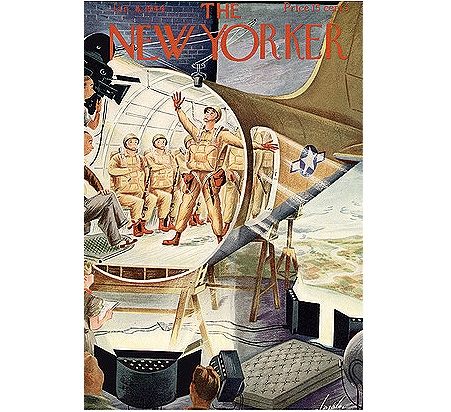
To read articles about submarines, you’d think they were about as big as a small beer keg, and that the men worked curled around each others elbows. To see submarine movies, you’d think the sailors spent their time bailing water, gasping, sweating, hammering on jammed doors and getting on each other’s nerves.

This is really a lot of Navy propaganda, designed to keep surface fleets from being stripped of their personnel by a rush of volunteers for submarine duty.


Click here to read about a Soviet submarine called the S-13

Advertisement

Use shortcode [oma_ad position="summary_top"] (or other position) in your theme or widgets to display OMA Promotions here.

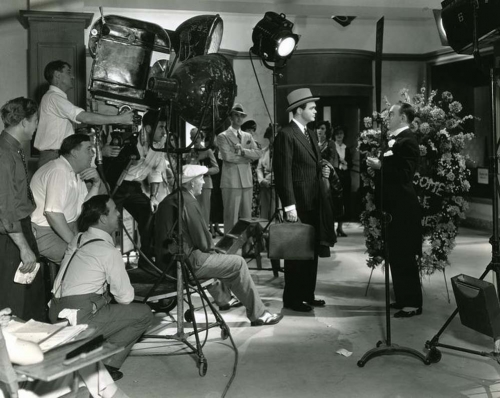
The Hollywood Offerings from Late 1944 (Click Magazine, 1944)
1944, Click Magazine, Hollywood

The Hollywood Offerings from Late 1944
(Click Magazine, 1944)

During the last month of 1944 the Yankee movie-goers had a choice of ten new releases to choose from, here are four titles:


Laura, starring Clifton Webb,

I’ll Be Seeing You, starring Joseph Cotton and Ginger Rogers

The Doughgirls, starring Jane Wyman and Ann Sheridan

Mrs. Parkington, starring Walter Pidgeon and Greer Garson

Each review is illustrated with thumbnail images of the ten films.

The Best Years of Our Lives (Photoplay Magazine, 1947)
1947, Hollywood, Photoplay Magazine

The Best Years of Our Lives
(Photoplay Magazine, 1947)

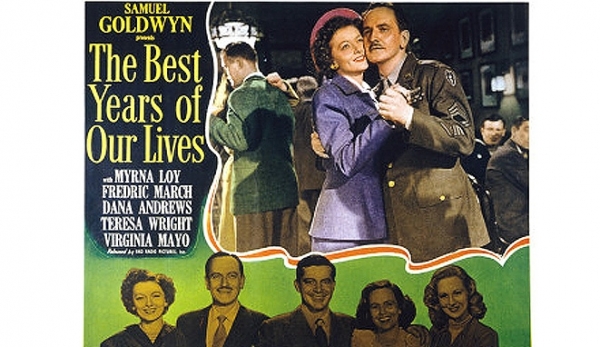
The post-World War II film The Best Years of our lives (1947) is attached herein, reviewed by the senior editor of Photoplay:

Of all the films released since August 1945 it best dramatizes the problems of men returning from war and of their families to whom they return…It eloquently preaches the need for veterans to do their share in the adjustment between home and soldier and between employer and returning worker. It eloquently preaches against the ugly attempts of the few to incite in these chaotic days race and religious hatreds. And it eloquently preaches the truth that physical disability need not cripple a man’s soul or his opportunities.

Advertisement

Use shortcode [oma_ad position="summary_top"] (or other position) in your theme or widgets to display OMA Promotions here.

JFK Image Abroad |
1964, Coronet Magazine, The Kennedys

JFK – As the World Saw Him
(Coronet Magazine, 1964)

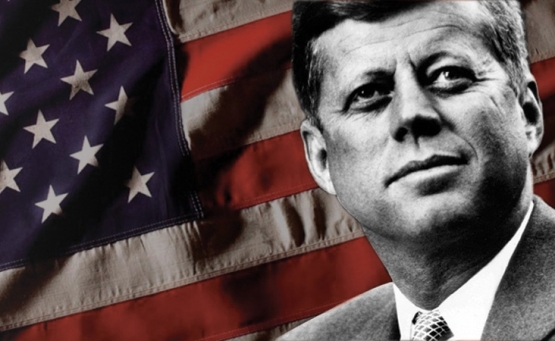
More than any other president in our history, John F. Kennedy was the public image of the United States of America. Unlike the initial acclaim accorded the stately Roosevelt or the revered Eisenhower, many nations viewed the election of Kennedy in 1961 with alarm. It was not difficult to understand; he was born to great wealth, he was very young and he was inexperienced. Could any country that elected such a man be respected?


Click here to read about Jackie Kennedy’s life after leaving the White House.

The Flapper Exageration (The Flapper Magazine, 1922)
1922, Flappers, The Flapper Magazine

The Flapper Exageration
(The Flapper Magazine, 1922)

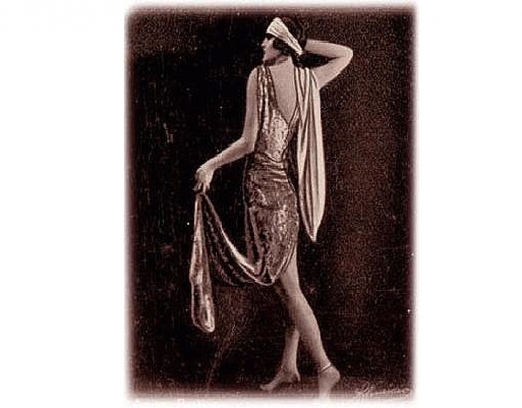
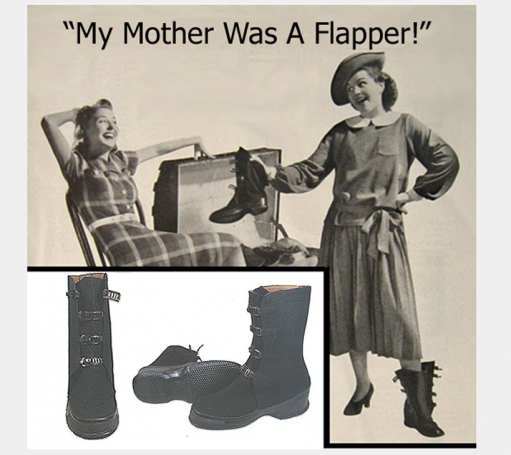
The attached column first appeared in Flapper Magazine and begins with three paragraphs outlining the ceaseless march of flappers throughout the centuries (Eve, Cleopatra, Madame Du Barry, etc…) and then dedicates the remaining three paragraphs to the various legal dust-ups flappers were causing throughout the fruited plane:


In Vinland, Kansas, a town of 400 inhabitants, [the rustics are up-in-arms because] Alice Hansen and Maude Buchanan, 16-year-old flappers, and daughters of farmers, are wearing skirts shorter than those that are in vogue among the high school pupils….it is now up to the highbrows of the Supreme Court of Kansas to decide the case and bring a satisfying verdict…All this criticism of flappers is bunk and should be treated lightly.

Advertisement

Use shortcode [oma_ad position="summary_top"] (or other position) in your theme or widgets to display OMA Promotions here.

'Is the Younger Generation in Peril?'' (Literary Digest, 1921)
1922, Flappers, The Literary Digest

The Case Against Flappers
(Literary Digest, 1922)

A collection of low opinions concerning the Flapper and her confederates, gathered from numerous clerical magazines throughout the fruited plane:

There is a great deal of frank talk among them that in many cases smacks of boldness. One hears it said that the girls are actually tempting the boys more than the boys do the girls, by their dress and conversation…

Flappers Were Nothing New (NY Times, 1922)
1922, Flappers

Flappers Were Nothing New
(NY Times, 1922)

Since the preceding article was jam-packed with intolerant remarks from the lip-service corner of the Holier-Than-Thou clerical crowd, it seemed only fitting that we post this article which dwelt upon the far more accepting and just a wee-bit more Christian feelings of yet another clergyman who tended to think that the flappers were not really as queer as everyone liked to think they were.

Painting faces is no new thing except on occasion. Belles and famous beauties of the past painted for State occasions. But then it was not good form to wear paint in daylight. Now it is, apparently. That many young women now carry this to extreme is not unusual…


Click here to read an article about the demise of a popular 1940s hairstyle.

N.Y. Court Ruled That Women Can Smoke in Public (Hearst's Sunday American, 1917)
1917, Flappers, Hearst's Sunday American

N.Y. Court Ruled That Women Can Smoke in Public
(Hearst’s Sunday American, 1917)

A brief notice from 1917 reported on the arrest of three women for smoking in the Times Square subway station in New York City.


When the socially astute, forward-thinking judge recognized that no real crime had been committed they were released, but in the high fashion world feminine tobacco abuse, these women are often said to be the Rosa Parks of nicotine:


Mary Driscoll, Edna Stanley and Elsie Peterson


let their names live ever more!

Advertisement

Use shortcode [oma_ad position="summary_top"] (or other position) in your theme or widgets to display OMA Promotions here.

Scroll to Top