Author name: editor

How to Escape from Communism | How to Escape the Iron Curtain
1967, Pageant Magazine, The Cold War

Escape from East Berlin
(Pageant Magazine, 1967)

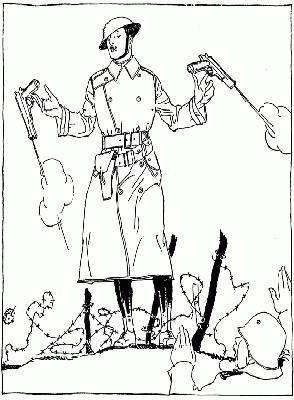
Lenin went to his grave believing that he had established a nation where a worker’s labor would be fairly compensated – a land free from want; but this was not the case. The Soviet Union, and all its assorted satellites, was in actuality, a police state where people longed to get away from all the free stuff that was offered – thousands of people successfully escaped while many others died trying. The countries he created were ones in which the word “escape” was frequently uttered.

1940, Click Magazine, Old New York History

A 1940s Tour of Manhattan
(Click Magazine, 1940)

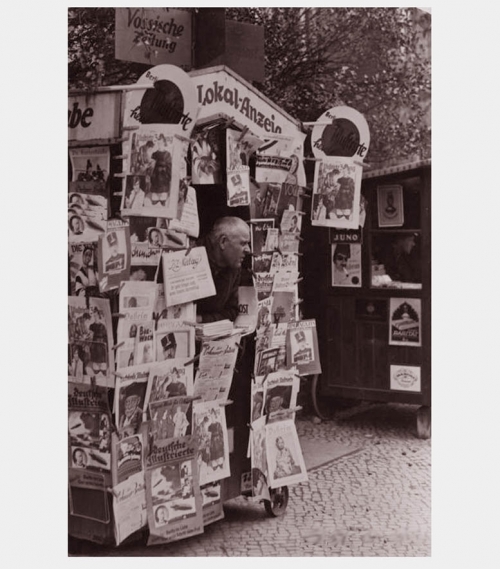
A black and white photo-essay of a New York that is gone with the wind, written in that wonderfully irreverent slang-heavy patois so reminiscent of the movies of that era. We posted this piece to please that New York archivist in all of you: you will see images of the watering holes preferred by the high and the low, the museums, Fifth Ave., Harlem, and the Fulton Fish Market.


Click here to see another 1930s photo-essay…

Advertisement

Use shortcode [oma_ad position="summary_top"] (or other position) in your theme or widgets to display OMA Promotions here.

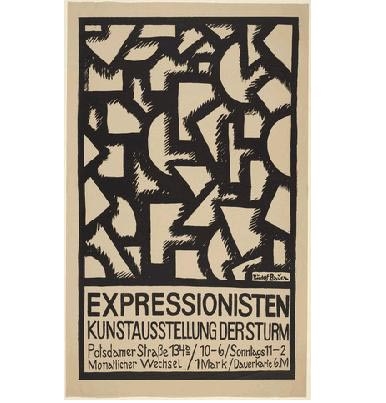
1919 New Objectivity Art Review | Berlin Secession Art Review 1919 | November Group Art Review 1919
1919, Current Opinion Magazine, Modern Art

The New Objectivity
(Current Opinion, 1919)

A review of the paintings and sculptures from the Weimer Republic and the manner in which that new art served to reflect the social upheaval that was taking place in Germany at that time. The article concerns itself primarily with one art exhibit in particular, the Spring Exhibition of the Berlin Secession (1919) and the two art factions who participated: there were the artists of Der Sturm a movement that existed prior to the war and a newer, post-war tribe; the November Group. Also displayed were the works of two painters who served in the Kaiser’s army and did not return; Franz Marc (1880-1916) and August Macke (1887-1914).

It is hoped by the German Expressionists and the artists of the New Objectivity that their art will serve as a tool for the destruction of Germany’s old order.


Click here to see a few trench war images by German Expressionist Otto Dix.

Click here to read about Expressionist woodcuts.


The New Objectivity held up a mirror to the political crises that was playing out all over Germany, click here to read about it…
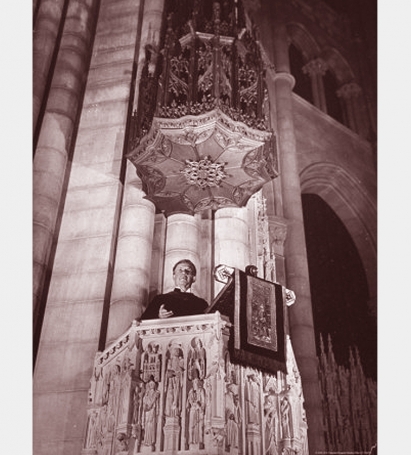
Dr. Fosdick's Brand of Liberation Theology (The Literary Digest, 1922)
1922, Faith, The Literary Digest

Dr. Fosdick’s Brand of Liberation Theology
(The Literary Digest, 1922)

Reverend Harry Emerson Fosdick (1878 – 1969) got some attention in the press when he preached that the work of saving of souls had much to do with man’s maintenance of a sound and just economic system here on the earth. Dr. Fosdick gained much of this understanding in the slums of New York City, in 1903, where he worked as a Baptist Minister.

In the twentieth century the greatest conflict in the world’s life is centered in economics. The most vital questions with which we deal are entangled with economic motives and institutions.

Click here to read further about Dr. Harry Emerson Fosdick..

Advertisement

Use shortcode [oma_ad position="summary_top"] (or other position) in your theme or widgets to display OMA Promotions here.

America Commits Itself to the War (Literary Digest, 1928)
1928, The Literary Digest, World War One

America Commits Itself to the War
(Literary Digest, 1928)

In writing a piece for La Revue Mondale ten years after the Armistice, StĂ©phane Lauzanne (1887 – 1928), Editor-in-Chief of the semi-official Paris Matin wrote a few bitter-sweet words about the American character and how it was both a hindrance and a benefit to the Allies in the war. Yet he was full of praise when he recalled the bold and forward-thinking manner in which America entered the war and committed both blood and treasure.


Click here to read an interview with the World War I American fighter pilot Eddy Rickenbacker.

French Insecurity in the Face of German Might (Literary Digest, 1913)
1913, Prelude, The Literary Digest

French Insecurity in the Face of German Might
(Literary Digest, 1913)

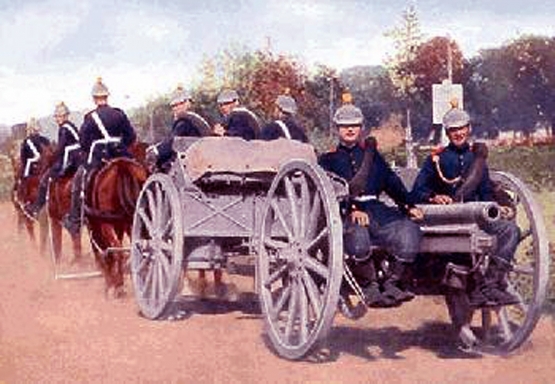
Attached is a 1913 article from an American magazine in which the journalist reported on a strong sense of insecurity experienced by France as a result of Imperial German military hubris. The reporter illustrated the point with various quotes from French papers of the day and in a similar vein, sites a number of German papers that express an arrogant contempt for France.

Advertisement

Use shortcode [oma_ad position="summary_top"] (or other position) in your theme or widgets to display OMA Promotions here.

Best-Dressed American Men of the 1930s | Fashionable Men of the 1930s
1930s Fashion, 1937, The Literary Digest

Colorful Menswear
(Literary Digest, 1937)

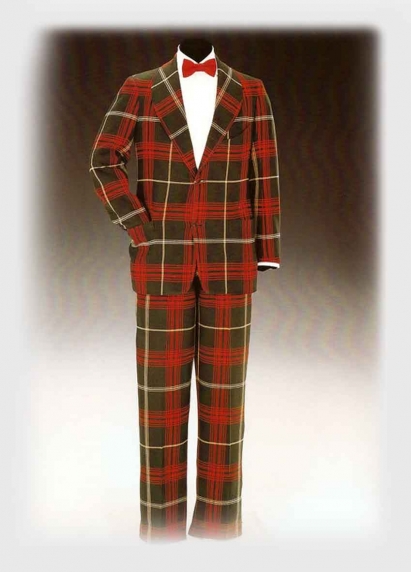
This 1937 fashion report let it be known that men’s fashions were getting more colorful; items that we associate with the Fifties such as plaid cummerbunds made their appearance first in 1937. The first clothing item to cross the color line was, in all probability, the Hawaiian shirt – which came into vogue some five years earlier.


Click here to read a related article from 1919.

WPA Scandal 1938 | Works Progress Administration Graft
1938, Pathfinder Magazine, WPA

Scandal
(Pathfinder Magazine, 1938)

The New Deal’s Works Progress Administration, with its millions of employees and billions of dollars in relief funds, has long been recognized as a potential cesspool of graft where the unscrupulous are concerned. Last week, in the fierce heat of the 1938 campaign’s closing days, the stench of scandal began to penetrate the WPA administrations of two states…

The W.P.A. Arts Projects Closed Due to Communist Tampering (Ken Magazine, 1939)
1939, Ken Magazine, WPA

The W.P.A. Arts Projects Closed Due to Communist Tampering
(Ken Magazine, 1939)

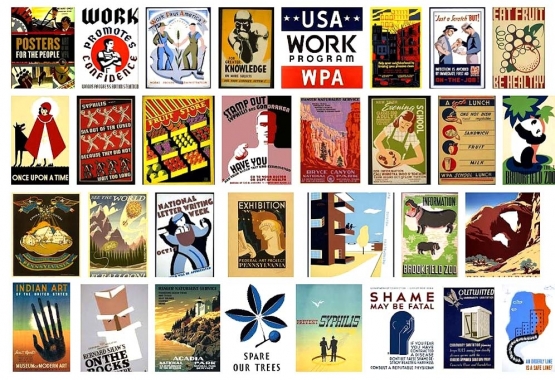
This 1939 magazine article addressed the matter of the communist organization Workers Alliance perverting the arts organizations that operated within the Federal Works Projects Administration (WPA), thus forcing the government agency to close:

When the arts projects of the WPA were instituted, many capable and culturally progressive individuals throughout the country hailed them as a banner raised against the gloomy depression sky to form a rallying point for youthful and ambitious artists whose task it was to carry the torch of aesthetic advancement on to that future time when we envisaged the return of ‘prosperity’…yet the obvious control of the arts projects by the communist party through its stooge, the Workers Alliance has forced the hand of Congress to abolish the agency.


CLICK HERE to read about African-Americans during the Great Depression.

Advertisement

Use shortcode [oma_ad position="summary_top"] (or other position) in your theme or widgets to display OMA Promotions here.

1938, Direction Magazine, WPA

Government Subsidized Art
(Direction Magazine, 1938)

This 1938 editorial by the artist Philip Evergood (1901 – 1973) stated that the Federal Arts Project of the Thirties had not simply made the lives of artists a little better, but had also created a far better society:

The Federal Arts Project has pointed the way to an American Culture. It has set a weight in motion, it has let loose a force that has affected hundreds of thousands of lives. It has made murals depicting the history of our country and the lives of our people have been placed on the walls of our schools, hospitals, libraries and public buildings making them of greater beauty and of greater community interest – monuments and small sculpture have been added in equal numbers, easel paintings and prints now hang in thousands on the walls of public buildings…

Evergood likened this government funding to the Renaissance, when the church served as the artist’s patron and culture flourished.

Brooks Brothers & Christmas 1917
1917, Magazine Advertisement, U.S. Army Uniforms of World War One

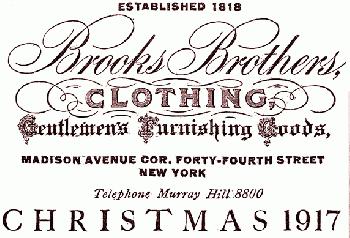
Brooks Brothers & Christmas 1917

During America’s short and costly participation in the First World War, a prominent New York clothing establishment, Brooks Brothers, did swift business making custom uniforms for both the Army and Navy.


As the following attachment will show, they also offered forty other items that were of use to both the officers as well as the ranks.


Click here to see a Vanity Fair editorial about Christmas gifts for Doughboys.

Hitler Was At Chateau Thierry? (Pathfinder Magazine, 1937)
1937, Chateau Thierry, Pathfinder Magazine

Hitler Was At Chateau Thierry?
(Pathfinder Magazine, 1937)

Having read a Hitler article that appeared in Pathfinder Magazine during the winter of 1937, a previously unknown German immigrant in New Jersey wrote to the editors and revealed that he had served with Hitler during the Battle of Chateau Thierry (May 31 – July 18, 1918). Perhaps the writer, Hans W. Thielborn, suffered some memory loss as a result of a head wound during the battle – but records show that the fight had been over for some ten days by the time the two interacted.

Advertisement

Use shortcode [oma_ad position="summary_top"] (or other position) in your theme or widgets to display OMA Promotions here.

A Glossary of WAC Slang (Collier's Magazine, 1944)
1944, Collier's Magazine, WACs

A Glossary of WAC Slang
(Collier’s Magazine, 1944)

Like other Army and Navy personnel, the members of the Women’s Army Corps have coined their own slanguage. If you hear a WAC say:

I’m off on an orchid hunt, kids – and no PFC. My night maneuvers are gonna be with a varsity crewman.


-you’ll know what she means after you’ve studied this [attached] glossary.

Advertisement

Use shortcode [oma_ad position="summary_top"] (or other position) in your theme or widgets to display OMA Promotions here.

Scroll to Top