Author name: editor

WW2 Japanese POW camp | ww2 Australian Prisoners of Japan
1945, POWs, Yank Magazine

Prisoners of the Japanese
(Yank Magazine, 1945)

An escaped Australian Private, having been rescued by a U.S. Navy submarine, recalls how life was in the hell of a Japanese jungle P.O.W. camp, where all Allied prisoners were forced to build a railroad for the Emperor:

‘I often sit and wonder what I’m doing here’ reflected Pvt. James L. Boulton of Melbourne, Australia. ‘By the law of averages I should have been dead two years ago, and yet here I am smoking Yank cigarettes, eating Yank food with Yank nurses taking care of me. When I was a PW in the jungles of Burma I never thought I’d survive the beatings and fevers and ulcers.’

Click here to read articles about post-war Japan.

Comprehending the Flapper Revolt (Vanity Fair, 1921)
1921, Flappers, Vanity Fair Hall of Fame

Comprehending the Flapper Revolt
(Vanity Fair, 1921)

In the early Twenties there were a good many social changes which men had to struggle to understand; among them was the Modern Woman. The Italian novelist and lexicographer Alfredo Panzini (1863 – 1939) attempted to do just that for the editors of Vanity Fair.

‘Don’t expect us’, she says to you, disconsolate male, ‘don’t expect us to be like the old-fashioned girls who went to church, and did the laundry, and looked up to their husbands as to their God.’

Advertisement

Use shortcode [oma_ad position="summary_top"] (or other position) in your theme or widgets to display OMA Promotions here.

Bushido and the Japanese Soldier | Shinto and the Japanese Military Tradions
1943, Coronet Magazine, Japanese Soldiers

Was He Brave?
(Coronet Magazine, 1943)

Before December 7, 1941, the average American regarded the Jap as a comical little fellow who bowed deeply from the waist and said, ‘So sorry.’…[and] as a fighting man, the Jap was obviously a joke. His army hadn’t been able to to lick poor old broken-down China in four years… This picture was destroyed forever by the bombs that fell on Pearl Harbor… But what makes the Jap so brave? Briefly, the Jap has two words for it. The first is Shinto and the second bushido,

Kamikaze Attacks (Yank Magazine, 1945)
1945, Kamikaze Attacks, Yank Magazine

Kamikaze Attacks
(Yank Magazine, 1945)

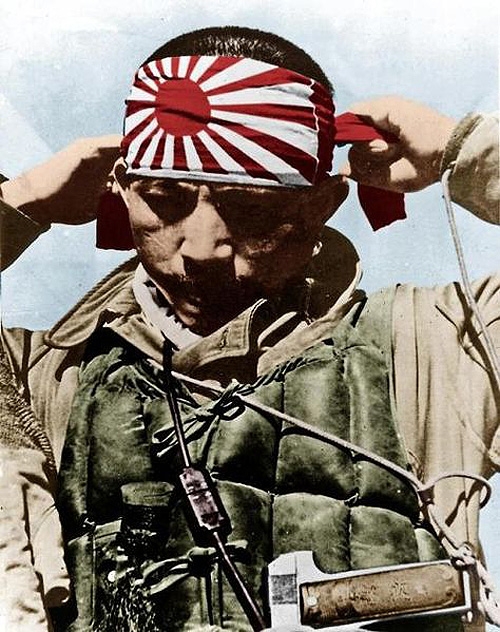
A two page magazine article about the U.S. Navy destroyer Newcombe (DD-586), a hard-charging ship that suffered heavy damage from repeated Kamikaze attacks off of Okinawa on April 6, 1945 (the Ryukyu Islands):

Then the plane shot past them, ripped through the gun mount and shattered itself against the after-stack. There was a blinding flash. The Newcombe shuddered and rolled heavily to starboard.

Advertisement

Use shortcode [oma_ad position="summary_top"] (or other position) in your theme or widgets to display OMA Promotions here.

Munchkin Gossip (Stage Magazine, 1939)
1939, Hollywood History, Stage Magazine

Munchkin Gossip
(Stage Magazine, 1939)

From the Hot From Hollywood page in STAGE MAGAZINE came this tidbit reporting on the curious events taking place on the sets of ‘The Wizard of Oz’:

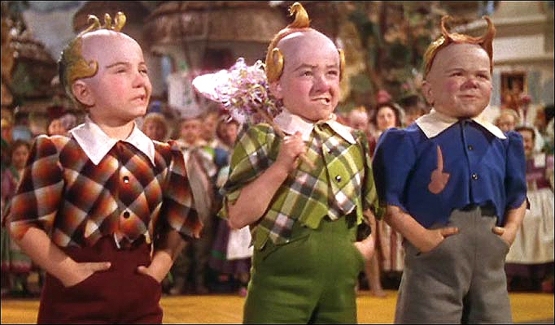
The cast was extraordinary, from the stars Frank Morgan, Judy Garland, Ray Bolger, Bert Lahr, Jack Haley to Toto, the Carin Terrier. But of them all, the most utterly enchanting were the midgets, two hundred and twenty-five of them, with their doll faces, their plastered hair that looked as though it had been painted on their heads, the little felt flowers that grew out of their shoes, the bells that jingled from their sleeves. They, of course, were in costume for the good little Munchkins.


Another article about this incredible film can be read here…

Small Unit Tactics of the Japanese Army | USMC Reaction to Japanese Banzai Charges | WW II Japanese Battle Cries
1945, Japanese Soldiers, The American Magazine

Engaging The Japanese Soldier
(The American Magazine, 1945)

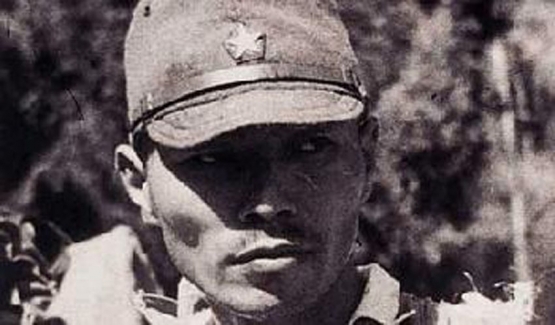
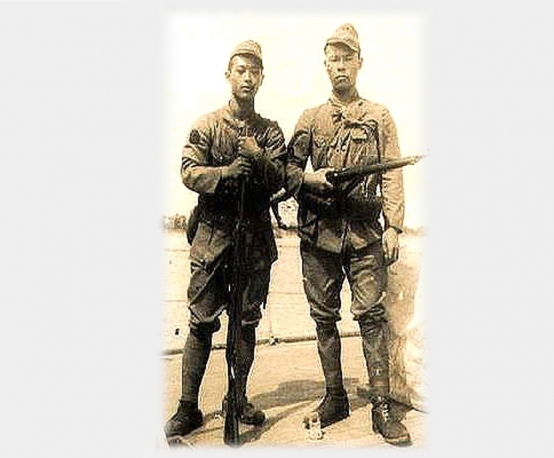
Wherever they have fought in this war, the Japs have shown an amazing aptitude for the queer and fantastic. They have staged solemn funeral processions in the midst of hot battle. They have blown themselves to bits with hand grenades, have stabbed themselves with daggers, sabers, bayonets and even with scythes. They plunged forward in stupidly blind Banzai charges. They have danced wildly atop ridges while exposed to American fire. And they have directed artillery action while lounging in hammocks.

The Japanese Soldier In China (Literary Digest, 1933)
1933, Japanese Soldiers, The Literary Digest

The Japanese Soldier In China
(Literary Digest, 1933)

An article that seems remarkable for lacking those politically correct qualities we’re all so used to reading in today’s magazine columns, this article presents a somewhat slanted, pro-Western vision of the Japanese Army, depicting it as an organized and highly disciplined peasant army:

Some of the finest raw material in the world makes up Japan’s infantry…The material is not so adaptable for horsed and mechanized units, as the Japanese possess little natural aptitude for dealing with animals or machines.

Some attention is paid to the strict diet of the Japanese soldier.

Advertisement

Use shortcode [oma_ad position="summary_top"] (or other position) in your theme or widgets to display OMA Promotions here.

Surfing: The New Thing (Click Magazine, 1941)
1941, Click Magazine, Miscellaneous

Surfing: The New Thing
(Click Magazine, 1941)

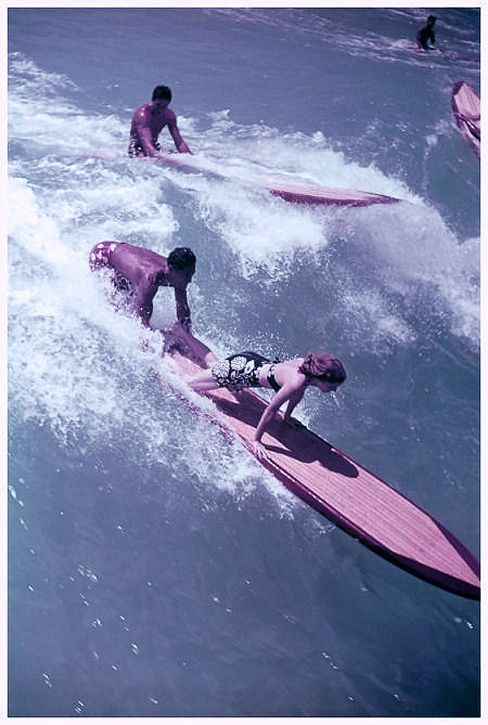
When you examine the 14 images in the attached article about California surfing in the Forties you’re quite likely to come away believing that the stale surfing comedy Beach Blanket Bingostyle=border:none was actually intended to be an anthropological documentary depicting a long lost Anglo-Saxon culture. Minus the bikinis, Frankie and Annette the pictures seem like production stills from the MGM archive; long boards do indeed rule, silly hats are evident and you might be surprised to see that bongo-drums were indeed pounded at the prerequisite evening bonfire, as well.
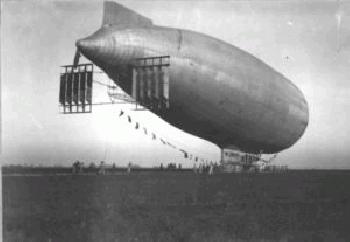
Enrico Forlanini and His Dirigible (New York Times, 1918)
1918, The New York Times, Zeppelins and Dirigibles

Enrico Forlanini and His Dirigible
(New York Times, 1918)

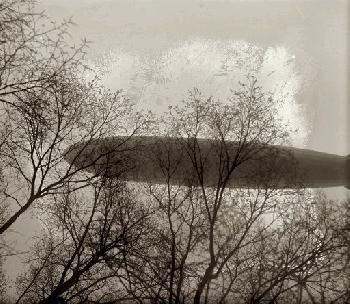
A New York Times photograph and report on the military dirigible designed by Italian Senator Enrico Forlanini (1848 – 1930). A concise account of the differences between Forlanini’s dirigible and the German Zeppelin are listed as well as the speed, altitude and various offensive capabilities. Enrico Forlanini is is best remembered today for his ground breaking work on steam-powered helicopters, hydrofoils and various other aircrafts, such as his 1909 dirigible, Leonardo Da Vinci.

The Loss of the Macon and It's Aftermath (Literary Digest, 1935)
1935, The Literary Digest, Zeppelins and Dirigibles

The Loss of the Macon and It’s Aftermath
(Literary Digest, 1935)

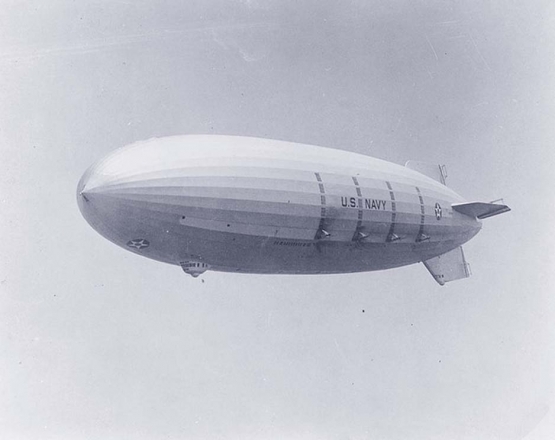
Just before dark, the $2,450,000 Macon had lurched crazily and inexplicably skyward, then had settled stern first into the sea. All but the chief radio operator and a Filipino mess-boy among the eighty-three officers and men aboard had taken to rubber life boats and had been picked up by war ships on Maneuvers.

All Congress needs to do is announce its refusal to condemn more American seamen to death; to declare that no more funds of American taxpayers will be squandered on these useless gas-bags.


Click here to read about a much admired American aviator who was attracted to the fascist way of thinking…

Advertisement

Use shortcode [oma_ad position="summary_top"] (or other position) in your theme or widgets to display OMA Promotions here.

The Destruction of the Shenandoah (Coronet Magazine, 1949)
1949, Coronet Magazine, Zeppelins and Dirigibles

The Destruction of the Shenandoah
(Coronet Magazine, 1949)

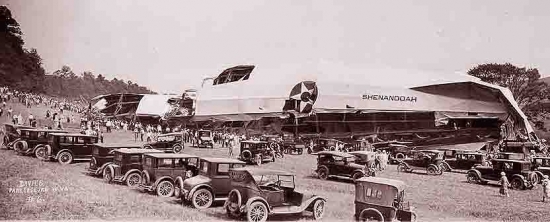
Pieced together from the captain’s log as well as various first-hand observations that were called to mind by the 29 surviving crew members, this article presents a blow-by-blow account as to how the U.S. Navy dirigible Shenandoah was overwhelmed by turbulent winds over Eastern Ohio and torn in two.

As they climbed into the hull, the ship began spinning counter-clockwise on its keel, then lifted its nose and shot upward. Girders groaned and wires snapped. Then came a crunching, sickening roar as the girders parted. The ship had broken in two. Another rending crash and the control car plunged earthwards, carrying Lt. Commander Landsdowne and seven other men to their death.

Design of the Zeppelin Airship Hindenburg | Dirigible Hindenburg Magazine Articles
1937, Creative Art Magazine, Zeppelins and Dirigibles

The Interior Design of the Hindenburg’
(Creative Art Magazine, 1937)

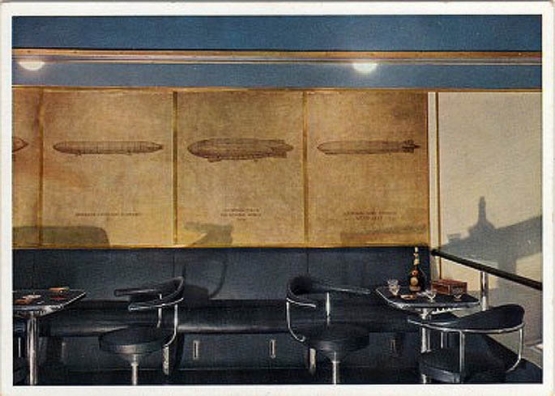
This article from a 1937 issue of The Magazine of Art addressed the over-all aesthetic appeal of the Hindenburg’ . Written by Blanche Naylor, no stranger to all matters involving industrial design of the Thirties and Forties, the article goes into some detail as to the color scheme, upholstery, paintings and the names of the assorted German designers responsible for the beauty of the air-ship. The article is accompanied by seven photographs and one diagram of the public rooms accessible to the Hindenburg’ passenger’s.

Advertisement

Use shortcode [oma_ad position="summary_top"] (or other position) in your theme or widgets to display OMA Promotions here.

The Forgotten Child (Literary Digest, 1935)
1935, The Great Depression, The Literary Digest

The Forgotten Child
(Literary Digest, 1935)

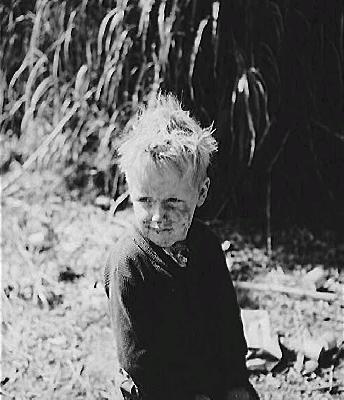
This magazine article from 1935 documented the Federal aid that was made available for America’s poorest children. The malnutrition visited upon the boys of America’s indigent would render some of them unfit for military service in World War II.

With nearly one-sixth of the nation’s child population in families dependent upon emergency relief, welfare agencies call for a solution of their grave problem.

The problem was laid before the recent National Conference on the 1935 Needs of Children held under the auspices of The Parent’s Magazine in New York City. Before them Katherine F. Lenroot, Chief of the United States Children’s Bureau, made one of her first public appearances since taking office:

…These children have a right to expect that Federal, State, and community relief policies of 1935 will provide more adequately for essential items in the family budget.


Another article about children of the Great Depression can be read here…

Doctors During the Great Depression | 1930s American Medical Professionals
1932, Pathfinder Magazine, The Great Depression

When the Depression Caught Up With Doctors
(Pathfinder Magazine, 1932)

Some people have maintained that doctors weren’t hit so hard by the economic slump. The claim was that people couldn’t help getting sick and their misfortune was the doctor’s gravy. But the Committee on the Cost of Medical Care, a non-governmental committee, of which Secretary Wilbur is chairman, reports a rapid decline in the income of doctors during the Depression… In 1930, the first [full] year of the Depression, physician’s incomes decreased 17% and they have been decreasing ever since.


The author also included some other elements gleaned by the committee – such as the average sum paid by the families in their study, the approximate cost of the nation’s medical bills and an approximation concerning the number of medical professionals at work in 1931.


During the Depression, many doctors and nurses worked entirely for free; to read about that, click here…

McCarthy and the 1952 Presidential Election (Quick Magazine, 1952)
1952, Quick Magazine, The Cold War

McCarthy and the 1952 Presidential Election
(Quick Magazine, 1952)

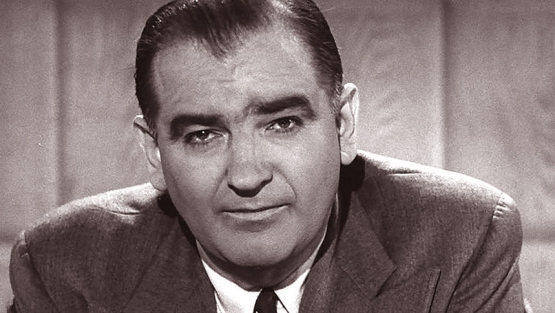
A small notice from the closing weeks of the 1952 presidential contest between retired General Eisenhower (R) vs former Governor Adlai Stevenson (D) in which Senator Joseph McCarthy stepped forth to muddy the waters with one of his characteristic insults:

McCarthy charged Stevenson was ‘part and parcel of the Acheson-Hiss-Lattimore group’ and that Stevenson in 1943 (as a State Department official) had a plan to ‘foist Communism’ on Italy when Mussolini fell.


Whether the comment convinced anyone was not recorded, but Eisenhower won the 1952 election by a wide margin, as did all Republican candidates.

Advertisement

Use shortcode [oma_ad position="summary_top"] (or other position) in your theme or widgets to display OMA Promotions here.

Scroll to Top