Author name: editor

US navy Sailor uniform history
1917, Miscellaneous, The Literary Digest

The American Sailor Uniform: An Explanation
(The Literary Digest, 1917)

When watching the old newsreel footage from the two world wars you see a fair amount of American sailors going about their business. They wore a uniform that seemed to have its origins in the Nineteenth Century, with bell bottom trousers and an odd shirt called a jumper. The blue jumper of an American sailor is decorated with various white stripes, stars and topped off with a queer little black silk kerchief; this article seeks to explain what the origins behind them all were largely British.

Canadian Movie Star Mary Pickford | Silent Film Star Mary Pickford | Mary Pickford Magazine Interview
1918, Current Opinion Magazine, Douglas Fairbanks & Mary Pickford

An Interview With Mary Pickford
(Current Opinion, 1918)

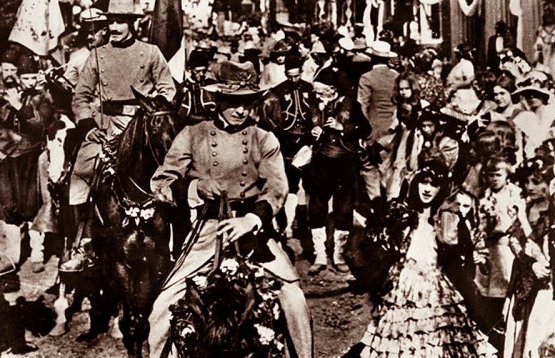
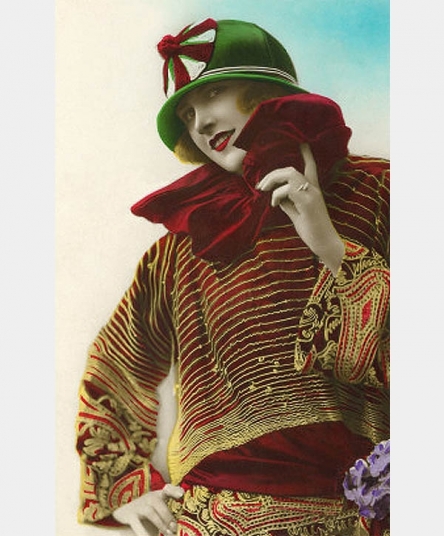
When this two page profile appeared in print Pickford was world famous, married to the handsomest actor in Hollywood, adored by all – she could do no wrong. Just fourteen years later, the respected New York playwright Clara Boothe Brokaw would ridicule her in the pages of Vanity Fair (August, 1932: p. 18) as a sad symbol representing a vulgar era.
As if that wasn’t bad enough, today few people know who she was – although she does get twice as many Google searches than Lillian Gish (but whose counting).


Amazon offers a PBS salute to the actress on a DVD that is strangely titled Mary Pickfordstyle=border:none.

Advertisement

Use shortcode [oma_ad position="summary_top"] (or other position) in your theme or widgets to display OMA Promotions here.

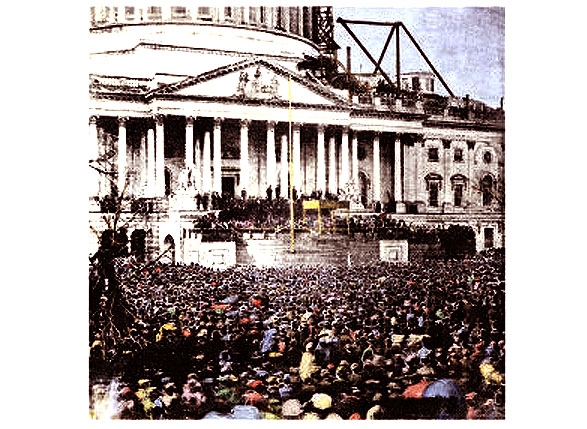
The Two Lincoln Inaugurations (Inaugural Program, 1949)
1949, Abraham Lincoln, Inaugural Program

The Two Lincoln Inaugurations
(Inaugural Program, 1949)

Callously torn from the binding of the 1949 inaugural program were these pithy paragraphs describing the somber moods of both Lincoln inaugurals. The anonymous author noted that

when Lincoln delivered his Inaugural Address, four future Presidents of the United States stood on the platform near him: Hayes, Garfield, Arthur and Benjamin Harrison.


To read the text of Lincoln’s Second Inaugural Address, click here .
Advertisement

Use shortcode [oma_ad position="summary_top"] (or other position) in your theme or widgets to display OMA Promotions here.

U.S. Presidential Trivia Quiz
Americana

U.S. Presidential Trivia Quiz

A printable trivia test of odd presidential facts regarding the assorted chief executives who have governed the United States at one time or another. Assembled herein is a list of real zingers that will put to the test your knowledge of U.S. history; do you know:


• Who the shortest president was?


• Which president first predicted a one-world government?


• Which president was the greatest student of the Bible?


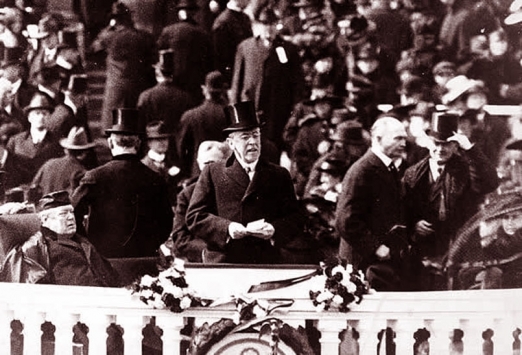
• Which president kissed 34 little girls at his Inaugural parade?


(HINT: It wasn’t Clinton)

Charles Lindbergh America First Committee | Charles Lindbergh Nazi Sympathies | Charles Lindbergh and the Nazis
1952, Charles Lindbergh, Pageant Magazine

Unpopular Charles Lindbergh
(Pageant Magazine,1952)

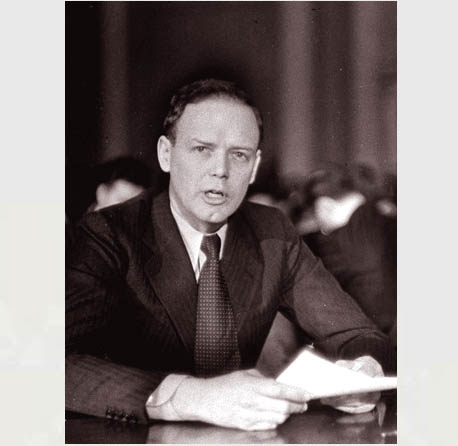
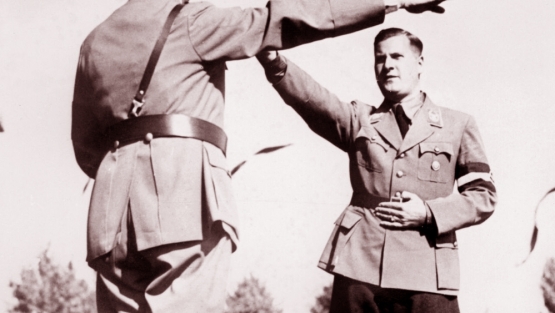
Written twenty years after the event, this article recalls that period when the Lindberghs returned to America after living in Europe for three years. While abroad, Americans were disturbed to read in the press that he chose to keep company with the Fascists of Germany and Italy; after a while American editors found his behavior so unimpressive, they chose not to write about him any longer. Upon his return, prior to the World War II, Lindbergh joined an isolationist movement called the America First Committee. It was at these functions when he began to make assorted racist comments in his speeches – remarks that the press corps could no longer ignore.

Advertisement

Use shortcode [oma_ad position="summary_top"] (or other position) in your theme or widgets to display OMA Promotions here.

Lenin, Rockefeller and Diego Rivera (The Literay Digest, 1933)
1933, Modern Art

Lenin, Rockefeller and Diego Rivera
(The Literay Digest, 1933)

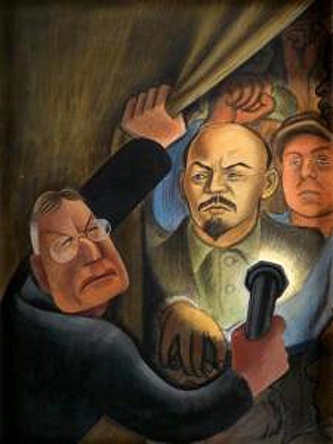
When it was made known to Nelson Rockefeller that the muralist he retained to decorate the lobby of his New York Building (Rockefeller Plaza) had taken the liberty of painting the likeness of Lenin in the work, letters were exchanged between the two men. The attached column is an excerpt from a longer piece that pertains to the dust-up.

WW I Unknown Soldier as Modern Icon 1927 | Common Man Modernist Icon 1927 | WW I Unknown Soldier Magazine Article
1927, Cemeteries, The Atlantic Monthly

The Unknown Soldier
(The Atlantic Monthly, 1927)

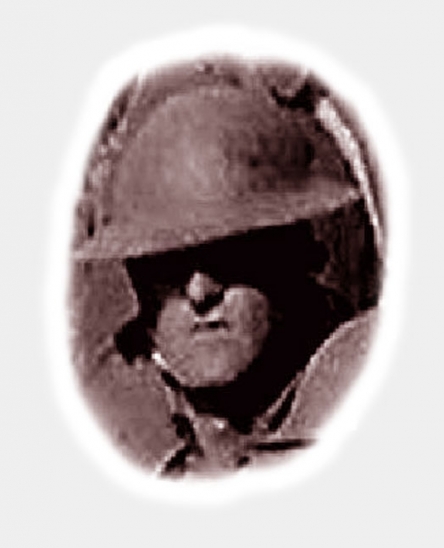
Ten years after Congress decided to enter the war in Europe, James Truslow Adams (1878 – 1949) wrote this article that appeared in The Atlantic Monthly in which he noted that one of the maladies of the modern era was the creation of a new type of collective thinking that celebrated the common man:

Man has always delighted to honor the great…But now for the first time whole nations, and those the most enlightened, have come to honor the man of whom we know nothing: the Unknown Soldier. As a matter of unfortunate fact, the particular body may be that of one who fought the draft to the last ditch and was a slacker in service. That, however, is of course wholly irrelevant; for it is not really the Unknown Soldier who thus receives the almost religious adoration of his people, but the Common Man, for that is what he is intending to typify…

Woman Martial Arts Instructor Fort Hancock New Jersey | Woman Martial Arts Instructor Fort Monmouth New Jersey | Judo in American Military Training
1943, The American Magazine, Women (WWII)

Badass
(The American Magazine, 1943)

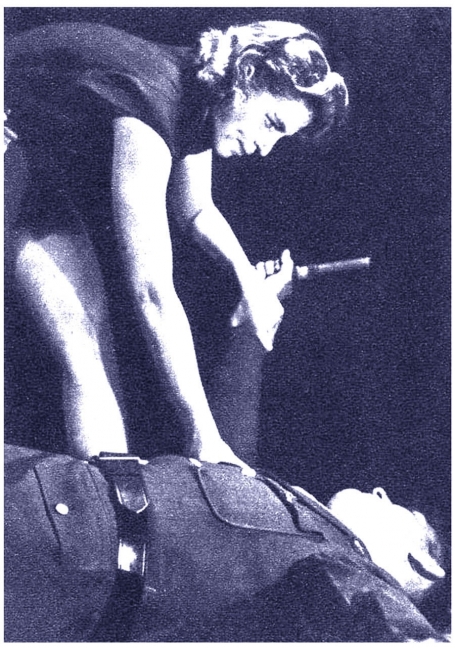
For those who survived it, the Second World War changed many lives – some for better, some for worse. Gale Volchok was rescued from a dreary job in New York retail and delivered to the proving grounds of two different infantry training camps in New Jersey. It was under her watchful eye that thousands of American soldiers learned to throw their enemies into the dirt and generally defend them selves.

Advertisement

Use shortcode [oma_ad position="summary_top"] (or other position) in your theme or widgets to display OMA Promotions here.

Trench French (Soldier's French Course, 1916)
1916, Soldier's French Course

Trench French
(Soldier’s French Course, 1916)

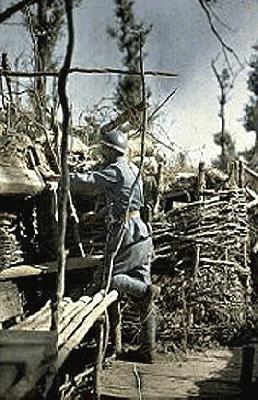
Here is a collection of French phrases and military vocabulary terms uttered in the combat zones of W.W. I. Translated expressions include the standard commands as well as such bon mots as shell the fort, the walls are shattered, the place is evacuated and for all those World War Two re-enactors, Retreat!.


Click here to read about a case of French Friendly-Fire…

Advertisement

Use shortcode [oma_ad position="summary_top"] (or other position) in your theme or widgets to display OMA Promotions here.

1943 Turning Point in WW II | WW2 Turning Point 1943 | 1943 the Year Everything Changed in WW II
1943, Newsweek, World War Two

1943: The Year Everything Changed for the Allies
(Newsweek Magazine, 1943)

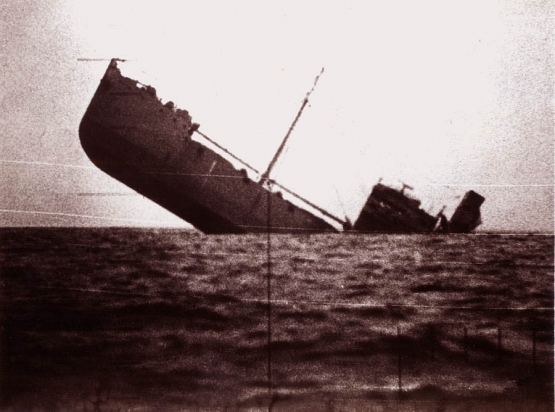
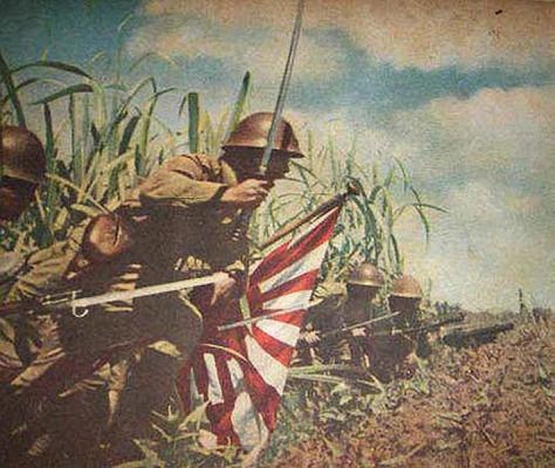
By the Autumn of 1943 it was becoming apparent to both parties that the Allies were coming into their own. The Axis was discovering to their surprise that they were not the only ones who knew how to fight – they’d been routed from North Africa, creamed at Stalingrad and bloodied at the Bismarck Sea:

On every front in this global war Axis strategy is definitely on the defensive.


Similar articles can be read here and here…


One year later, this article would appear…

Americans Tell of Japanese Prison Camps (Yank Magazine, 1945)
1945, POWs, Yank Magazine

Americans Tell of Japanese Prison Camps
(Yank Magazine, 1945)

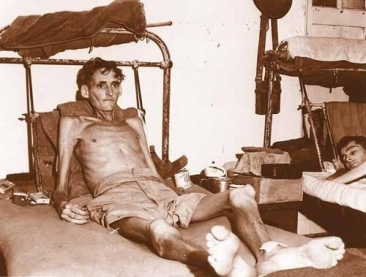
A well illustrated magazine article which relays the tale of two Marines who were captured at the fall of Corregidor in 1941 and spent the remainder of the war in a Japanese prisoner of war camp on the island of Honshu, Japan. The two men told Yank correspondent Bill Lindau all about their various hardships and the atrocities they witnessed as well as the manner in which their lot improved when their guards were told that Japan had surrendered.


Click here to read an article about the American POW experience during the Korean War.

Click here if you would like to read about a World War One German P.O.W. camp.

CABANATUAN PRISON CAMP magazine article 1945 | WW2 Japanese POW Camp Escape
1945, POWs, Yank Magazine

The Japanese Prison Camp at Cabanatuan
(Yank Magazine, 1945)

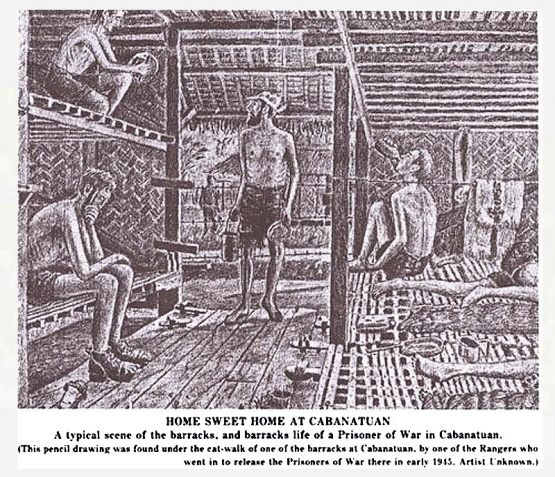
Here is an interview with the American P.O.W.s who were strong enough to survive the abuses at the Japanese Prison Camp at Cabanatuan (Luzon, Philippines).These men were the survivors of the infamous Bataan Death March:

You were on the Death March? somebody asked him.

Is that what they call it?…Yes, we walked to Capas, about 65 miles. Three days and three nights without food, only such water as we could sneak out of the ditches. We were loaded into steel boxcars at Campas, 100 men to a car – they jammed us in with rifle butts…

The rescue of these men by the 6th Ranger Battalion (U.S. Army) was dramatized in a 2005 television production titled The Great Raid.

Click here if you would like to read more about the 6th Rangers and the liberation of the Cabanatuan P.O.W. camp.

Advertisement

Use shortcode [oma_ad position="summary_top"] (or other position) in your theme or widgets to display OMA Promotions here.

Scroll to Top