





































47 Magazine Articles
Click Magazine Articles
Collier's Magazine Articles
Confederate Veteran Magazine Articles
Confidential Magazine Articles
Creative Art Magazine Articles
Current Literature Magazine Articles
Direction Magazine Articles
Film Daily Magazine Articles
Freedom's Triumph Articles
G.I. Joe Magazine Articles
Harper's Bazaar Magazine Articles
Harper's Weekly Articles
Hearst's Sunday American Articles
Ken Magazine Articles
La Baionnette Articles
Leslie's Magazine Articles
Liberty Magazine Articles
Life Magazine Articles
Men's Wear Magazine Articles
Newsweek Articles
Outing Magazine Articles
Outlook Magazine Articles
People Today Magazine Articles
Photoplay Magazine Articles
Pic Magazine Articles
PM Tabloid Articles
Punch Magazine Articles
Rob Wagner's Script Magazine Articles
Scribner's Magazine Articles
Sea Power Magazine Articles
Stage Magazine Articles
The American Legion Monthly Articles
The American Legion Weekly Articles
The Atlantic Monthly Articles
The Dial Magazine Articles
The Film Spectator Magazine Articles
The Flapper Magazine Articles
The National Park Service Articles
The New Republic Articles
The New York Times Articles
The North American Review Articles
The Saturday Evening Post Articles
The Saturday Review Articles
The Smart Set Articles
Theatre Arts Magazine Articles
Touchstone Magazine Articles
Trench Warfare Articles
Vanity Fair Magazine Articles
Vogue Magazine Articles

Inventions and Weapons

The French
Renault Tank

• Freedom's Triumph, 1919 •


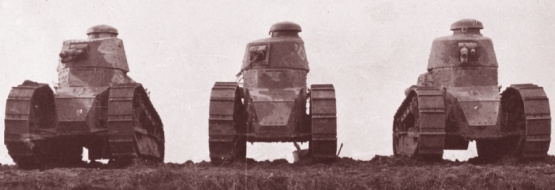
The W.W. I French Renault tank first appeared on the Western Front in 1918; it had a crew of two, measured 13 feet in length and weighed 6.5 tons. The tank’s 35 hp. engine moved it along at a top speed of 6 mph. The factory options were few: one turret was fashioned to accommodate a 37mm gun while the other was made for a machine gun. The American Army placed 227 of these tanks in the field; the American Renaults were differed distinctly from those commanded by the French: the American version sported an octagonal turret (as opposed to a circular one) and steel wheels (the French Army preferred wood).

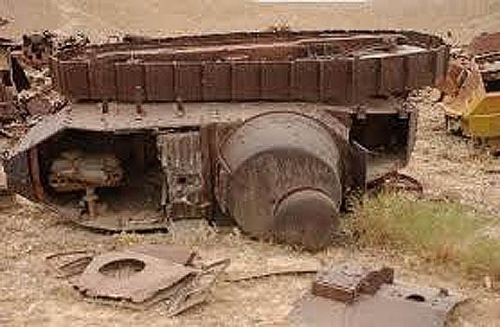
In 2003 two FT17 Renault tanks were found rusting away in an Afghan junk yard (below) – whereupon the two were quickly whisked away for restoration and exhibition at the Patton Tank Museum in Kentucky; it was believed that the armor was given to the White Russians by the French after Armistice Day in order to keep the Bolsheviks in check (it didn’t work). More on this topic can be read HERE.
If you wish to read about the only German tank of World War I, click here.

Read about the Patton tank in Korea…

Read A Diagram of the French Renault Tank<br>(Freedom’s Triumph, 1919) for Free
World War One Tank articleWW1 American Tank Corps articleWW! Tank History articleArticle About Renault Tank in AEFPicture of Renault light TankWW1 Tanks in American ArmyWW1 Light Renault Tank 1918WW1 French Tank sold to US ARMYWW1 Armored Warfare 1918WW1 Renault Tank InformationHow Fast Could a WW1 French Renault Tank TravelHow Many Men in Renault TankWW1 Renault Tank Crew info

The French [br]Renault Tank

World War One Tank articleWW1 American Tank Corps articleWW! Tank History articleArticle About Renault Tank in AEFPicture of Renault light TankWW1 Tanks in American ArmyWW1 Light Renault Tank 1918WW1 French Tank sold to US ARMYWW1 Armored Warfare 1918WW1 Renault Tank InformationHow Fast Could a WW1 French Renault Tank TravelHow Many Men in Renault TankWW1 Renault Tank Crew info
Scroll to Top