Author name: editor

Failed Vietnam War Strategy | Why Did the U.S. Lose the Vietnam War
1967, American Opinion, The Vietnam War

‘While Brave Men Die”
(American Opinion, 1967)

One terrible and overwhelming fact must be faced: Our soldiers and our pilots are being maimed and killed fighting a war that they are not being allowed to win. The Johnson Administration is not keeping faith with the men who must fight this war, with the half-million super-patriots, the half-million anti-Communists, who are fighting and dying in action against the forces of the International Communist Conspiracy.

Advertisement

Use shortcode [oma_ad position="summary_top"] (or other position) in your theme or widgets to display OMA Promotions here.

KKK in US Politics | KKK in Oregon Politics 1922 | KKK in Texas State Politics
1922, Ku Klux Klan, The Literary Digest

The KKK Influence on U.S. Politics
(The Literary Digest, 1922)

Attached is a 1922 report from THE LITERARY DIGEST regarding how remarkably close two KKK candidates for governor came to winning their respective state primaries. The two political contests in question, Oregon and Texas, caught national attention and became popular subjects for concern across the United States:

The closeness of the vote ought to be a warning…If the Ku Klux Klan insists on entering politics, good citizens must show it the way out.

The Birth of the KKK (Coronet Magazine, 1946)
1946, Coronet Magazine, Ku Klux Klan

The Birth of the KKK
(Coronet Magazine, 1946)

A brief account outlining the post-Civil War origins of the KKK:

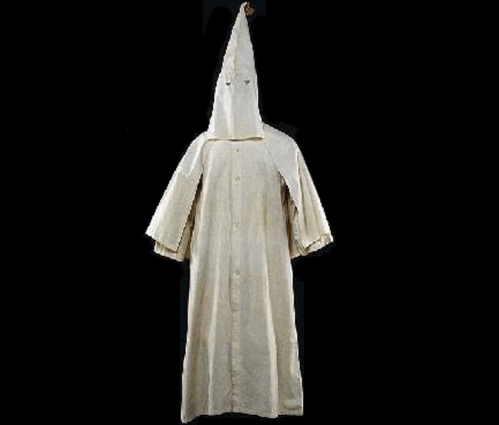
The original Ku Klux Klan began in 1865 as a social club of young men in Pulaski, Tennessee. Its ghostly uniform and rituals frightened superstitious Negroes; and when Klansmen discovered this fact accidentally, they lost little time in recruiting membership to 55,000.


During the Thirties and early Forties there was a link between the Bund and the KKK: click here to read about him.

Advertisement

Use shortcode [oma_ad position="summary_top"] (or other position) in your theme or widgets to display OMA Promotions here.

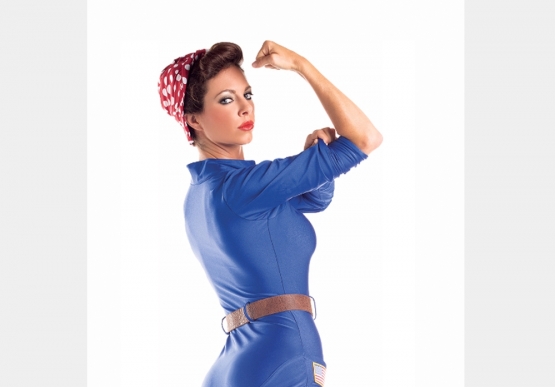
Women War Workers at Vultee Aircraft Plants | Rosie the Riveter at Vultee Aircraft Factory | Employment of Women Increases with War Jobs 1942
1942, The American Magazine, Women (WWII)

Women Working for the War
(The American Magazine, 1942)

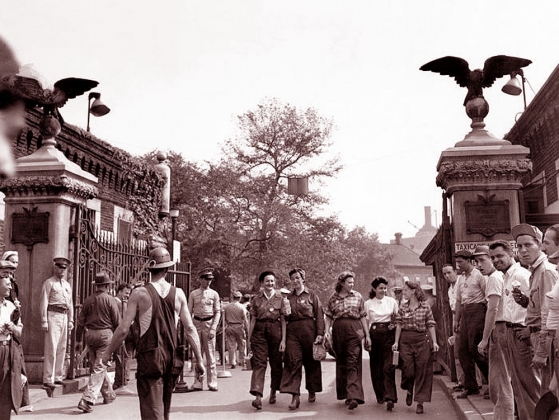
Here is an account by one reporter of his visit to an American aircraft factory early in the war. His article concerns the novelty of female laborers:

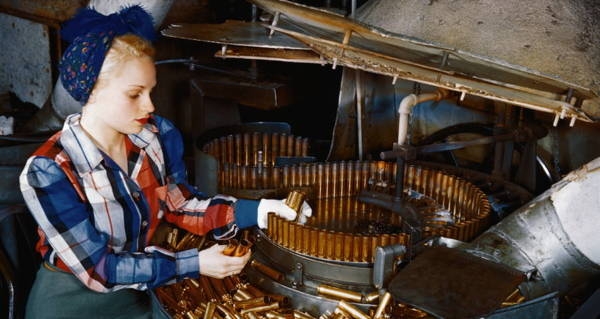
We climbed to a catwalk in the rafters and looked down on one of the most fascinating factories on earth. It was gay as a flower garden. Women in bright blouses and slacks were everywhere, doing everything. Blondes and brunettes and redheads and – well , middle-aged ones. Mostly pretty. And every one eagerly intent upon her job.


1943 Fight to End Industrial Absenteeism in War Plants | Jeannine Christiansen No Work No Woo movement 1943 | Albina Engine and Machine Works shipyard Portland Oregon
1943, Collier's Magazine, Women (WWII)

No Work, No Nooky
(Collier’s Magazine, 1943)

In an effort to put an end to worker absenteeism at defense plants, a fetching welder at the Albina Engine & Machine Works shipyard (Portland, Oregon), Jeannine Christiansen unhatched a sure-footed scheme to do just that. Recognizing that (most) men don’t find life worth living without rubbing noses with the females of the species, Miss Christiansen instituted the NO WORK NO WOO movement (I think you can guess what Woo means). The attached report states that it was effective and spread to other factories along the West Coast.

Advertisement

Use shortcode [oma_ad position="summary_top"] (or other position) in your theme or widgets to display OMA Promotions here.

Rampant Inflation in Post-War Germany (Click Magazine, 1944)
1944, Aftermath (WWI), Click Magazine

Rampant Inflation in Post-War Germany
(Click Magazine, 1944)

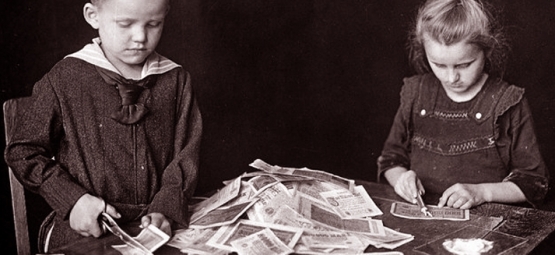
Author and radio commentator Emil Ludwig (1881 – 1948) recalled the economic catastrophe that devastated post-World War I Germany as a result of their inflated currency:

Inflation in Germany really started on the first day of the war in 1914 when the government voted a credit of five billion marks. This was not a loan…I saw the mark, the German monetary unit corresponding to the British shilling or the American quarter, tumble down and down until you paid as much for a loaf of bread as you would have paid for a limousine before inflation started.

Advertisement

Use shortcode [oma_ad position="summary_top"] (or other position) in your theme or widgets to display OMA Promotions here.

Anti-Asian Riots (Harper's Weekly, 1907)
1907, Canadian Immigration, Harper's Weekly

Anti-Asian Riots
(Harper’s Weekly, 1907)

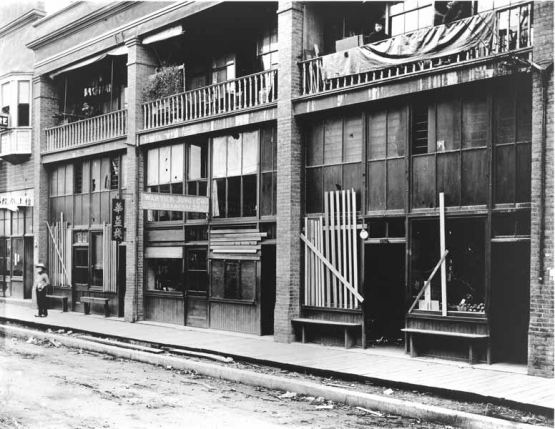
The cheap yellow and brown men have driven out the Whites and Indians from the salmon fisheries and canneries, the farms and the mines.


– So reported the the Harper’s Weekly correspondent in the attached article that documented the 1907 anti-Asian race riots in Vancouver, British Columbia. Having visited San Francisco some time earlier, the journalist mused that similar mob-violence will result in the American West if the Federal Government does not take steps to soothe the racial tensions in some manner.

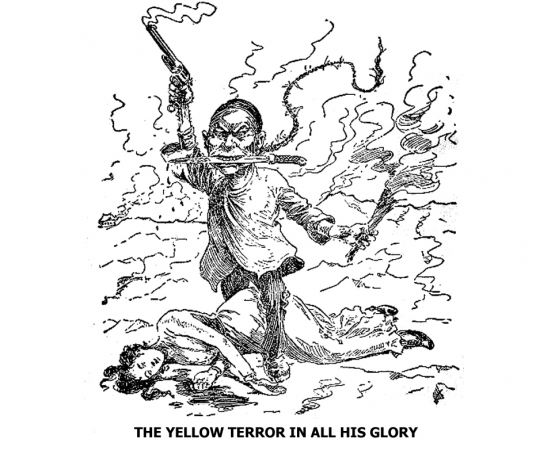
The Yellow Peril in Vancouver (Review of Reviews, 1910)
1910, Canadian Immigration, The American Review of Reviews

The Yellow Peril in Vancouver
(Review of Reviews, 1910)

The Canadians of British Columbia were just as uncomfortable with Asian immigration as their American neighbors on the west coast. This article discusses the Canadian Prime Minister, at the time, Sir Wilfred Laurier, and what he planned to do about Asiatic immigration, such as placing a head tax on each Asian who migrated. The growth of the Indian Hindu population along the Canadian West Coast is also mentioned

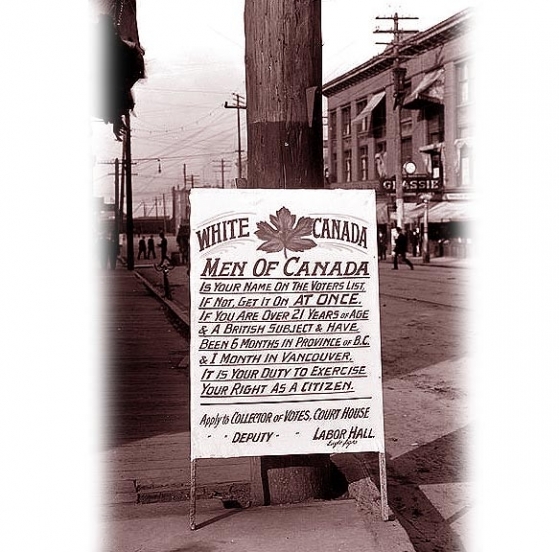
Race Riots in Vancouver (Harper's Weekly, 1907)
1907, Canadian Immigration, Harper's Weekly

Race Riots
in Vancouver
(Harper’s Weekly, 1907)

A Harper’s Weekly correspondent filed the attached report that served as an eye-witness account of the 1907 anti-Asian riots that flared up in the Canadian city of Vancouver, British Columbia. The riot triggered countless acts of violence and arson targeting the Asian communities of that western city. The widespread Asian migration to the Dominion of Canada was a result of the diplomatic agreements between Japan and Great Britain (Anglo-Japanese Alliance, 1902–1922) resulting in a tremendous amount of racist tension among Canadian Whites.


Today, the surname Li is the most common last name in Canada.


Click here to read about the Japanese-American internment camps of W.W. II.

Advertisement

Use shortcode [oma_ad position="summary_top"] (or other position) in your theme or widgets to display OMA Promotions here.

All the Pretty German Spies (Coronet Magazine, 1943)
1943, Coronet Magazine, Spying

All the Pretty German Spies
(Coronet Magazine, 1943)

Siegrid von Laffert, Edit von Coler and the exotic dancer LaJana had four things in common: they were all carbon-based life forms, they were all all German women, they were all beautiful and they were all Nazis spies:

These women spies are called the ‘Blonde Battalions’. Chosen for their physical attractiveness, they are usually between 18 and 22 years of age. Members of the ‘Blonde Battalion’ are admitted to the Gestapo school in Altona, near Hamburg and after they are sent out to perform their work as efficient machines, with rigid discipline and precision…


From Amazon:
Double Cross: The True Story of the D-Day Spiesstyle=border:none

Above Nagasaki (Yank Magazine, 1945)
1945, Atomic Bombs, Yank Magazine

Above Nagasaki
(Yank Magazine, 1945)

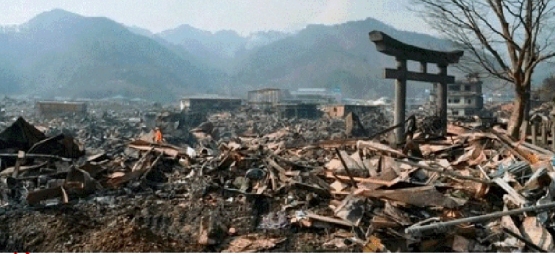
The destruction of Nagasaki looks nothing like the debris in Cassino or Leghorn. The strange thing here is the utter absence of rubble. You can see a couple of square miles of reddish-brown desolation with nothing left but the outlines of houses, a bit of wall here and half a chimney there. In this area you will see a road, and the road will be completely clean. It is too soon after the bombing for the Japs to have done any cleaning of the roads and you can’t see a single brick or pile of broken plaster or lumber on any street or sidewalk in town.


After Nagasaki, Japan surrendered – but there was a lapse of fifteen hours before the Japanese heard that their declaration had been accepted…

1945 American Occupation Begins | August 28 1945 Beginning of Allied Occupation of Japan
1945, Newsweek, Post-War Japan

Occupation Begins
(Newsweek Magazine, 1945)

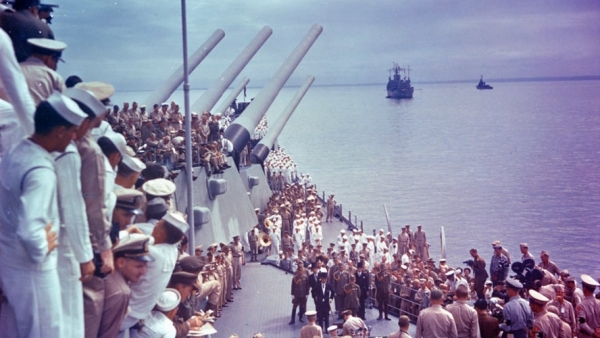
On Tuesday, August 28 (Tokyo time), the Japs got their first taste of the ignominy of surrender… The occupation forces were ordered to go ashore much as they regularly did in amphibious operations – with full combat equipment and battle dress, across beaches and onto docks. No chances were to be taken.

Advertisement

Use shortcode [oma_ad position="summary_top"] (or other position) in your theme or widgets to display OMA Promotions here.

Scroll to Top