Author name: editor

1st day at Gettysburg 1863 | July 1st 1863 Gettysburg Battle | First day at the Battle of Gettysburg 1863
1954, Gettysburg History, Pamphlet Produced by the National Park Service

The Battle of Gettysburg: Day One
(National Park Service, 1954)

An account of the inconclusive first day at Gettysburg:

The two armies converge on Gettysburg – The men of Heth’s division, leading the Confederate advance across the mountain, reached Cashtown on June 29. Pettigrew’s brigade was sent on to Gettysburg the following day to obtain supplies, but upon reaching the ridge a mile west of the town, they observed a column of Union cavalry approaching…


Click here to read a Confederate perspective of the first day at Gettysburg.


It was on the first day at Gettysburg that the Confederates made a terrible mistake. Read about it here.

A Southern Spy in Pennsylvania (W.C. Storrick, 1951)
1951, Gettysburg History, W.C. Storrick

A Southern Spy in Pennsylvania
(W.C. Storrick, 1951)

In his Civil War memoirstyle=border:none
Confederate General John B. Gordon (1832 – 1904) recalled leading the spearhead of Lee’s army through Gettysburg and on to the towns of York and Wrightsville on June 28th, 1863. While his procession was entering York a young girl ran up to him and handed him a large bouquet of flowers, which served to camouflage a letter from a Southern spy.


Click here to read more about Civil War espionage.

The Confederate Error on the First Day (Confederate Veteran Magazine, 1923)
1923, Confederate Veteran Magazine, Gettysburg History

The Confederate Error on the First Day
(Confederate Veteran Magazine, 1923)

Alabama native John Purifoy was a regular contributor to Confederate Veteran Magazine and he wrote most often about the Battle of Gettysburg; one of his most often sited articles concerned the roll artillery played throughout the course of that decisive contest. In the attached article Purifoy summarized some of the key events from a rebel perspective. In the last paragraph he pointed out the one crucial error Lee soon came to regret- take a look.

Advertisement

Use shortcode [oma_ad position="summary_top"] (or other position) in your theme or widgets to display OMA Promotions here.

'My Friend Babe Ruth'' (Collier's Magazine, 1924)
1924, Babe Ruth Articles, Collier's Magazine

‘My Friend Babe Ruth”
(Collier’s Magazine, 1924)

1920s sportswriter Arthur Robinson wrote this profile of his pal Babe Ruth (1895 – 1948) for the editors of Collier’s:

For some years I have had a peculiarly intimate friendship with Babe Ruth…to the alternately and jeering millions who have watched this modern Beowulf at bat, driving out his smashes, it may have appeared that he was just a thick-skinned ballplayer, schooled to deafness on the field. The skin of my friend Babe Ruth is not thick.

The 1940 Election Polls and FDR (Coronet Magazine, 1941)
1941, Coronet Magazine, F.D.R.

The 1940 Election Polls and FDR
(Coronet Magazine, 1941)

The attached article was written by Dr. George Gallup (1901 – 1984), the pioneering American pollster and founder of the Institute of Public Opinion. Gallup’s article reveals some surprising information about American voters and their thoughts concerning FDR’s 1940 bid for re-election against Wendell Willkie (1892 – 1944).

Advertisement

Use shortcode [oma_ad position="summary_top"] (or other position) in your theme or widgets to display OMA Promotions here.

Anti-Lynching Legislation Proposed by US Representative Joseph Gavagan 1943
1942, Lynchings, PM Tabloid

Anti-Lynching Legislation Shelved
(PM Tabloid, 1942)

Whether it was due to the urgency of the war or whether it was simply business as usual on Capitol hill, who knows – but ever since he came to Washington in 1929 Representative Joseph Gavagan (D., NYC: 1892 – 1968) tried numerous times to get his anti-lynching legislation through Congress. In April of 1937 he succeeded in getting one of his anti-lynching bills passed (277 to 118) – but the Southern Democrats saw to it that he wouldn’t get an encore performance in ’42; this was his last attempt, he retired from the House that same year.

Titanic Verses (The Bookman, 1912)
1912, The Bookman, Titanic History

Titanic Verses
(The Bookman, 1912)

The Titanic catastrophe was not seen by many to be a poetic topic, however there were a few wordsmiths who did address the subject. The link above will lead you to two of these poems; one by Charles Hanson Towne (1877 – 1949), a poet, essayist and playwright who, at the time of the sinking, was serving as an editor at Designer magazine. The second poem was penned by M.C. Lehr, of whom there is no surviving information.

'I Was On Board Titanic'' (Pageant Magazine, 1953)
1953, Pageant Magazine, Titanic History

‘I Was On Board Titanic”
(Pageant Magazine, 1953)

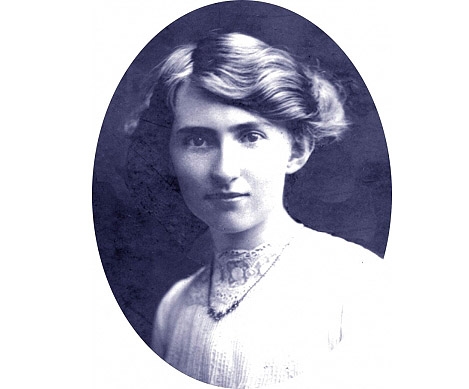
The 1953 Titanic reunion took place in New York City. Numbered among the nine survivors was Edith Russell, who had been nineteen at the time of the ship’s sinking. Also in attendance that day was the writer Seymour Ettman, who collaborated with Russell in crafting the attached five page article about her experiences the night Titanic slipped below the surface of the North Atlantic:

If the Titanic sinks, will they transfer the luggage?

Miss, if I were you, I’d go back to your room and kiss your lovely things goodbye.

Advertisement

Use shortcode [oma_ad position="summary_top"] (or other position) in your theme or widgets to display OMA Promotions here.

How John Jacob Astor Died (New York Times, 1912)
1912, The New York Times, Titanic History

How John Jacob Astor Died
(New York Times, 1912)

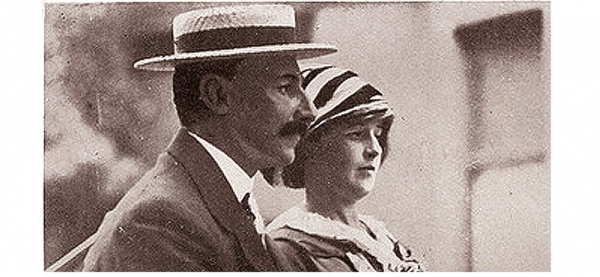
Two eyewitness accounts relaying the last moments in the life of millionaire investor John Jacob Astor IV (born and his gallantry in refusing a place in the lifeboats. According to Mrs. Churchill Candee (born Helen Churchill Hungerford, 1859 – 1949)and Second Class passenger Hilda Slater (1882 – 1965) he lived up to the expected standards of the day:

I saw Colonel John Jacob Astor hand his young wife into a boat tenderly and then ask an officer whether or not he might also go. When permission was refused he stepped back and coolly took out his cigarette case.
‘Good bye, dearie’ he called gaily, as he lighted his cigarette and leaned over the rail, ‘I’ll join you later.’

Isador Straus (New York Times, 1912)
1912, The New York Times, Titanic History

Isador Straus
(New York Times, 1912)

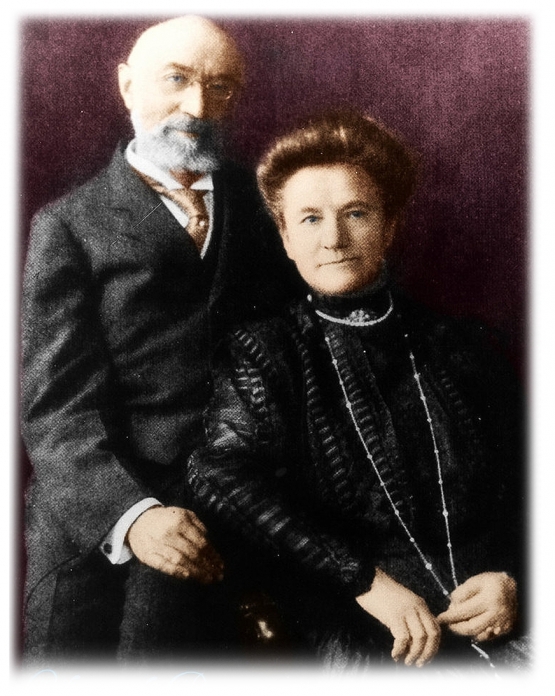
The attached obituary of Isador Straus (born 1845) as it appeared in THE NEW YORK TIMES the day after the news of his death was made known. At the time he had secured passage on board Titanic, Straus was co-owner of the Macy’s department store with his brother Nathan. A trusted advisor to U.S. President Grover Cleveland, he was elected to represent the New Yorkers of the fifty-third district and served in that post between 1894 and 1895. He died in the company of his wife Ida; unlike Straus, her body was never recovered.

Advertisement

Use shortcode [oma_ad position="summary_top"] (or other position) in your theme or widgets to display OMA Promotions here.

Weighing-In on Bruce Ismay (Current Literature Magazine, 1912)
1912, Current Literature Magazine, Titanic History

Weighing-In on Bruce Ismay
(Current Literature Magazine, 1912)

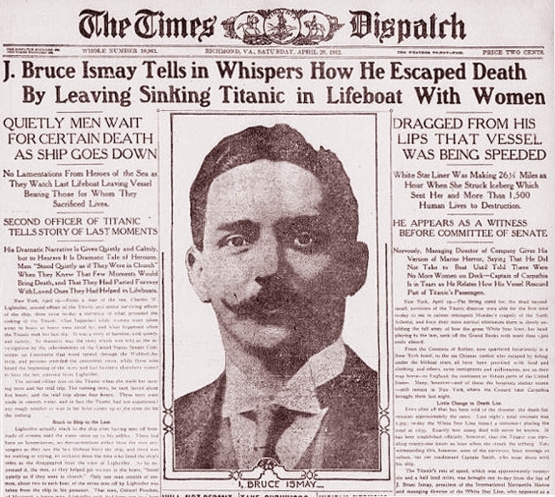
A couple of admirals weigh in as to the innocence or guilt of Bruce Ismay (1862 – 1937), Managing Director of the White Star Line. While the PITTSBURGH DISPATCH seemed to think that a debate was simply not necessary:

…But it cannot be ignored that the man who in the management of the line had sent the great steamer to sea with lifeboats for about one-third of the ship’s company, bore a responsibility that might well have been atoned by joining the gallant men who went down with the ship.

The Titanic Disaster (The Nation, 1912)
1912, Pamphlet Produced by the National Park Service, Titanic History

The Titanic Disaster
(The Nation, 1912)

Not long after the Titanic catastrophe was made known to the world there were many rumors and half truths that had to be sorted out and recognized as such in order to fully understand the full scope of the catastrophe; the editors of The Nation printed this article which contributed to that effort:

…two terrible, damning facts stand out: the first, that the ship was speeding through an ice-field of the presence of which its officers were fully aware; the second, is that every life could readily have been saved had there been boats and rafts enough to keep people afloat in a clear, starry night on an exceptionally smooth Atlantic sea. Both these facts are indisputable.

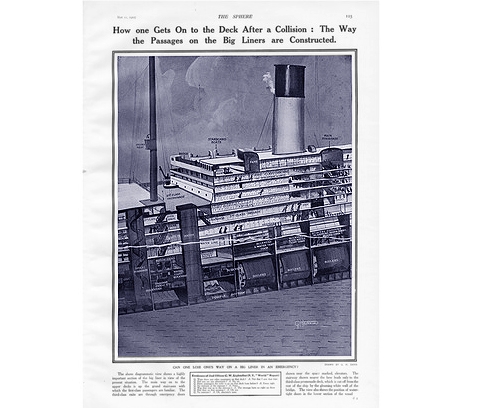
As for the lifeboats, these expensive affairs that could cost the large sum of $425.00 apiece – there were but twenty of them in addition to a few rafts…

Advertisement

Use shortcode [oma_ad position="summary_top"] (or other position) in your theme or widgets to display OMA Promotions here.

Cowardly Behavior on TITANIC (New York Times, 1912)
1912, The New York Times, Titanic History

Cowardly Behavior on TITANIC
(New York Times, 1912)

This is a small notice from THE NEW YORK TIMES reporting on the surprisingly impulsive behavior of the men of high civic standing on-board Titanic who were among the first to scramble for the lifeboats:

It was our Congressmen, our Senators, and our ‘big men’ who led in the crush for the lifeboats.


It was also pointed out that many of the Titanic heroes that night were also men of prominence within their communities, fellows such as Isador Straus and John Jacob Astor who refused to accept lifeboat seating.

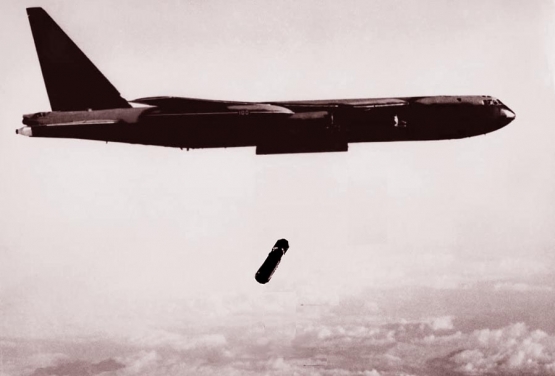
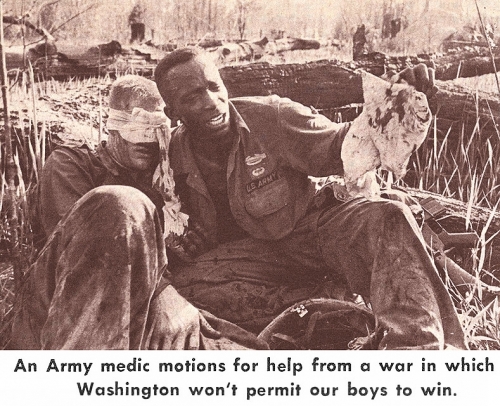
1965 Military Options in Vietnam
1965, The Vietnam War

Military Choices
(U.S. News & World Report, 1965)

Events are moving now toward a military showdown in Vietnam – with a decision to be made by combat.

The question at this time is whether the coming crisis will be resolved in South, middle or North Vietnam. As the showdown approaches, the U.S. finds itself involved in three forms of war in Southeast Asia:


• An anti-guerrilla war in southern South Vietnam.


• A base-defense war in northern South Vietnam.


• An anti-logistics war in southern North Vietnam.


The military man who penned this article weighs all these scenarios and also discusses the nuclear option.

Advertisement

Use shortcode [oma_ad position="summary_top"] (or other position) in your theme or widgets to display OMA Promotions here.

Scroll to Top