Author name: editor

Advertisement

Use shortcode [oma_ad position="summary_top"] (or other position) in your theme or widgets to display OMA Promotions here.

The Battle of Gettysburg: Day Two (National Park Service, 1954)
1954, Gettysburg History, Pamphlet Produced by the National Park Service

The Battle of Gettysburg: Day Two
(National Park Service, 1954)

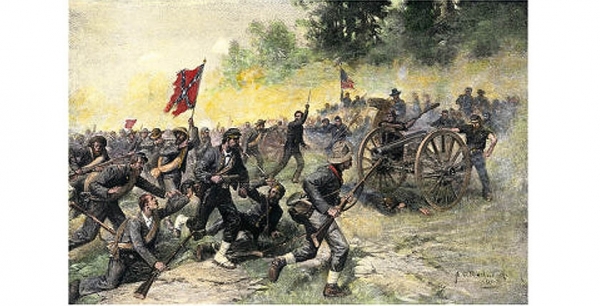
By the afternoon of July 2, the powerful forces of Meade and Lee were at hand, and battle on a tremendous scale was imminent. That part of the Union line extending diagonally across the valley between Seminary and Cemetery Ridges held. Late in the forenoon, General Dan Sickles, commanding the Third Corps which lay north of Little Round Top, sent Berdan’s sharpshooters and some of the men of the 3rd Maine Regiment forward from Emmitsburg Road to Pitzer’s Woods… as they reached the woods, a strong Confederate force fired upon them…
End of Invasion: July 4, 1863 (National Park Service, 1954)
1954, Gettysburg History, Pamphlet Produced by the National Park Service

End of Invasion: July 4, 1863
(National Park Service, 1954)

In just two paragraphs this author beautifully summed up the immediate aftermath of that remarkable battle:

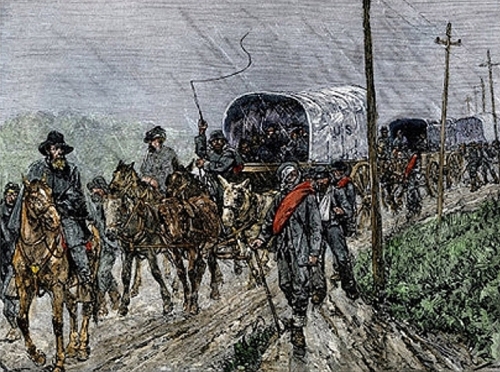
Late on the afternoon of July 4, Lee began an orderly retreat. The wagon train of wounded, 17 miles in length, guarded by Imboden’s cavalry, started homeward through Greenwood and Greencastle. At night, the able-bodied men marched over the Hagerstown Road by way of Monterey Pass to the Potomac…


From Amazon: Retreat from Gettysburg: Lee, Logistics, and the Pennsylvania Campaignstyle=border:none


Click here to read about the 1913 Gettysburg Reunion.

Advertisement

Use shortcode [oma_ad position="summary_top"] (or other position) in your theme or widgets to display OMA Promotions here.

1913, Gettysburg History

Reunion at Gettysburg
(The Outlook, 1913)

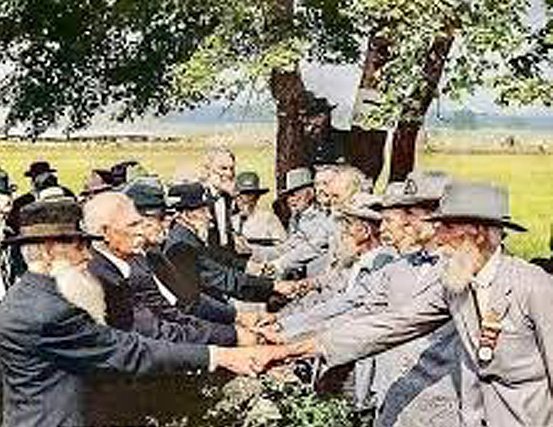
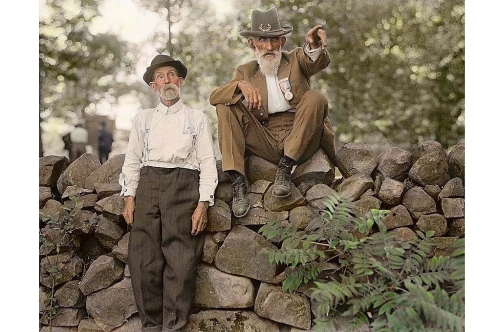
Johnny Reb and Billy Yank encountered each other once again – fifty years after the Union victory at Gettysburg:


The conductor raised his baton and the strains of ‘The Star-Spangled Banner’ floated out upon the air. All of those gathered upon the dusky lawn – the Picketts, the Longstreets, the daughter of General A.P. Hill, the Meades, the long row of men in gray and gold – became silent, rose to their feet, and uncovered. That was Gettysburg fifty years afterward.


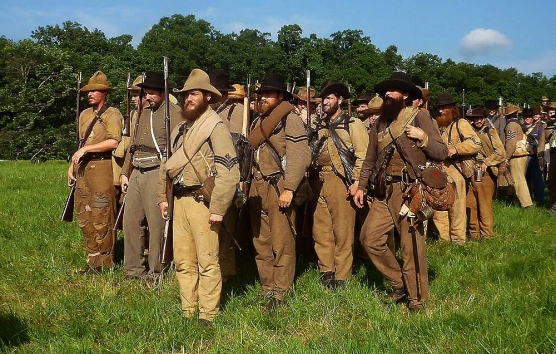
Click here to see the Confederate Uniform worn at the Reunions.

General George Gordon Meade Article | General Meade at Gettysburg
1912, Gettysburg History, The Literary Digest

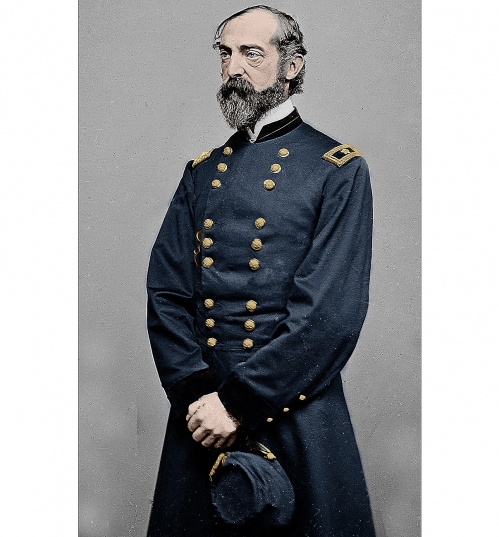
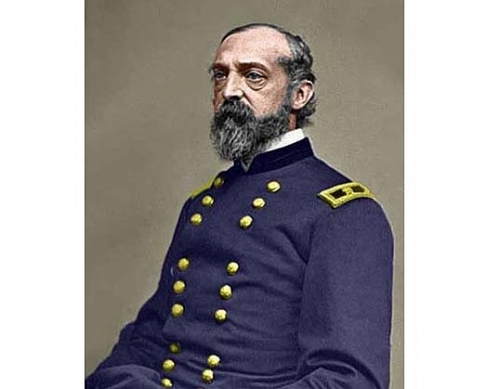
The Career of General George Gordon Meade
(Literary Digest, 1912)

A brief article on the military career of Civil War General George Gordon Meade (1815 – 1872) with particular attention paid to his leadership during the Battle of Gettysburg.

Meade will not be ranked by the historians with the great commanders, but his career is that of a well-trained, capable, and patriotic soldier, and he must always be remembered in the history of the war and of the country as the General who, for the longest period in its history, held the command of the Army of the Potomac, and to whom came the well-deserved good fortune of winning with this army the decisive battle of the war.

Advertisement

Use shortcode [oma_ad position="summary_top"] (or other position) in your theme or widgets to display OMA Promotions here.

General Meade's Report on the Battle of Gettysburg (History of the U.S. , 1867)
1867, Gettysburg History, The Southern Rebellion

General Meade’s Report on the Battle of Gettysburg
(The Southern Rebellion , 1867)

Our own losses were very severe, two thousand eight hundred and thirty-four killed, thirteen thousand seven hundred and nine wounded, and six thousand six hundred and forty-three missing – in all twenty-three thousand, one hundred and eighty-six.

It is impossible, in a report of this nature, to enumerate all the the instances of gallantry and good conduct which distinguished our success on the hard-fought field of Gettysburg. The reports of corps commanders and their subordinates, herewith submitted, will furnish all information upon this subject.


Click here to read about the military record of U.S. General George Gordon Meade.


Click here to read about the finest generals of the American Civil War.

With the First Texas Regiment at Gettysburg (Confederate Veteran, 1922)
1922, Confederate Veteran Magazine, Gettysburg History

With the First Texas Regiment at Gettysburg
(Confederate Veteran, 1922)

Attached is a Gettysburg reminiscence by one W.T. White, veteran of the First Texas Regimentstyle=border:none who had documented his experience on Little Round Top in his earlier writings, but preferred to dwell on some other glorious moments on this page.
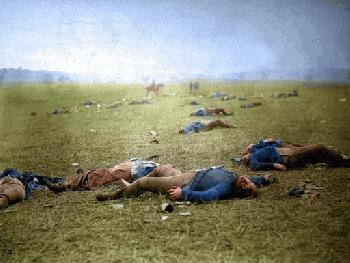
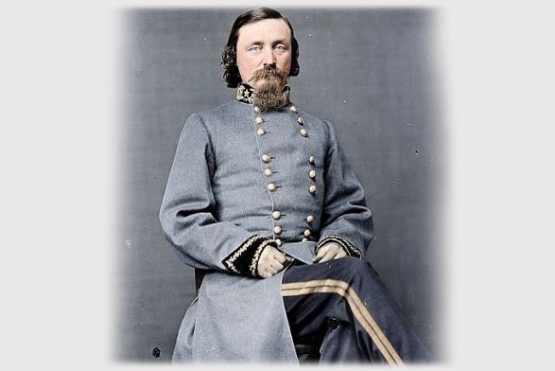
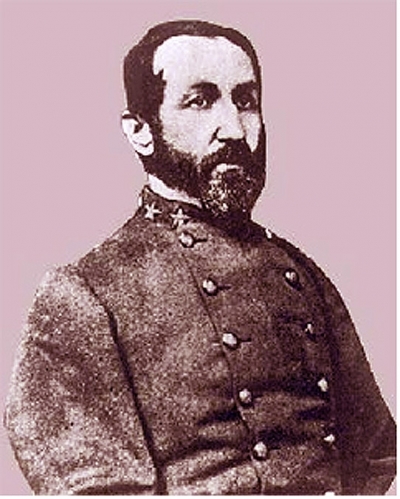
As a result of their charge up Little Round Top, the boys of the Twentieth Maine sent the First Texas Infantry to the bottom of the hill leaving 25 dead, 20 missing and 48 wounded.

Advertisement

Use shortcode [oma_ad position="summary_top"] (or other position) in your theme or widgets to display OMA Promotions here.

The North Carolina Presence at Gettysburg (Confederate Veteran Magazine, 1930)
1930, Confederate Veteran Magazine, Gettysburg History

The North Carolina Presence at Gettysburg
(Confederate Veteran Magazine, 1930)

This article, from Confederate Veteran Magazine, presented the drama of events as they unfolded on the first day of the Battle of Gettysburg with an eye to specifically telling the tale of the North Carolina regiments and the part they played as the battle was taking shape. The author, Captain S.A. Ashe (author of the 1902 book, The charge at Gettysburg) explained thoroughly which Confederate and Federal units arrived first at Gettysburg and at what hour, while indulging in just a little Monday morning quarterbacking:

If General Longstreet, with his very fine corps, had struck the Federals early the next morning, there probably never would have been a third day at Gettysburg.

A Summation of the Battle of Gettysburg (Famous Events Magazine, 1913)
1913, Famous Events Magazine, Gettysburg History

A Summation of the Battle of Gettysburg
(Famous Events Magazine, 1913)

This essay clearly states why the Battle of Gettysburg is a significant event in Civil War history, what the Rebels intended and why the battle was such a decisive victory for the Federal Army:

In the first rush the Confederates were successful, the scattered Union regiments under General Hancock were pressed back. But on the second day, the main body of the Northern army under General Meade arrived, and the contest held even, with awful slaughter on both sides. The third day the Confederates made one last desperate charge…

Abraham Lincoln: Short Story Writer…

A Summation of the Battle of Gettysburg (Famous Events Magazine, 1913)
1949, Coronet Magazine, Gettysburg History

Gettysburg: an Epilogue
(Coronet Magazine, 1949)

An article that looks back at some of the lost opportunities squandered by both armies, wondering if the outcome might have been different had their importance been recognized and properly exploited.

At Gettysburg, the heat broke at last, and rain fell on July 4. As doctors and ambulances moved onto the scene, neither retreating Confederates nor jubilant Northerners recognized the great issue that had been decided on that field. Only a few sensed that the twilight of the Confederacy had come.


Read an article about how Victorian fashion saved a life during the Civil War.

Advertisement

Use shortcode [oma_ad position="summary_top"] (or other position) in your theme or widgets to display OMA Promotions here.

1863: A Poor Summer for the Rebels (National Park Service, 1954)
1954, Gettysburg History, Pamphlet Produced by the National Park Service

1863: A Poor Summer for the Rebels
(National Park Service, 1954)

For Jefferson Davis and his confederates, the double disasters of Gettysburg and Vicksburg that came with the summer of 1863 spelled doom for the Rebel cause. Writing in his diary during those canicular days was Confederate General Josiah Gorgas (1818 – 1883) who succinctly summarized the meaning of these two major defeats:

Events have succeeded one another with disastrous rapidity. One brief month ago we were apparently at the point of success. Lee was in Pennsylvania, threatening Harrisburg, and even Philadelphia… Today absolute ruin seems to be our portion. The Confederacy totters to its destruction.

1951, Gettysburg History

Lee’s Report Regarding the First Day
(W.C. Storck, 1951)

The enemy was driven through Gettysburg with heavy loss, including about 5,000 prisoners and several pieces of artillery. He retired to a high range of his hills south and east of the town. The attack was not pressed that afternoon, the enemy’s force being unknown, and it being considered advisable to await the arrival of of the rest of our troops.

Advertisement

Use shortcode [oma_ad position="summary_top"] (or other position) in your theme or widgets to display OMA Promotions here.

Scroll to Top