Author name: editor

Leif Tronstad Thwarted German Atomic Research | Leif Tronstad Heavy Water Experiments
1945, Atomic Bombs, Coronet Magazine

‘How We Escaped the Bomb”
(Coronet Magazine, 1945)

Said Winston Churchill in offering thanks for Divine help in the race for atomic power, ‘By His mercy British and American science outpaced all German efforts.’

Thank God, to be sure. But it should not be overlooked that for this work He had an able servant in Lief Tronstad. As saboteur par excellence, the young professor was a ball and chain on Nazi ankles in this race to the atomic finish line.

Mareth Line Battle News Article | British Attack Along Mareth Line 1943
1943, North Africa, PM Tabloid

British Attack Along The Mareth Line
(PM Tabloid, 1943)

The British have struck heavily at the Mareth Line in what both sides call the opening blow of the long-awaited big battle of Tunisia.


(The Mareth Line was a system of bunkers built by France in southern Tunisia during the late Thirties. The line was intended to protect Tunisia against an Italian invasion from its colony in Libya.)

General Lunsford Errett Oliver in Tunisia | US Army in Tunisia North Africa 1943 | General Lunsford Errett Oliver Collier's Magazine April 17 1943
1943, Collier's Magazine, North Africa

The Opening Campaign in Tunisia
(Collier’s Magazine, 1943)

General Lunsford Errett Oliver (1889 – 1978) wrote this article about his experiences commanding the American Army in Tunisia. As many of you may know, the American efforts in North Africa were fraught with many difficulties, the least of them were the Germans. The biggest one referred to by the general was the total lack of air cover for his advancing army.


Click here to read about the retreat of the Africa Corps.

Advertisement

Use shortcode [oma_ad position="summary_top"] (or other position) in your theme or widgets to display OMA Promotions here.

General Rommel Retreat from North Africa 1942 | Photographer Slim Aarons Was A WW II War Reporter
1942, North Africa, Yank Magazine

The Afrika Korps in Retreat
(Yank Magazine, 1942)

This article was penned by YANK correspondent Sergeant George Slim Aarons (1916 – 2006) concerning his travels throughout the Allied occupied portions of Tunisia in 1943. Aarons reported on the heavy presence of German military debris that could be found scattered throughout the deserts – evidence that spelled out the imminent eviction of the Germans from that continent:

Some of these tanks lay in groups, showing how they had clustered together and fought it out to the bitter end. Other iron carcasses were alone in the desert, burned and twisted – relics of a hopeless, single-handed struggle against the Allied forces.


Click here to read about the retreat of the German 7th Army from Normandy.

The News of the W.W. I Armistice (The Stars and Stripes, 1918)
1918, Stars and Stripes Archive, The Stars and Stripes

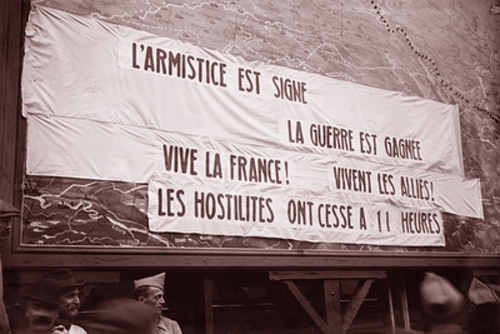
The News of the W.W. I Armistice
(The Stars and Stripes, 1918)

By the time this news column was read by the American Doughboys the truce was old news, however it makes for an interesting read as it is able to impart much of the Armistice excitement that filled the streets of Paris when the news of the surrender hit the boulevards. This front-page column makes clear that many of the rumors pertaining to the German collapse could not be verified, yet affirms reports concerning the revolution in Germany, it’s food shortages and the Kaiser’s exile to Holland.

Click here to read World War II articles from YANK MAGAZINE.
The A.E.F. Tank Corps (The Stars and Stripes, 1919)
1919, Stars and Stripes Archive, The Stars and Stripes

The A.E.F. Tank Corps
(The Stars and Stripes, 1919)

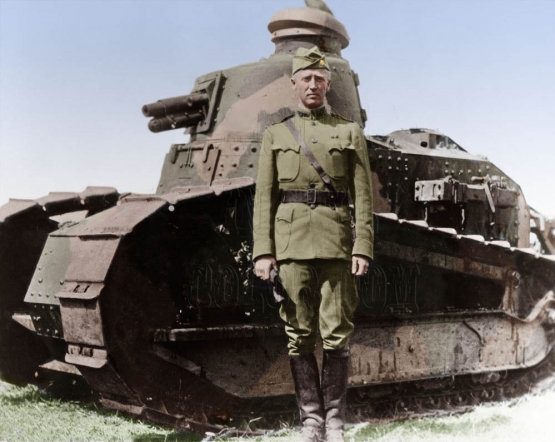
This article appeared some seven months after the war, and it presents an interesting account of the first American tank units that ever existed.


The preferred tank of the American Army of World War I was a light tank made by the French called a Renault. It had a crew of two, measured 13 feet (4 meters) in length and weighed 6.5 tons. The tank’s 35 hp. engine moved it along at a top speed of 6 miles per hour. This article outlines where the American tanks fought, which units they supported and who commanded them; some readers may be interested to know that reference is made to the First American Tank Brigade and the officer in charge: Lieutenant Colonel George S. Patton (1885 – 1945).

During the course of the Meuse-Argonne battles, the tank units of the 1st Brigade had lost 3 officers and 16 enlisted men killed, and 21 officers and 131 enlisted men were wounded. These losses were suffered in 18 separate engagements…


Read about General Patton, Click here


Read other articles from 1919.

Advertisement

Use shortcode [oma_ad position="summary_top"] (or other position) in your theme or widgets to display OMA Promotions here.

Yanks on the Marne: The Battle of Chateau-Thierry (The Stars and Stripes, 1918)
1918, Stars and Stripes Archive, The Stars and Stripes

Yanks on the Marne: The Battle of Chateau-Thierry
(The Stars and Stripes, 1918)

The American performance at the battle of Chateau-Thierry proved to General Foche that the Americans had the necessary stuff, and it was widely recognized that the Doughboys played the key roll in keeping the Germans out of Paris.

The attached STARS AND STRIPES article is extremely detailed as to the individual units (both French and American) that participated in rolling back the Germans along the Marne.

On June 4, the best information available indicated that the enemy was employing not less than 33 divisions, about 3000,000 men…But like the defenders of Verdun, the American machine gunners set their teeth and said, ‘They shall not pass.’

Stars and Stripes Folds it's Tent (American Legion Weekly, 1919)
1919, Stars and Stripes Archive, The American Legion Weekly

Stars and Stripes Folds it’s Tent
(American Legion Weekly, 1919)

An article by The American Legion Weekly correspondent Rex Lapham about the last issue (until the next war) of The Stars and Stripes. The article recorded many sentimental remarks, words of praise and seldom heard facts about the history of the Doughboy newspaper.

If the paper found it’s way across, as it surely did, into the hands of the German intelligence officers – if that’s what they could be called – it must have given them something to ponder about. How could they have reported anything favorable to the ears of the German high command after having perused this defiant and determined manifestation of Doughboy psychology?

Click here to read how the newspaper was staffed and managed in 1918 Paris.

Advertisement

Use shortcode [oma_ad position="summary_top"] (or other position) in your theme or widgets to display OMA Promotions here.

US 92nd Division in Italy | 92nd Division (colored) 1944 | NYT Reporter Milton Bracker in WW2 Italy
1945, African-American Service, Newsweek

Jim Crow at Newsweek
(Newsweek Magazine, 1945)

What a thoroughly outrageous article this is! In my experience reading news pieces from both world wars I have never once come across one in which the journalist pinpoints a particular fighting unit and labels it as substandard – but that is exactly what happens in this article about the all-black 92nd Division. Previously, I never thought such a thing would ever happen with a censored press that sought to preserve the morale of both soldiers and home front – but I was wrong.

American English is Better Than U.K. English... (Literary Digest, 1922)
1922, American English, The Literary Digest

American English is Better Than U.K. English…
(Literary Digest, 1922)

E.B. Osborn of the London Morning Post reviewed H.L. Mencken’s book, The American Languagestyle=border:none (1921) and came away amused and in agreement with many of the same conclusions that the Bard of Baltimore had reached:
…Americans show superior imaginativeness and resourcefulness; for example, movie is better than cinema…The American language offers a far greater variety of synonyms than ours; transatlantic equivalents for drunk are Piffled, spifflicated, awry-eyed, tanked, snooted, stewed, ossified, slopped, fiddled, edged, loaded, het-up, frazzled, jugged and burned.


Read about the Canadian Preferences in English…


– from Amazon: A Decade-by-Decade Guide to the Vanishing Vocabulary of the Twentieth Centurystyle=border:none

First Moscow Conference 1941
1941, Joseph Stalin, The American Magazine

Harry Hopkins and Stalin
(The American Magazine, 1941)

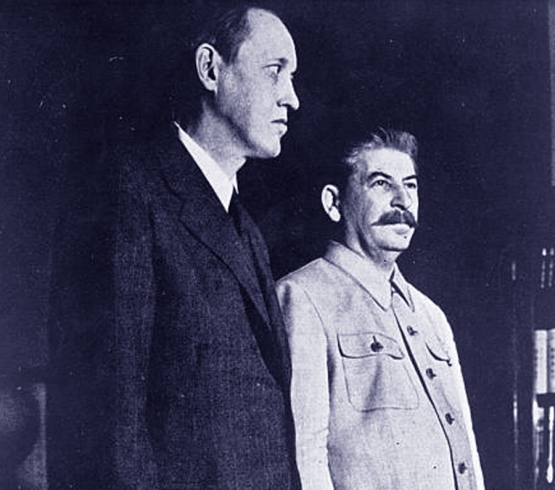
Bromance was in the air when Harry Hopkins (1890 – 1946) went to Moscow to meet Joseph Stalin (1876 – 1953) for their second meeting:

He shook my hand briefly, firmly, courteously. He smiled warmly. There was no waste of word, gesture, nor mannerism. It was like talking to a perfectly coordinated machine, an intelligent machine. Joseph Stalin knew what he wanted, knew what Russia wanted and he assumed that you knew.


Mic-drop.

Advertisement

Use shortcode [oma_ad position="summary_top"] (or other position) in your theme or widgets to display OMA Promotions here.

Harry Hopkins Magazine Article | Who Was Harry Hopkins | Diana Hopkins Daughter of Harry Hopkins
1944, F.D.R., The United States News

Harry Hopkins – FDR’s Right Hand
(United States News, 1944)

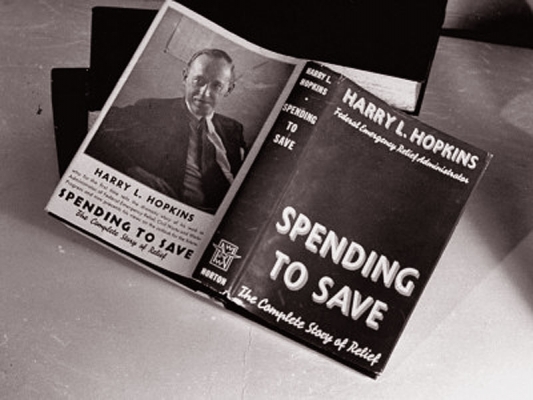
This article makes it quite clear that Harry Hopkins (1890 – 1946) wore many hats in the administration of FDR.
During the first five years of the New Deal he had the unique title Special Assistant to the President, he not only wrote speeches for FDR – Hopkins also oversaw the goings-on at the Civil Works Administration (CWA), the Federal Emergency Relief Administration (FERA), and the Works Progress Administration (WPA). Between the years 1938 through 1940, he served as Secretary of Commerce and when the war came he supervised the Lend-Lease program, the Chairman of the Munitions Assignment Board and traveled frequently as the President’s representative to Moscow and London.


When the U.S.S.R. collapsed, it was discovered that one of his additional duties was being a Soviet agent.


Click here to read about another member of the New Deal Brain-Trust…


Read an anti-Gandhi article from 1921…

Advertisement

Use shortcode [oma_ad position="summary_top"] (or other position) in your theme or widgets to display OMA Promotions here.

Director Fritz Lang in 1943 | The Last Will of Dr. Mabuse Movie Review 1943
1943, Hollywood, PM Tabloid

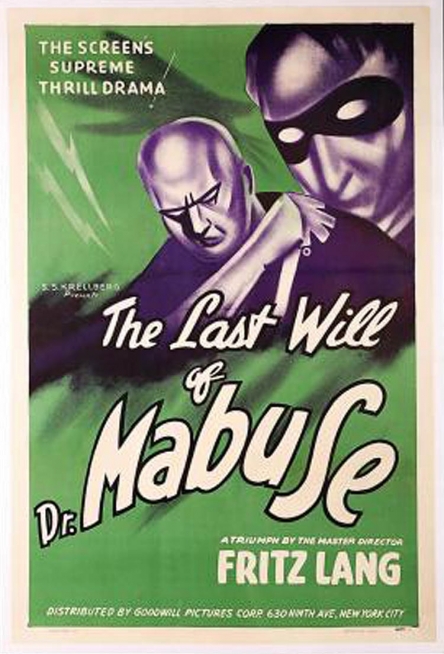
The Last Will of Dr. Mabuse
(PM Tabloid, 1943)

The reason the Nazis banned The Last Will of Dr. Mabuse was that it was a political preachment against Hitler ‘socialism,’ by a man [Fritz Lang] whose films were appreciated by the Germans as true interpretations of the social trends of post-war Germany… Lang’s intention in the film was, in his own words, ‘to expose the masked Nazi theory of the necessity to deliberately destroy everything which is precious to a people so that they would lose all faith in the institutions and ideals of the State. Then, when everything collapsed, they would try to find help in the new order.’

Slim Aarons in Cassino (Yank Magazine, 1944)
1944, Photographers, Yank Magazine

Slim Aarons at Cassino
(Yank Magazine, 1944)

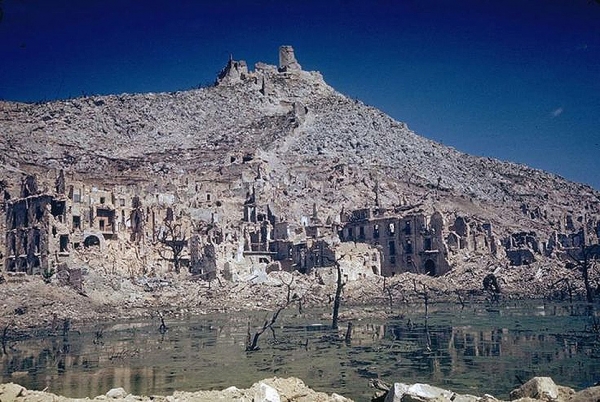
Society photographer Slim Aarons (1916 – 2006) is remembered for chronicling the swells of Palm Beach and Newport during the 1960s for Town & Country, among other magazines, but before he was able to have those villa doors open for him he had to first pay his dues at Yank Magazine, photographing the dung and destruction of World War Two.
This is an article he wrote about all that he saw during the Battle of Monte Cassino (January 17, 1944 – May 19, 1944), accompanied by five of his photographs.

Advertisement

Use shortcode [oma_ad position="summary_top"] (or other position) in your theme or widgets to display OMA Promotions here.

Scroll to Top