Author name: editor

Yvonne De Carlo magazine article | Yvonne De Carlo Hollywood Actress
1945, Collier's Magazine, Hollywood History

Yvonne De Carlo Arrives
(Collier’s Magazine, 1945)

A 1945 Collier’s Magazine article about Yvonne De Carlo (a.k.a. Lilly Munster: 1922 – 2007) that appeared shortly after her first big break in Hollywood, Salome, Where She Danced. At the time of this interview the actress had well-over fifteen minor films on her resume but the journalist chose to claim that Salome was her first, just for the unbelievable glamor of it all; he also chose to shave three years off her age.

Yvonne De Carlo was born twenty years ago in Vancouver, British Columbia…She was a featured dancer at Earl Caroll’s and earned the undying respect of the producer by tipping the scales at a svelte 115 pounds, standing on the runway at a mere 5 feet four inches, and by displaying an 11 -/2 -inch neck, a 36 bust, a 24 waist, 32 hips a 7 1/2 -inch ankle, and 15 2/3 -inch wrist.

Celebrities Served WW2 Military | Hollywood Actors Who Got Out of the WWII Draft
1942, Hollywood, Photoplay Magazine

Who in Hollywood Received Draft Deferments
(Photoplay Magazine, 1942)

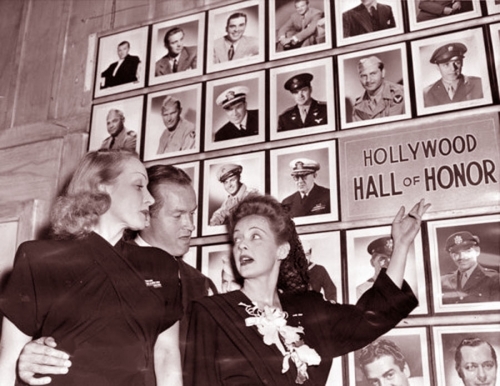
This article first appeared at the end of America’s first full year of war and it is composed of the names and pictures of Hollywood’s leading men who were absolved from fulfilling their military obligations during the war.

The personalities of the fabulous films are on the spot in the matter of serving their country. It is useless to deny that the motion picture stars have been getting the best of it. Some have been given special draft deferments and choice assignments and often have been allowed extra months to finish their pictures before having to report for duty.


Click here to read about the American draft-dodgers of the Second World War.

Post-War Economic Boom in Fifties Fashion | 1950 s Prosperity and Effect Upon US Culture | Claire McCardell at home plaid gown
1950s Fashion, 1951, Quick Magazine

The Strong Economy and its Effect on Fashion
(Quick Magazine, 1951)

The antidote to the austere fashion deprivations of the 1930s and the wartime fabric restrictions that characterized the Forties arrived in the immediate post-war period when designers were at last permitted to make manifest their restrained cleverness and create an aesthetic style in a mode that was overindulgent in its use of fabric. This fashion revolt commenced in Paris, when Christian Dior showed his first collection in 1947 – couturiers in every style capitol in the West willingly kowtowed and a new era in fashion was born.

Advertisement

Use shortcode [oma_ad position="summary_top"] (or other position) in your theme or widgets to display OMA Promotions here.

WAAC Truck Drivers (Click Magazine, 1943)
1943, Click Magazine, WACs

WAAC Truck Drivers
(Click Magazine, 1943)

A Click Magazine photo-essay about the hard-charging WAACS of the Motor Transport School in glamorous Daytona Beach, Florida. Trained to operate and maintain two-ton trucks, the American women of the WAACs were mobilized to run the vast convoy system within the U.S. in order to free-up their male counterparts for more dangerous work in hostile regions.


Click here to read about the most famous woman truck driver in all of World War II…

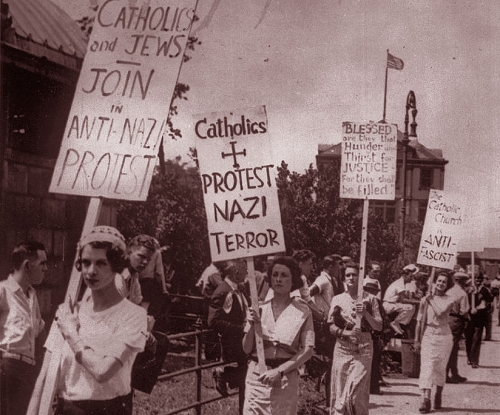
Hitler Concordat 1933 Violated | Hitler Violates 1933 Agreement with Catholic Church | Catholic Church and Hitler Concordat 1933
1937, Pathfinder Magazine, Pseudotheology

Catholics and Nazis
(Pathfinder Magazine, 1937)

Shortly after Hitler assumed power, he struck a deal with the Catholic Church in Germany allowing their schools to remain open. On May Day, 1937, he ified the agreement, saying:

We made a start with the nation’s youth. They shall not escape us. We will take them when they are 10 years-old and bring them up in the spirit of the community…
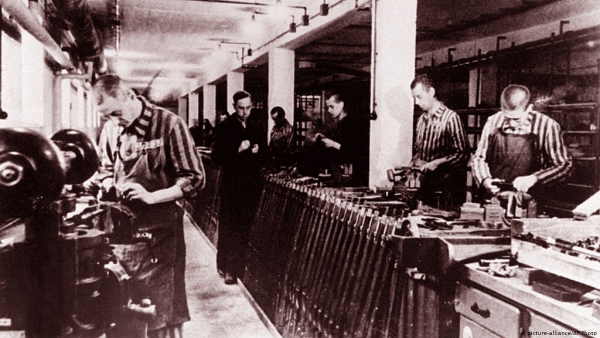
Hitler's Slave Labor 1942 | Hitler's European Slaves
1942, PM Tabloid, World War Two

Europe Enslaved
(PM Tabloid, 1942)

Today in Europe there are more slaves than ever existed on any continent at any time. Hitler had to fight for every one of them… They used gangs, particularly in Poland, to round up workers from the streets, to drag them from churches and theaters and even from homes to go to work in Germany.


At the time it was estimated that there were as many as 6,000,000 slaves in Germany; half of them were prisoners of war.


Click here to read about the enslavement of France…

Advertisement

Use shortcode [oma_ad position="summary_top"] (or other position) in your theme or widgets to display OMA Promotions here.

Should Movie Stars Be Expected to Fight, As Well? (Photoplay Magazine, 1942)
1942, Home Front, Photoplay Magazine

Should Movie Stars Be Expected to Fight, As Well?
(Photoplay Magazine, 1942)

We were very surprised to read in the attached editorial that the whole idea of draft deferments for actors and other assorted Hollywood flunkies was not a scheme cooked-up by their respective agents and yes-men, but a plan that sprung forth from the fertile mind of the executive officer in charge of the Selective Service System: Brigadier General Lewis Blaine Hershey (1893 – 1977) in Washington.


Always one to ask the difficult questions, Ernest V. Heyn (1905 – 1995) executive editor of Photoplay posed the query Should Stars Fight? and in this column he began to weigh the pros-and-cons of the need for propaganda and an uninterrupted flow of movies for the home front, and the appearance of creating a new entitled class of pretty boys.


Twenty years earlier a Hollywood actor would get in some hot water for also suggesting that talented men be excused from the W.W. I draft…

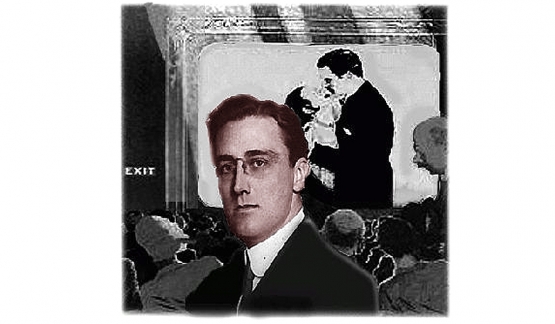
Vladimir Lenin Interview 1921 | Washington D Vanderlip Meets Lenin |
1921, Soviet History, The Literary Digest

The Conversational Lenin
(Literary Digest, 1921)

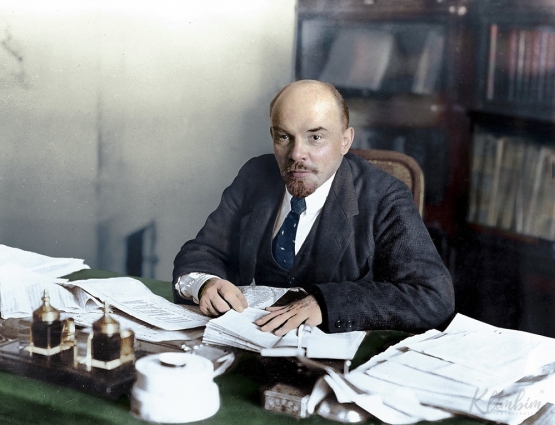
When Washington D. Vanderlip made his way to the nascent Soviet Union to secure mining rights in Siberia he wrote of his meeting with the nation’s first dictator, Vladimir Lenin, and revealed a Lenin that was seldom seen in print. He wasn’t blathering on about the proletariat or the bourgeoisie but rather musing about his pastimes and dreams for the future.

On his desk was a copy of the New York Times, well-thumbed. ‘Do you really read it?’ I asked. ‘I read the New York Times, the Chicago American and the Los Angeles Times regularly,’ he said.’Through the New York Times I keep track of the atrocities, the assassinations and the new revolutions in Russia. Otherwise I wouldn’t know where to find them.’

Advertisement

Use shortcode [oma_ad position="summary_top"] (or other position) in your theme or widgets to display OMA Promotions here.

The Pentecostal Church in America | Fastest Growing Protestant Faith | History of the Assemblies of God Church
1958, Coronet Magazine, Faith

Assemblies of God
(Coronet Magazine, 1958)

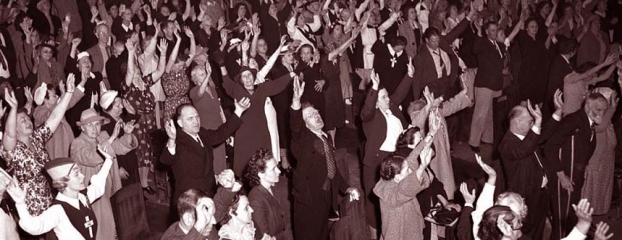
The fastest-growing Protestant religion today is the Pentecostal movement… In barely half a century this dynamic young version of old-time fundamentalism has produced spectacularly successful leaders such as Oral Roberts and the late Aimee Semple McPherson, has won the devotion of at least 2,000,000 Americans of every racial and religious origin and through zealous foreign missionary work, has gained thousands of converts on every continent.

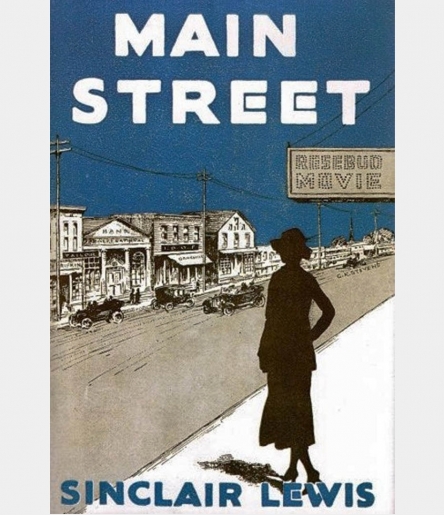
1920 Book Review of Main Street by Sinclair Lewis | Main Street by Sinclair Lewis Summary | Primary Source Book Review of MAIN STREET
1920, Twentieth Century Writers

Main Street by Sinclair Lewis
(NY Times, 1920)

A remarkable book is this latest by Sinclair Lewis. A novel, yes, but so unusual as not to fall easily into a class. There is practically no plot, yet the book is absorbing. It is so much like life itself, so extraordinarily real. These people are actual folk, and there was never better dialogue written than their revealing talk.

Advertisement

Use shortcode [oma_ad position="summary_top"] (or other position) in your theme or widgets to display OMA Promotions here.

Failure of Prohibition | Prohibition Made Gangsters Rich
1932, Pathfinder Magazine, Prohibition History

The Non-Success of Prohibition
(Pathfinder Magazine, 1932)

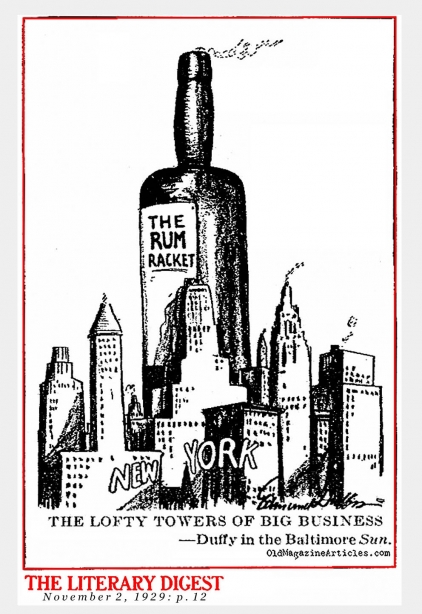
Prohibition had been in place for a little over eleven and a half years by the time this uncredited editorial was published. The column is informative for all the trivial events that Prohibition had set in motion and are seldom remembered in our own time – such as the proliferation of private golfing institutions; clubs that intended to appear innocent enough, but were actually created for Wet dues-paying golfers. A recently posted article (1917) that appeared in THE LITERARY DIGEST near the end of 1929 examined the astronomical wealth that had been earned by the gangsters in America’s biggest cities.

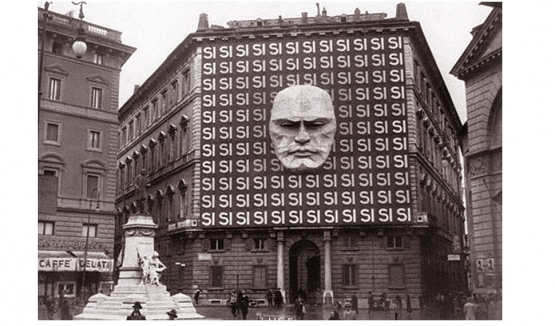
Fascism's Triumph Explained by Italian-American Journalists (Literary Digest, 1922)
1922, Benito Mussolini, The Literary Digest

Fascism’s Triumph Explained by Italian-American Journalists
(Literary Digest, 1922)

At the request of The Literary Digest editors, a number of Italian-language journalists working in North America were asked to explain the great success that the Italian Fascists were experiencing in 1922 Italy. This article lists an enormous number of Italian language newspapers that existed in the United States at that time; virtually every medium-sized to large American city had one. We were surprised to find that the most pro-Mussolini Italian-American newspaper operating in the U.S. was located in New York City.


In the late Thirties, early Forties the FBI began to monitor the Italian-Americans who adored Mussolini – Click here to read about it

Zaibatsu Family Power Ends 1945 | End of Japanese Economic Power Structure 1945
1945, Newsweek, Post-War Japan

Breaking Up The ‘Big Eight’
(Newsweek Magazine, 1945)

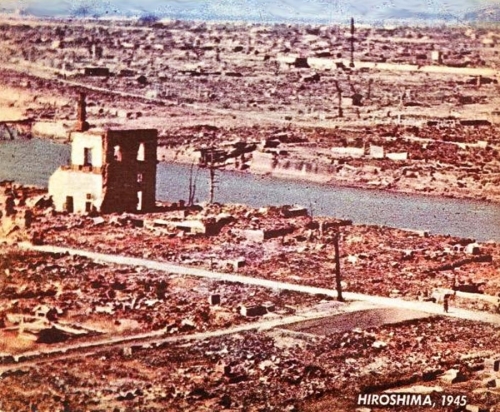
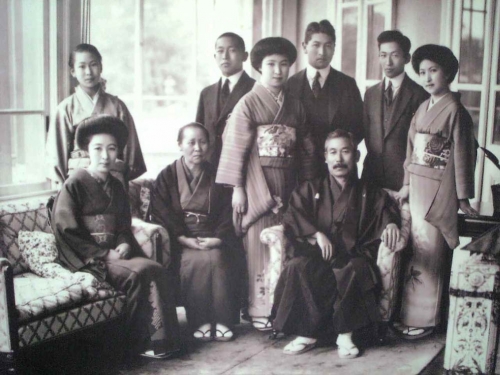
As the American effort to restructure a defeated Japan commenced, it seemed obvious to all that one of the first things to go was the Zaibatsu Family. Zaibatsu was the name given to the eight families which had held a monopoly on the manufacturing wealth and banking power in Japan since the mid-to-late Nineteenth Century. Made up of many names that you will recognize, this article goes into some detail explaining how the power structure worked and its relation with the Emperor.

Advertisement

Use shortcode [oma_ad position="summary_top"] (or other position) in your theme or widgets to display OMA Promotions here.

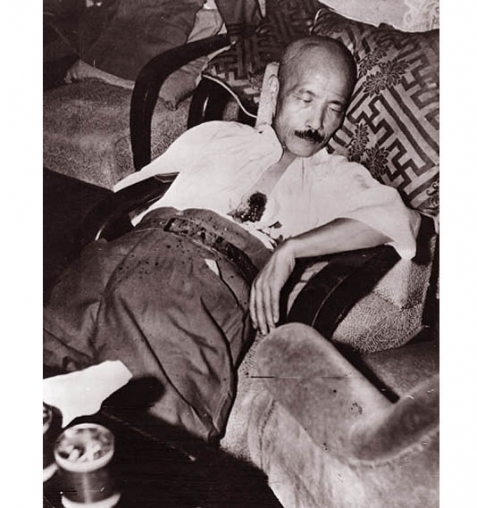
General Hideko Tojo Attempted Suicide 1945 | General Hideko Tojo Hara-Kiri 1945 | General Hideko Tojo Seppuku 1945
1945, Post-War Japan, Yank Magazine

The Capture of General Hideko Tojo
(Yank Magazine, 1945)

War correspondent George Burns reported on the momentous day when the American Army came to arrest the former Prime Minister of Imperial Japan, General Hideko Tojo (1884 – 1948). Tojo served as Japan’s Prime Minister between 1941 and 1944 and is remembered for having ordered the attack on the American naval installation at Pearl Harbor, as well as the invasions of many other Western outposts in the Pacific. Judged as incompetent by the Emperor, he was removed from office in the summer of 1944.


This article describes the efforts of Lt. Jack Wilpers who is credited for prolonging the life of Tojo after his amateur suicide attempt and seeing to it that the man kept his date with the hangman. Nominated for the Bronze Star, he was decorated in 2010: read THE WASHINGTON POST article.

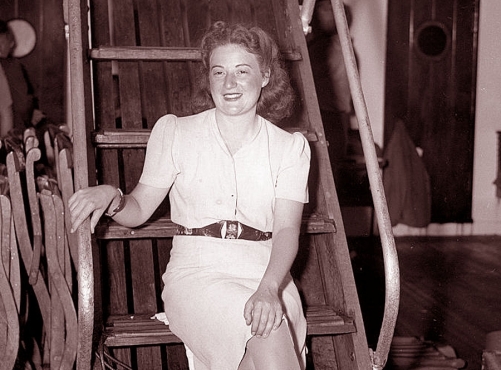
Betty Wason War Correspondent
1941, PM Tabloid, War Correspondents

Reporter Under Fire
(PM Tabloid, 1941)

CBS war correspondent Betty Wason (1912 – 2001) reported in a very chatty way about how the war was proceeding along the shores of the Southern Mediterranean Sea. Of particular interest was her observation regarding how thoroughly lame the Italian Army appeared to their opposite numbers in the Albanian Army. Rather than eliciting feelings of dread and hatred, the Italian soldiers were pitied for their poor skills – their bodies were plentiful on every battlefield.

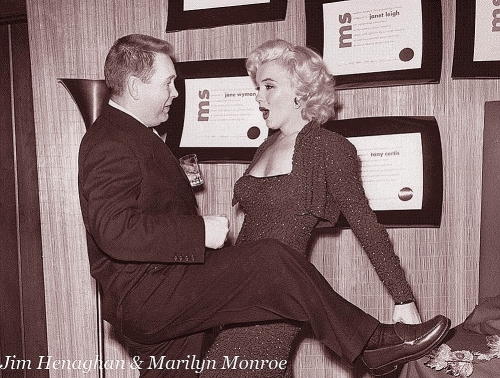
Marilyn Monroe as Friend | Marilyn Monroe Insecure Woman
1971, Marilyn Monroe, Pageant Magazine

Warm Recollections of Marilyn
(Pageant Magazine, 1971)

Nine years after Marilyn Monroe’s death, Hollywood reporter James Henaghan remembered his friendship with the star and their warm, unguarded moments together:

I guess I had known it all the time. I knew that I belonged to the public and to the world. The public was the only family, the only Prince Charming, and the only home I ever had dreamed about.

Advertisement

Use shortcode [oma_ad position="summary_top"] (or other position) in your theme or widgets to display OMA Promotions here.

Scroll to Top